
Everything is F*cked: A Book About Hope
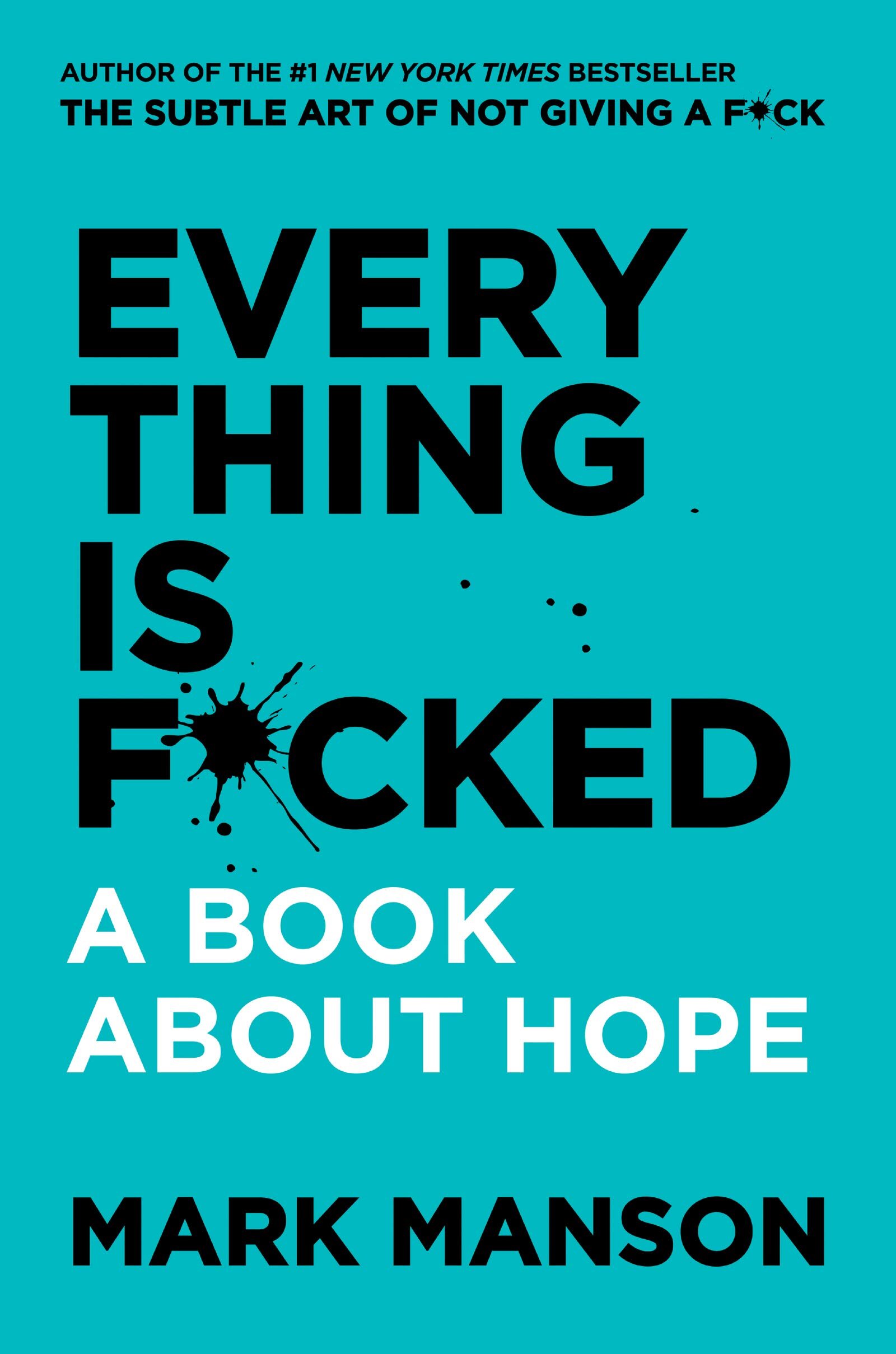
Everything is F*cked is Mark Manson’s follow‑up to the wildly popular The Subtle Art of Not Giving a F*ck – a book I scandalously skipped, despite my usual need to read things in perfect, orderly sequence. The sequel arrives with all the subtlety of a neon sign in Times Square: loud, clever, a touch performative, and fully aware of its own shock value. As a piece of pop philosophy, it sits neatly on that shelf between self‑help and existential crisis, where “meaning of life” questions mingle with internet sarcasm.
I’ll be honest: this was one of the most difficult books I’ve pushed myself through in recent years. Around the midpoint, I seriously considered abandoning ship, latte in hand, dignity intact. The structure feels uneven; the first half is all set-up and provocation, while the second half suddenly dives into heavy philosophy, moral psychology, and sweeping ideas about hope, religion, and human behaviour. That’s where it finally gets interesting – but also where I frequently had to reread paragraphs and wonder whether my brain had quietly left the chat.
To Manson’s credit, Everything is F*cked does not pretend to be an easy read. It is, essentially, a philosophy book dressed in sweary, internet‑age clothing. He draws on Immanuel Kant, Nietzsche, contemporary psychology and even a bit of political theory, stitching together concepts such as hope, freedom, suffering and morality into a grand, if slightly chaotic, narrative about why the modern world feels so broken. His talent lies in taking dense ideas and making them accessible, if not exactly gentle, layering them with dark humour and sticky metaphors that linger long after you close the book.
“Act that you use humanity, whether in your own person or in the person of any other, always at the same time as an end, never merely as a means.”
Here’s the thing, though: destiny, faith, religion and morality are not light topics you can tie up with a witty footnote and a barbed punchline. Having taken a lone, disorienting philosophy module at university (and nursed a quiet obsession with essays such as Peter Singer’s The Drowning Child and the Expanding Circle), I’m wary of any book that rushes towards grand conclusions. Everything is F*cked is marketed as “a book about hope”, yet much of it argues that our hopeful narratives are illusions, if not outright destructive. It feels a bit like ordering dessert and being served a meticulously plated existential slap instead.
Then there are the footnotes – and my word, the footnotes. They occupy what feels like a fifth of the book: part citation list, part running commentary, part bonus rant. At first, I found them witty and conspiratorial, as if Manson were whispering behind the main text. After a while, though, they began to feel a touch manipulative, as if the real arguments were scattered in the margins, ready to catch out anyone not reading with obsessive thoroughness.
That said, I wouldn’t write the book off. Everything is F*cked is a thought‑provoking entry point into moral philosophy, the psychology of hope, and why the world feels perpetually on fire. It made me question how I construct meaning, even when I didn’t agree with his leaps. I suspect I’ll need a second read to decide what truly resonates and what was merely philosophical fireworks. For readers curious about big ideas with fewer theatrics, I’ve seen many recommend Yuval Noah Harari’s works instead; they explore similar themes with calmer, more grounded prose and a little less existential showmanship.
For now, I’m left with one lingering question: after all the swearing, suffering and footnotes, what exactly did the book want to leave me hoping for – if anything at all?
Key Takeaways
The Uncomfortable Truth: One day, we will all die, and our existence will become inconsequential. Everything we do is to avoid confronting it by inventing our importance and purpose.
Amor fati, “love of one’s fate”: Uncompromisingly accepting all that happens in life. The extension is not about hoping for anything, but about acting despite the bad and becoming better.
The Formula of Humanity: Treat people as an end, not a means. Period.
The Blue Dot Effect: We will always find threats regardless of how safe the environment is. By extension, our perception and judgment follow our emotional tendencies rather than the other way around.
Antifragility: We benefit from accepting and actively seeking discomfort because pressure fosters growth and maturity, allowing us to exert better control and adopt more robust principles.
This post may contain affiliate links, meaning we receive a commission when you click the links and make a purchase.
Feeling inspired?
Check out more books below!







Still waiting to fall in love with New Age books, I found A New Earth thoughtful but not exactly unforgettable. More gentle hum than spiritual mic drop.