
Sophie’s World: A Novel About the History of Philosophy
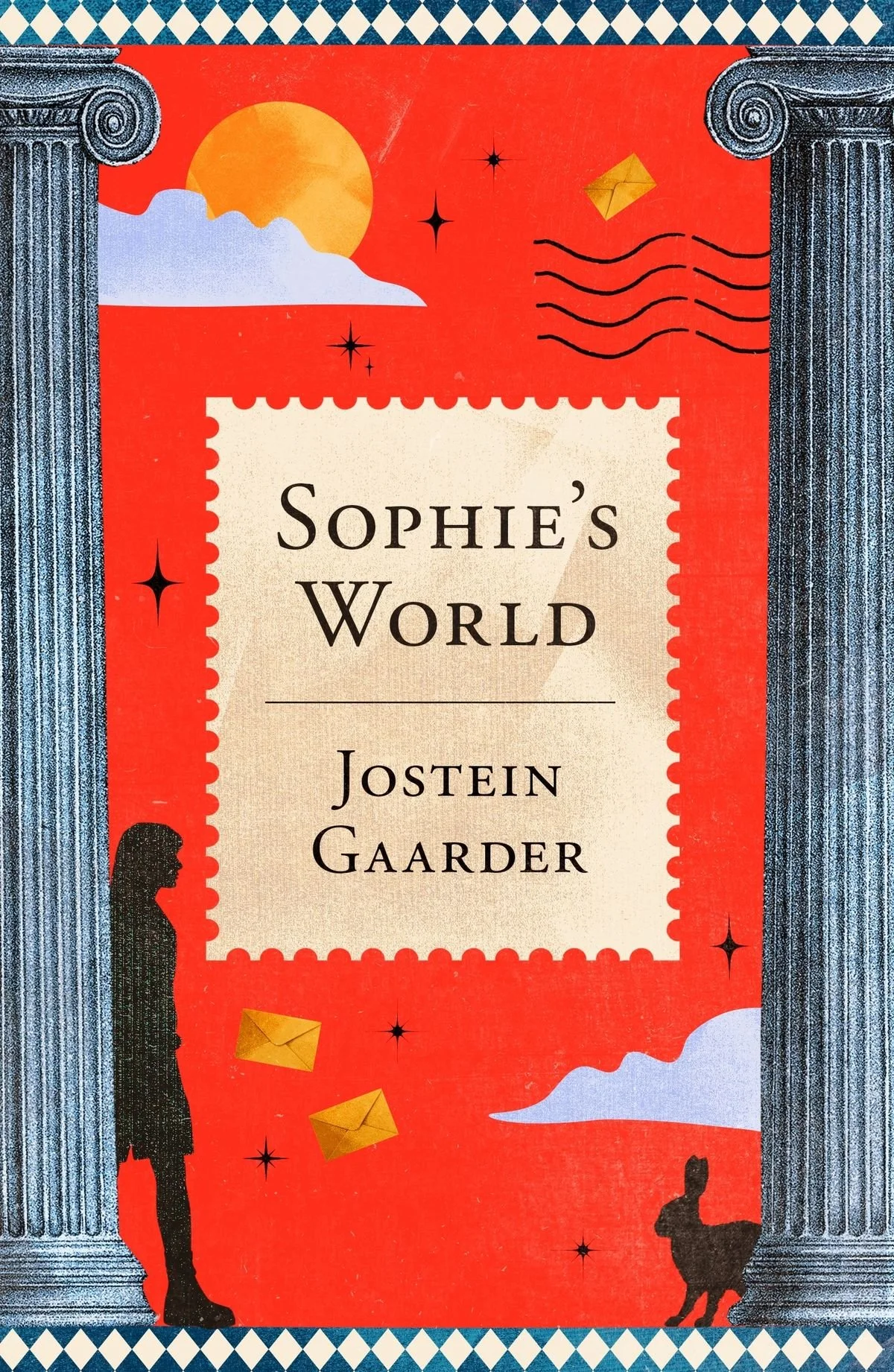
If there’s one book I wish had gate-crashed my teenage years, it’s Sophie’s World by Jostein Gaarder. Part coming-of-age novel, part crash course in the history of Western philosophy, it’s the kind of “children’s book” that quietly rearranges your brain cells. On the surface, it’s a mystery about a Norwegian girl receiving strange letters; underneath, it’s a gentle ambush into big questions about existence, reality and what on earth we’re all doing here. As introductions to philosophy go, this is less of a dusty textbook and more of a whimsical portal into wonder.
What struck me first was how readable it is, given that it casually walks you through everyone from Socrates and Plato to Kant, Hegel and Sartre. Gaarder manages to distil the history of ideas into bite-sized explanations without dumbing them down—no small feat when you’re juggling metaphysics, ethics and political philosophy in a so-called YA novel. The 20th‑anniversary edition’s new introduction hit me especially hard; it felt like being personally invited to sit at the grown-ups’ table of ideas, even if I still sometimes drop my cutlery.
Let’s be honest: Sophie’s World is not a dainty little novella you toss into your tote for a light commute. It’s hefty—over 500 pages—and at times the philosophical theories come thick and fast. I’ll admit there were chapters when my brain politely checked out and went for a walk. But that’s precisely why I know I’ll reread it, this time armed with a pen, a notebook and less hubris. It’s the sort of book that promises new layers with each return, particularly if you’re interested in critical thinking, ethics and how philosophy shapes art, science and politics.
“An all-important principle in the study of ethics has been the golden rule, otherwise known as the reciprocity principle: Do to others what you would like them to do to you. Over time, we have learnt to apply this rule more widely... We have begun to realise that the reciprocity principle applies across time too: Do to the next generation what you would like them to have done to you, had they lived on the planet before us.”
Parents might side-eye certain themes—there are moments that touch on religion, identity and the nature of reality in ways that could feel unsettling for younger teens. Personally, I’d argue that by the time a reader can tackle this book, they’re already developing the critical thinking skills to decide what resonates and what doesn’t. If anything, Sophie’s World models how to question everything, including itself, which is probably the safest form of intellectual rebellion you could hand to an impressionable mind.
Reading it took me right back to the accidental introductory philosophy course I once took at university, the one that blindsided me more than any physics lesson on Copernicus ever did. Discovering rigorous arguments for why morality matters—and equally rigorous ways to detect sneaky, emotionally loaded nonsense—felt like finding the cheat codes to adult life. Compared with punchier, more pessimistic modern reads like Everything is F*cked, Gaarder’s approach is quieter, more curious. Instead of screaming that the world is broken, Sophie’s World simply keeps asking, “But what do you think?” I have a feeling I’ll be answering that question differently every time I come back to it.
This post may contain affiliate links, meaning we receive a commission when you click the links and make a purchase.
Related Posts




A missing girl, a one‑legged cop and a town built on secrets—this haunting Texas thriller quietly moved into my head and refused to leave.