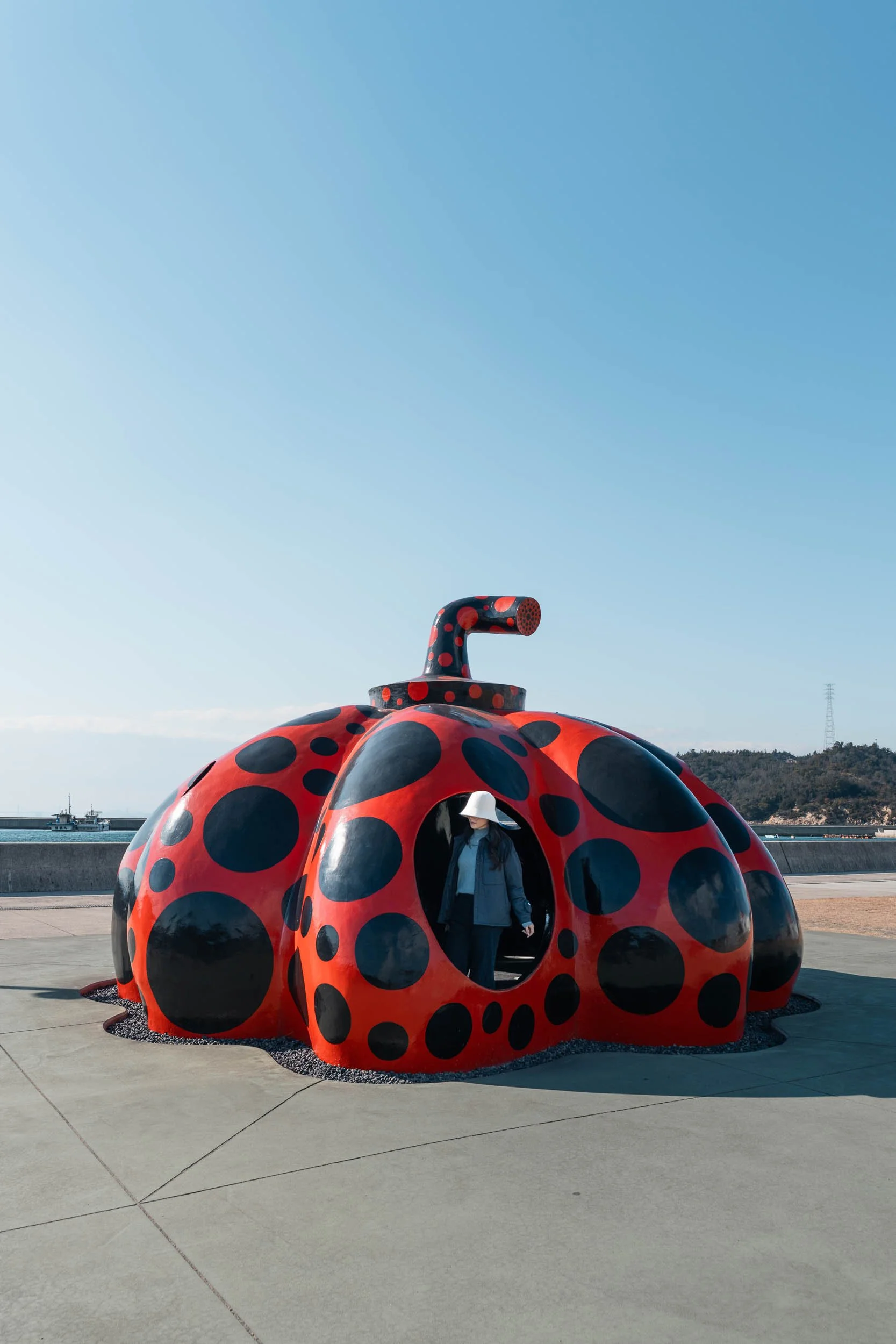
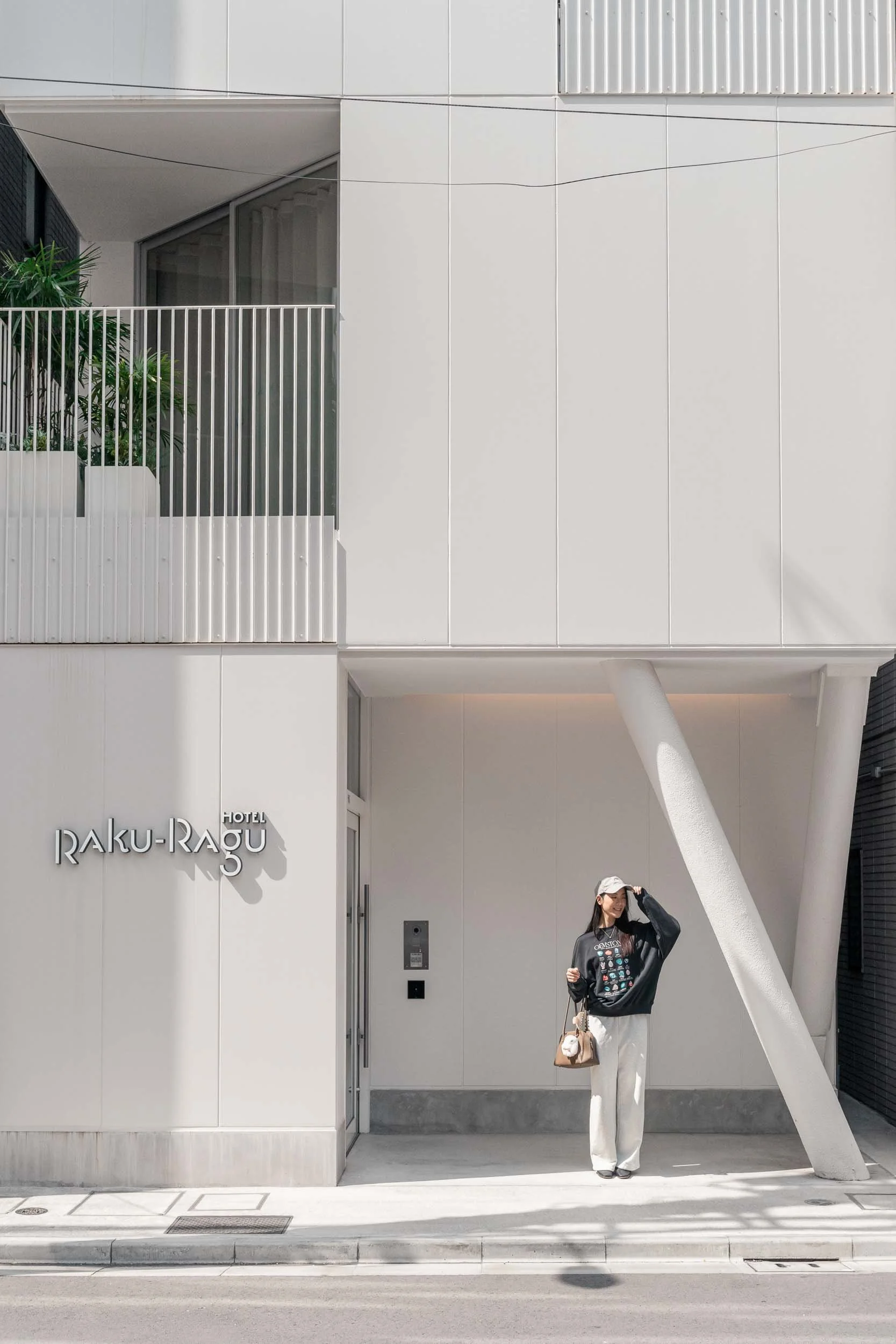
The Complete Guide to Okayama City: The Land of Sunshine and Peaches
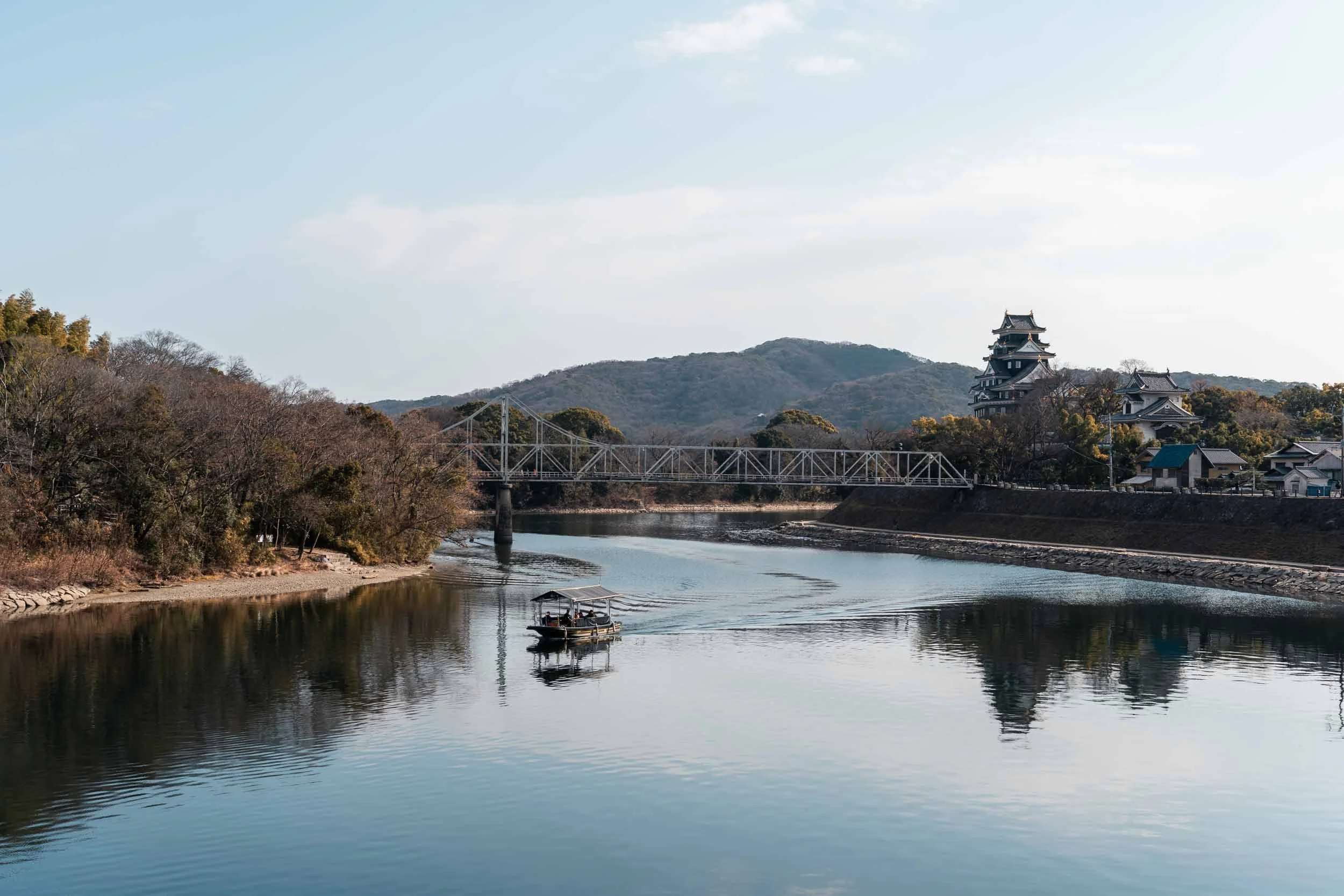
Before it was established as a city, Okayama was an essential political and economic centre during the Sengoku period, particularly under the rule of the Ukita clan. Following the Meiji Restoration in 1868, Okayama became the capital of Okayama Prefecture and underwent significant development, marked by the establishment of railroads and educational institutions. The city suffered extensive damage during World War II, which destroyed much of the urban area, but Okayama experienced rapid economic growth and urban development afterwards.
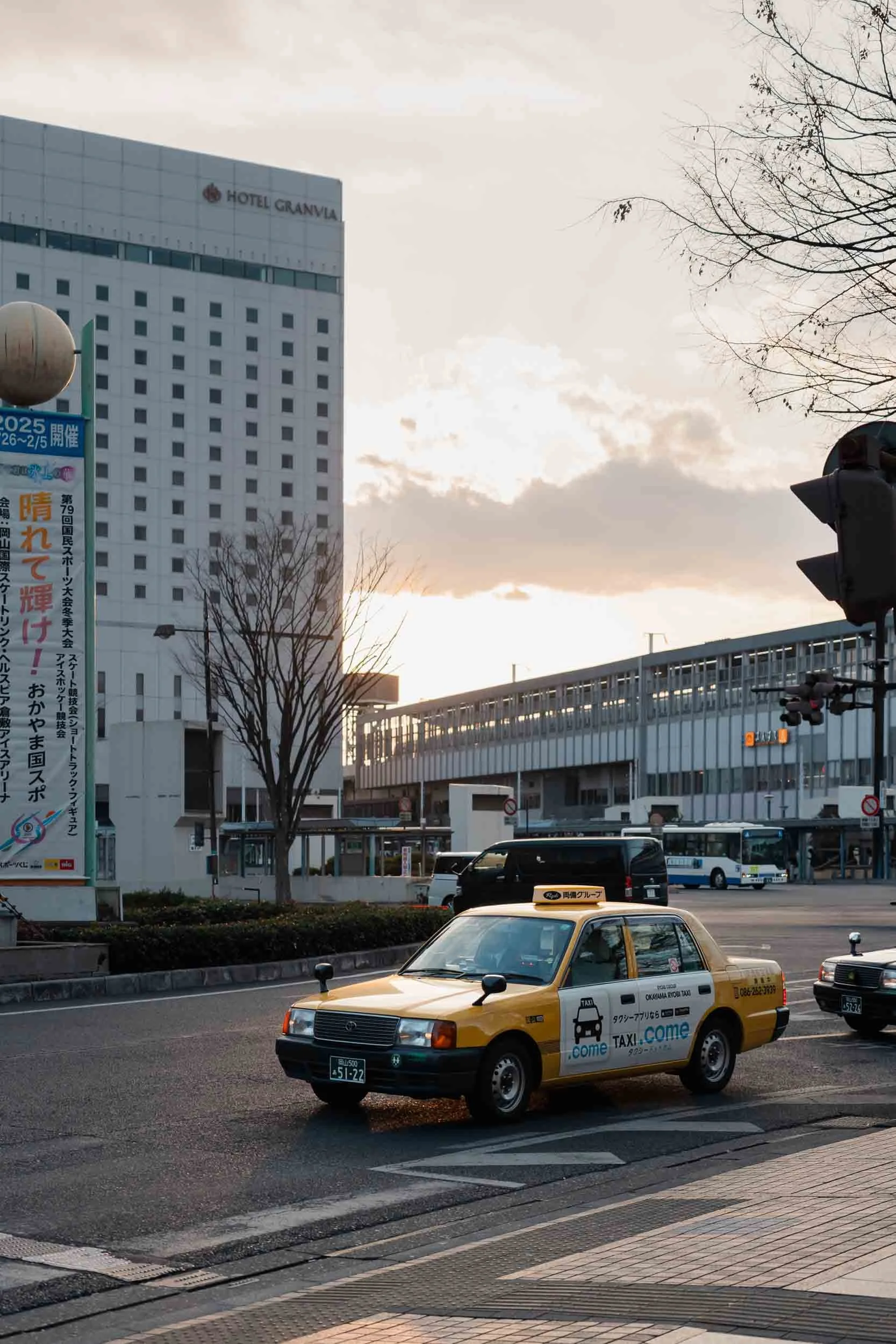

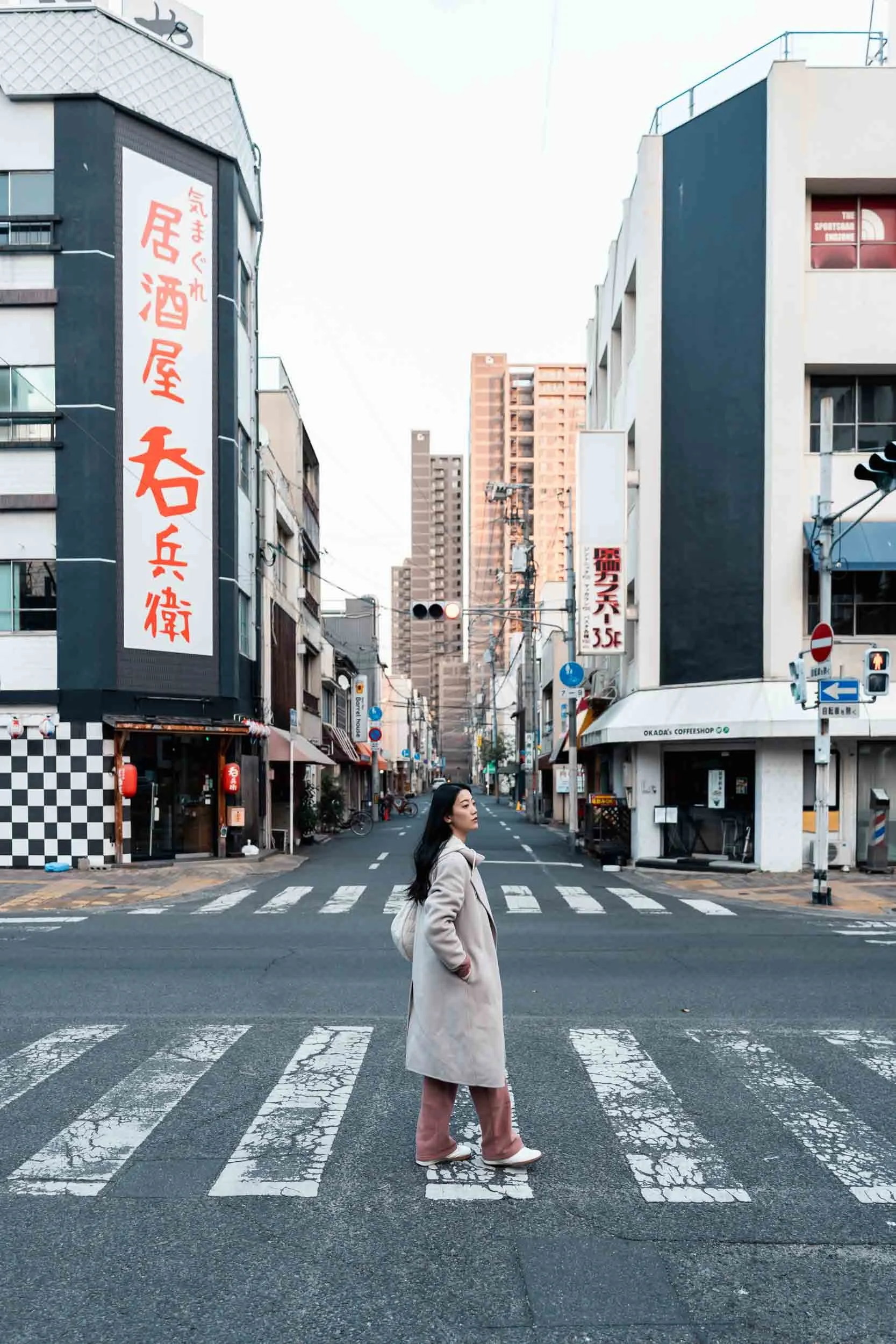
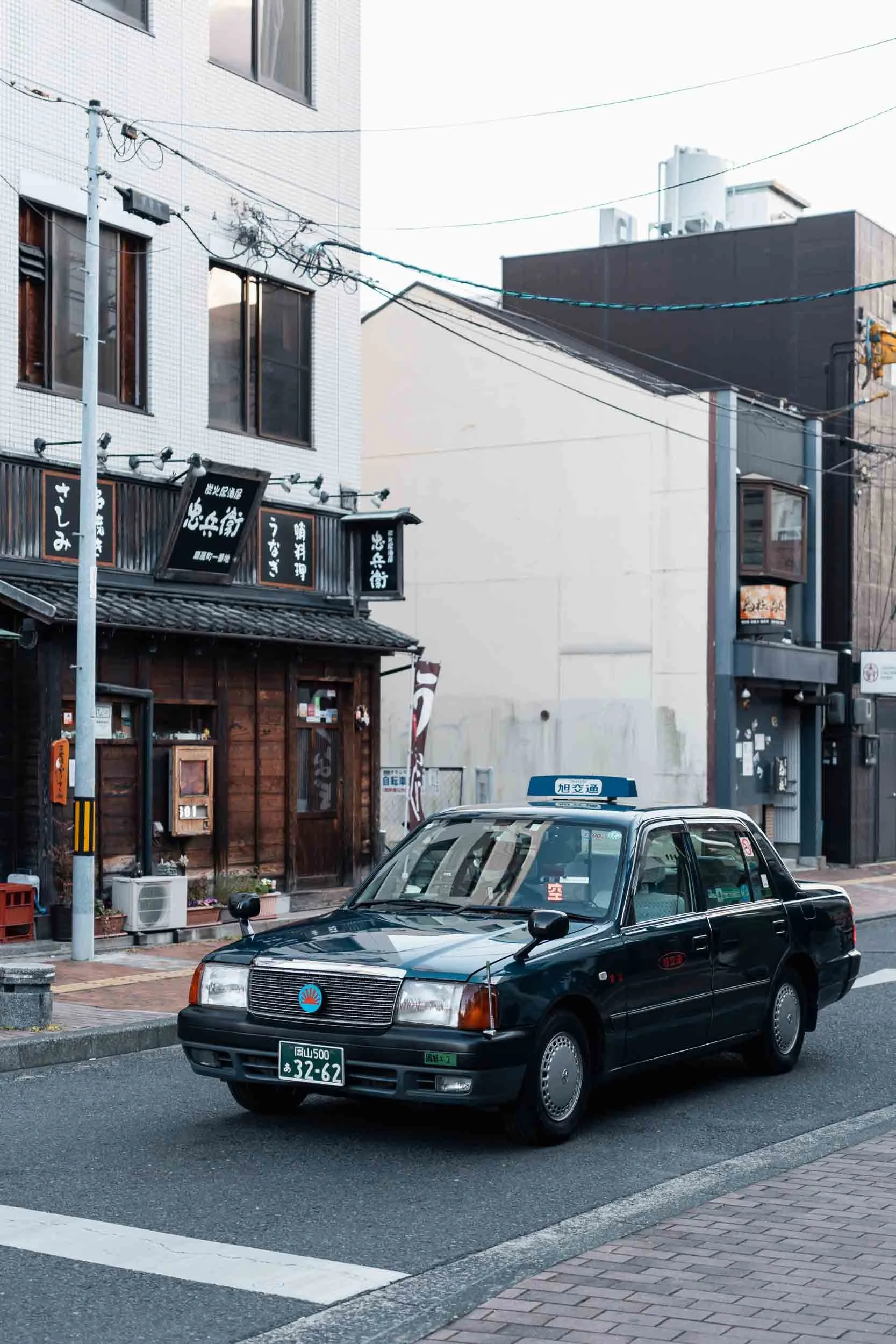
Okayama is situated on the Okayama Plain, bordered by the Asahi and Yoshii rivers, and is known for its mild climate and the most rain-free days in Japan. Often overshadowed by its more illustrious neighbours, Okayama is a significant economic hub in the Chūgoku region, with a focus on agriculture, manufacturing, and education. It’s a place where the sweetness of life is celebrated, as the city is known for producing fruits, particularly peaches and grapes, and is home to the peach legend Momotaro.
Are you visiting Okayama soon?
To save you time, we’ve curated a digital map on the best places to see, eat, shop and stay at.
Contents
-
-
-
-
-
-
Super Hotel Okayama Station East-Gate
Dormy Inn Okayama
ANA Crowne Plaza Okayama
VIA INN OKAYAMA
Hotel Granvia Okayama
Getting to Okayama
By Shinkansen (Bullet Train)
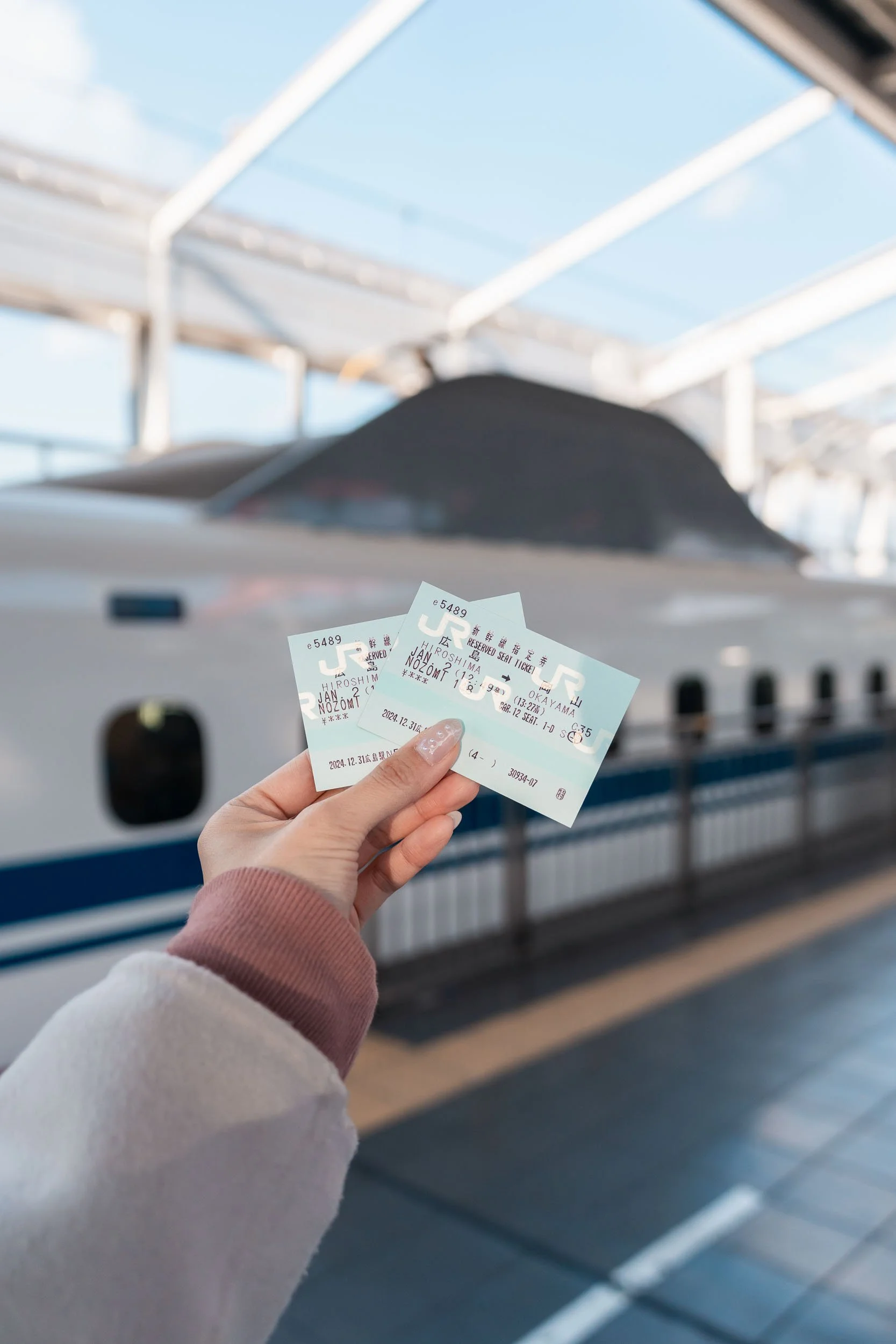
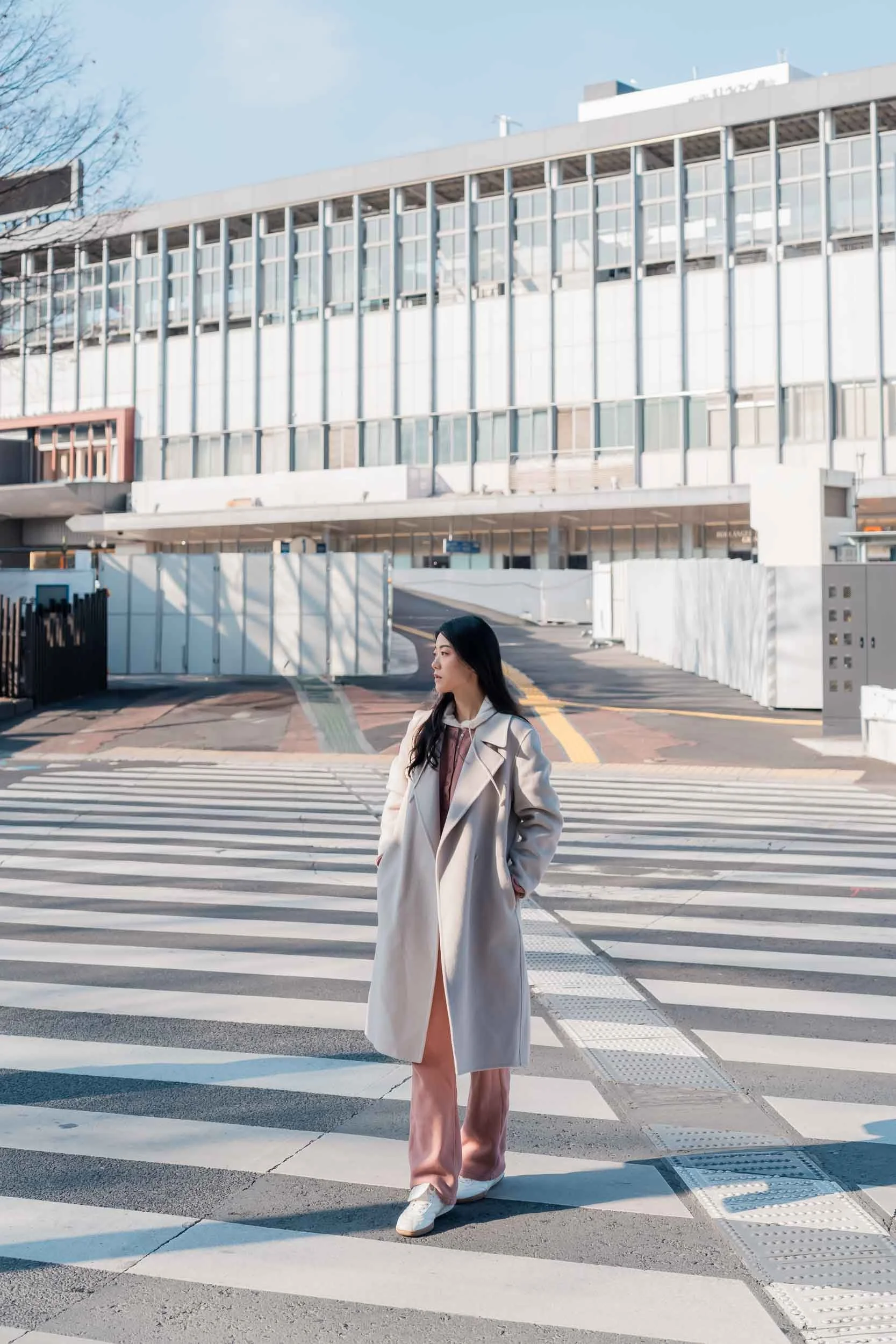
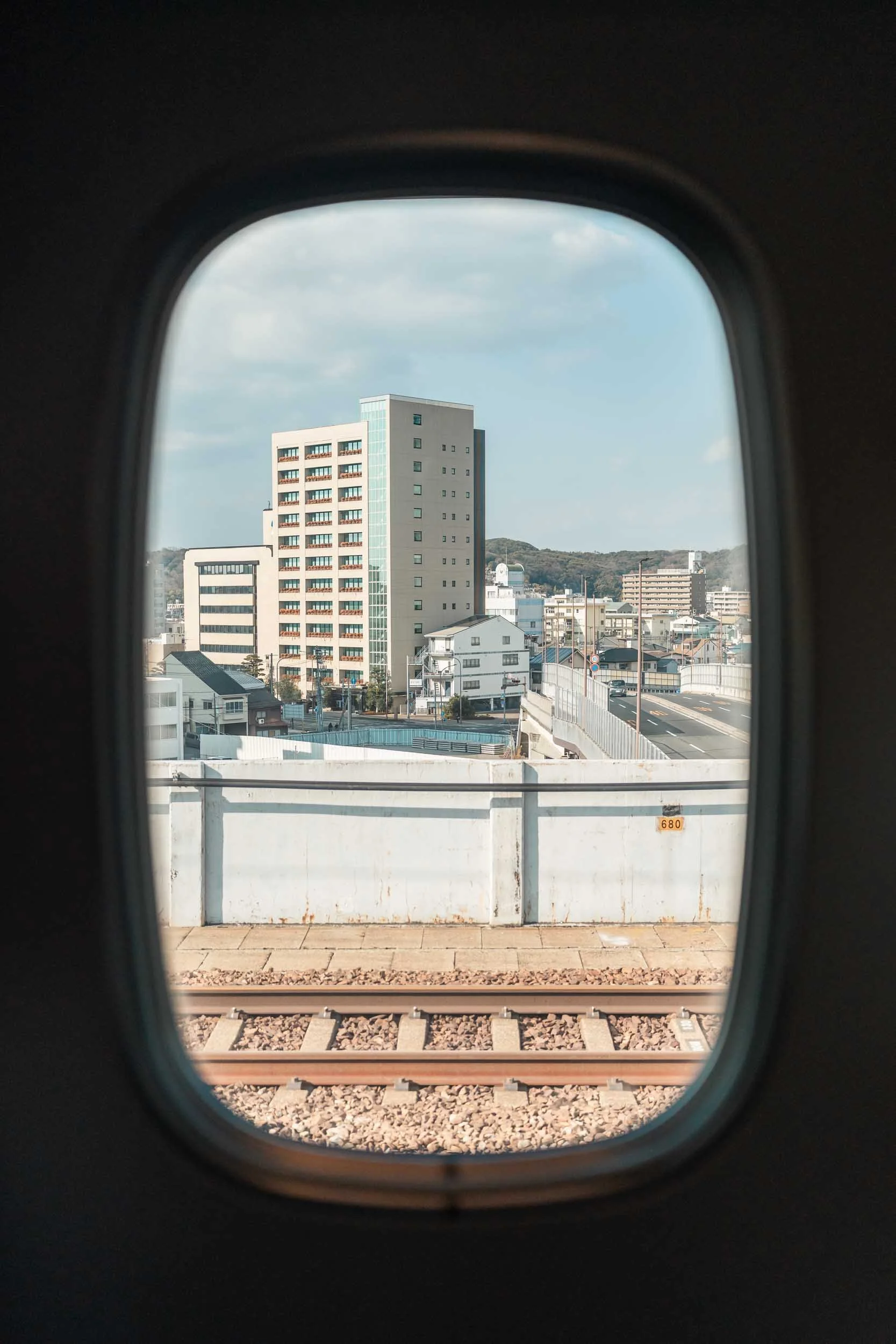

Okayama Station is a major stop on the JR Tokaido and Sanyo Shinkansen lines. From Tokyo, it takes approximately 3.5 to 4 hours. The Japan Rail Pass covers the trip if you take a Hikari train, although a supplement fee applies for Nozomi trains.
From Osaka or Hiroshima, the journey is shorter—about 45 minutes from Osaka and 35 minutes from Hiroshima—making Okayama an ideal day-trip or overnight destination.
By Air
Okayama Momotaro Airport (OKJ) offers domestic flights mainly from Tokyo’s Haneda Airport, with a flight duration of approximately 75 minutes. An airport limousine bus connects the airport to Okayama Station Nishiguchi in about 30 minutes for 1,000 yen.
By Highway Bus
Highway buses from Osaka, Hiroshima, and Takamatsu also serve Okayama, offering a budget-friendly alternative, though slower than the train. Most regional buses run from the Okayama Station Nishiguchi (岡山駅西口) at the west exit of the train station.
Getting Around Okayama
By Tram/Streetcar
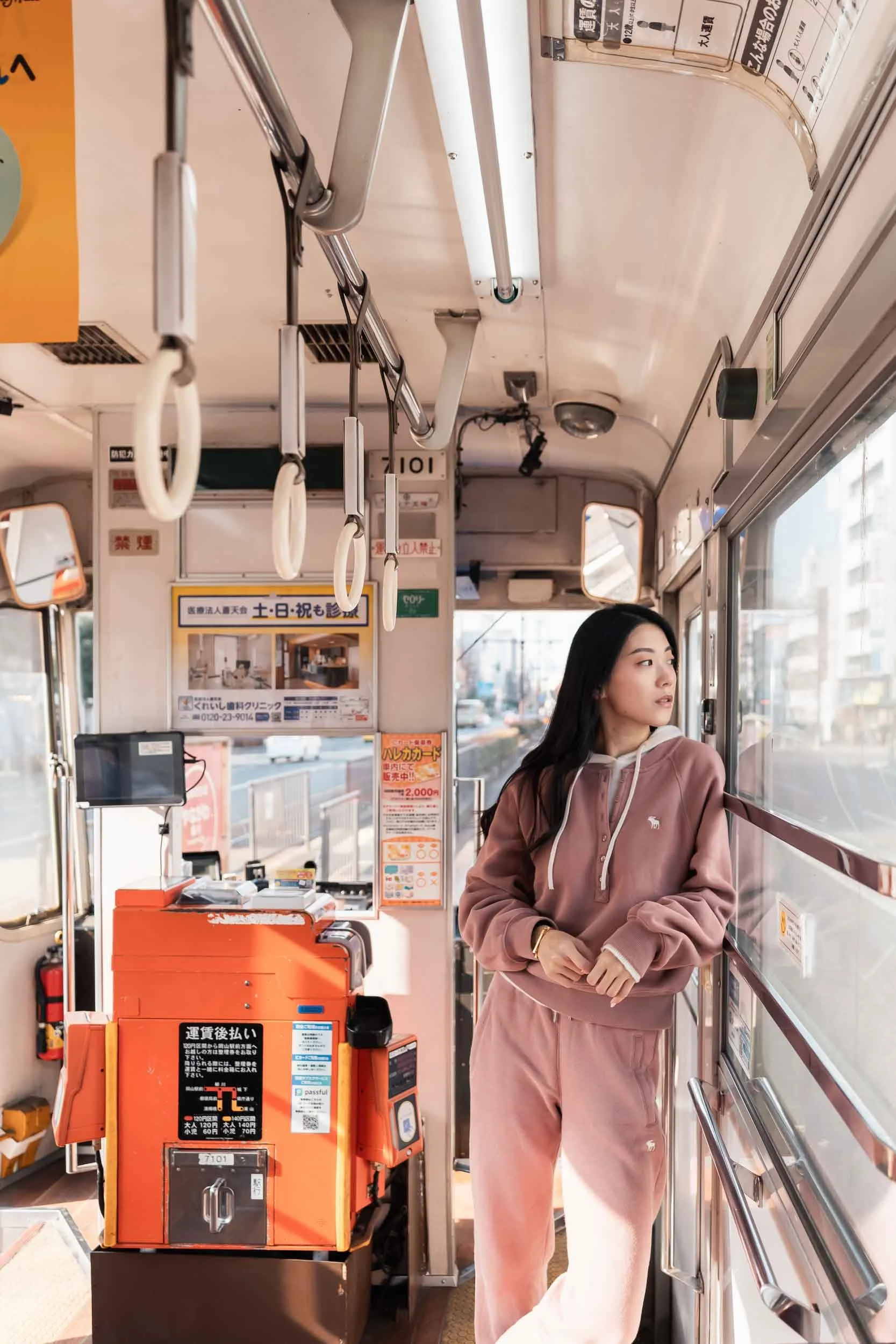
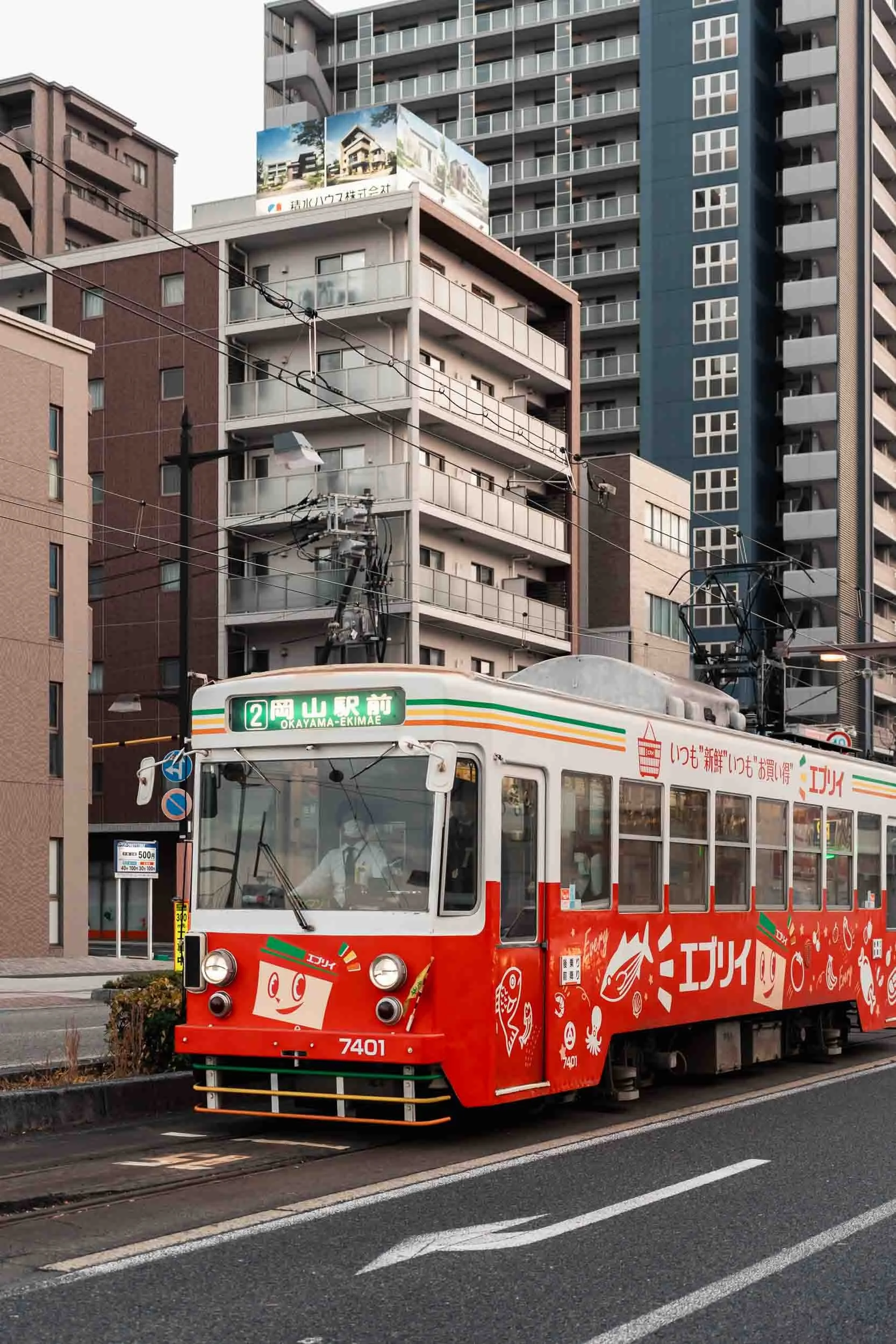
The city operates a tram network with only two straightforward tram lines, both starting from Okayama-Ekimae (岡山駅前) in front of the train station:
Line 1 for Higashiyama (東山) runs southeast across the river
Line 2 for Sekibashi (清輝橋) runs south, terminating at a peculiar intersection with a pentagon-shaped pedestrian walkway
A flat fare applies for rides within the city centre, and riders can easily pay with an IC card. One-day passes are also available for unlimited travel.
If you’re travelling with kids, you can also check out the themed Chuggington tram, designed to resemble Brewster (blue and yellow) and Wilson (red) from the series. There’s a premium fare for the one-hour ride with reservations required, but the concept turns it into a mobile amusement park that brings a delightful experience for children. Shoes are not allowed on board, so children can play on the floor.
By Bus
Local buses operate throughout the city, covering areas that trains and trams don’t reach. I find a dizzying number of local buses running from the east exit of the train station, so if that’s where you’re departing from, check carefully ahead of time. However, once you figure that out, the bus system is user-friendly with English signage on main routes.
By Bicycle
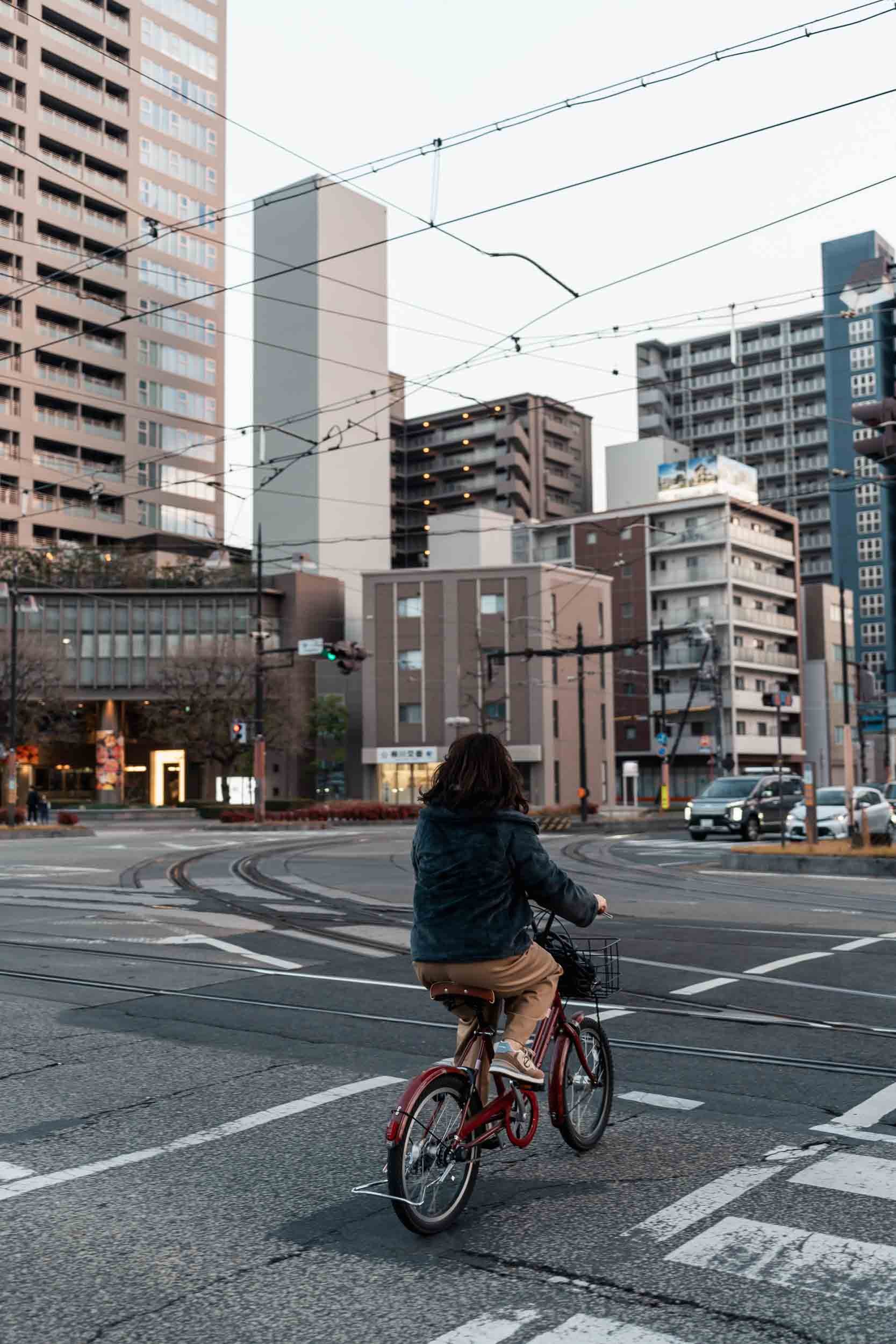
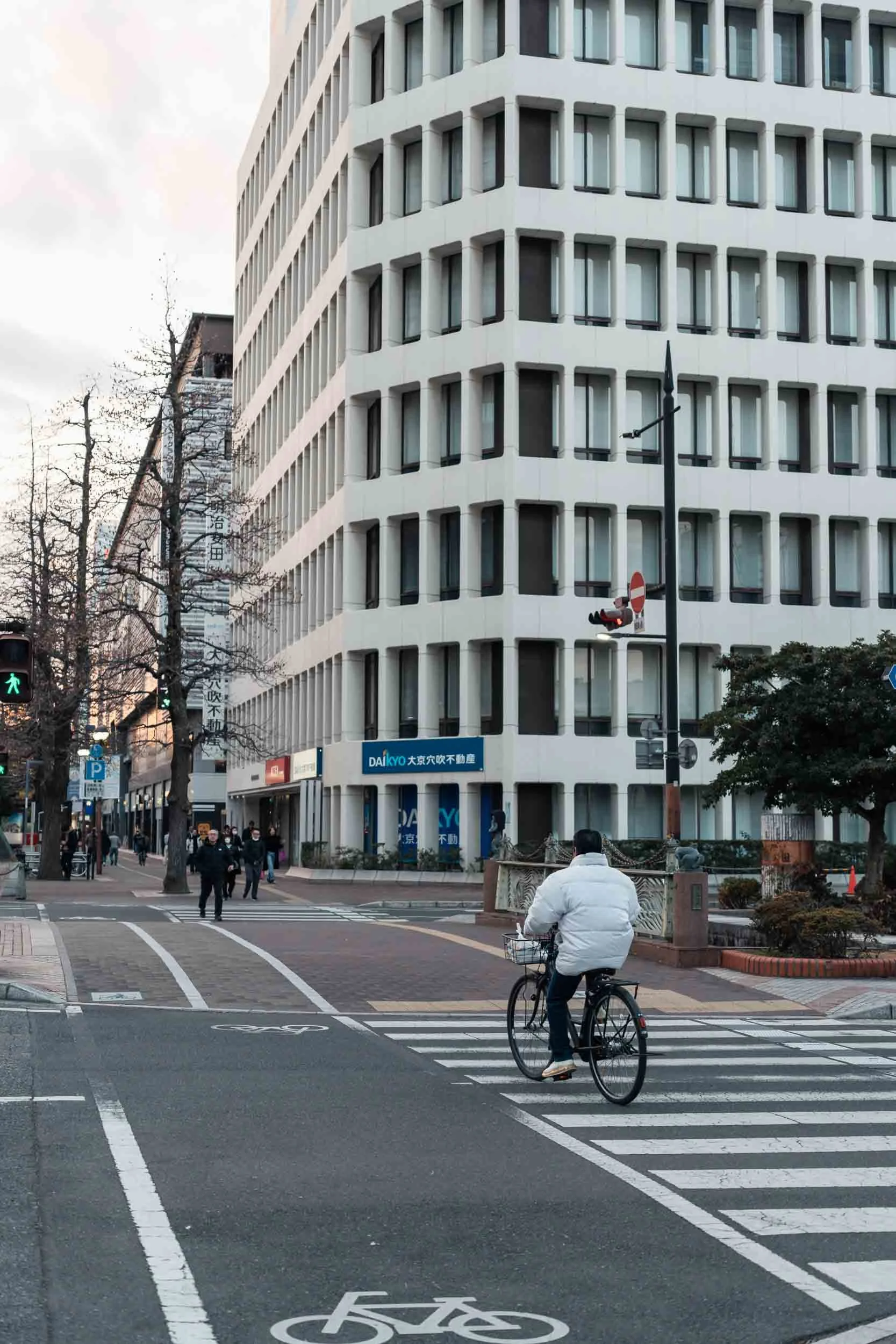
Okayama City’s terrain is flat, with fairly wide streets, which make cycling a pleasant way to explore at your own pace. The city features a rental bike system called MOMOchari (ももちゃり). Over 30 bicycle docks are dotted on the river's left, with several locations readily available near both train station exits. Rentals cost 100 yen per use, plus an additional 100 yen per 30 minutes when the rental exceeds 60 minutes. Registration is required for first-time users, and the machines take IC cards.
What to See and Do
Kōrakuen Garden (後楽園)
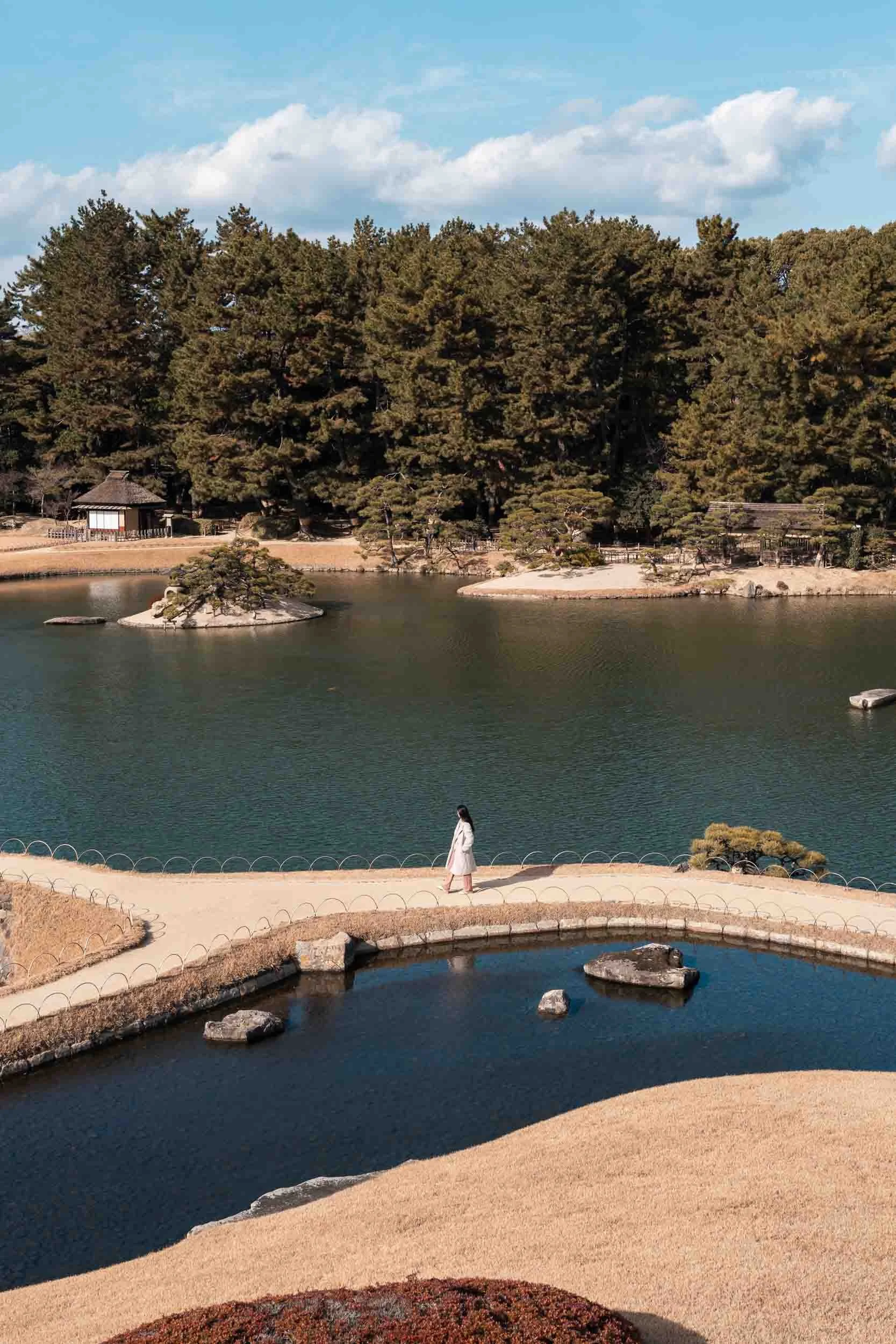
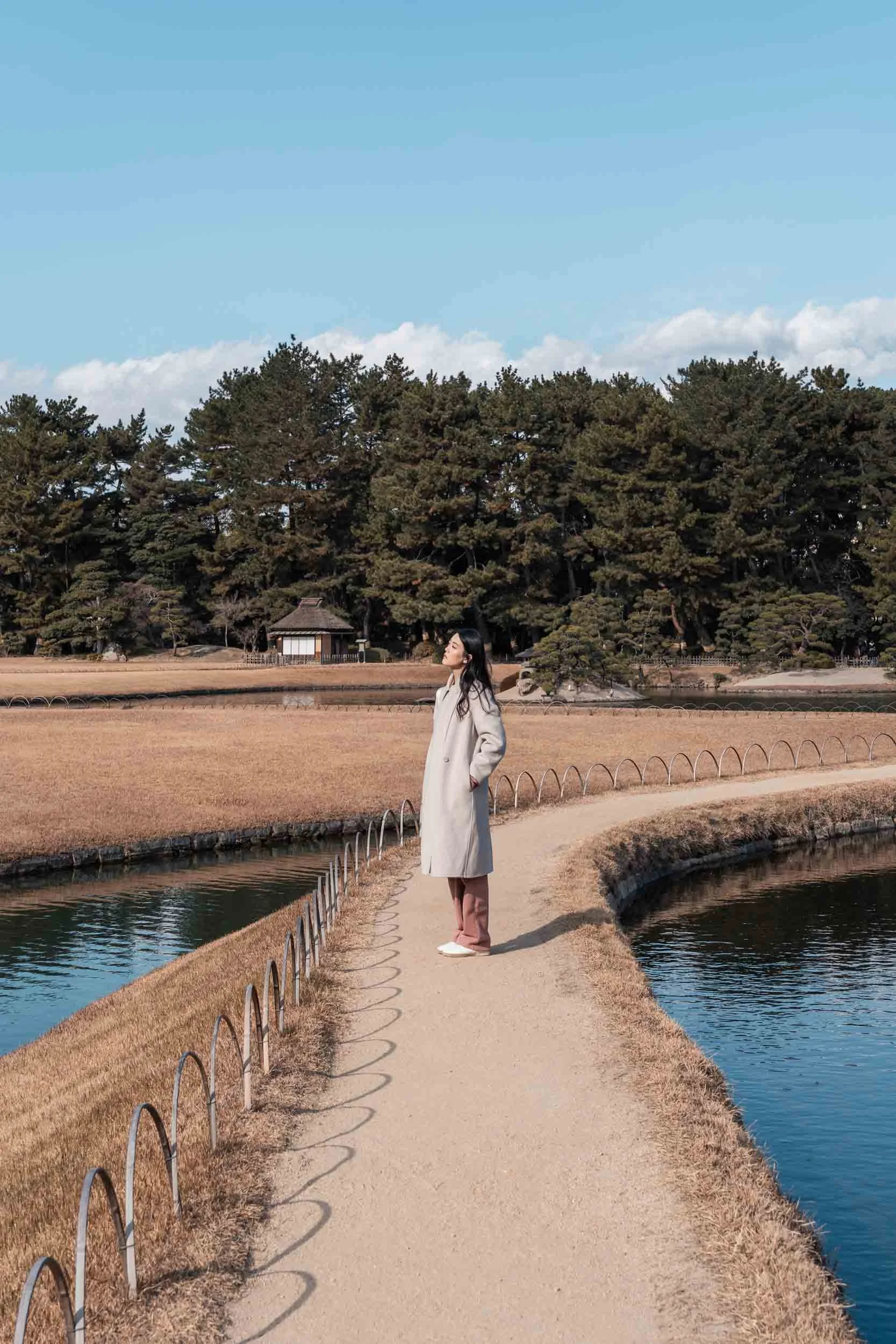
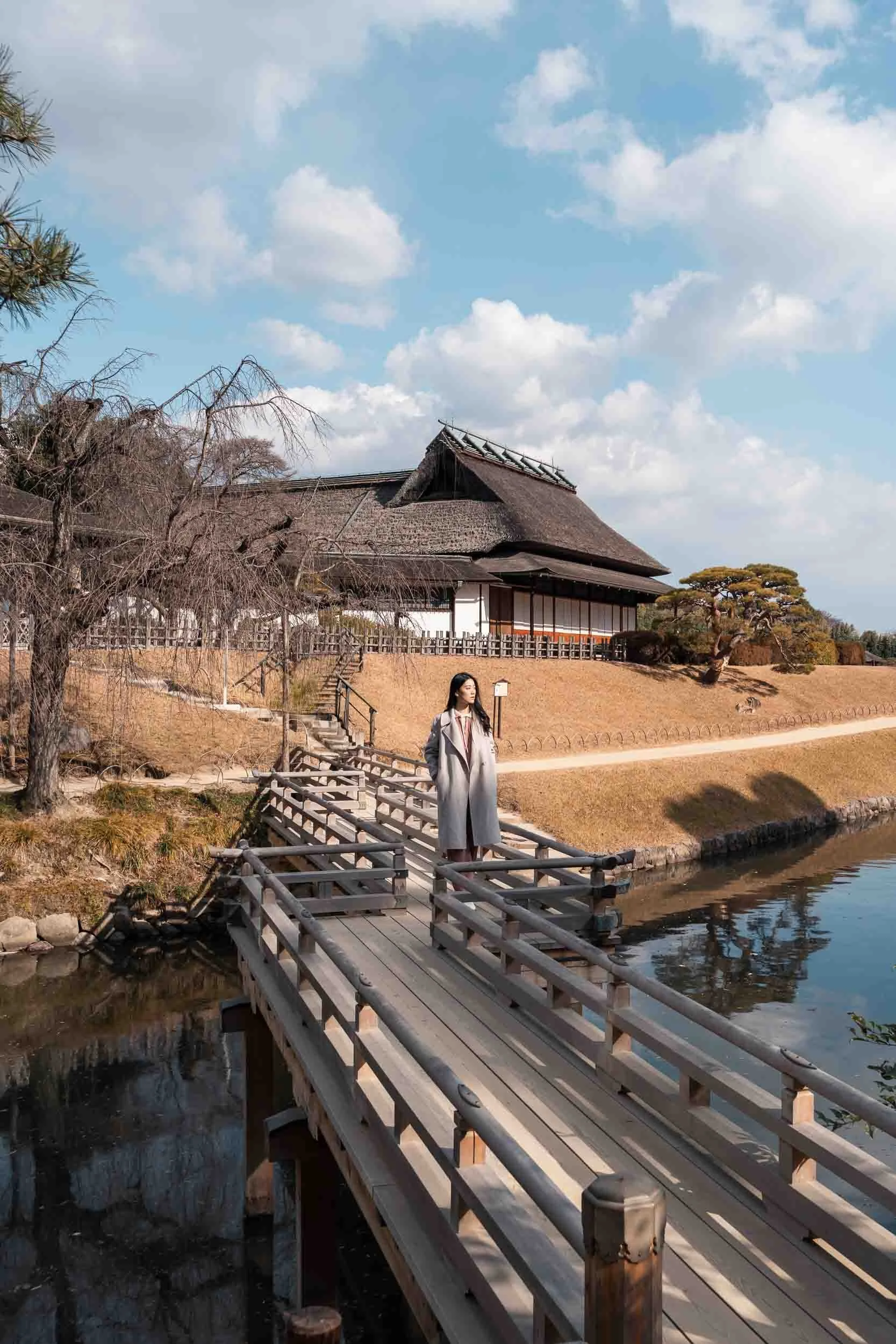
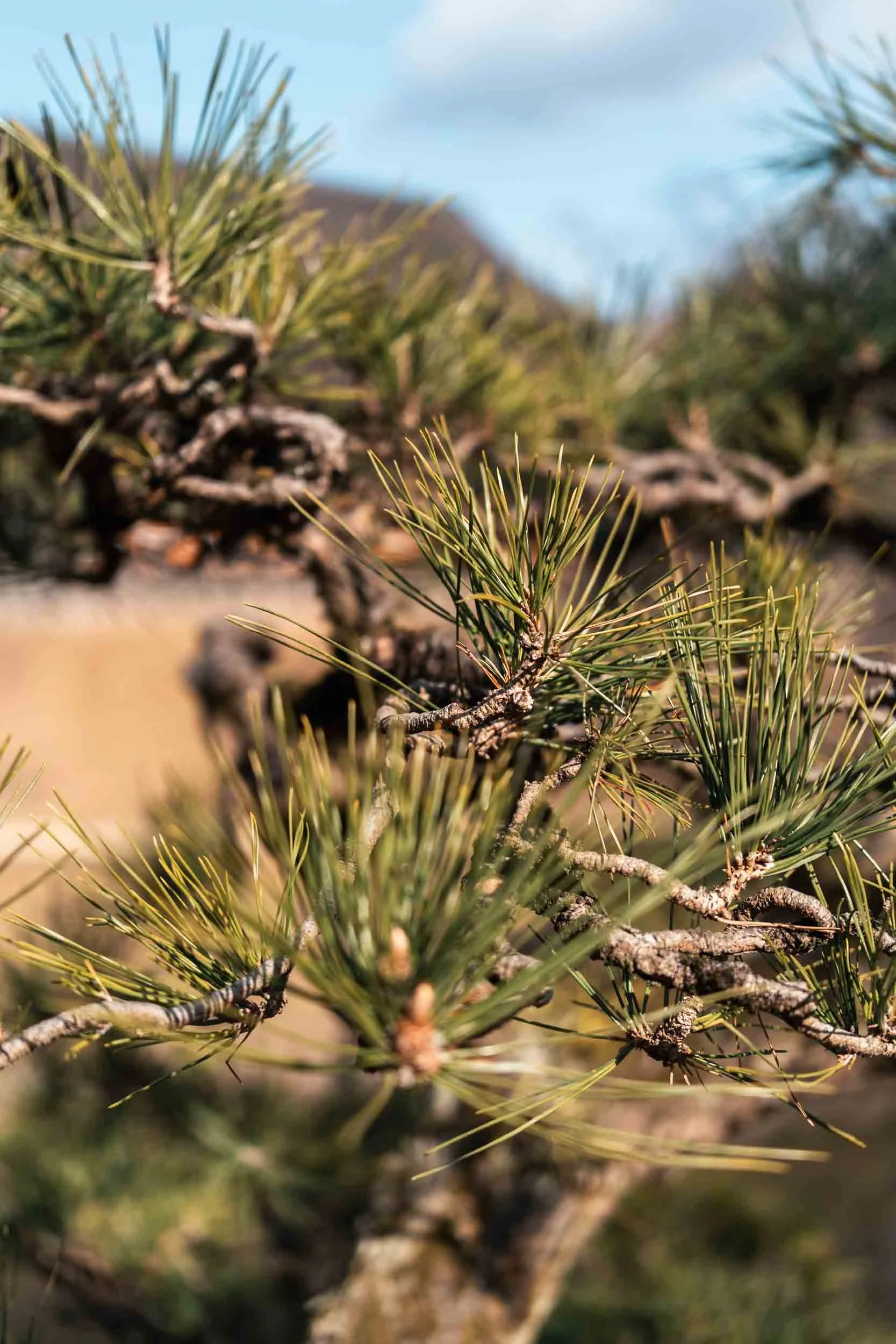
Located just across the bridge from Okayama Castle, Kōrakuen is a stunning landscape garden recognised as one of the country's three great gardens, alongside Kenrokuen (兼六園) in Kanazawa and Kairakuen (偕楽園) in Mito.
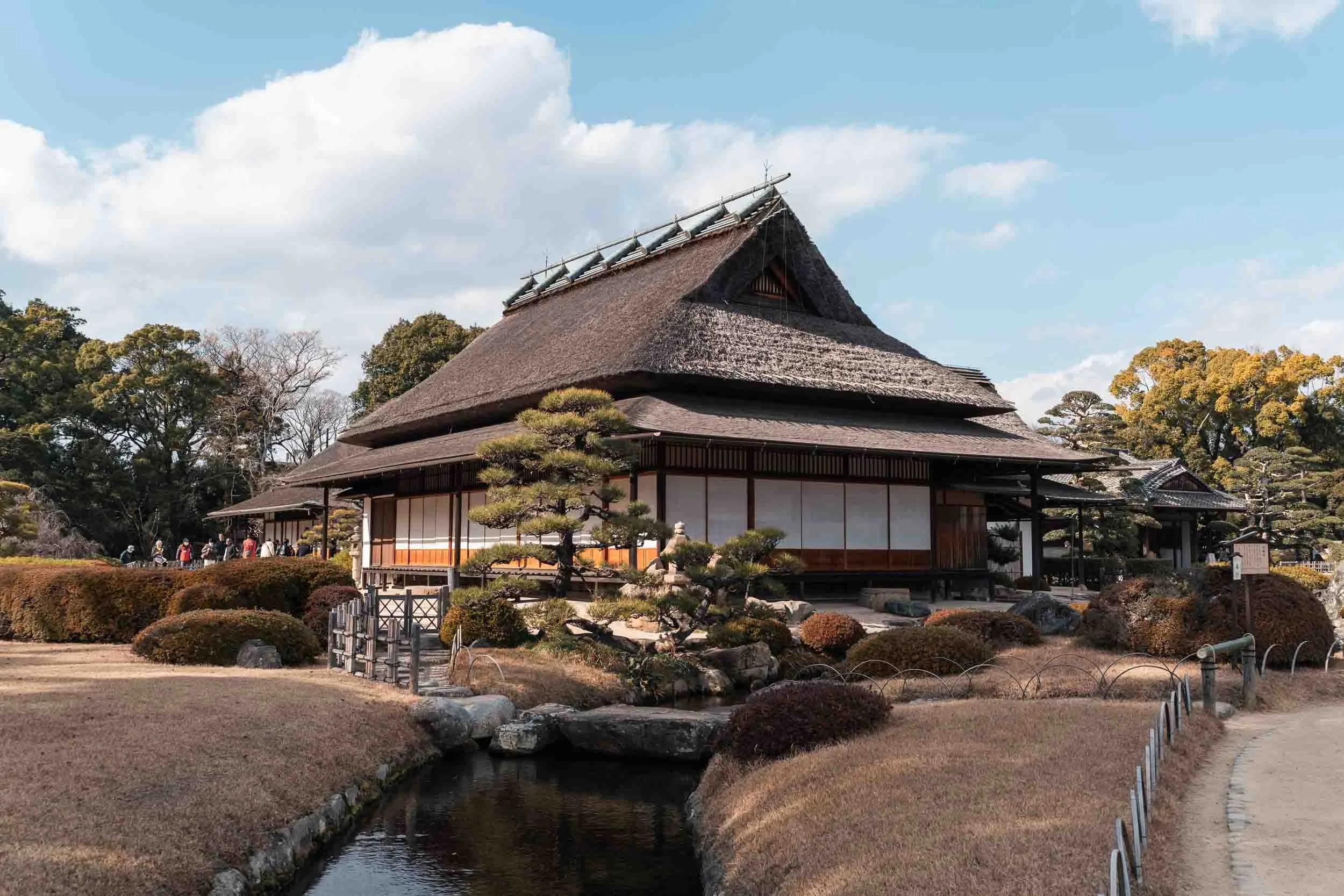
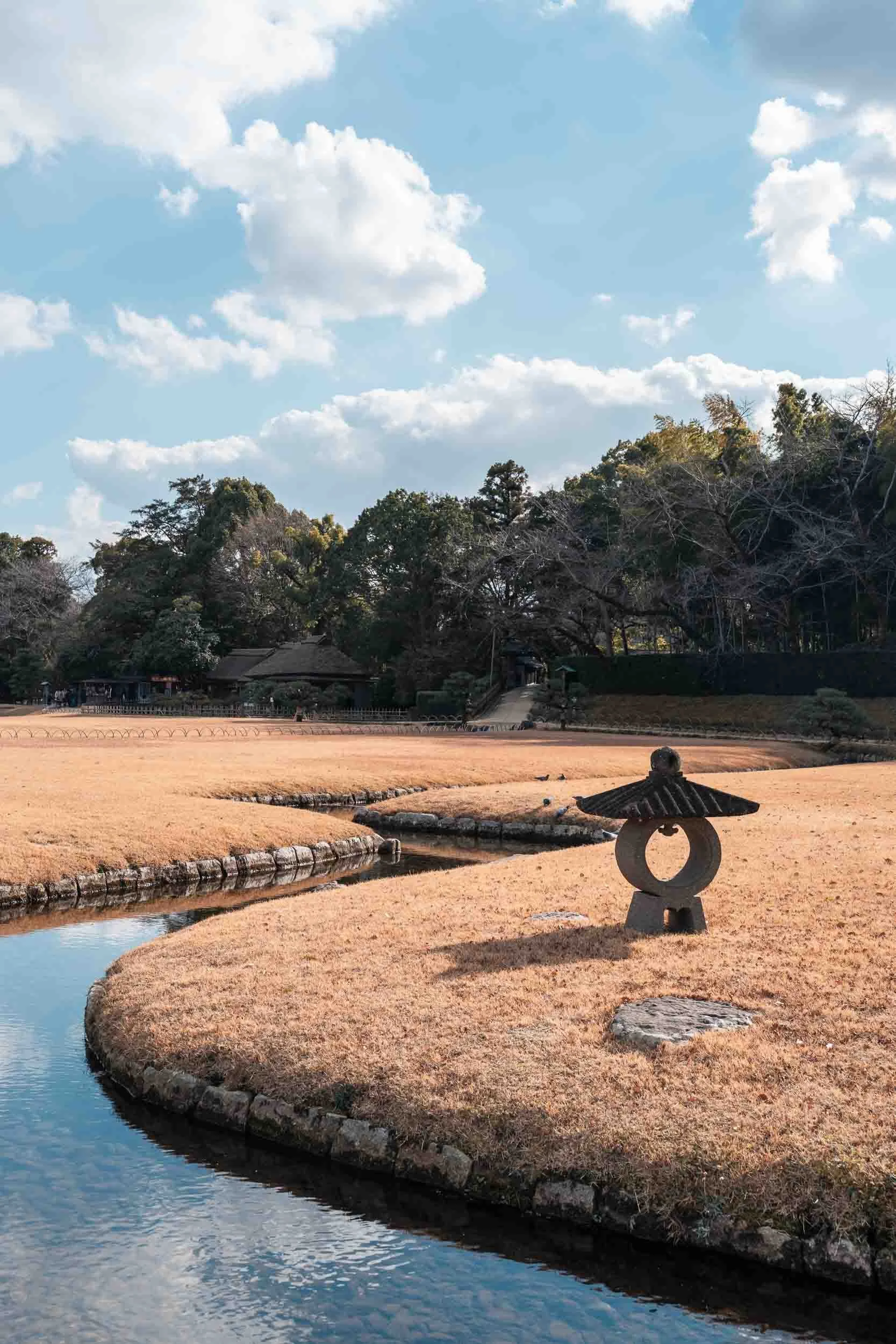
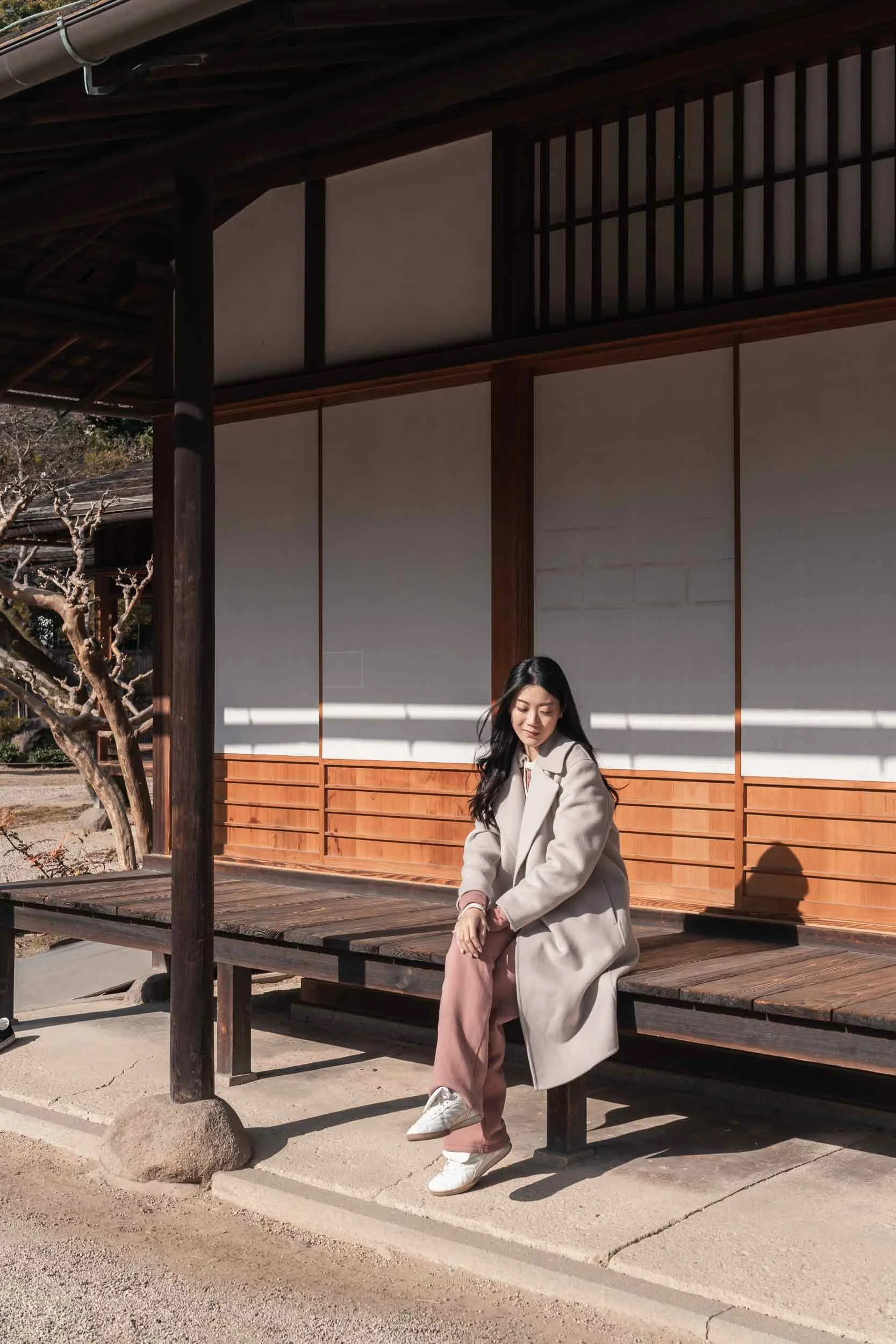
The local feudal lord, the Ikeda family, commissioned the garden in 1687 as a place for relaxation and entertainment for the ruling family and their guests, and it was opened to the public in 1884 after being transferred to Okayama Prefecture following the end of the feudal era. Korakuen has undergone several restorations due to flooding and wartime bombing, but it has been meticulously restored to maintain its original design thanks to detailed records kept by its creators.
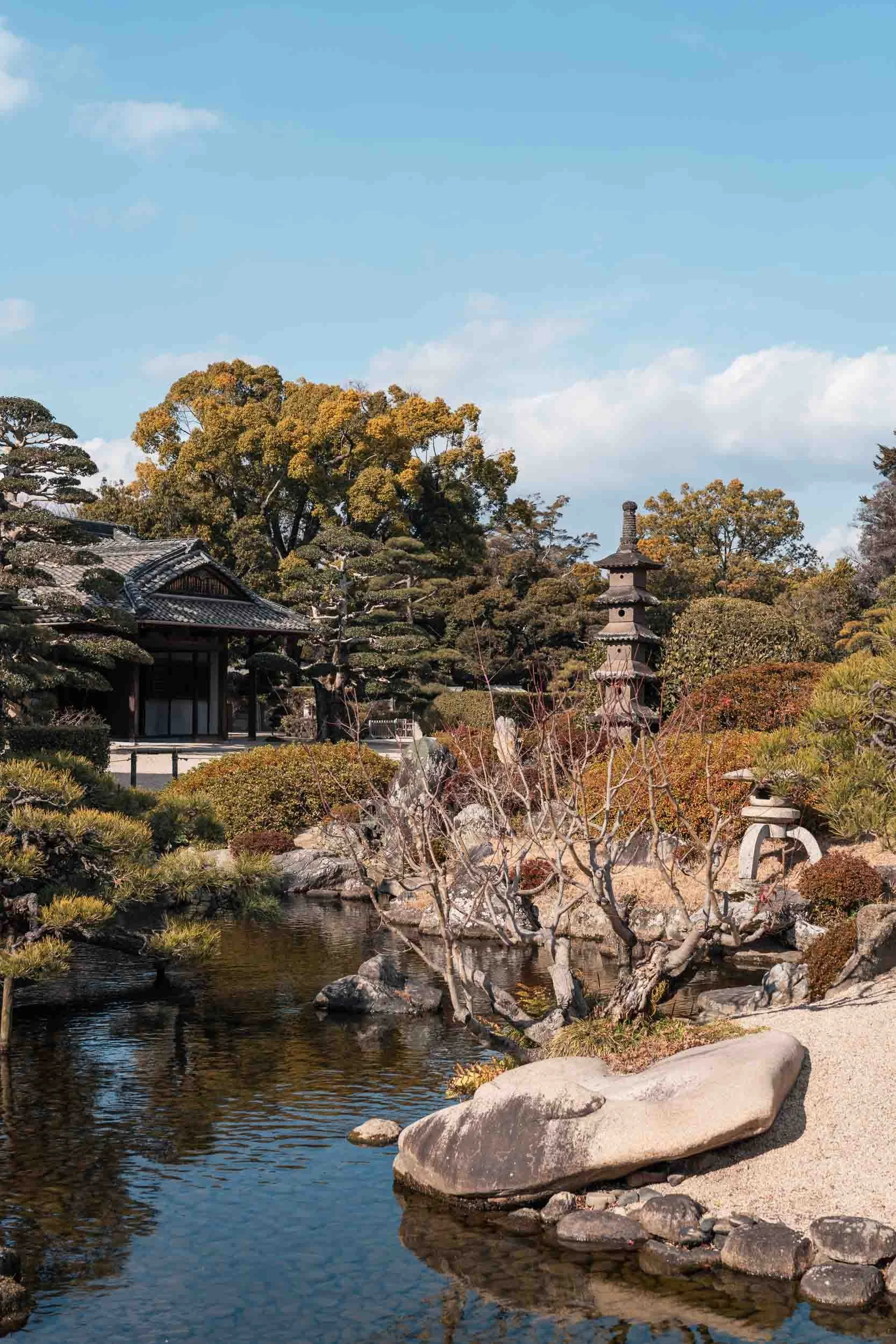
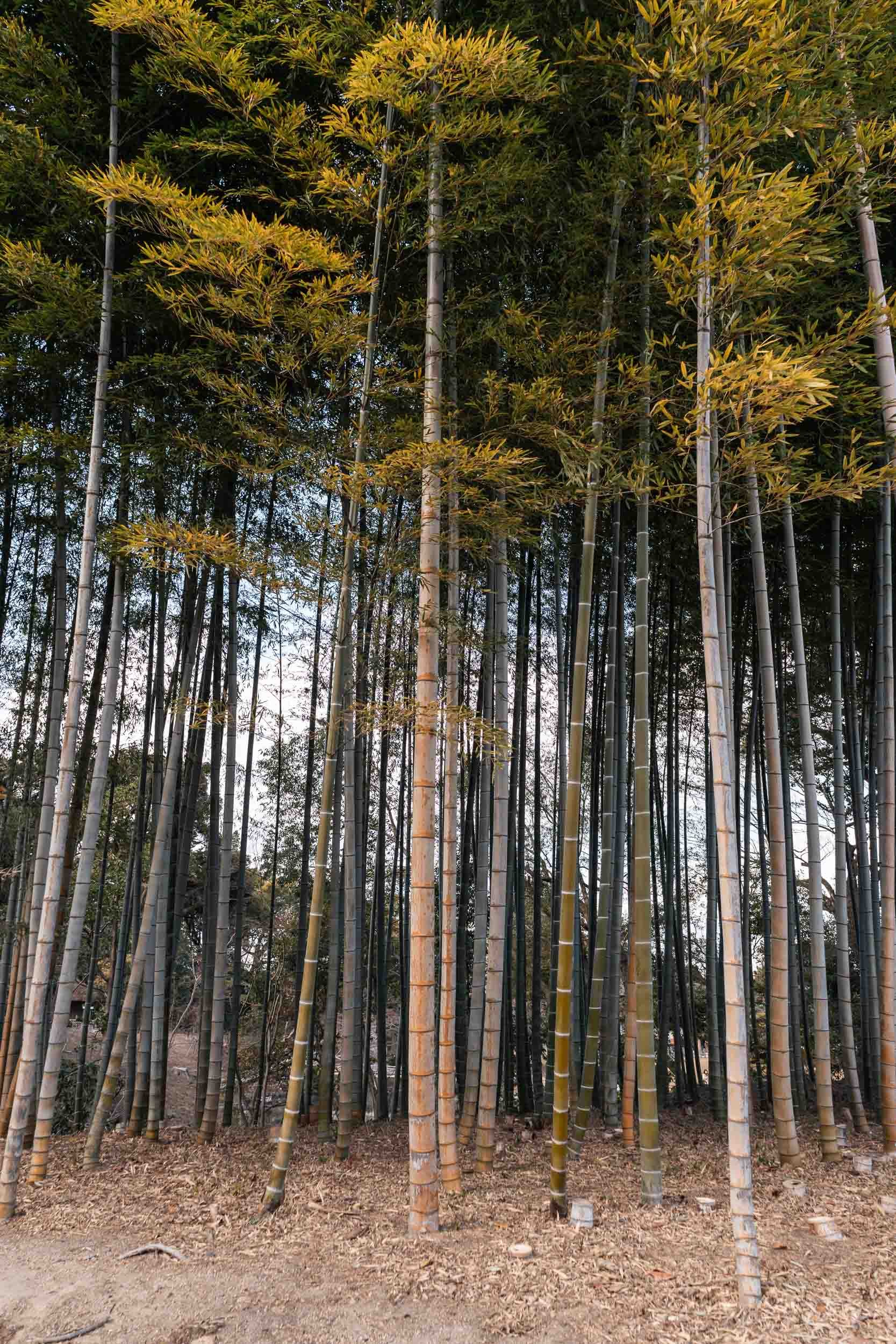
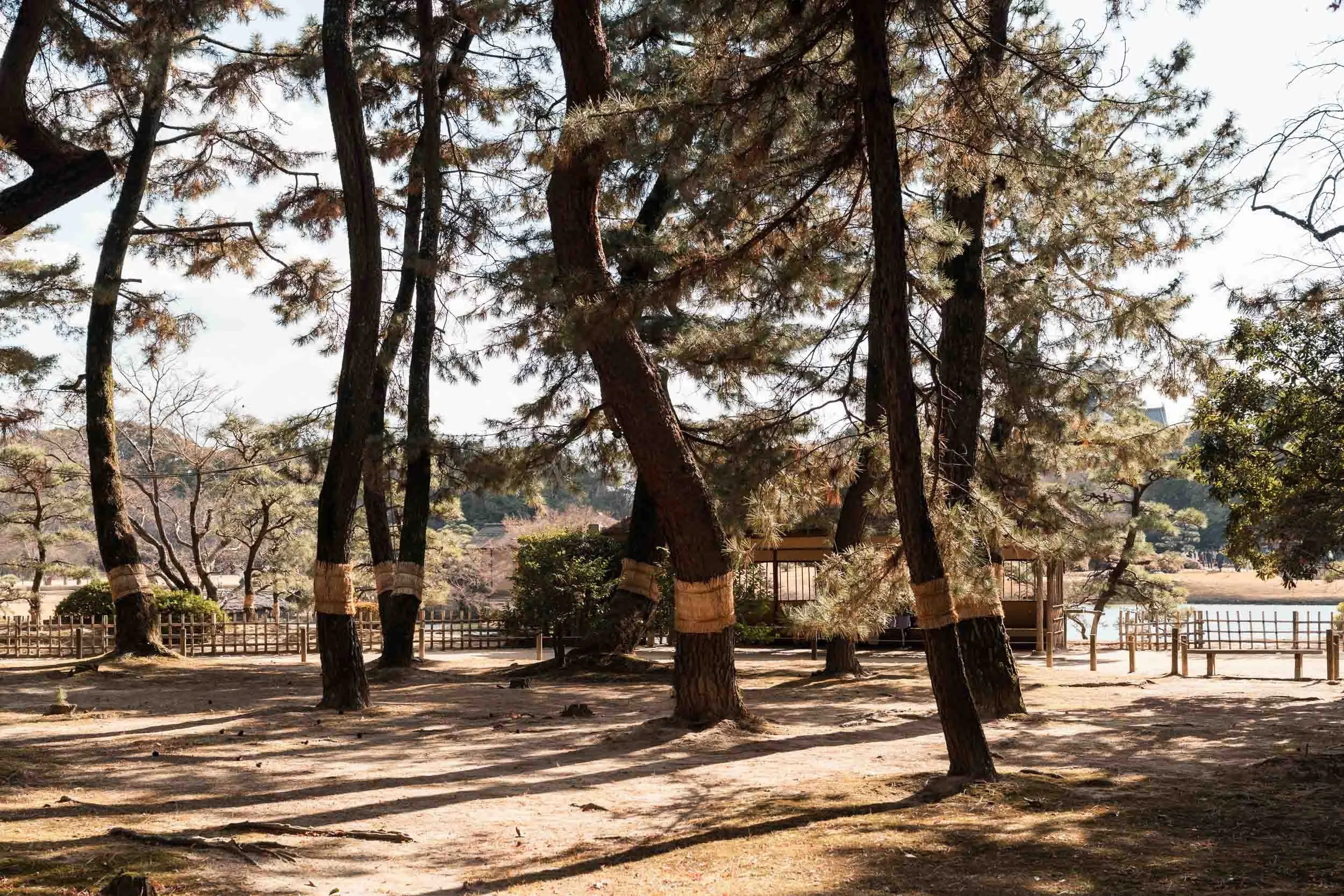
The garden spans approximately 14 hectares and features a large pond, streams, walking paths, and a hill that serves as a lookout point. Unique to Korakuen are its expansive lawns, which are rare in traditional Japanese gardens. Visitors can enjoy a variety of trees and plants, including plum, cherry, and maple trees, as well as tea and rice fields. Korakuen hosts various events throughout the year, including traditional tea ceremonies and seasonal festivals celebrating the garden's beauty and flora. Seasonal highlights include cherry blossoms in spring, wisteria in late April to early May, and vibrant autumn leaves. Outside the garden, a river cafe offers boat rentals, and in fine weather, it can be delightful to paddle up and down the river in a swan, or more amusingly, a peach!
The garden is a 10-minute walk from Shiroshita Station (城下駅). If you’re visiting Okayama Castle on the same day, opt for the bundled admission ticket with a small discount.
Okayama Castle (岡山城)
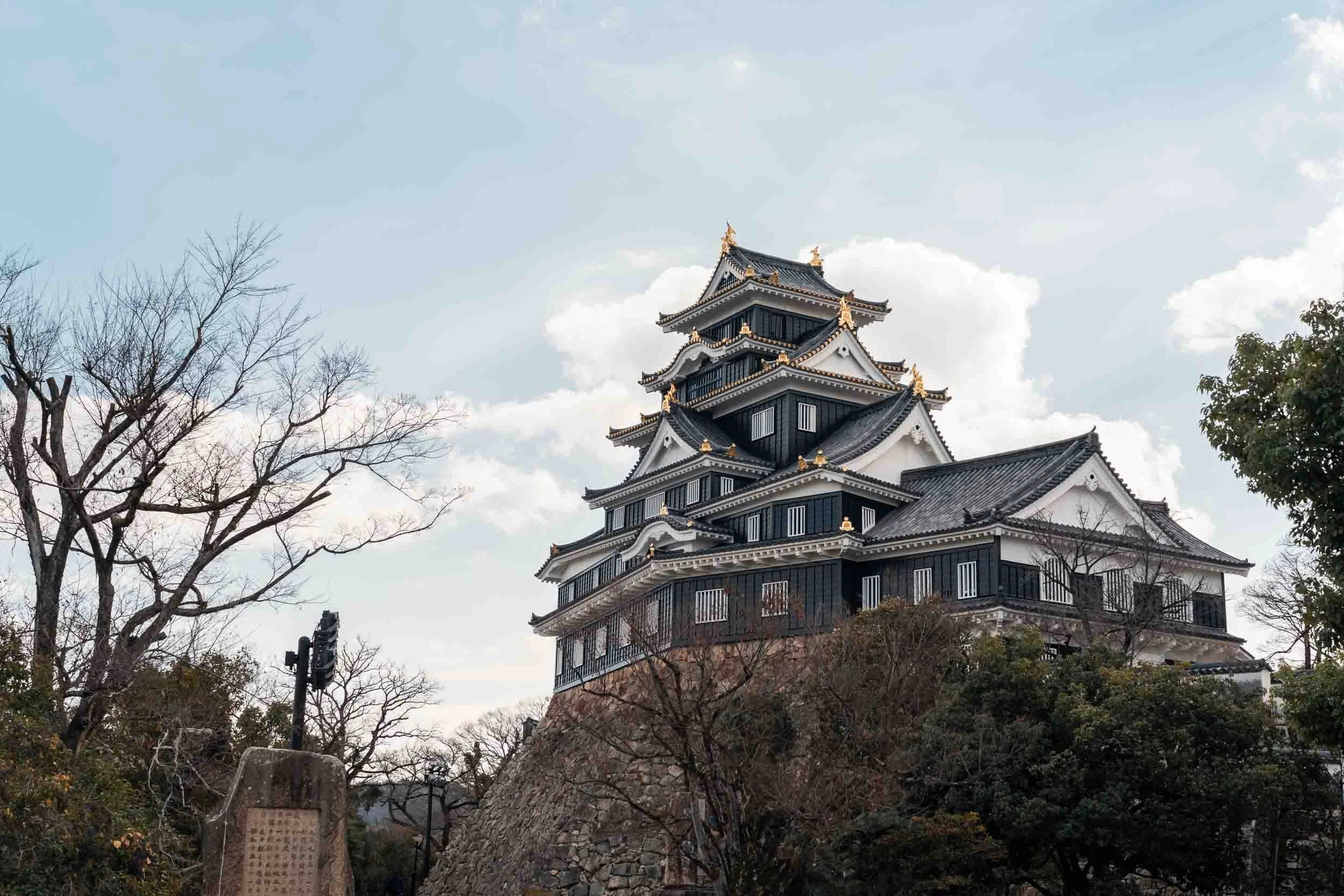
Often referred to as "Crow Castle" for its striking black exterior, the castle was built in 1597 by Ukita Naoie in the Azuchi-Momoyama style. It is situated on the banks of the Asahi River, which historically served as a moat and was a strategic military base and residence for the ruling samurai class.
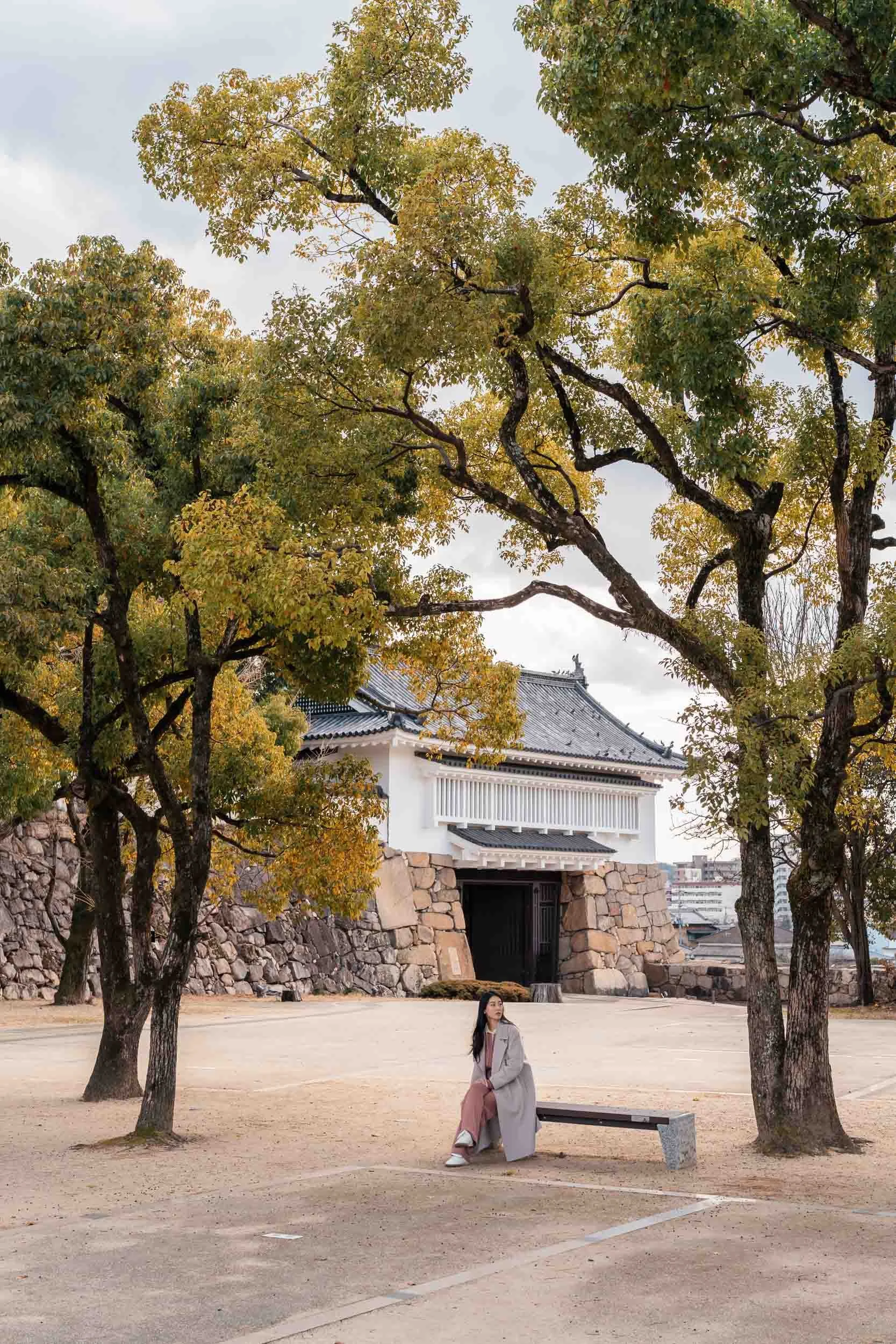
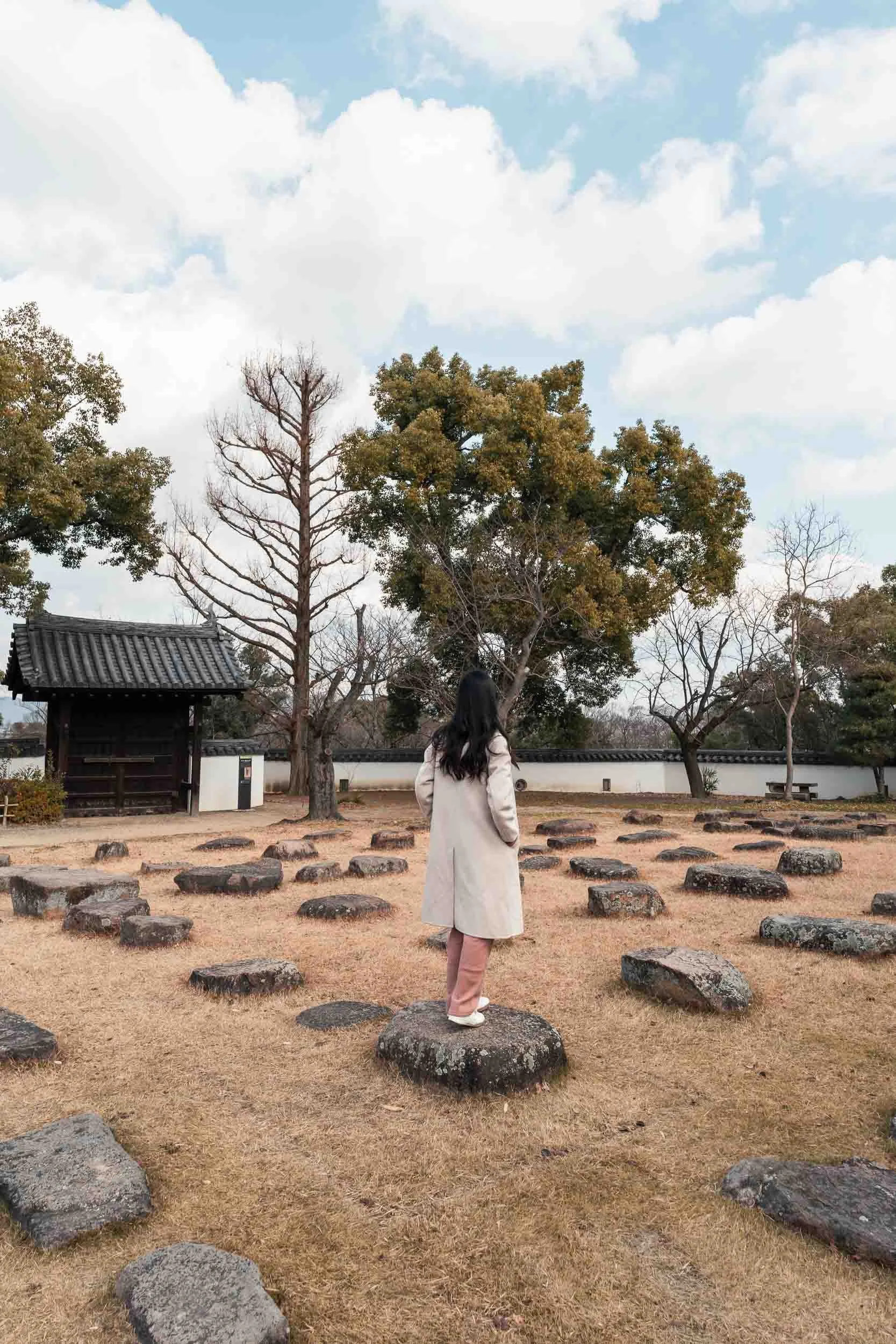
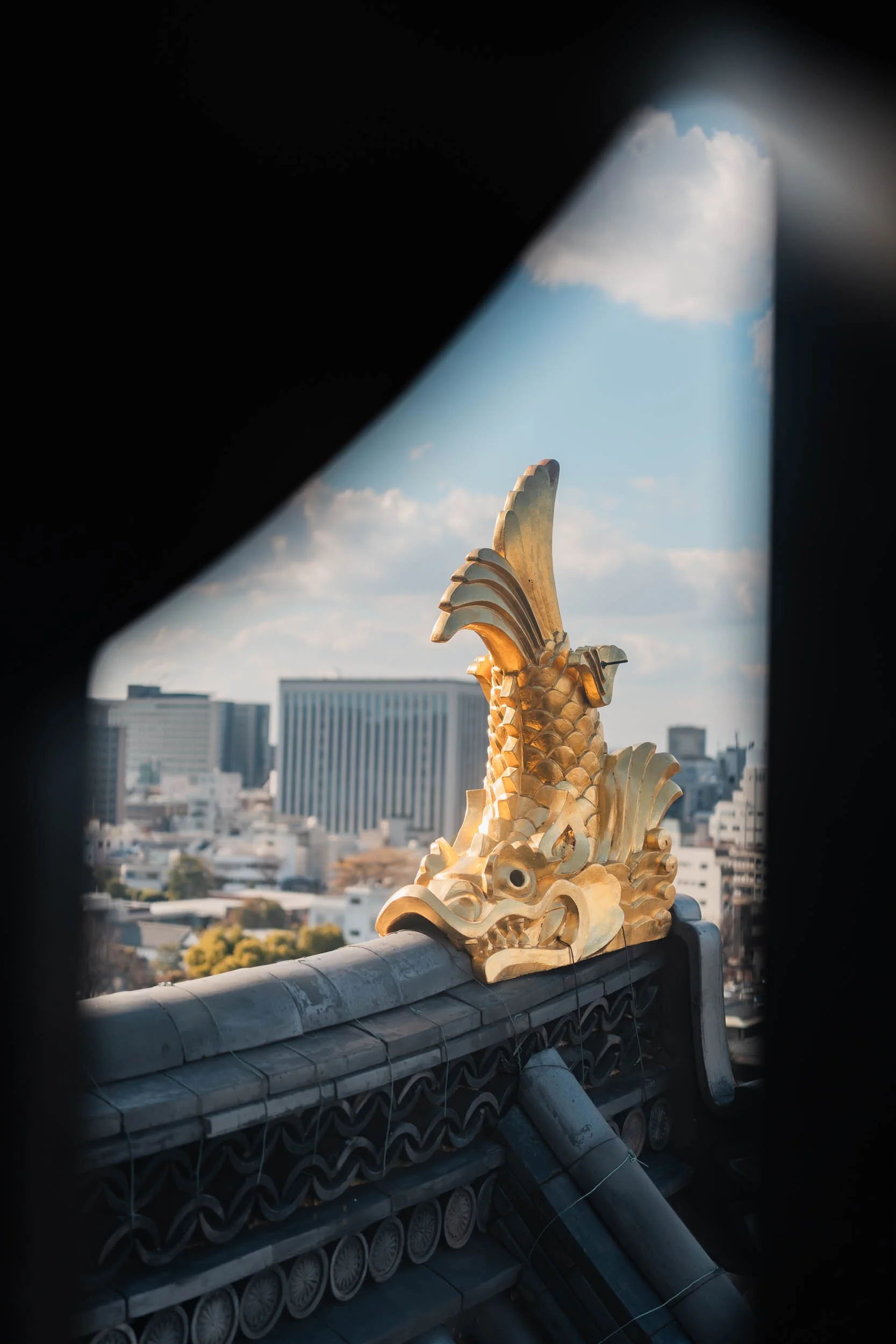
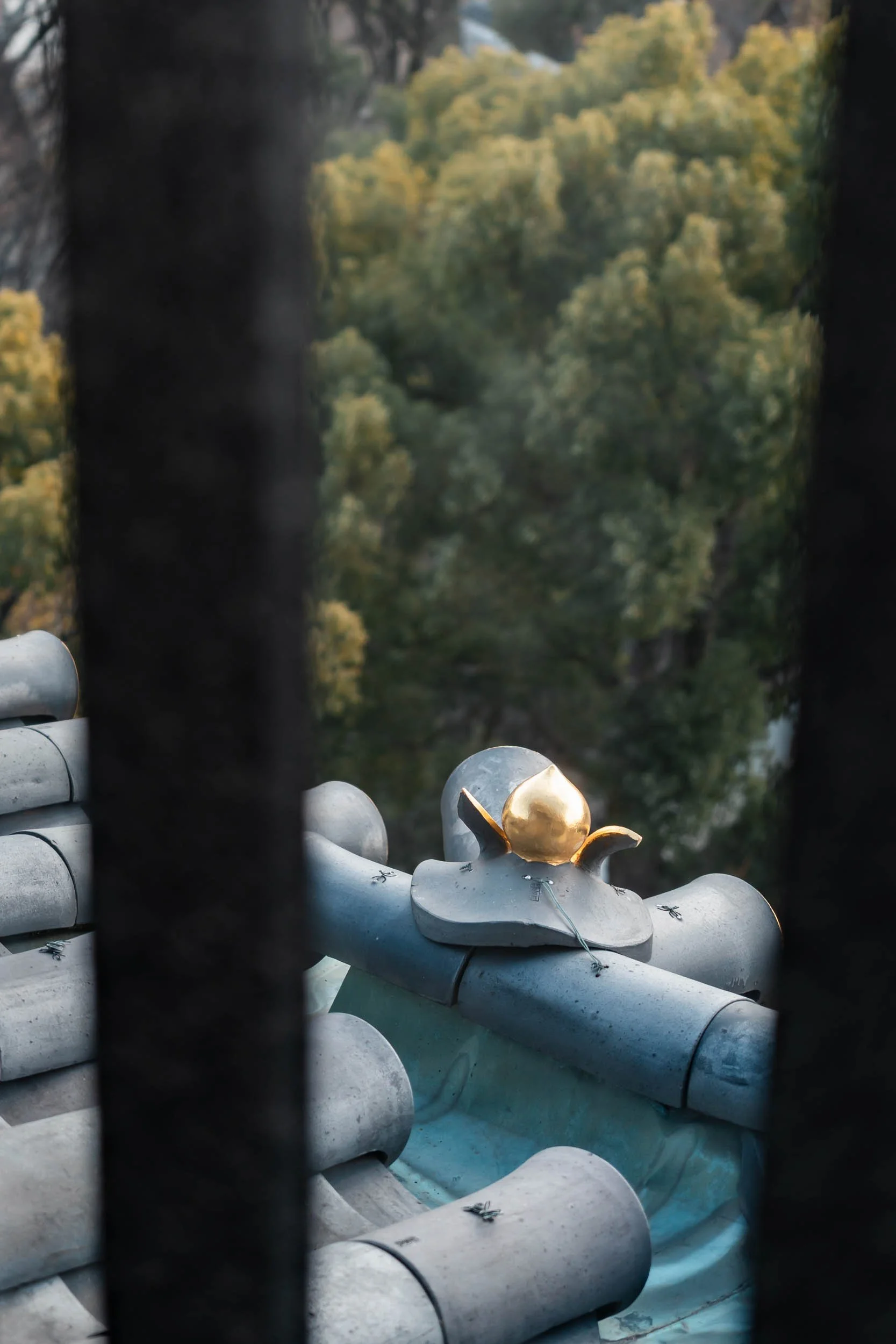
The original structure was destroyed during World War II, but it was reconstructed in 1966. The castle retains its historical significance and architectural style, with one original turret, the Tsukimi Yagura (月見櫓), surviving the war. The six-story castle keep houses exhibits related to the history and development of Okayama Castle, including artefacts from the castle’s past. The lower floors were not my thing, but the tiny top level offers stunning views of the surrounding area.
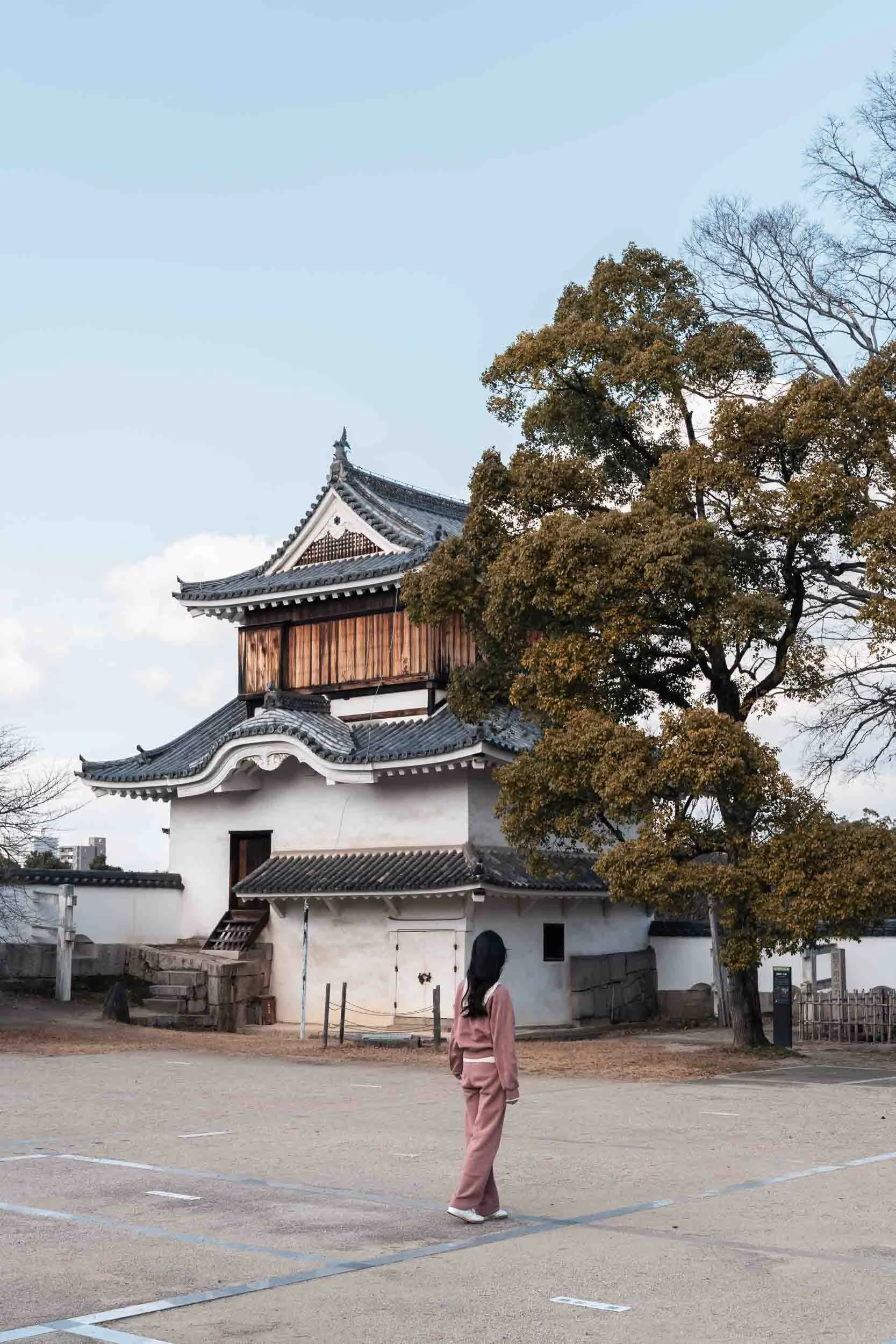
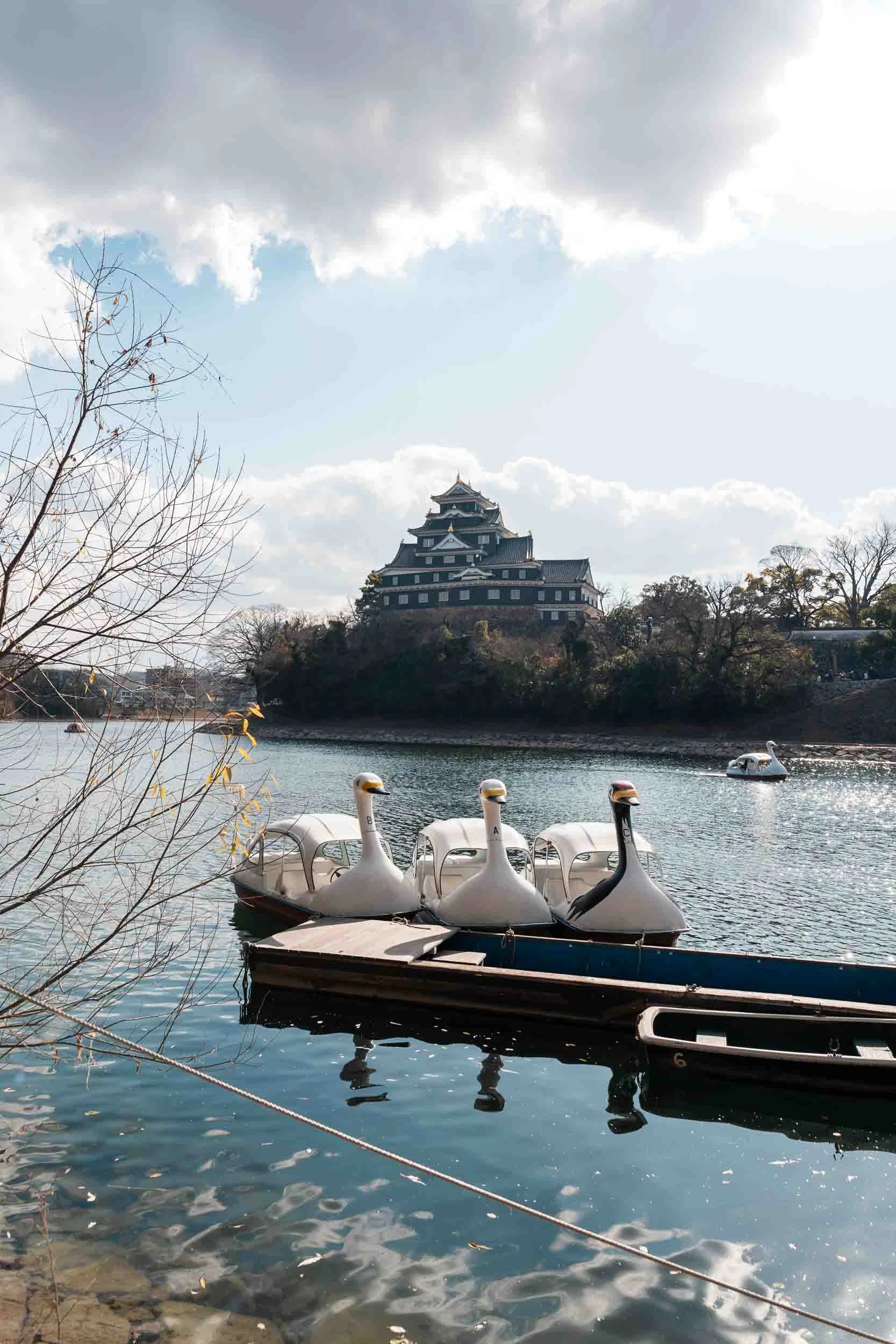
The castle grounds also include a pottery studio where visitors can try making Bizen-yaki, a traditional pottery style from Okayama Prefecture, though reservations are recommended.
Momotaro Statue (桃太郎像)
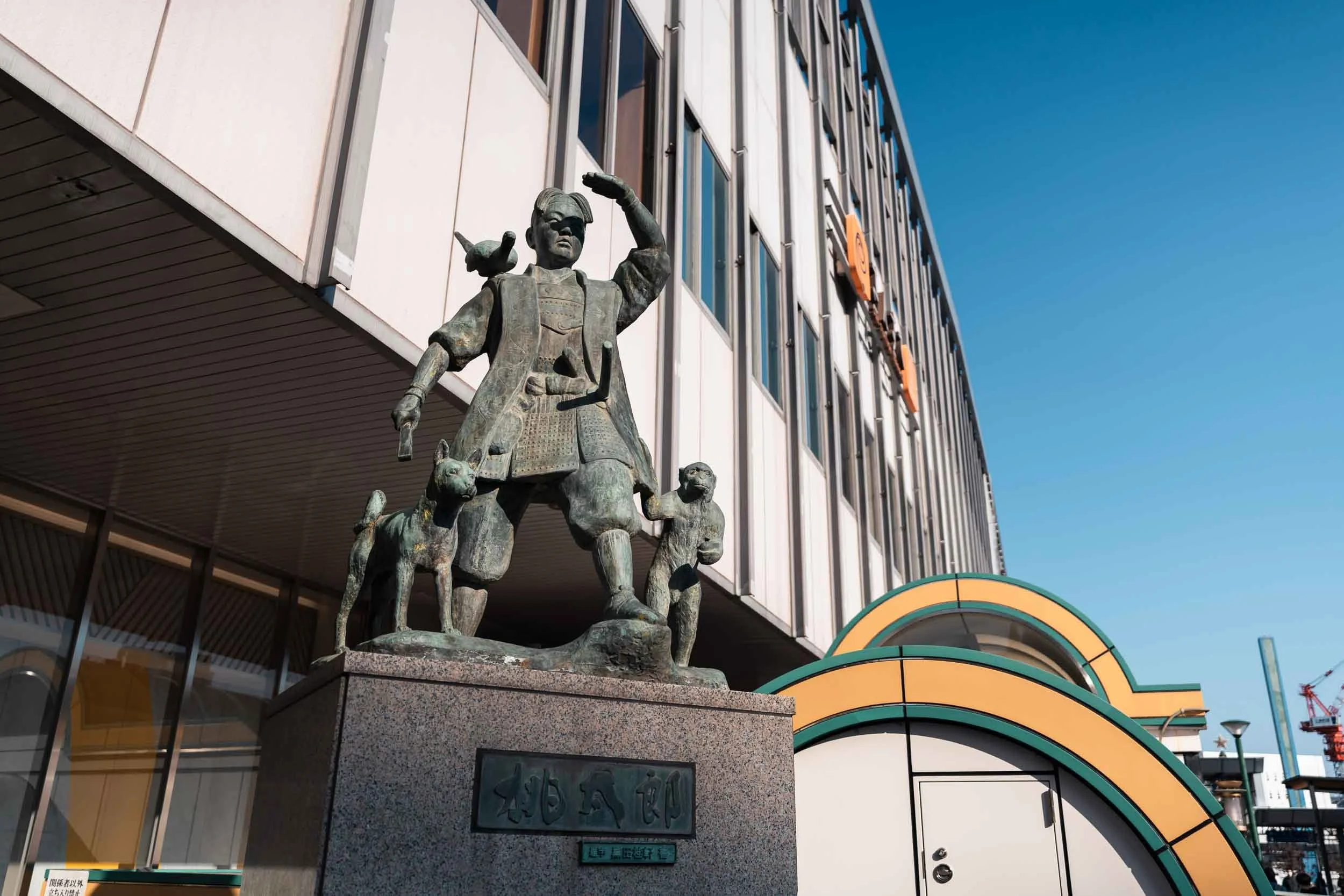
Momotaro, also known as “Peach Boy”, is one of Japan's most beloved folk heroes, and he is celebrated for his courage and kindness. He is particularly associated with Okayama Prefecture, although this connection was popularised in modern times rather than rooted in historical consensus.
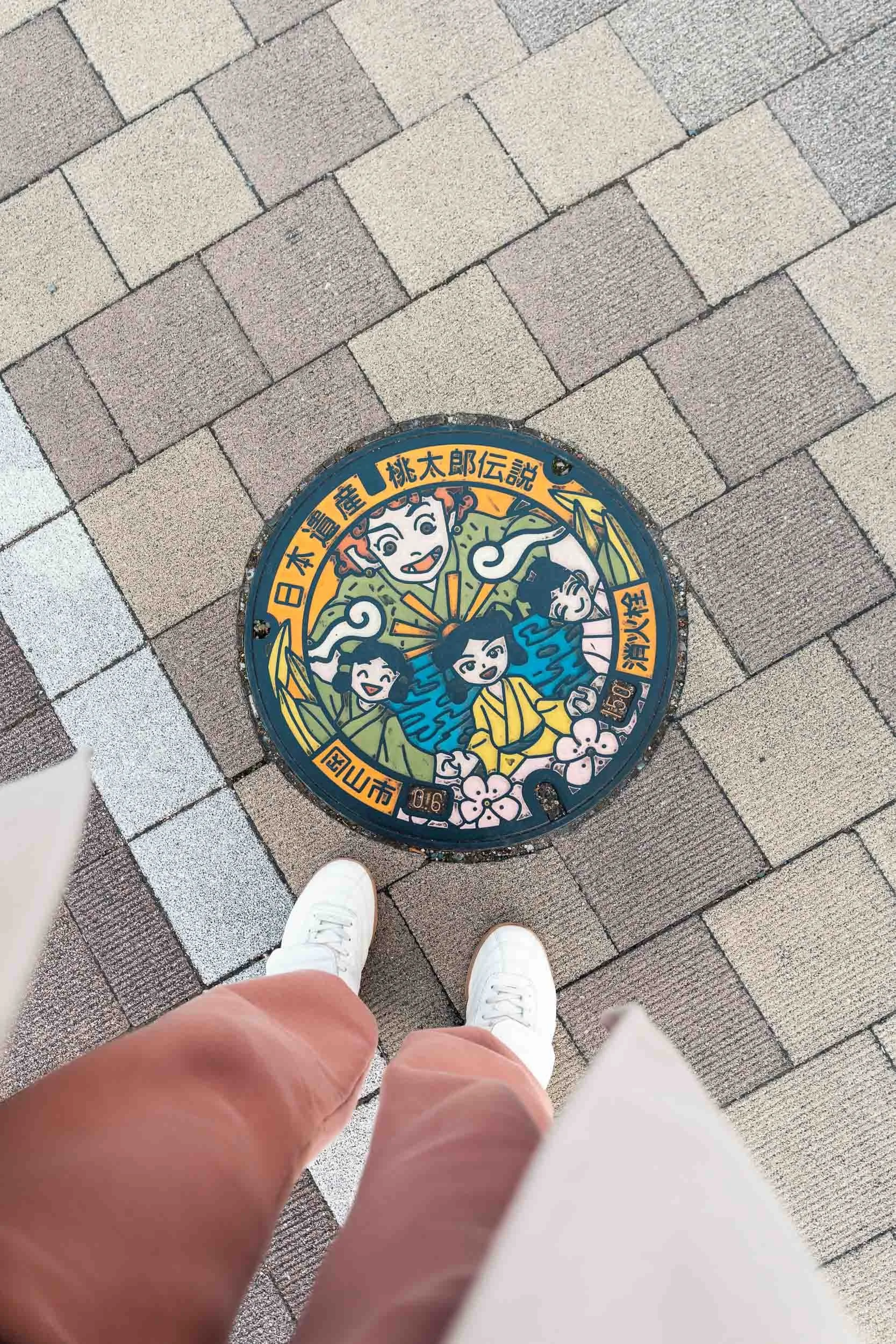
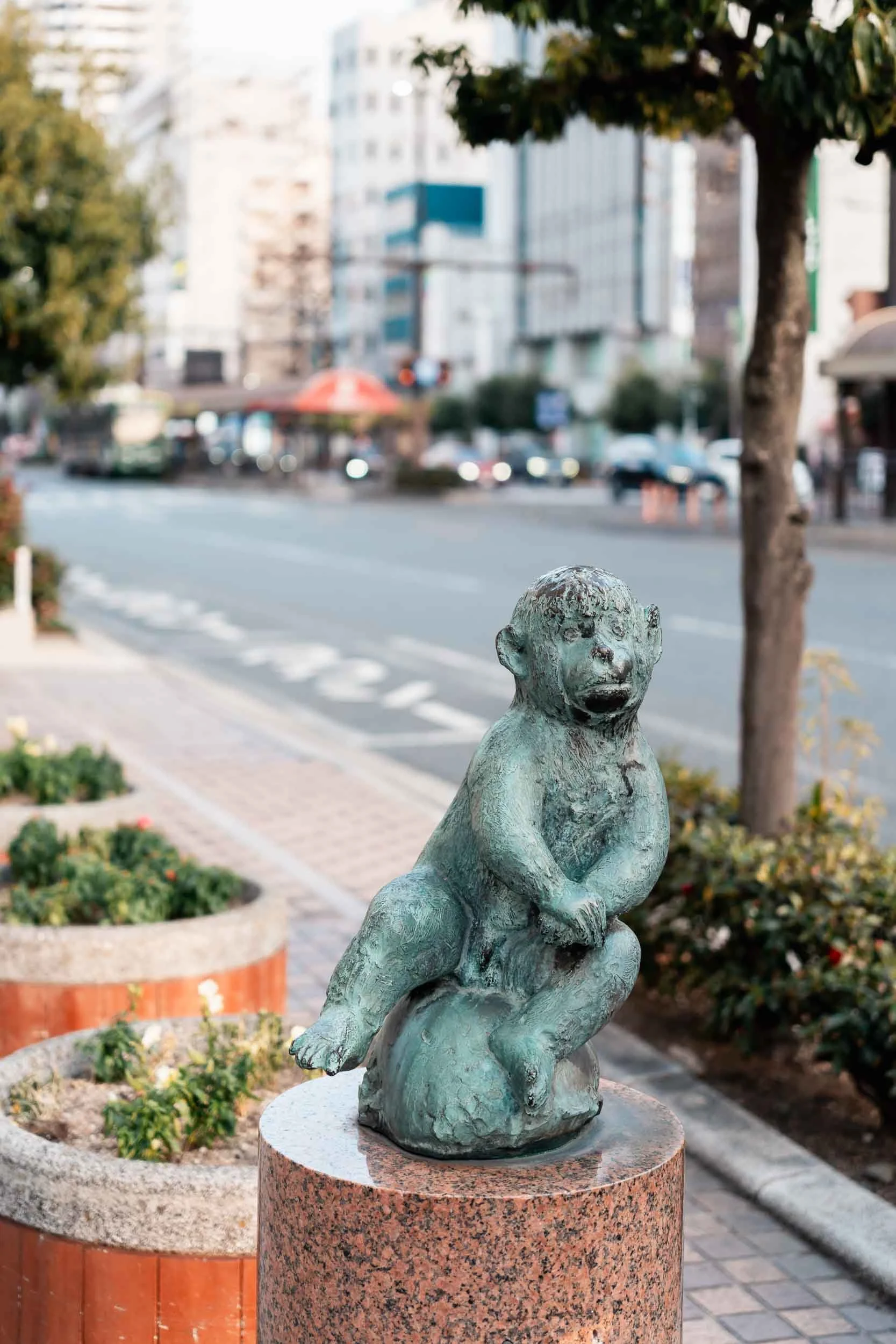
Momotaro’s tale begins with an elderly couple living in the mountains who discover a giant peach floating downstream while washing clothes in a river. When they cut it open, a baby boy emerges, claiming to have been sent by the gods, and they named him Momotaro, combining "momo" (peach) and "tarō" (eldest son).
As Momotaro grows strong and brave, he learns that a group of Oni (demons) is terrorising the land, stealing from the villagers. He embarks on a quest to protect his home, and in preparation, his mother gives him kibi dango (millet dumplings) for sustenance. On his way, he meets a talking dog, a monkey, and a pheasant, all of whom agree to join him in exchange for some of his kibi dango. Momotaro and his animal friends defeat the demons, who surrender and return the stolen treasures. It’s a story that embodies themes of bravery, friendship, and the triumph of good over evil, and has become a symbol of hope and resilience in Japanese folklore. Momotaro and his animal friends defeat the demons, who surrender and return the stolen treasures. It’s a story that embodies themes of bravery, friendship, and the triumph of good over evil, and has become a symbol of hope and resilience in Japanese folklore.
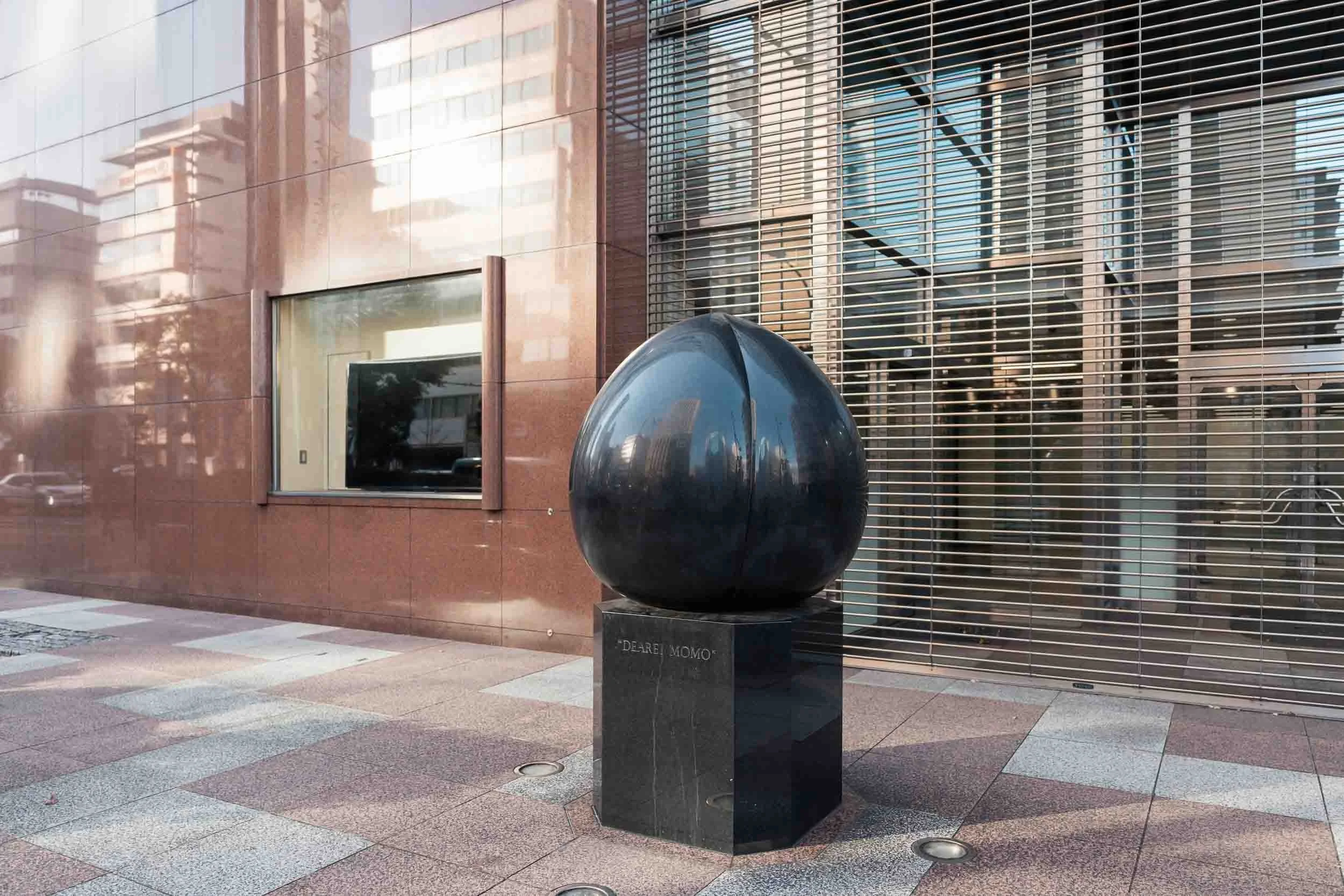
Outside the Okayama Station, you can find bronze statues of Momotaro alongside his loyal companions—a dog, a monkey, and a pheasant. You’ll also find quirky touches of the Momotaro legend dotted around town that make for fun city walks to see what you can find.
Hayashibara Museum of Art (林原美術館)
Established in 1964, the Hayashibara Museum of Art is situated on a former guesthouse beside the inner moat of Okayama Castle, with the building designed by renowned architect Kunio Maekawa.
The museum showcases the extensive collection of Ichiro Hayashibara, a prominent local businessman and art collector, with around 10,000 artefacts, including swords, pottery, Noh costumes, and lacquerware from the Ikeda clan. The collection includes several Important Cultural Properties and National Treasures, such as a 14th-century indigo Dō-Maru samurai armour. Due to limited display space, the exhibits are rotated four to five times a year, allowing visitors to experience different aspects of the collection.
The museum is a five-minute walk from Kenchodori Station (県庁通り駅).
Okayama Symphony Hall (岡山シンフォニーホール)
Okayama Symphony Hall is situated right in front of Shiroshita Station (城下駅) and is easily recognisable due to its distinctive shape.
Designed by architect Yoshinobu Ashihara, the building's exterior integrates a cylindrical form with a sleek facade that complements the urban landscape of downtown Okayama. It’s not all looks, though, as its shape enhances the acoustics within the performance space. On the inside, the hall's acoustics were expertly designed by Nagata Acoustics, a firm renowned for its work in concert hall design, ensuring an exceptional auditory experience for performers and audiences.
Kibi Plain Cycling Route
The Kibi Plain cycling route is a popular, scenic trail that offers a unique opportunity to explore the beautiful rural landscape and visit historical sites associated with the ancient Kibi Kingdom.
The cycling route is approximately 17 kilometres long, stretching between Bizen-Ichinomiya Station (備中高松駅) and Soja Station (総社駅). The route is relatively flat, making it accessible for cyclists of all skill levels, and winds through picturesque rice fields and attractions like the Kibitsuhiko Shrine (吉備津彦神社), Kibitsu Shrine (吉備津神社), and Bitchu-Kokubunji Temple (備中国分寺). Stop by Tsukuriyama Kofun (造山古墳), a burial mound offering panoramic views of the surrounding area.
Bicycles can be rented at Rent-a-Cycle, which has several shops. For reference, it takes approximately 60 minutes to cycle from Uedo to Takaya, and an additional 30 minutes to reach Araki.
Uedo: Bizen-Ichinomiya station
Takaya: Bicchu -Kokubunji Temple
Araki: JR Soja station
A one-day bicycle rental costs 1,500 yen, with an additional 500 yen fee if you drop off the bike at a different location. Online reservations are recommended.
To reach Bizen-Ichinomiya Station from Okayama Station, take the JR Kibi Line (吉備線), also known as the Momotaro Line (桃太郎線), which takes about 10 minutes. Soja station can be reached via the same line, taking approximately 35-40 minutes.
Kibitsu Shrine (吉備津神社)
Kibitsu Shrine is dedicated to Okibitsuhiko Okami, the deity associated with the legend of Momotaro, a popular figure in Japanese folklore. The shrine is closely linked to the Kibi region's history and mythology.
The shrine is famous for its unique "Kibitsu-zukuri" architectural style, which is characterised by its long, covered corridor (approximately 360 meters) that connects the inner and outer shrines. This style is considered unparalleled in Japan and is a designated Important Cultural Property.
The grounds are also beautiful year-round, with seasonal highlights such as cherry blossoms in spring and vibrant autumn leaves. The best time to see peonies is from late April to early May, and hydrangeas bloom from mid-June to early July.
One of the shrine's notable events is the Narukama Shinji ritual, where the sound of a steaming pot is believed to predict good and bad fortune. This ritual is held from 9 AM to 2 PM (closed on Fridays), attracting visitors who seek to participate and experience its cultural significance.
Kibitsu Shrine is about a 10-minute walk from Kibitsu Station (吉備津駅) on the JR Kibi Line.
Manekineko Art Museum (招き猫美術館)
Japan has museums for everything, and Okayama has one dedicated to the famous Japanese figurine known as the maneki-neko, or "beckoning cat," believed to bring good luck and fortune.
The museum features approximately 800 maneki-neko figurines, spanning styles from the Meiji period to contemporary interpretations. Themed areas include the "Hyakufuku Room," which displays a variety of beckoning cats, and the "Wishing Lucky Longevity Alley," where visitors can write their wishes on wooden boards. Visitors can also participate in a hands-on painting experience at the annexe called “Lucky Cats House”, where they can create and personalise their maneki-neko figurines.
The downside is that the museum is difficult to access. From Okayama station, even if you take the Tsuyama line (津山線) to Bizen-Hara Station (備前原駅) or the Kido bus to Kanayama-guchi (金山口), it’s impossible to walk uphill to the museum, and you’ll still have to transfer to a 10-minute taxi ride.
Okayama Orient Museum (岡山市立オリエント美術館)
Established in 1979, the Okayama Orient Museum focuses on the art and artefacts of the Ancient Near East, Roman provincial, Byzantine, Sassanian, and Islamic periods.
The museum collection was primarily formed from the personal collection of Shinjiro Yasuhiro, who gathered thousands of objects with the guidance of academics from the University of Tokyo. Significant pieces include a winged Assyrian relief from the palace of Ashurnasirpal II in Nimrud, Mesopotamia, which was acquired to commemorate the museum's 25th anniversary.
The museum is a short walk from Shiroshita Station (城下駅).
Okayama Prefectural Museum of Art (岡山県立美術館)
A block up from the Okayama Orient Museum is the Okayama City Museum of Art, designed by architect Shinichi Okada. The building features a unified exterior that harmonises with the cultural landscape and emphasises open spaces and natural light, creating an inviting atmosphere for visitors. The museum hosts a diverse collection of artworks from both Japanese and international artists and regularly features temporary exhibitions, making it a dynamic space for art appreciation.
Okayama Prefectural Museum (岡山県立博物館)
Tucked away behind the back entrance of Kōrakuen is the Okayama Prefectural Museum, dedicated to preserving and showcasing artefacts of the prefecture from historic times to the modern era. The museum features Important Cultural Properties, such as taichi swords and a National Treasure: a unique, red-laced yoroi armour from the 12th century, the only known example of this type.
Yumeji Art Museum (夢二郷土美術館)
The Yumeji Museum is the first to focus on the art of Japanese artist Yumeji Takehisa, showcasing a collection that includes paintings, woodblock prints, and other artworks that reflect his unique perspective and the atmosphere of the Taisho period. Four special exhibitions are held annually, featuring over 100 selected pieces on specific themes.
What to Eat
Kibi Dango (きびだんご)
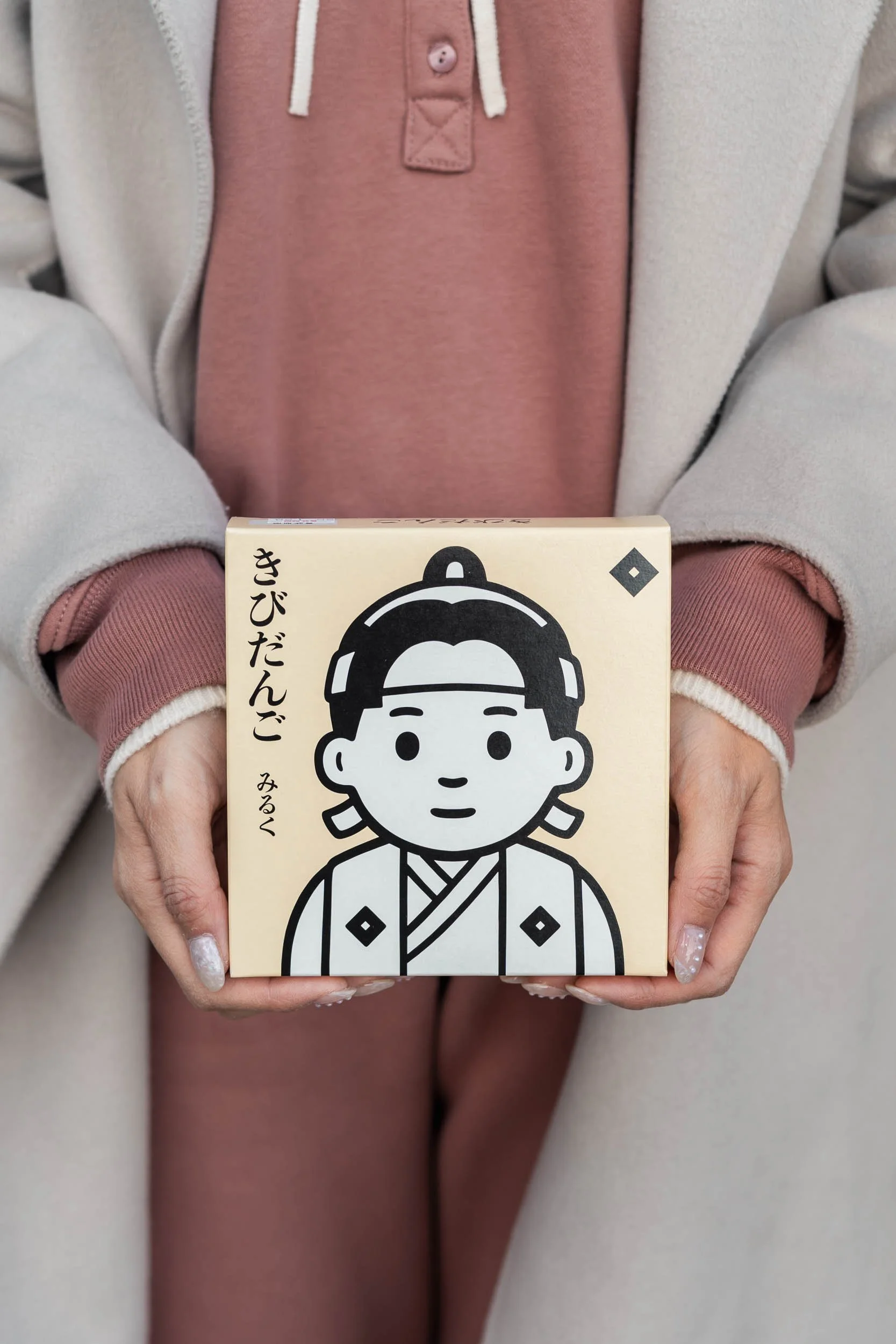
Kibi dango is a traditional Japanese sweet with a delightful history intertwined with the beloved folktale of Momotaro, often associated with good luck and companionship. These small, round dumplings, traditionally made with millet flour, glutinous rice, starch, syrup, and sugar, have a soft, chewy texture. You’ll find no shortage of brands of kibi dango in souvenir shops, and my favourite are the ones by Kōeidō Takeda (廣榮堂武田) that feature adorable illustrations by Noritake of Momotaro and his companions.
Coffee stand 887
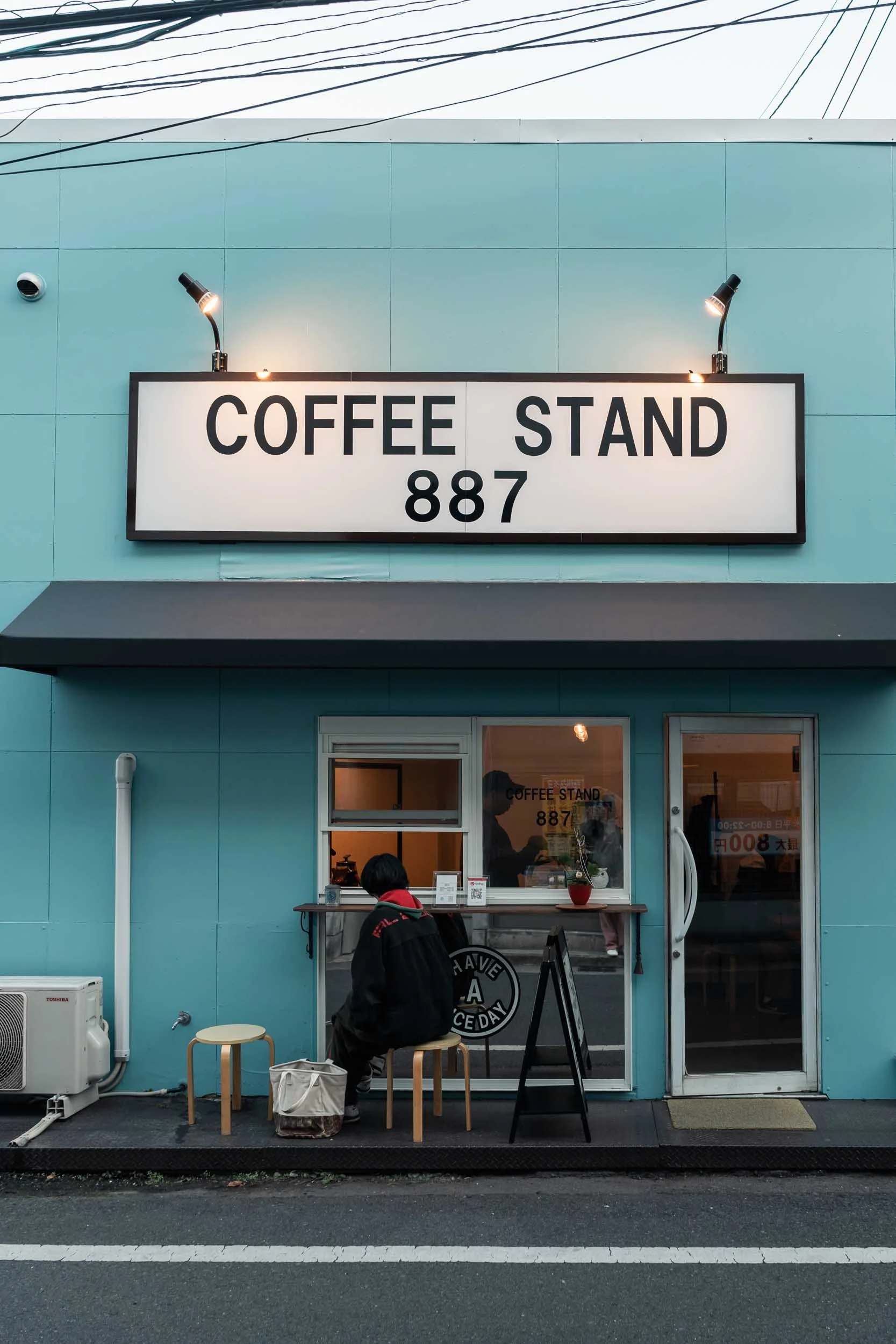
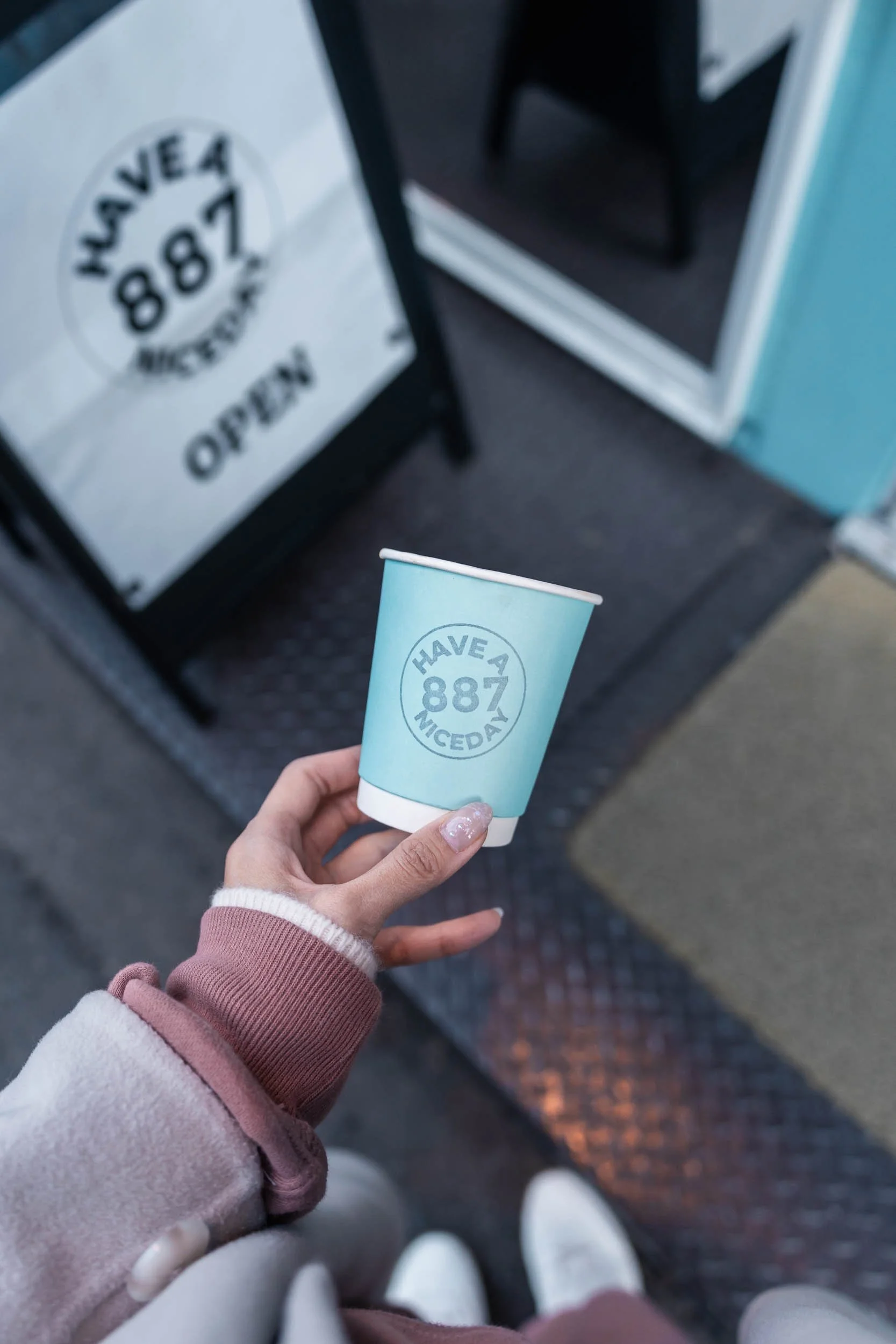
Coffee stand 887 is tucked in the small streets between the two tram lines, in the block between Yubinkyoku-Mae Station (郵便局前駅) and Kenchodori Station (県庁通り駅). The name is a subtle wordplay on Japanese, as “hachi hachi nana” (887) sounds like “havana”, and the store’s refreshing sky-blue exterior makes it easily recognisable.
The small joint specialises in a range of coffee drinks with rich flavour and aroma, including drip coffee and lattes. Seats are limited, but many regulars stand outside and enjoy a good chat with the owner, who is passionate about coffee.
STAND
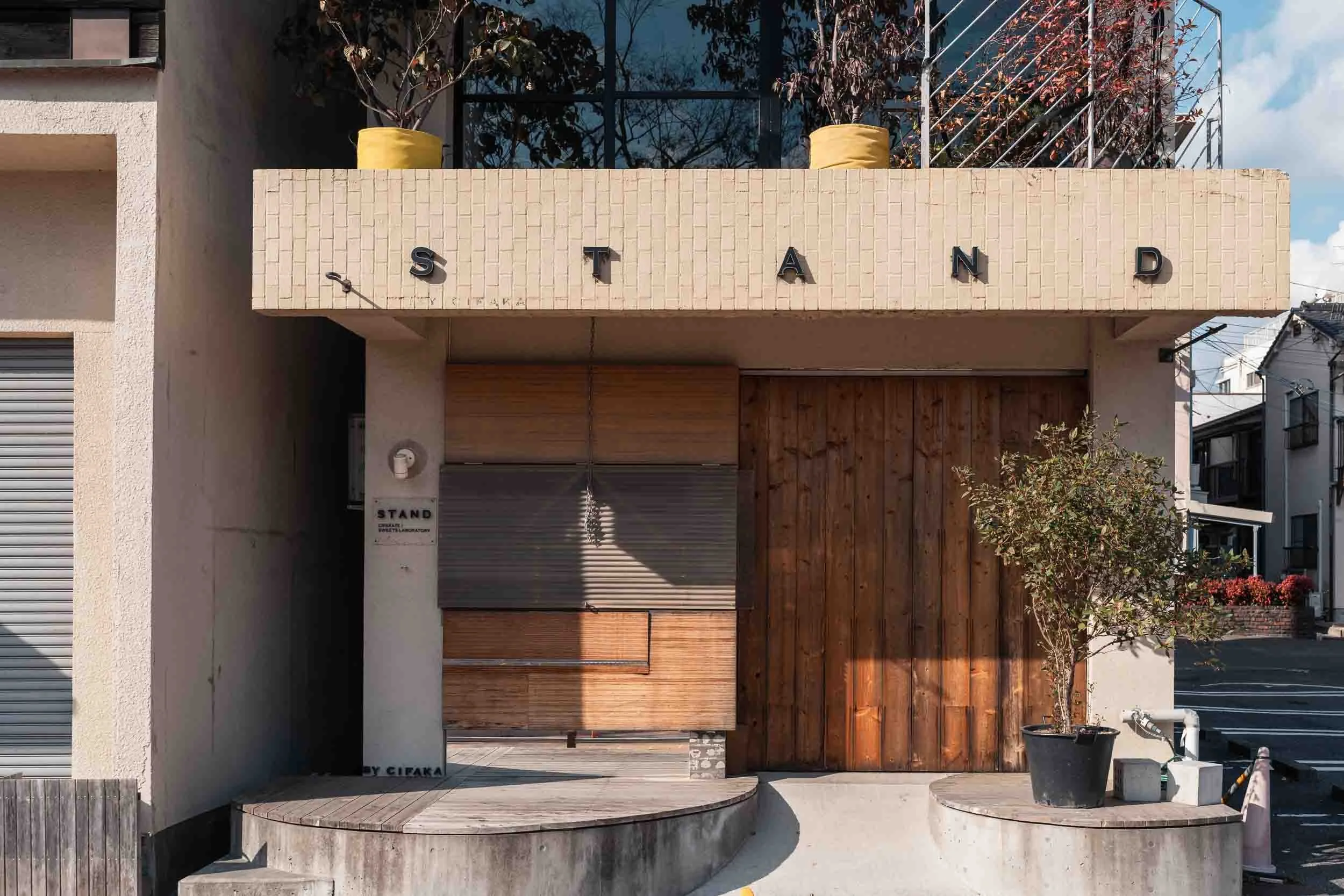
STAND is operated by the design firm CIFAKA, with two locations: STAND6-10, situated by the Asahi River, and STAND1-1, near Okayama Station.
The former is part of a larger space featuring a design store, where visitors can find a curated selection of products by CIFAKA. Its stylish and inviting interior reflects a modern aesthetic, combines elements of traditional Japanese design, and includes a gallery space that hosts regular exhibitions and events. The menu features seasonal dishes crafted with fresh, high-quality ingredients, complemented by expertly brewed coffee.
Setouchi Tonkatsu Butamado (瀬戸内とんかつ 豚まど)
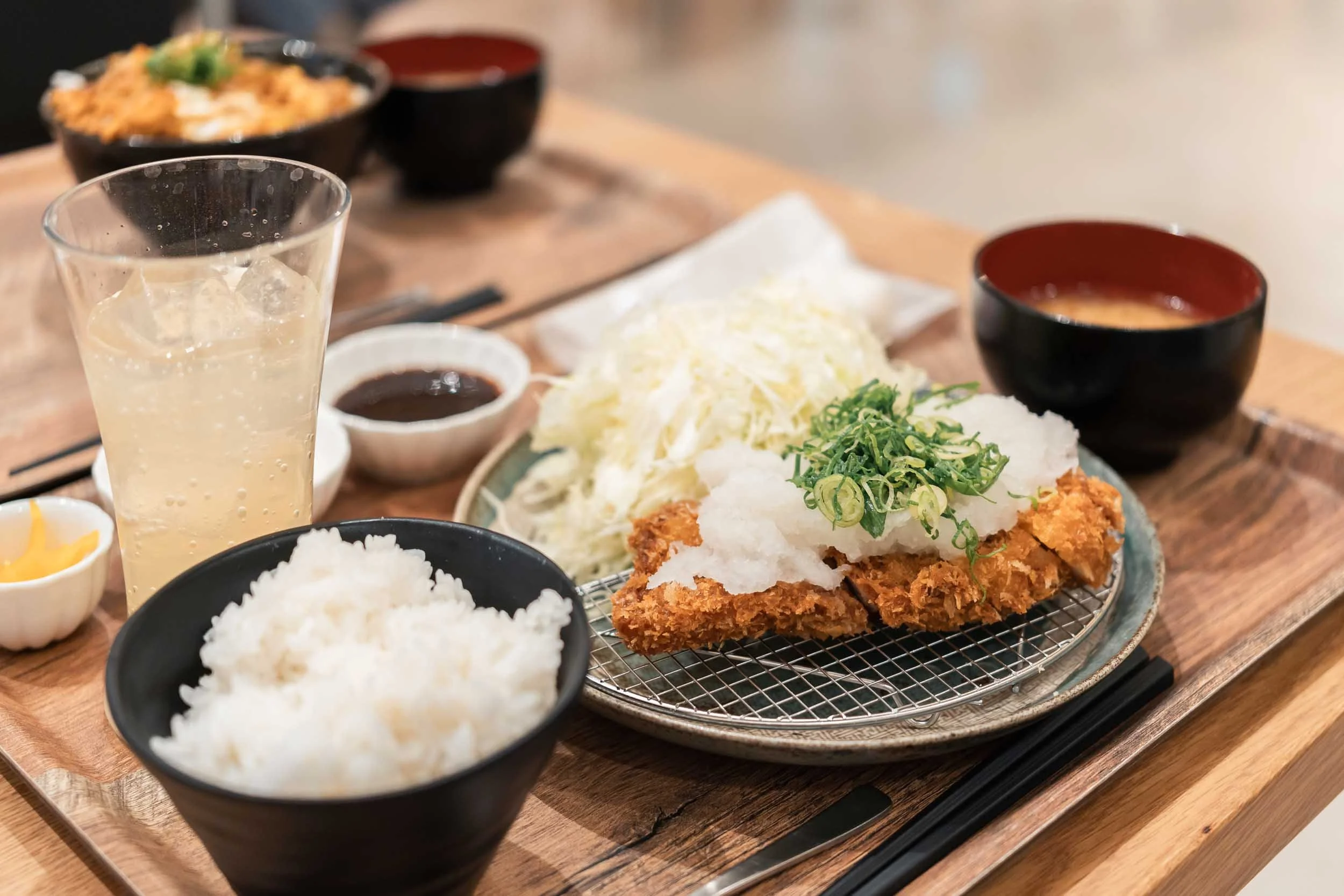
Butamado specialises in tonkatsu, a Japanese dish of breaded and deep-fried pork cutlets served with shredded cabbage, rice, and miso soup. Don’t be fooled by its location in Morinomachi Plaza’s food hall; the restaurant serves top-notch dishes that will make you crave more.
Its tonkatsu is made from carefully selected peach pork in Okayama, resulting in sweet, juicy fillets that melt in the mouth. Dipped in batter and fried at low temperatures, the crispy golden exterior is as light as millefeuille and served in a demi-glace sauce.
kai-fork (解放区)
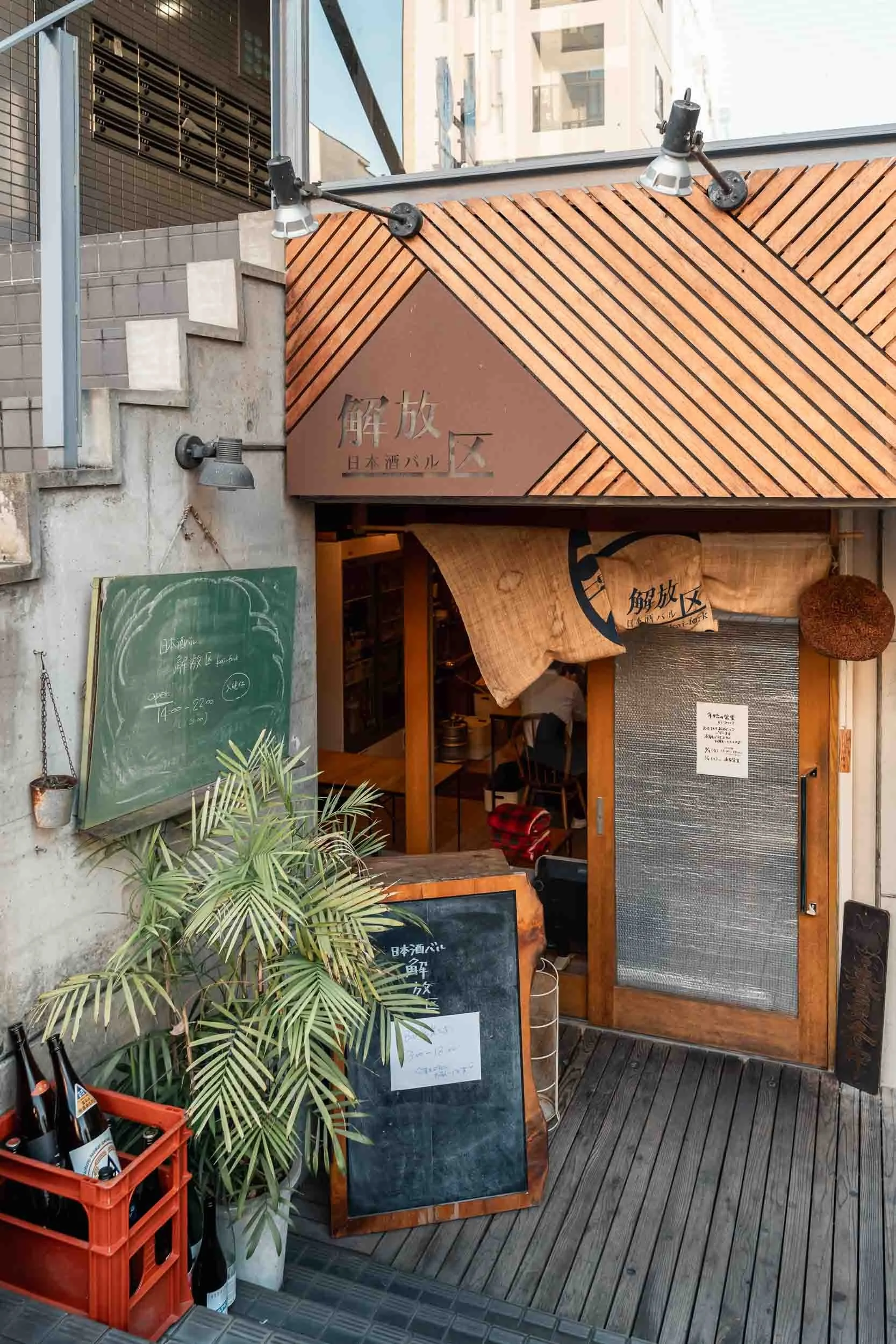
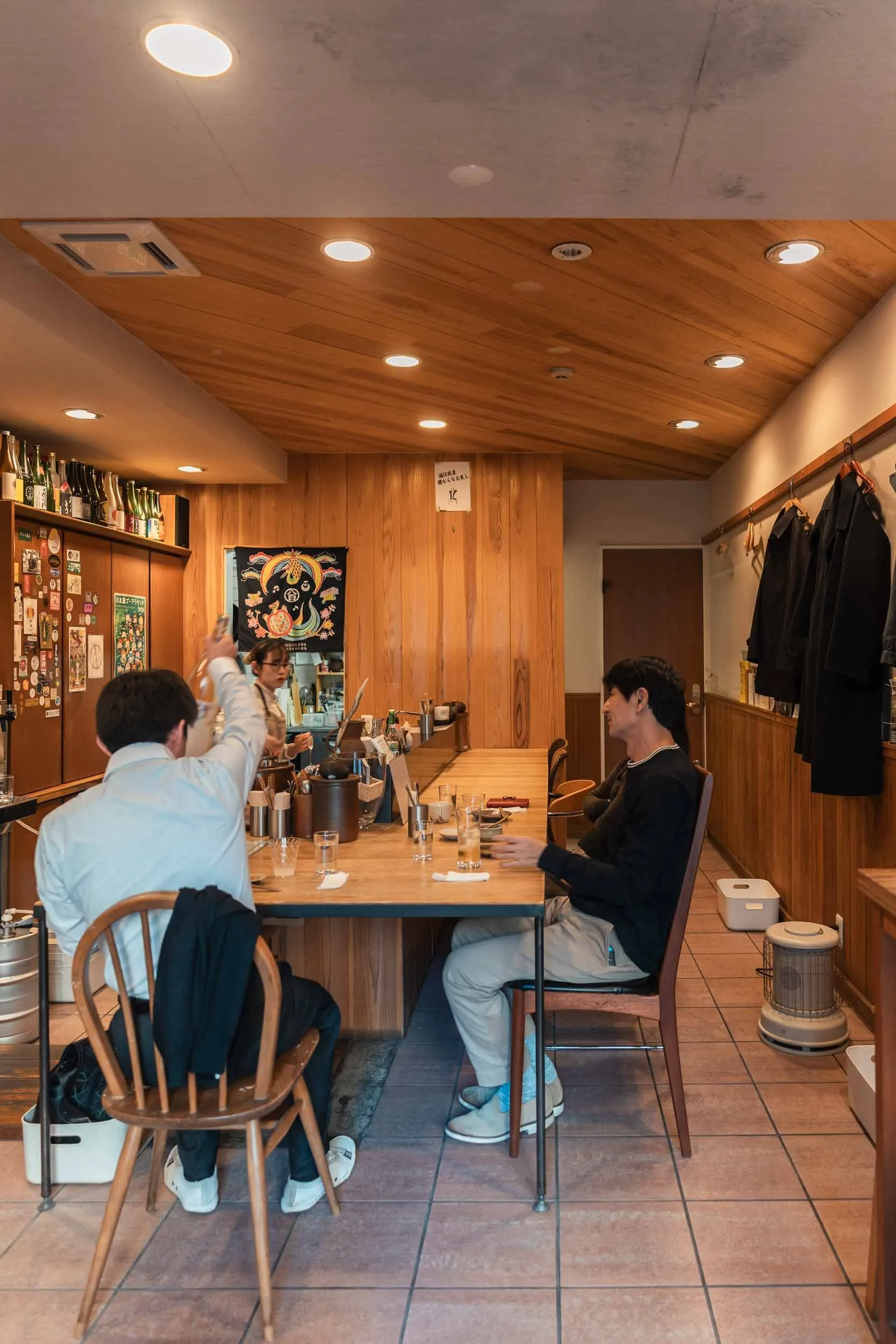
Kai-fork is a renowned sake bar specialising in local jizake (regional sake) from Okayama and selections from the Tohoku region. It has a unique emphasis on serving warm sake (燗酒), as the owner, Fujii-san, is passionate about warming premium sake to enhance its flavours, even recommending it during the summer months.
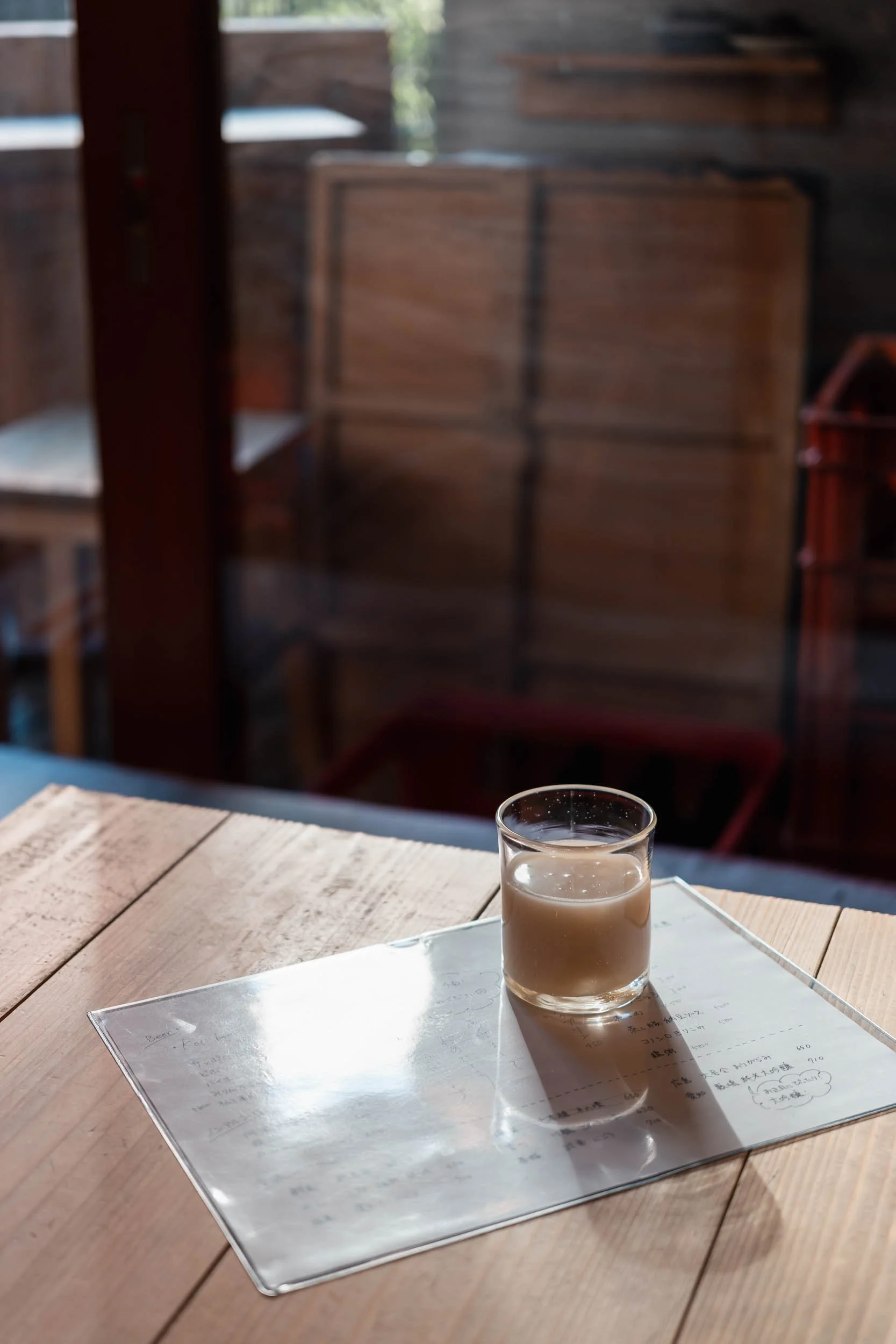
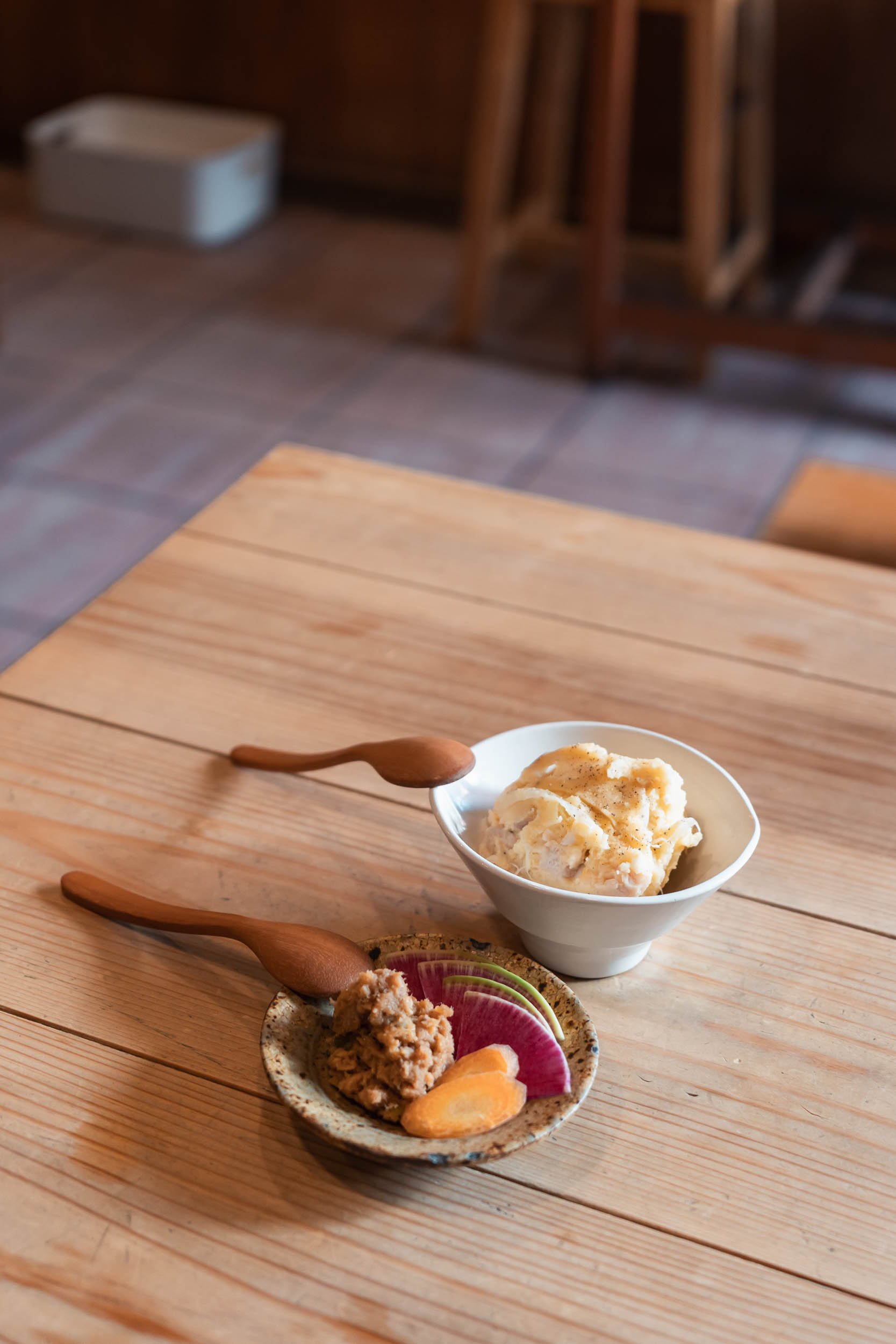
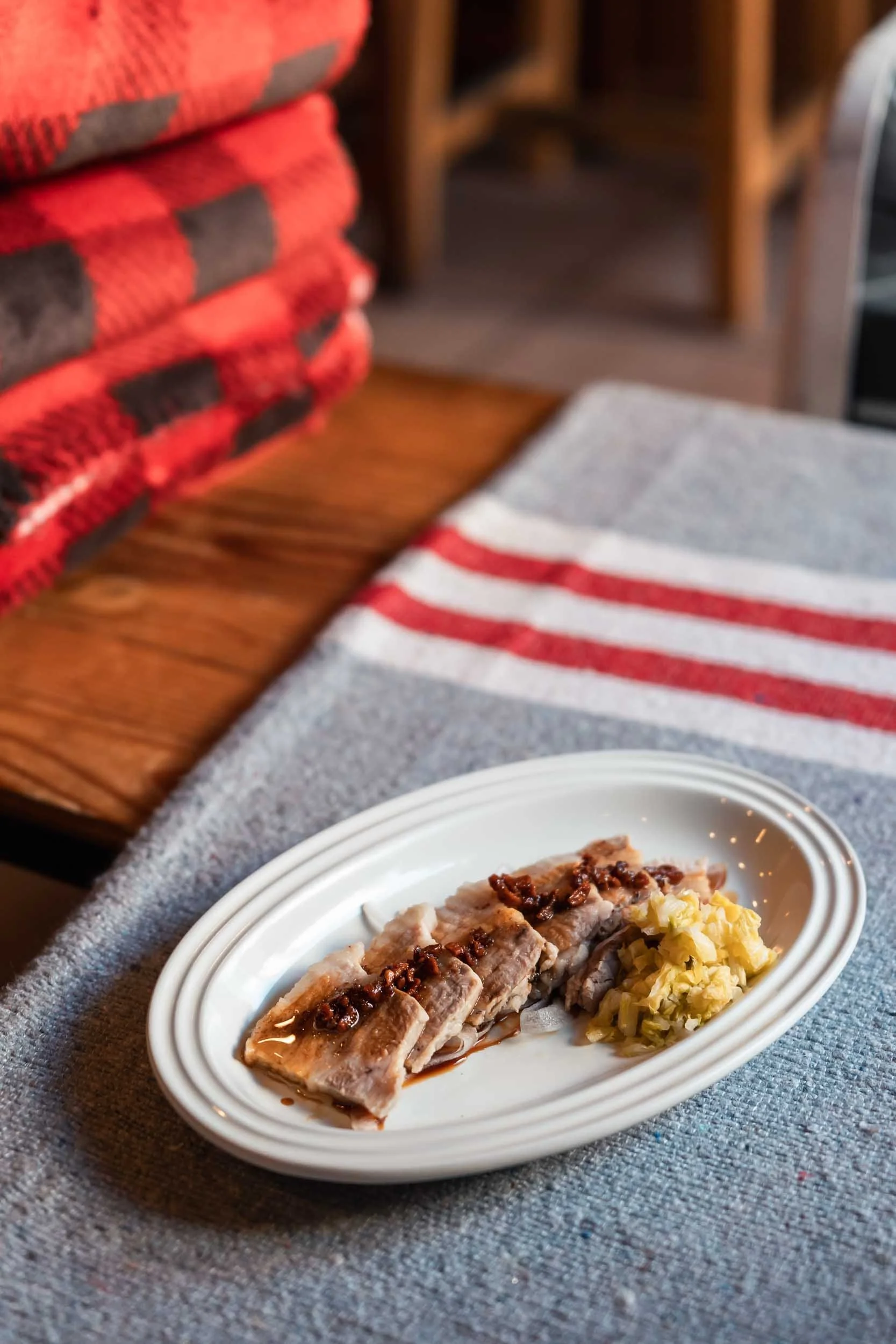
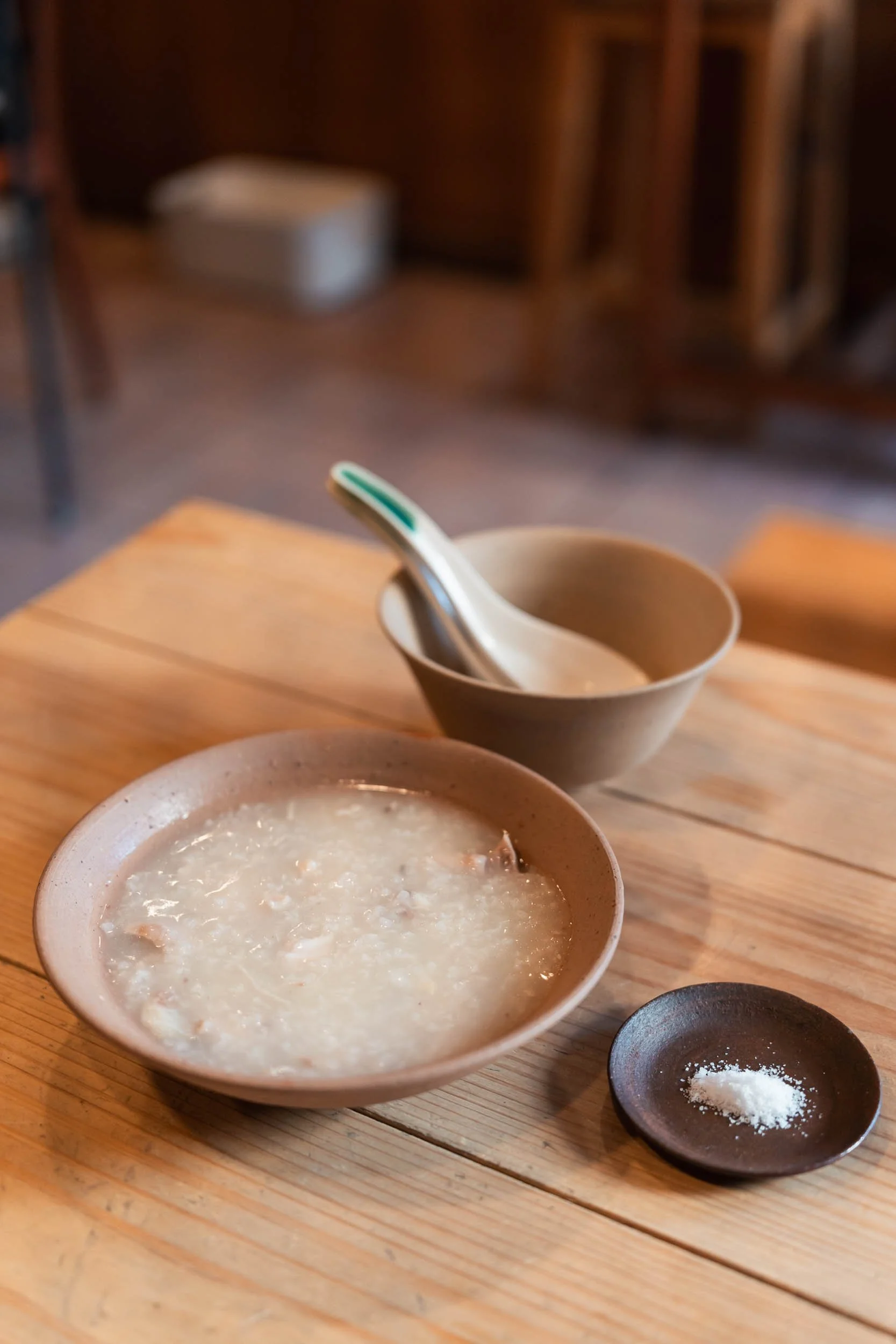
We didn’t come for the sake though. The menu features small dishes carefully chosen to pair well with sake, with ingredients that give a crossover element between home cooking and izakaya-style cuisine, and offers very reasonable prices in a cosy basement.
Nishigawa Rumba (西川ルンバ)
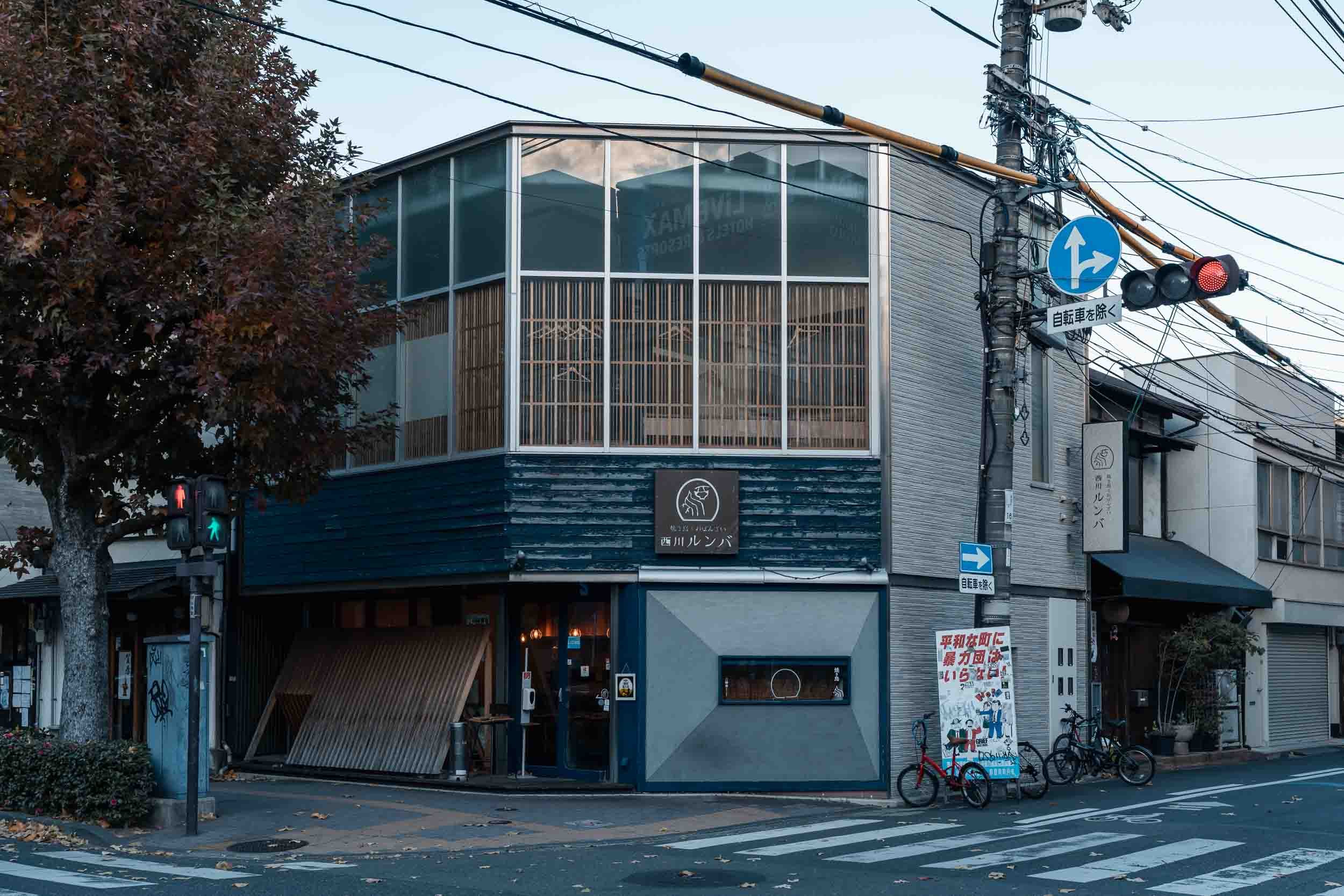
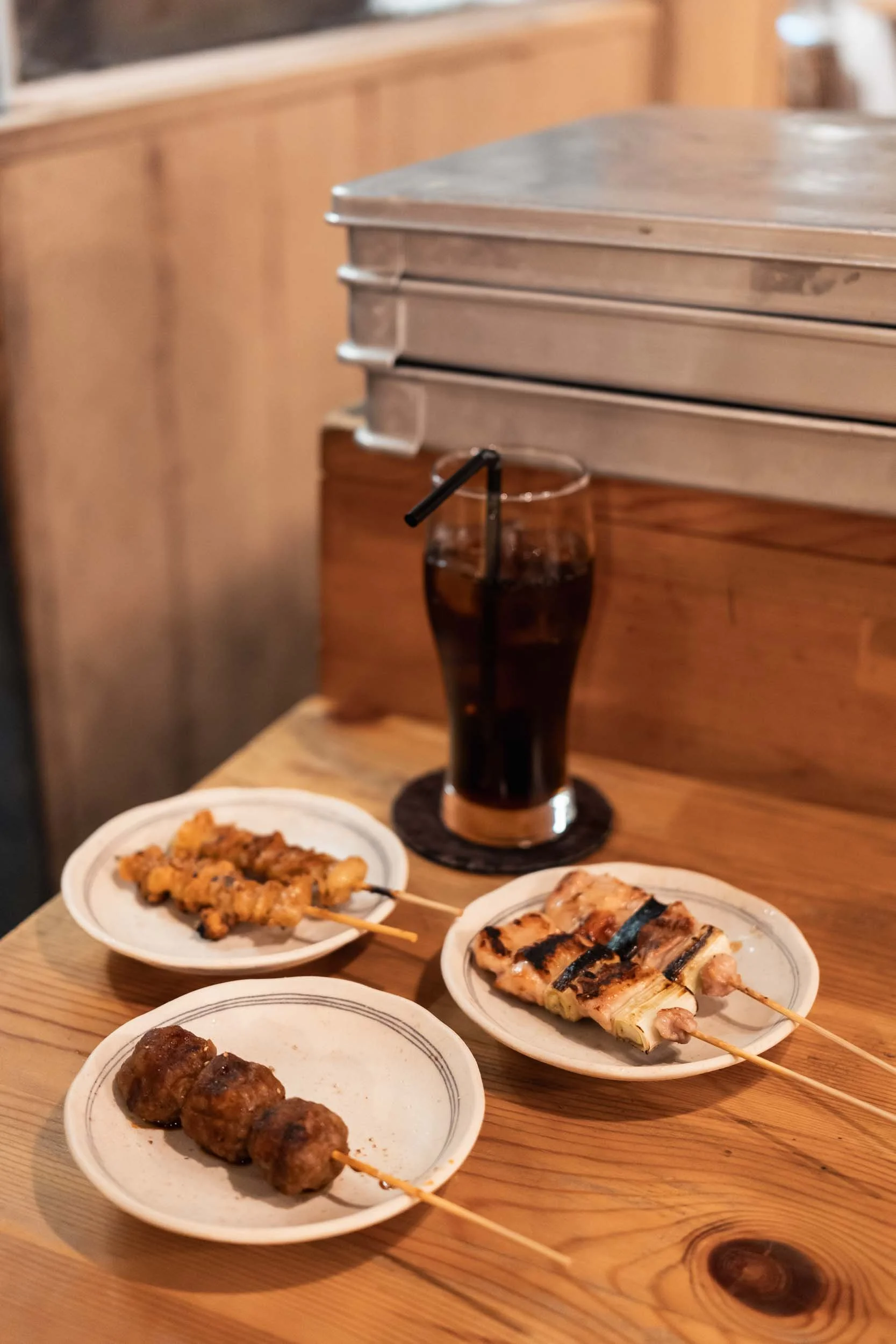
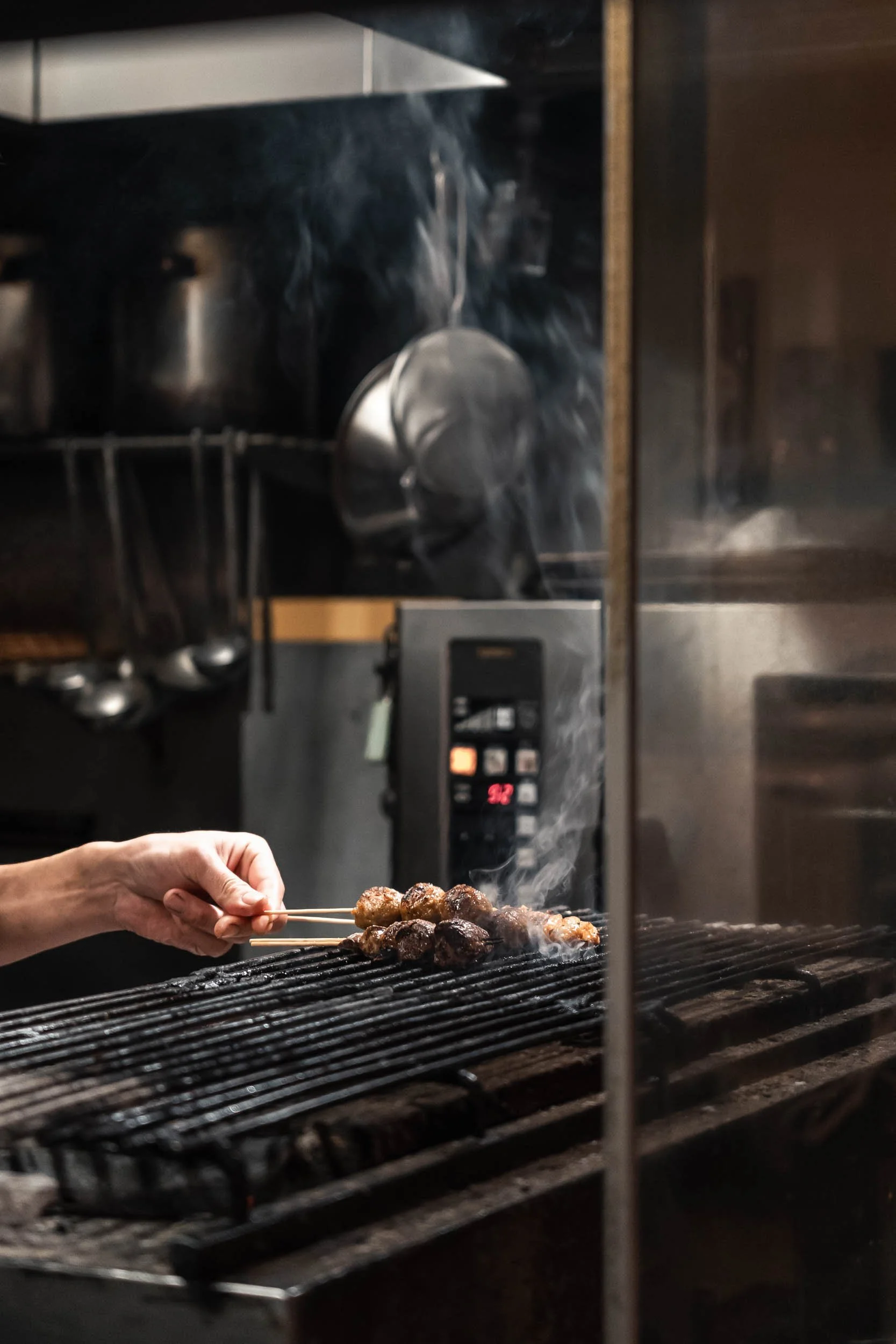
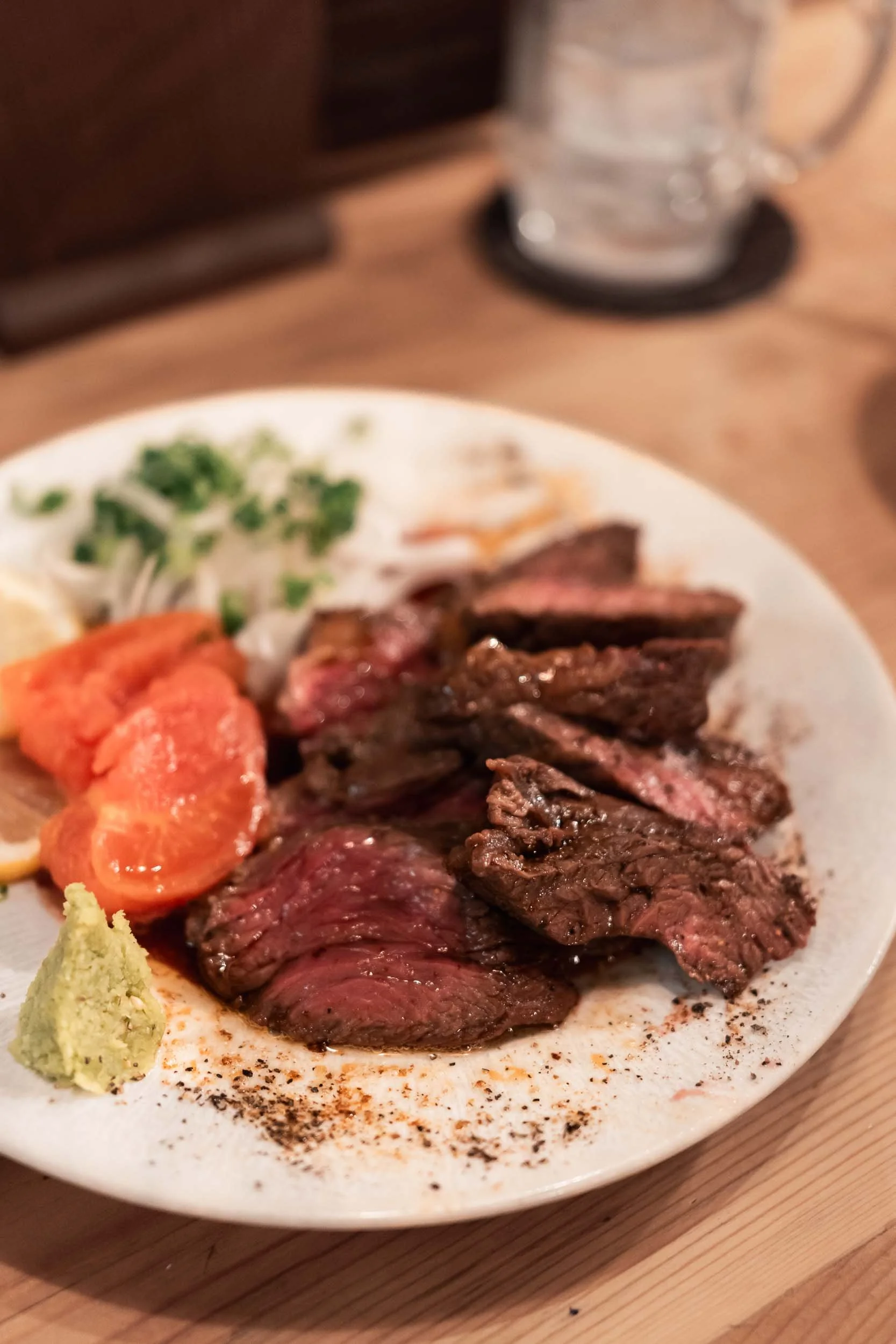
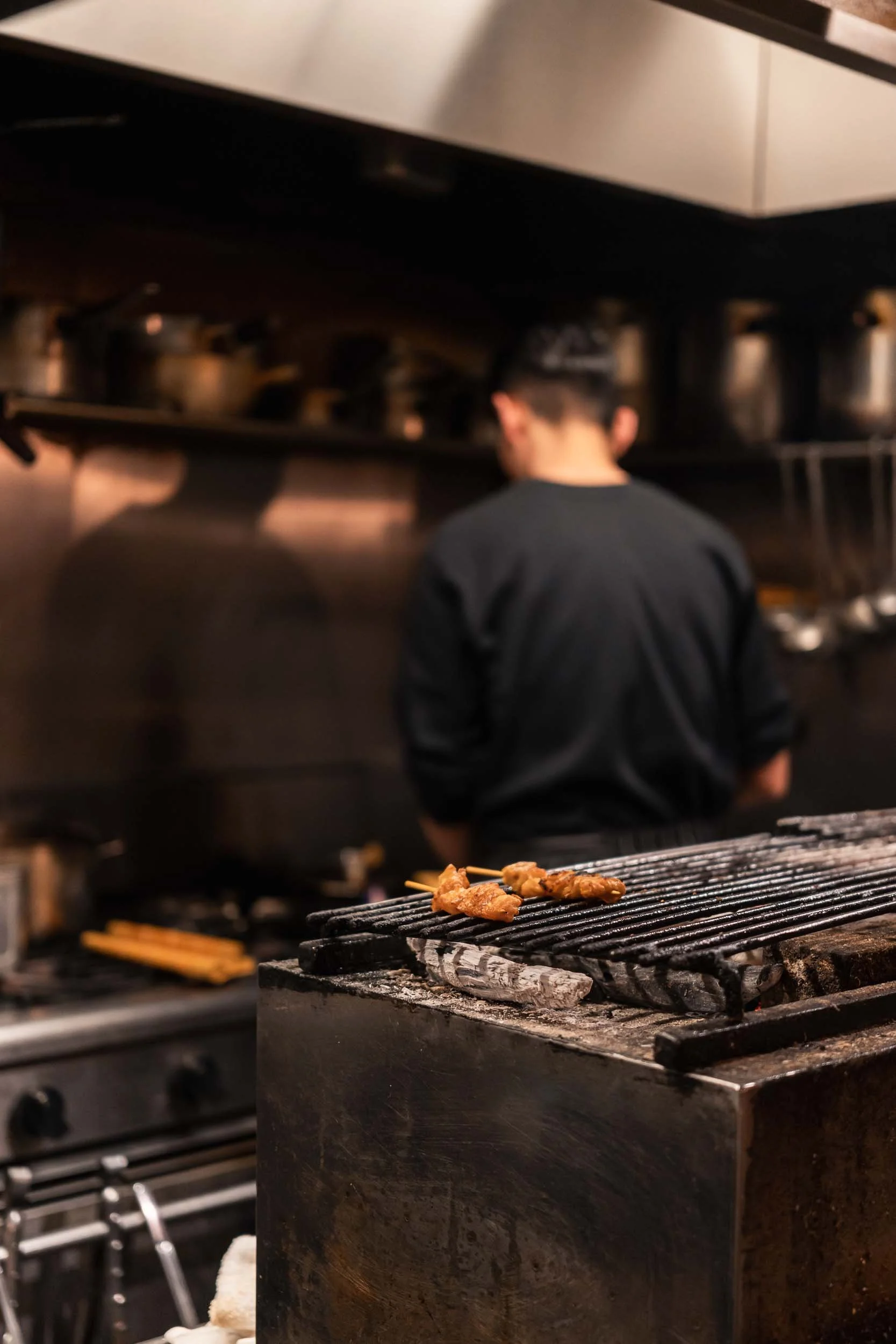
Nishigawa Rumba is a popular izakaya by the canal, known for its focus on obanzai (home-cooked dishes). It offers courses with all-you-can-drink options starting at 5,000 yen for 10 items. We went à la carte, and everything was delicious, with my favourite being the salads and grilled skewers.
Kiraku Sushi (喜楽鮨)
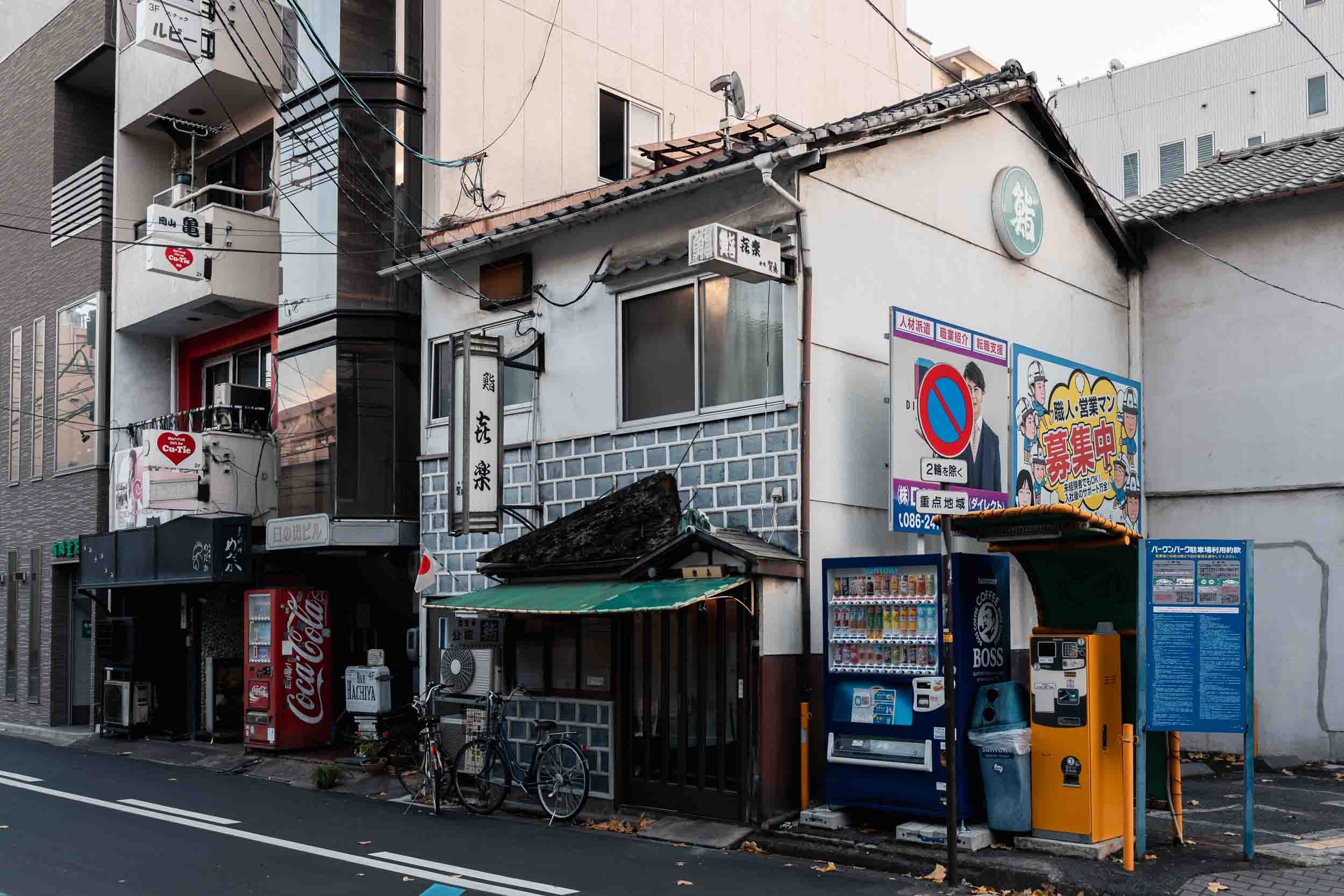
Just across the street from Nishigawa Rumba is Kiraku Sushi, a family-run establishment with a warm and welcoming atmosphere. Kiraku specialises in barazushi, a local speciality traditionally served on special occasions, and offers affordable omakase sets. It is tiny with only eight counter seats, but we were lucky to have snagged the last ones without a reservation.
Café Kitsuné Roastery
Café Kitsuné sits near the top tip of the Korakuen island, a 10-minute walk from Shiroshita Station (城下駅). True to the brand’s identity, the architecture emphasises simplicity and functionality, hallmarks of Japanese architecture, and uses natural materials such as wood and stone to create a cosy, organic space that subtly fuses French influences.
As the cafe offers roasting workshops, its interior has been thoughtfully arranged to facilitate a comfortable experience, with a coffee roasting area visible to patrons, allowing them to engage with the coffee-making process and appreciate the craftsmanship.
Onsaya Coffee
The name "Onsaya" is inspired by the soul jazz piece "Onsaya Joy" by Richard “Groove” Holmes, reflecting the café's philosophy that good music and good coffee bring people together. The cafe is run by Azuma-san, who has transformed his deep childhood passion for coffee into a thriving business, attracting regulars who appreciate his personal touch.
Onsaya offers a variety of hand-drip coffee options, including single-origin and blended coffees, emphasising the importance of quality beans and careful brewing techniques. The interiors ooze a soft, Japanese vintage vibe, designed to be a cosy haven for coffee lovers.
Onsaya has four locations in Okayama City, with the Hokancho branch serving as the honten, and another branch on the Shikada campus of Okayama University.
CORDO COFFEE (コルドコーヒー)
Formerly known as Chapter, CORDO is well-known for its delicious cakes, including the popular Basque cheesecake and carrot cake. Clean and stylish interiors create a relaxing environment for delightful coffee and desserts near the Nishigawa canal.
Oda Coffee (おだ珈琲店)
Oda Coffee is on the basement floor of a building, which contributes to its cosy, tranquil vibe. One of the standout items on the menu is the seasonal strawberry shortcake, which pairs beautifully with their flavourful coffee.
Gensoba Ipponbiki Ishizeki (玄そば一本挽き 石関)
Ipponbiki specialises in gen soba, made with whole buckwheat grains from the owner’s hometown in Okuizumo and milled using traditional stone-grinding methods, preserving flavour and nutritional value. The menu features a variety of soba dishes, including cold soba with dipping sauce and warm soba options. Signature dishes include "kamo seiro" (duck soba) and "tororo gohan" (grated yam rice).
The restaurant is in the Ishizaki riverside area, across from the Okayama Orient Museum. It wasn’t indicated online, but there was a break after lunch hour, so go early to avoid being rejected.
Kitchen Horiguchi (キッチンほりぐち)
Horiguchi is a cafeteria-style restaurant near the Hayashibara Museum of Art known for its hearty set meals. Its fried chicken is served in generous portions piled high on the plate, and other popular dishes include ginger pork and pork loin cutlets. Reservations are unavailable, but lunch bento can be reserved for specific hours.
400℃ Pizza
If you’re a pizza lover, check out 400℃ Pizza, a highly-acclaimed pizzeria that Tabelog selected as one of Japan's top pizza restaurants. The restaurant specialises in Neapolitan-style pizza, characterised by its soft, fluffy dough, achieved through a high-hydration process and a 4-day fermentation period. Their signature pizza is the FNT, with original blue cheese sauce, mascarpone, and honey.
The honten is in Tondacho, a 10-minute walk from Okayama Station, with a second Okayama location in Morinomachi Plaza. It also has a branch in Tokyo, which has gained attention for maintaining the quality of the original.
Megu (恵)
Megu sits halfway between Yanagawa Station (柳川駅) and Shiroshita Station (城下駅), specialising in shabu-shabu and sukiyaki for one person (i.e. everyone cooks in their own pot). The menu offers high-quality meat options, including Chiya beef and black pork, both from Okayama.
Shunsai Hayato (旬彩 はや斗)
Shunsai Hayato specialises in “otonosama-ryori”, the traditional fine cuisine of feudal lords. The restaurant emphasises seasonal ingredients and offers a variety of courses that highlight the best of Okayama's culinary heritage. It’s particularly known for using Chiya wagyu, a rare and highly marbled beef native to Okayama, often referred to as “phantom wagyu”. Additionally, fresh fish is delivered four times daily, ensuring the highest quality for sashimi and nigiri sushi.
Shunsai Hayato is located further from the town centre, beyond Korakuen, on the other side of the river and can be reached by bus.
Uosho (魚祥)
Uosho is a one-star Michelin restaurant run by Mr Hiroshi Yamamoto, who inherited it from his father in 2019 and continues to uphold the traditional flavours and techniques that define Uosho.
The restaurant is renowned for its exquisite nigiri sushi, crafted with seasonal seafood from the Seto Inland Sea, including octopus from Shimotsui, sea bream, and red clams. It’s particularly famous for its anago (sea eel) and tamagoyaki (Japanese omelette), with omakase lunch starting at 6,600 yen for 15-16 pieces of sushi.
Shōun (祥雲)
Another one-star Michelin restaurant is Shōun, a kaiseki restaurant that offers a multi-course dining experience emphasising seasonal ingredients and artistic presentation.
Shōun focuses on using locally sourced ingredients, including rare items like “shishi yuzu” (a type of citron) and “green eel”, also known as the “phantom eel”. The restaurant also grows its own vegetables and rice, ensuring freshness and quality in its dishes.
Kuikiri Ryori Happou (喰切料理 八方)
Happou is a two-star Michelin restaurant, helmed by Chef Toshiya Hamura, who boasts over 40 years of experience in Japanese cuisine.
The restaurant offers a unique dining experience centred around "kuikiri ryori," which involves serving just enough dishes for guests to enjoy one by one, allowing for a focus on each dish's flavours and presentation. The omakase menu changes seasonally, featuring approximately 10 dishes crafted from locally sourced ingredients. Guests can expect to find dishes featuring seasonal ingredients from the Seto Inland Sea, such as natural eel, hamo (pike conger), and various types of crab.
Where to Shop
Momotaro Jeans (桃太郎ジーンズ)
Technically, Momotaro Jeans are from Kojima in Okayama Prefecture (a renowned denim production area) rather than Okayama City itself, but unless you’re about to make a trip down to the coast, this is a pretty good option.
The premium denim brand is known for its craftsmanship and meticulous attention to detail—from dyeing and weaving to sewing and material selection—using premium Zimbabwe cotton handpicked for softness and durability, with lifetime repairs guaranteed. Their menswear line of jeans and jackets often features their signature Tokuno Blue, a deep indigo colour achieved through multiple dyeing processes that nods to the Seto Inland Sea’s depth.
Okayama Ekimae Shopping Street (岡山駅前よりより市)
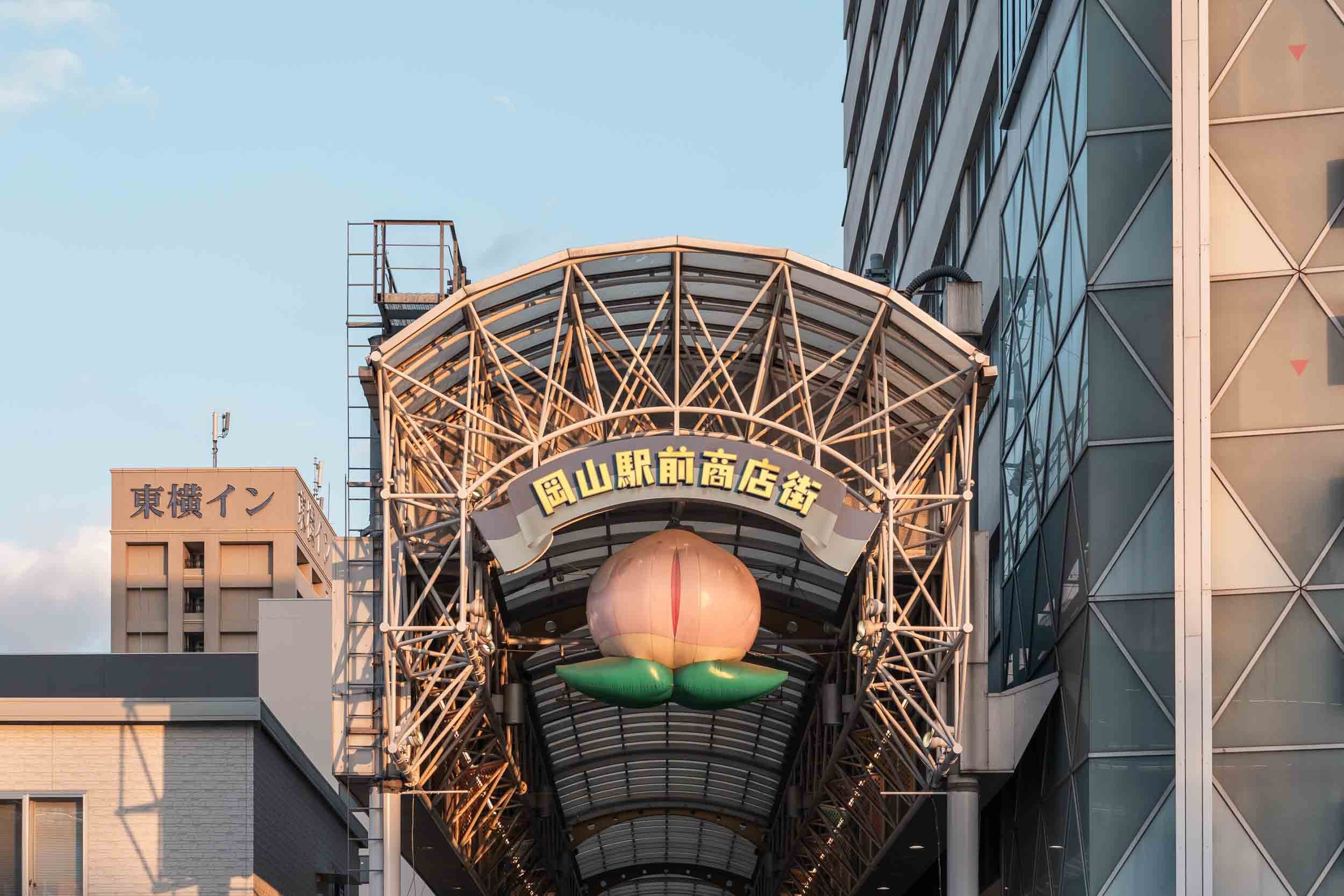
As you exit Okayama Station and make your way to the crossing, you will notice a gigantic peach hanging in the air, marking the entrance to the shopping street. However, despite its location directly in front of the station, the shopping street can feel quiet, especially on weekday mornings when many shops are closed — a stark contrast to the bustling atmosphere in other shopping districts.
Some have attributed this to recent developments, such as the opening of the adjacent Bic Camera, which has altered the shopping street's landscape. The street still showcases a combination of older, traditional shops alongside newer establishments, reflecting the area's evolution over the years, but the revitalisation has left some spots neither here nor there, robbing the area of its old charm.
Tenmaya Okayama (天満屋岡山)
With a history spanning over 190 years, Tenmaya began as a notions shop and has evolved into a regional department store with a strong presence in Okayama and its surrounding areas. It is renowned for its diverse range of goods and customer-oriented services, making it a staple for local shoppers. If you only have time for one department store, make it Tenmaya.
Omotecho Shopping Street (岡山市表町商店街)
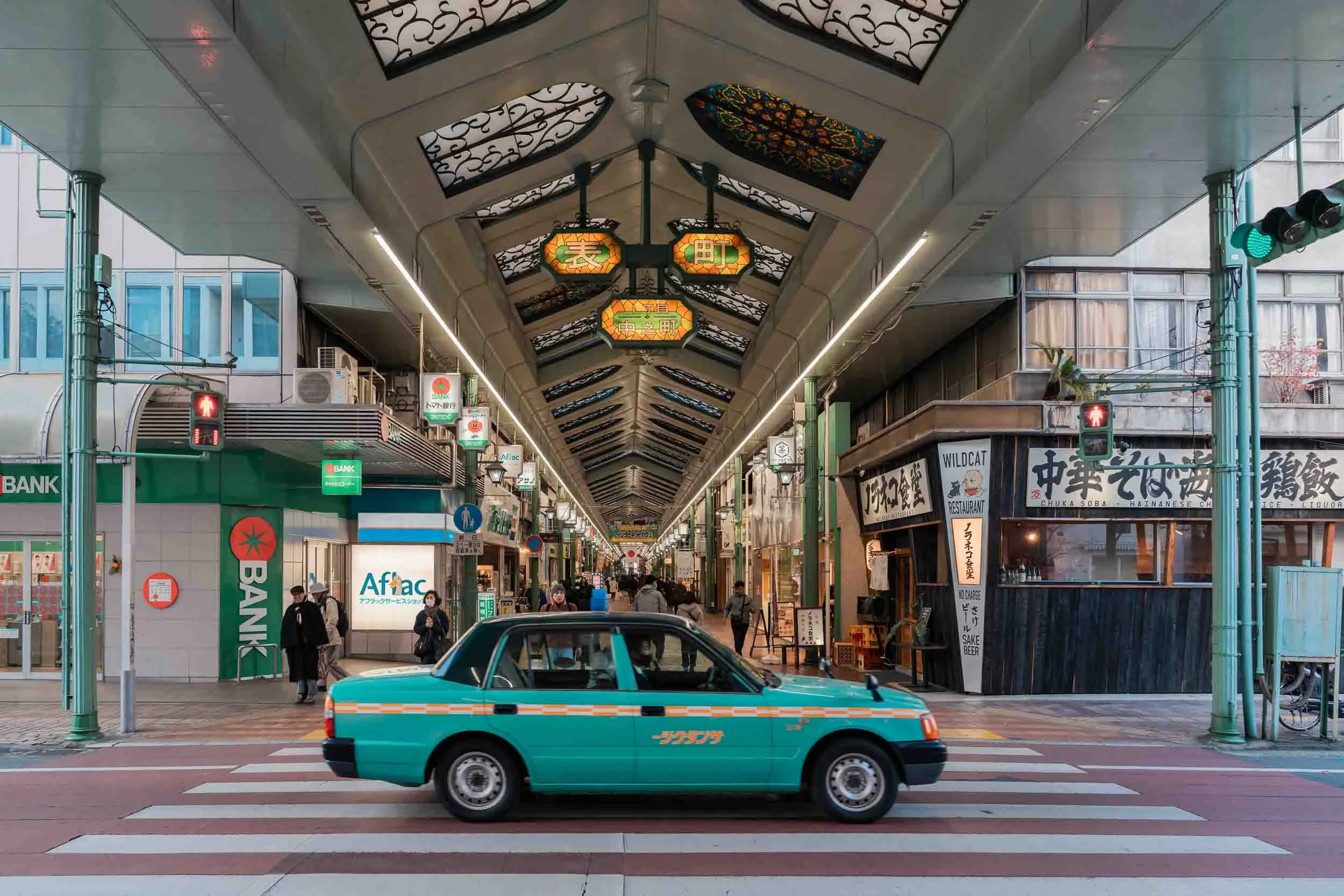
Omotecho is another shopping street in Okayama, located next to Tenmaya, featuring around 300 shops, including apparel stores, cafes, arcades, and bookstores.
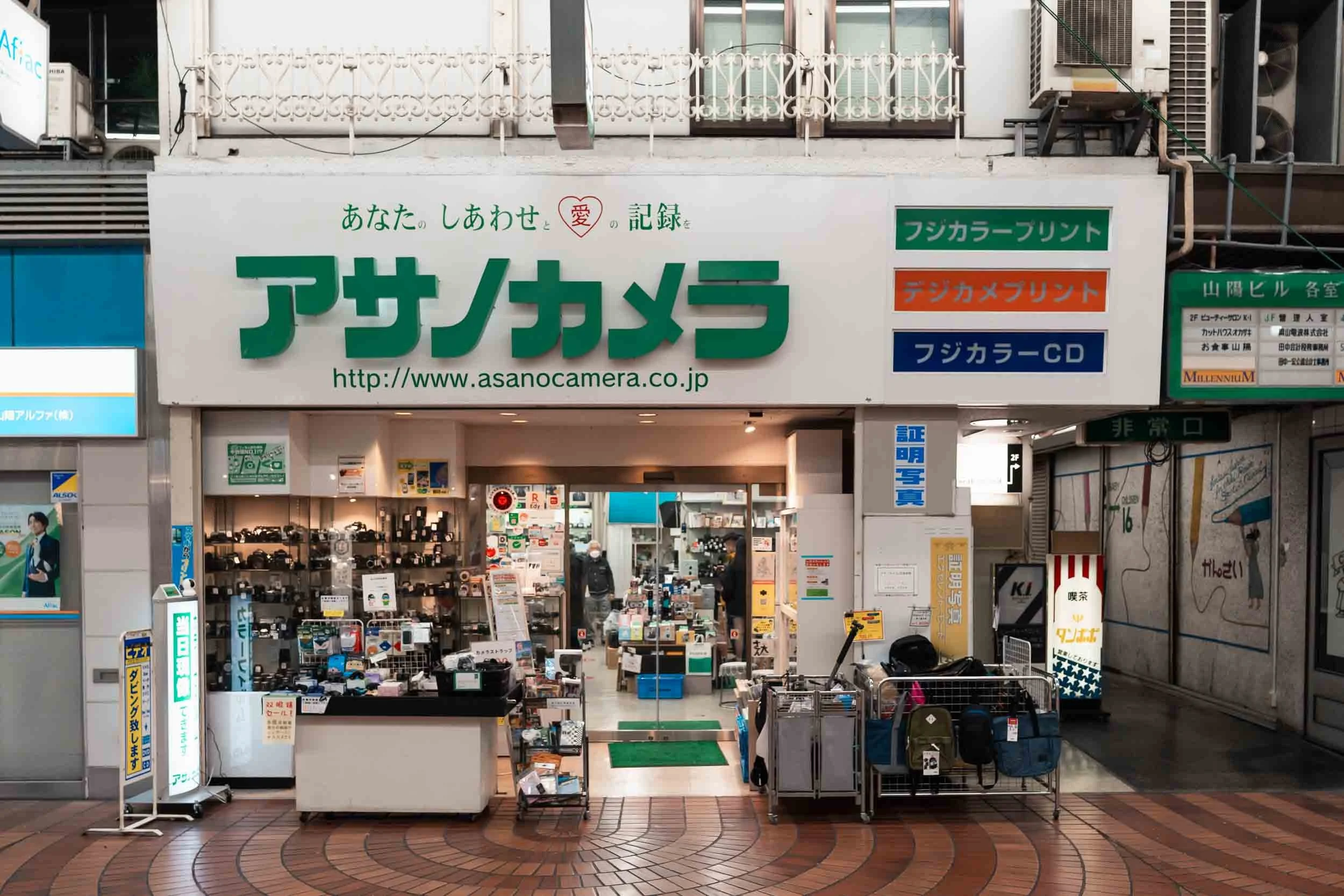
The street features a glass roof that lets natural light in while shielding shoppers from the elements. Its architecture is designed to evoke the charm of European streets, enhancing the shopping experience with colourful sculptures and seasonal decorations. While passé, I prefer its retro vibes over the rather bland Okayama Ekimae shopping street.
Morinomachi Plaza (杜の街グレース モリノマチプラザ)
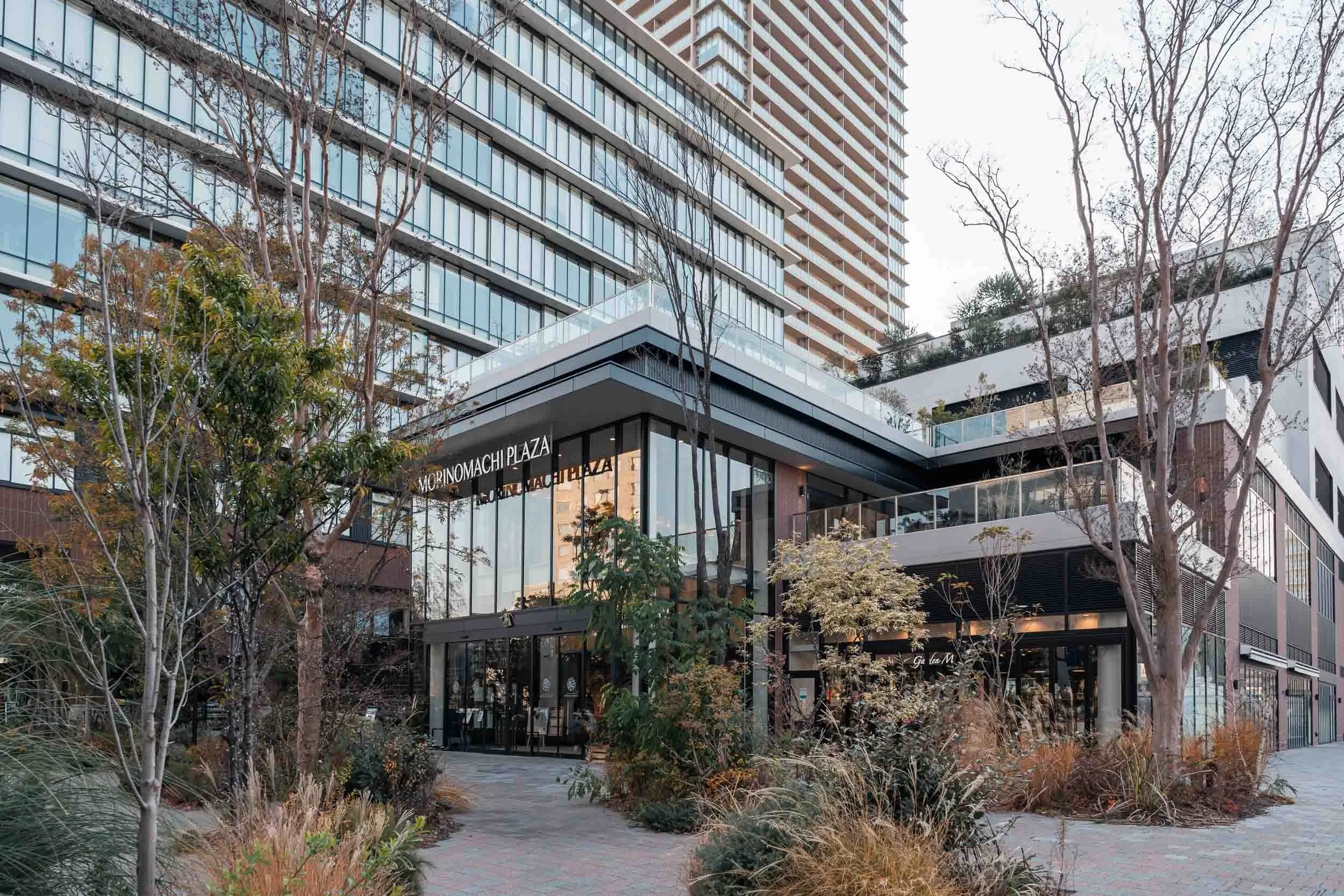
Morinomachi Plaza is part of the larger Morinomachi Grace complex, which aims to promote sustainable urban development and community engagement. It’s a 15-minute walk from Okayama Station, but its peaceful atmosphere makes it worthwhile.
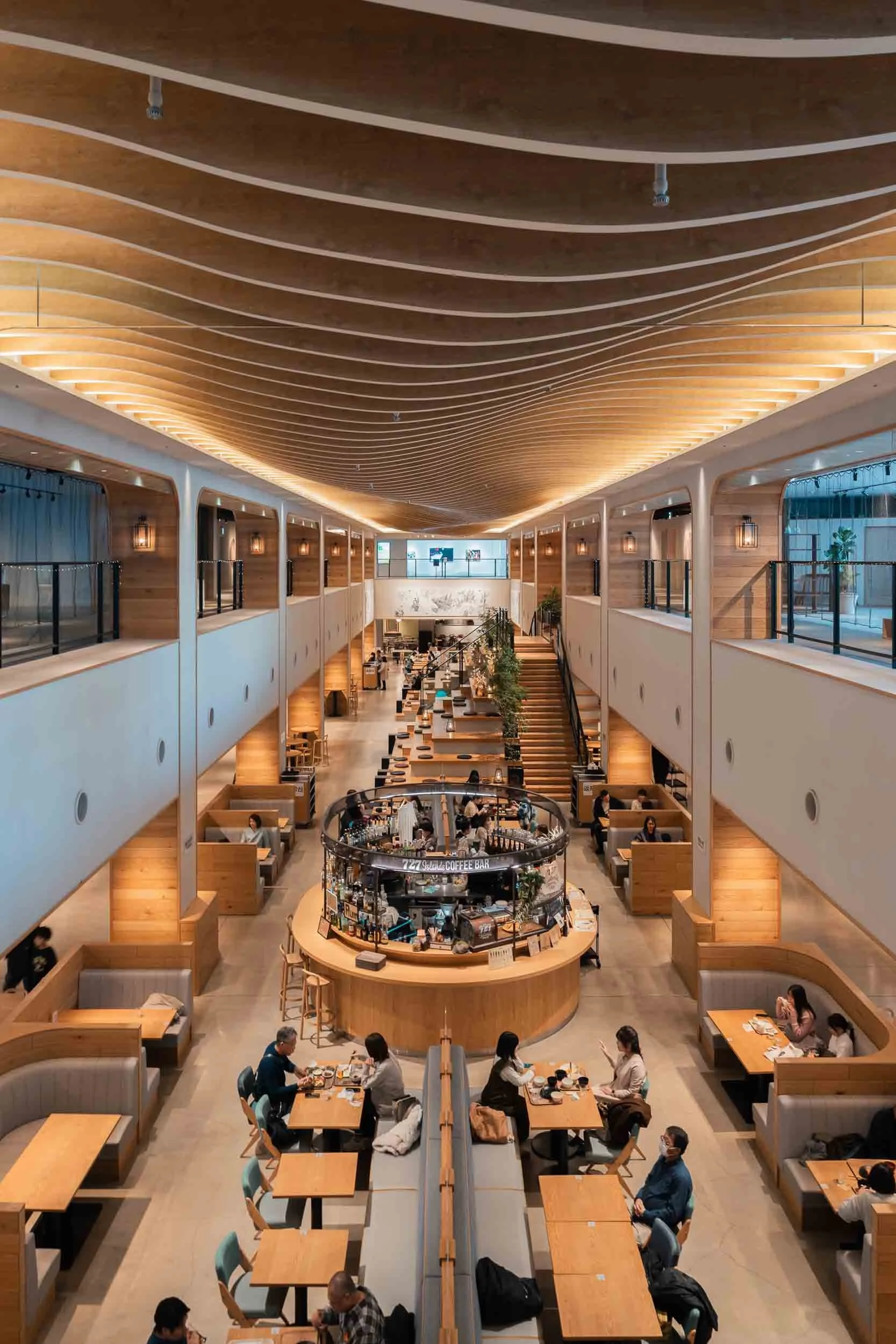
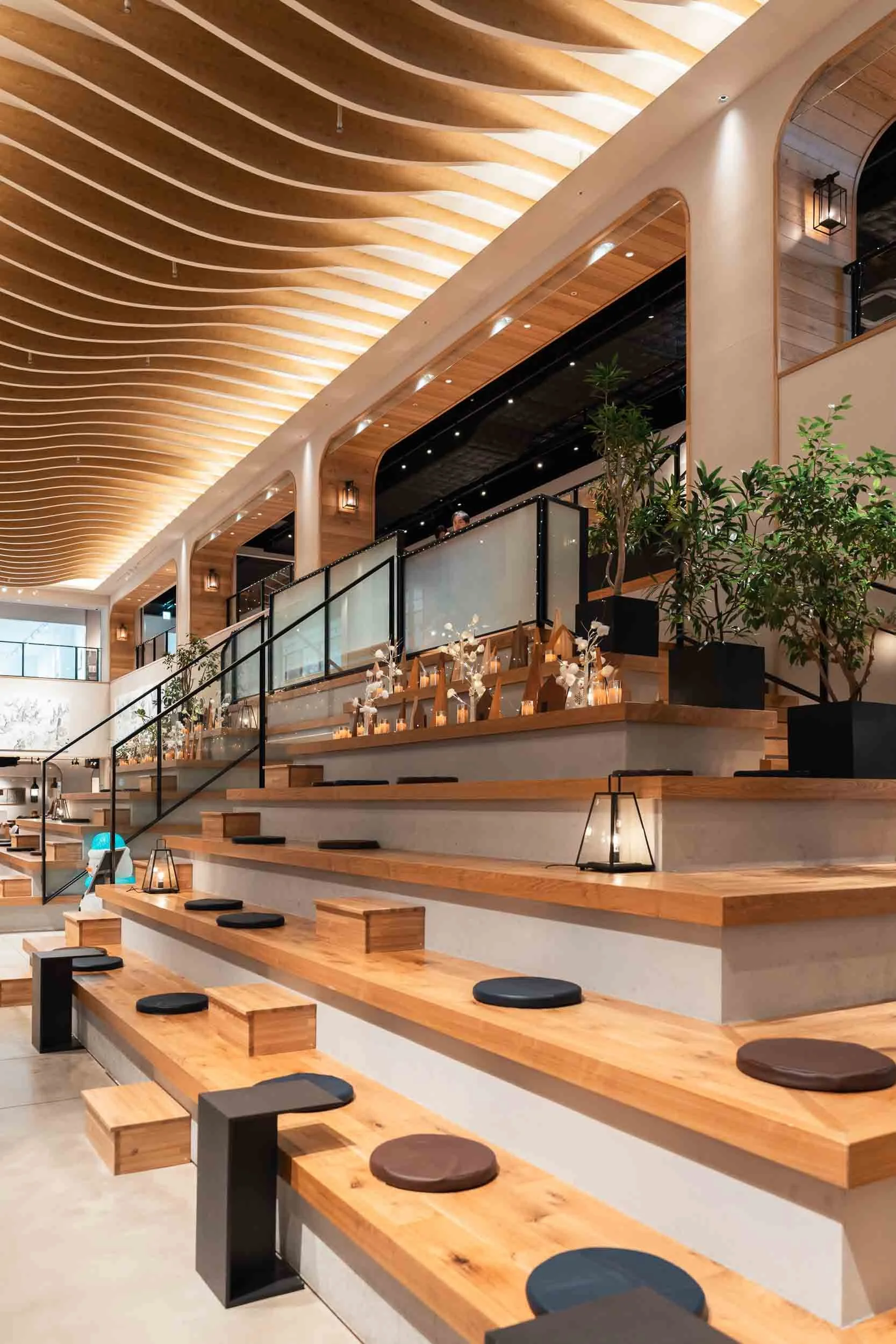
The design is inspired by the natural beauty of the Seto Inland Sea, with wave-shaped elements on the ceiling that mimic the movement of water, creating a serene atmosphere. The space includes a terraced "hill" that connects different levels, serving as both seating and an event stage. Green spaces are incorporated, featuring 1,000 trees and various plant species, to honour Okayama's natural environment.
At the plaza's centre is the Wonseto Foodhall, a vibrant culinary hub showcasing local cuisine from the Okayama region and the Seto Inland Sea. The complex also includes an art lounge curated by local artists, promoting social interaction and cultural activities.
Sun Station Terrace Okayama (さんすて岡山)
Located within Okayama Station, Sun Station Terrace is larger than it appears from the outside, featuring three separate wings filled with clothing stores, restaurants, and food stalls. It’s a convenient location to grab a bite before or after travelling, but it can get extremely packed at any time of day.
Okayama Ichibangai (岡山一番街)
Once you hit the sub-level from Okayama Station, you enter the Ichibangai, essentially the underground portion of Sun Station Terrace directly underneath the station. Ichibangai is home to the trendier Japanese brands, with tunnels branching off to PESCA, AEON Mall, and Takashimaya.
AEON Mall Okayama (イオンモール岡)
Further down the tunnel, you will get to AEON Mall, Okayama’s downtown urban mall with an extensive range of shops, dining options, and entertainment facilities under one roof. My favourite store is AEON STYLE, a sprawling supermarket with every imaginable Japanese grocery you can buy and snack on in your hotel room.
Hare Nochi Hare at Shunkan Hiroba (旬感広場 晴れのち晴れ)
Hare Nochi Hare is a direct farm and livestock product sales store located on the first floor of Shunkan Hiroba, part of a larger complex that emphasises local agriculture and food culture. It’s a bit out of the way in Soja, but if you’re driving, the farmer’s market is a shopper’s heaven just 30 minutes away.
The store offers a wide selection of fresh, locally grown fruits and vegetables, including seasonal items like peaches and grapes, which are particularly popular in summer. Customers can find a variety of Okayama brand meats, such as Chiya beef and Bisei Manten pork, as well as fresh seafood delivered daily from local fishing ports. If you’re on the go, the deli section features a range of prepared foods, including sushi rolls, chirashizushi, and onigiri, making it easy for shoppers to grab a quick meal.
The building also features a cafe, SORA & SUN, on the second floor, serving dishes made with locally sourced ingredients.
Where to Stay
Super Hotel Okayama Station East-Gate (スーパーホテル岡山駅東口)
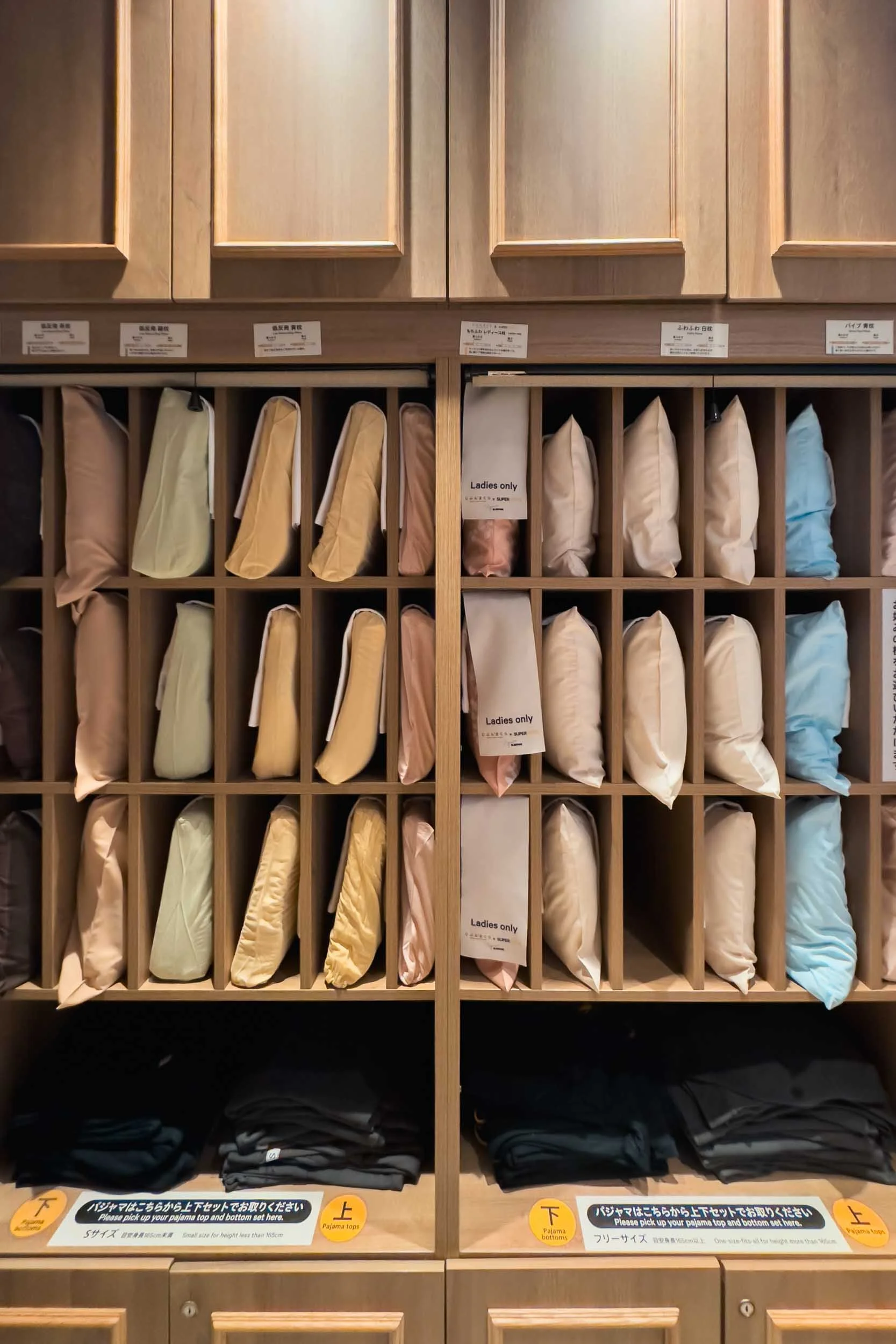

Super Hotel offers standard compact rooms, typical of Japanese hotels. What’s interesting, though, is their “pillow concierge” concept, where guests can choose from eight pillows of different height and hardness to ensure a comfortable night’s sleep. The hotel’s natural hot spring, Bizen no Yu, is known for its skin-friendly properties.
They also offer a complimentary breakfast—uncommon in Japanese hotels—with a selection of Japanese and Western dishes. My favourites were the peach curry on rice, Okayama’s famous kibi dango, and freshly baked bread and pastries. In the evenings, the restaurant space transforms into a welcoming bar with an open alcohol bar for guests.
Super Hotel is only a short walk from AEON Mall, from which you can access Okayama Station through an underground passage.
Dormy Inn Okayama (ドーミーイン岡山)
Dormy Inn’s hot spring, Kibi no Yu (吉備の湯), uses natural hot spring water delivered directly from Shimo-Yubara Onsen in Okayama Prefecture. It features an indoor and outdoor bath on the top floor, including a cold bath and a dry sauna, with complimentary ice cream served after bathing.
Breakfast options feature local specialities such as barazushi, seared Spanish mackerel with peach jelly, and complimentary ramen served in the late evening.
Dormy Inn is situated between AEON Mall and Nishigawa Canal, making it an ideal base for exploring the area, with numerous food options nearby.
ANA Crowne Plaza Okayama (ANAクラウンプラザホテル 岡山)
ANA Crowne Plaza may be more of a business hotel with all the facilities a corporate event requires, but it is directly connected to Okayama Station’s west exit via a bridge, which makes commuting outside of Okayama City a breeze.
VIA INN OKAYAMA (ヴィアイン岡山)
Just across the street from the ANA Crowne Plaza is the VIA INN, which is directly attached to the Okayama Station concourse and offers a panoramic view of the trains from its lobby.
Hotel Granvia Okayama (ホテルグランヴィア岡山)
On the other side of the tracks is Hotel Granvia, run by JR Hotel Group, which manages many properties connected to train stations. The hotel is accessible directly from Okayama Station and Ichibangai.
Rooms are more old-fashioned but spacious, with family rooms housing up to four. It also features a whopping eight restaurants offering diverse cuisines, ranging from Japanese and French to Chinese.
This post may contain affiliate links, meaning we receive a commission when you click and make a purchase.
Related Posts
![My Ultimate Shopping Guide to Japan Konbinis [2026 Edition]](https://images.squarespace-cdn.com/content/v1/5fa57aacf5b0a90a76b0d7cc/41592b29-051b-450b-bdf4-7929a4cbf953/travel_japan_konbini_portrait.jpg)