
The Complete Guide to Naoshima: Japan’s Art Island of Light and Stillness
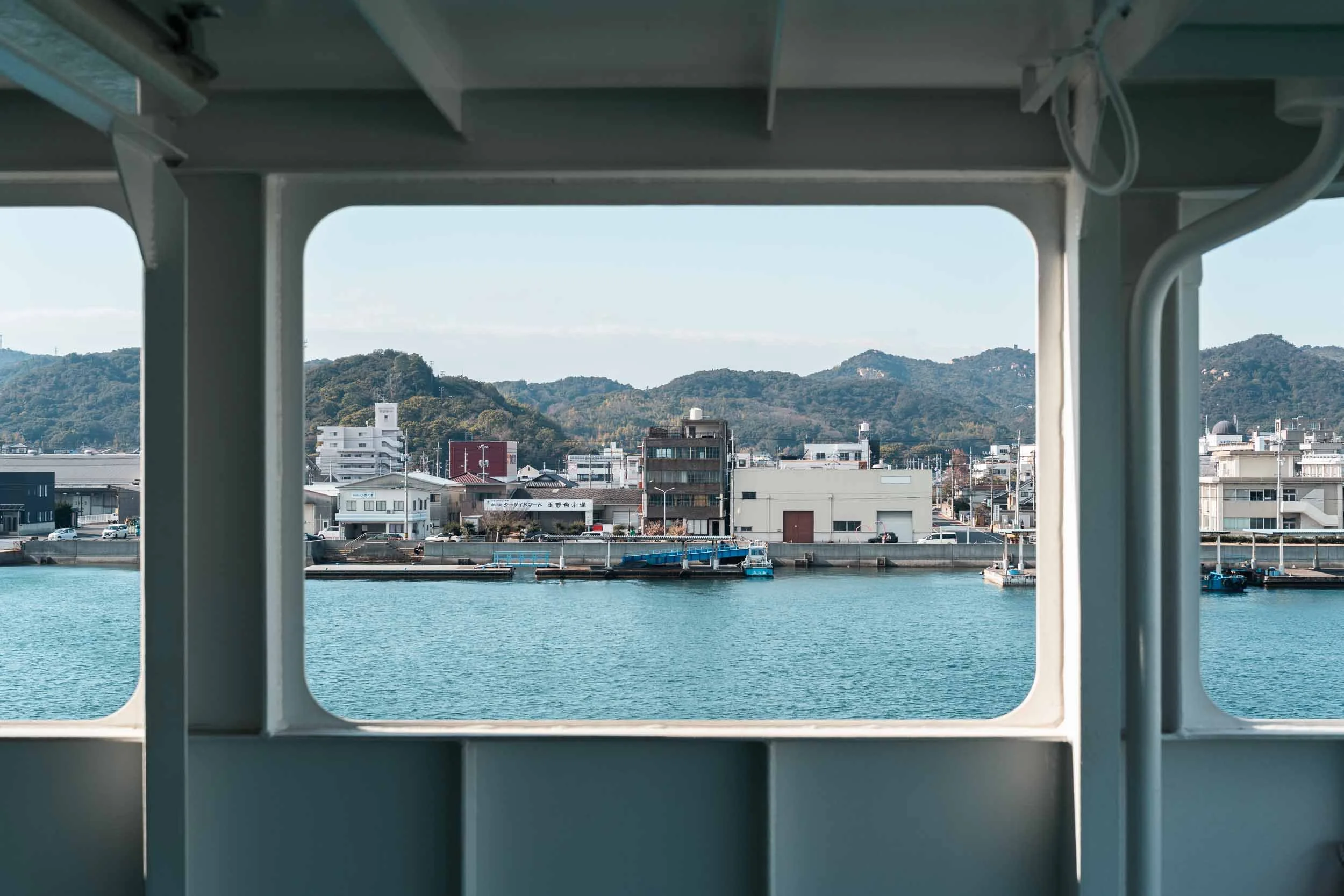
Naoshima is the kind of place that quietly beckons if you love art and architecture.
Nestled in the Seto Inland Sea, this tiny island in Kagawa Prefecture is often called an “art island,” but that hardly captures its whole story, and Naoshima has not always been just a minimalist haven. For much of the 20th century, it was a modest island with factories and a declining population—one of many small communities in the Seto Inland Sea. Things began to change in the late 1980s, when Benesse Holdings (yes, the education company) and the Naoshima Fukutake Art Museum Foundation started quietly investing in the island. Working closely with architect Tadao Ando, they transformed abandoned schools, empty houses, and coastal hillsides into museums, site-specific installations, and art projects—gradually turning Naoshima from an industrial outpost into Japan’s icon for art and architecture.
Nowadays, Naoshima remains peaceful in its unhurried, gently lived-in way: laundry fluttering outside traditional houses, schoolchildren cycling past sleek concrete buildings, fishing boats bobbing in the distance as visitors wander between galleries and shoreline. It’s a dreamy blend of sea, sky, and sculpture; a living canvas where everyday life and contemporary art coexist on the same streets, beaches, and bus stops.
I visited Naoshima on a day trip from Okayama, making for a satisfying escape if you’re already exploring the Chugoku or Kansai regions, although I would strongly recommend spending a night on the island to see more of the museums.
Contents
Getting to Naoshima
Naoshima may seem remote, but it’s surprisingly straightforward to reach once you understand the ferry routes. Most visitors arrive via Okayama or Takamatsu—and ultimately, all roads (and rails) lead to a ferry. Even if you’re travelling from larger centres like Osaka, Kyoto or Hiroshima, you’ll almost always funnel through Okayama or Takamatsu.
I visited Naoshima on a day trip from Okayama, one of the most convenient bases for the island. But Naoshima also makes an excellent side trip if you’re coming from Kagawa or Tokushima on the Shikoku side. This route is especially popular with travellers following the Setouchi art circuit, island-hopping between Naoshima, Teshima, and Shodoshima.
From Okayama (Chūgoku Side)
Step 1: Okayama to Uno (by Bus/Train)
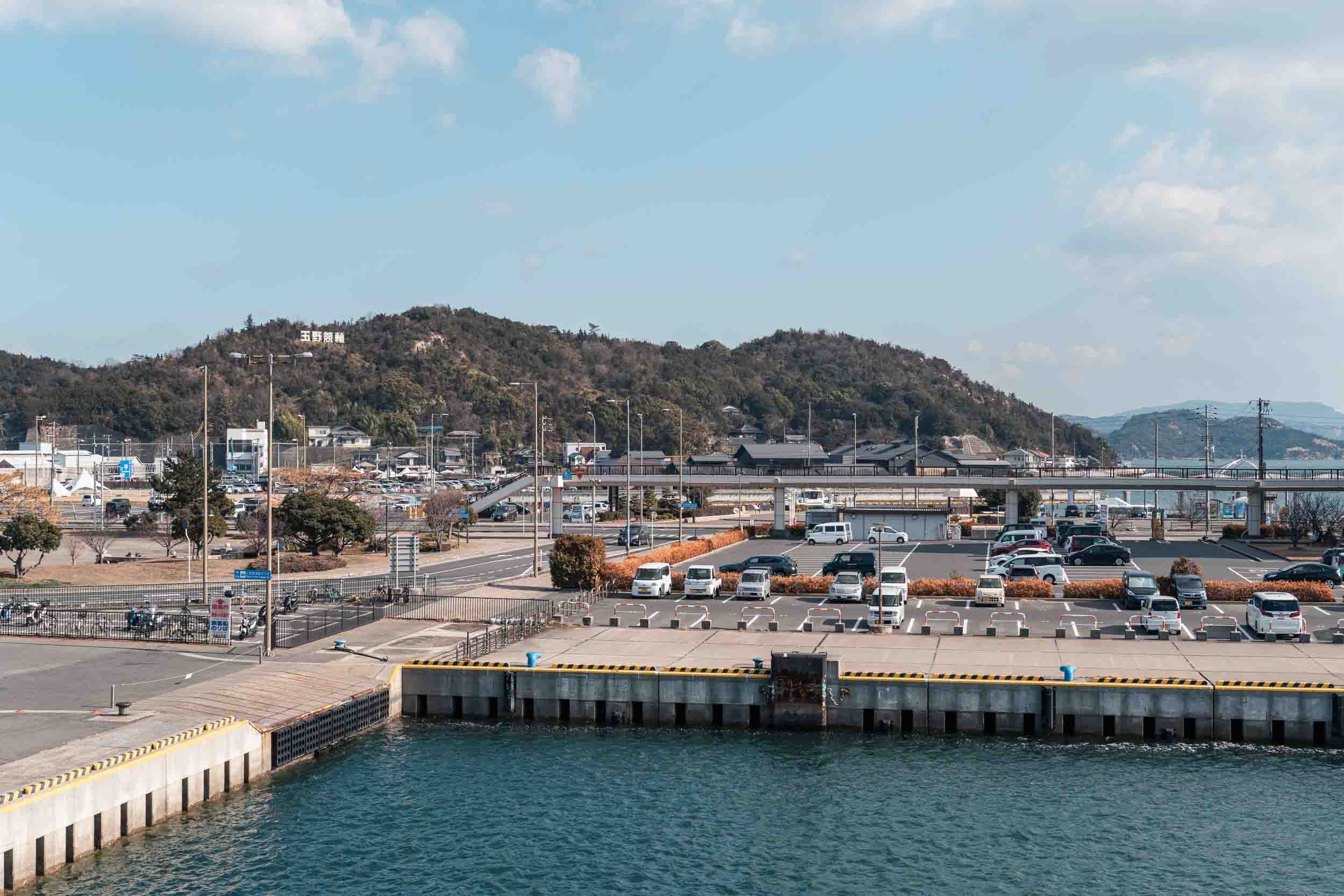
You can catch a bus heading for Tamano (玉野市) or Uno Port (宇野港) from the bus terminal outside JR Okayama Station (岡山駅). The journey takes approximately 50–60 minutes, depending on traffic conditions. No transfers are necessary, so you can relax and watch the city recede into the countryside and coastline, although it can be challenging to determine the correct bus route and schedule.
Alternatively, take the Seto-Ohashi Line (瀬戸大橋線) train from Okayama Station to Uno Station (宇野駅), with a transfer at Chayamachi Station (茶屋町駅), for a journey of 45–60 minutes. Uno Station is just a short walk from Uno Port, where ferries depart.
Step 2: Uno to Naoshima (by Ferry)
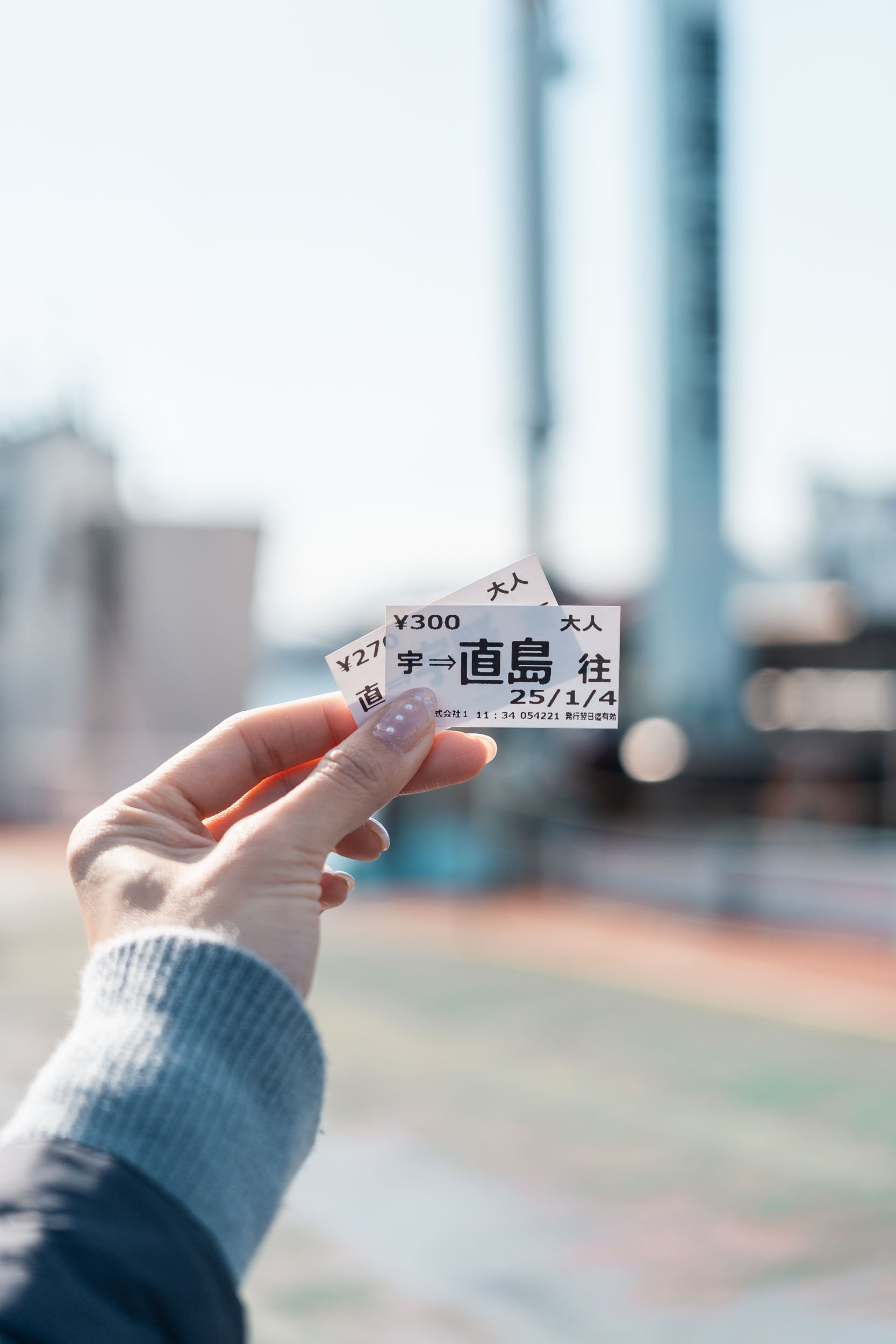
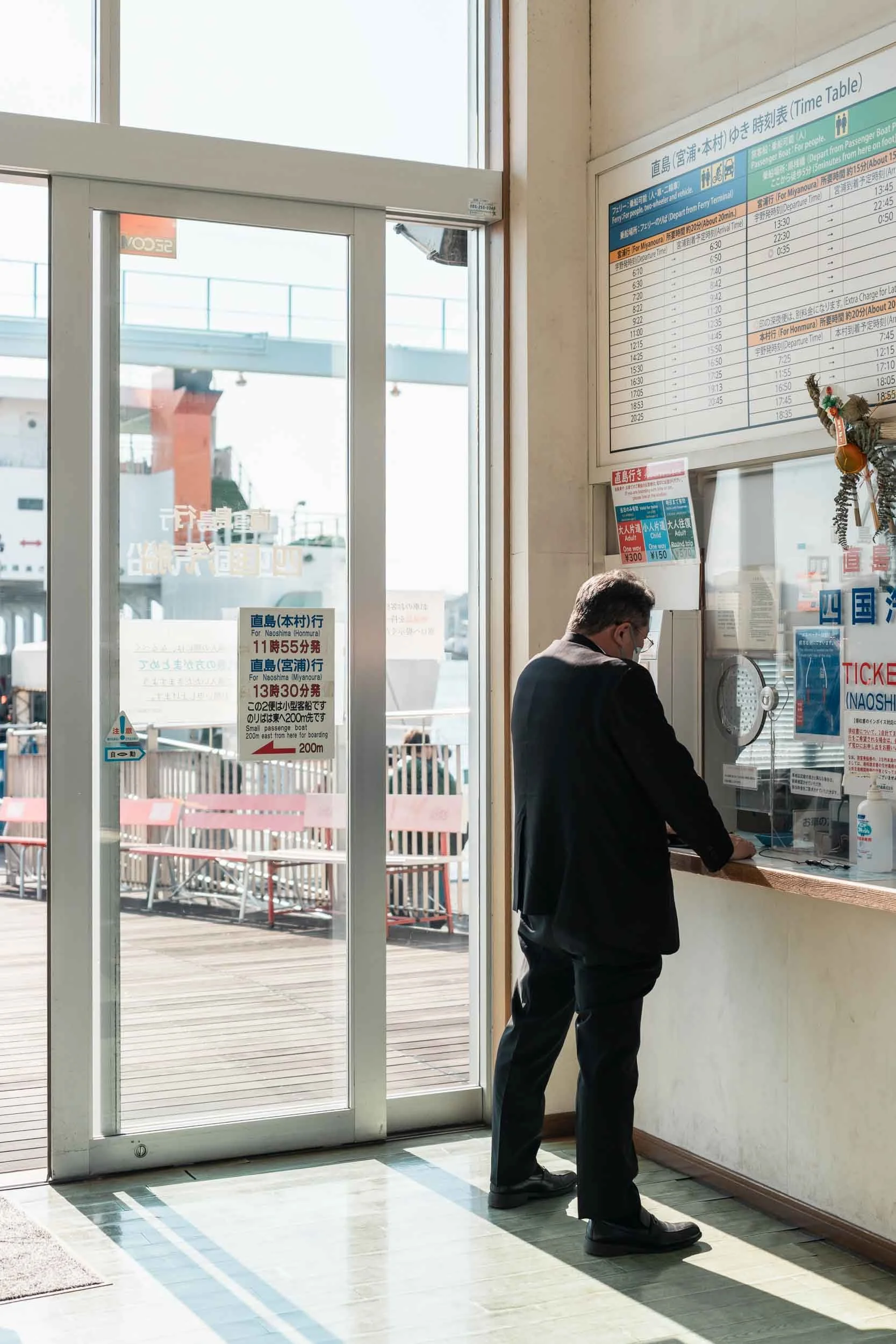
From Uno Port, ferries run to Miyanoura Port (宮浦港 in the west, the island’s main gateway) and Honmura Port (本村港 in the east, closer to the Art House Projects). Ferries are infrequent, and I recommend checking the timetable in advance and planning your train or bus connection around your chosen ferry, especially if you’re doing Naoshima as a day trip. Ticket machines on the spot also accept only cash, no IC cards.
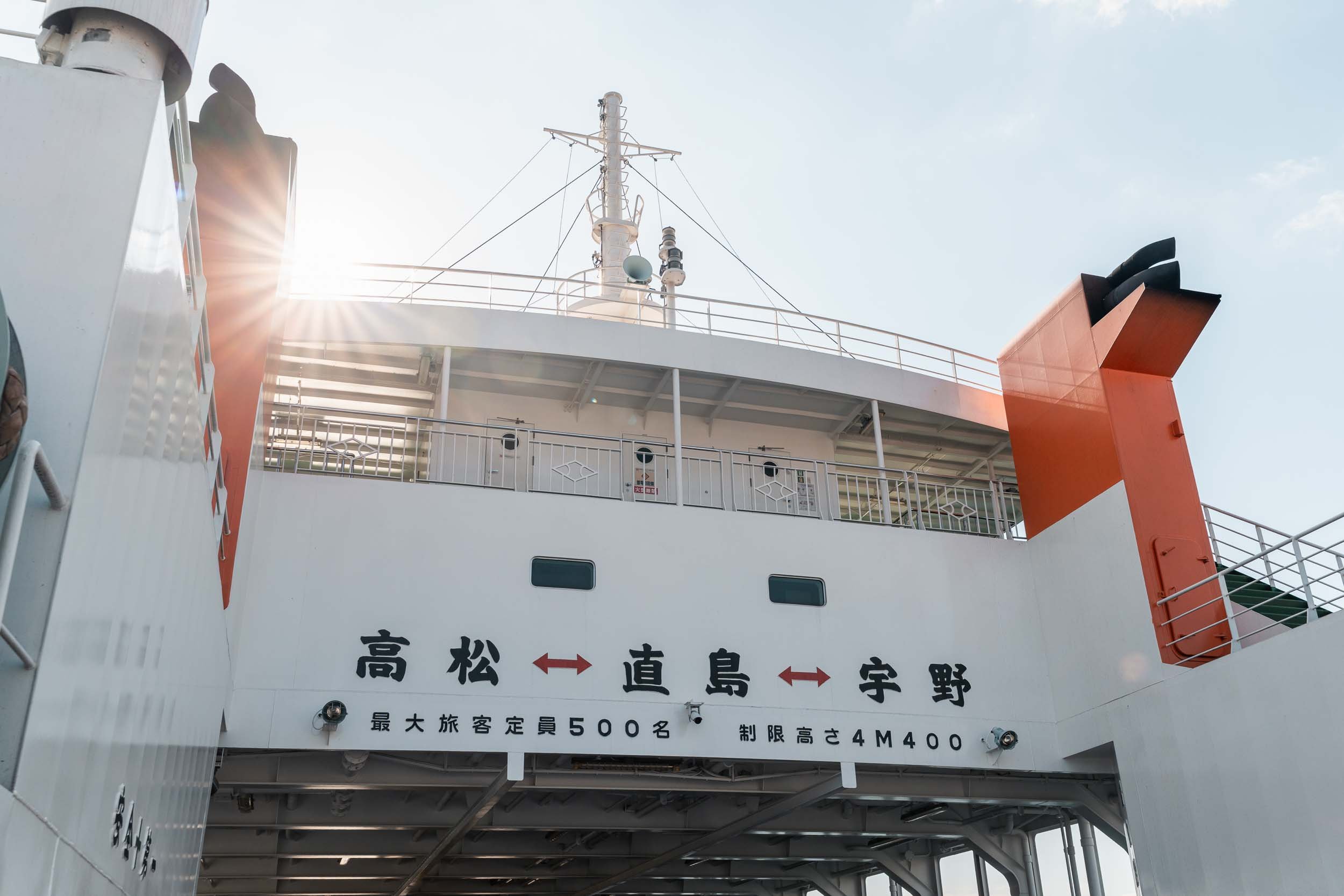
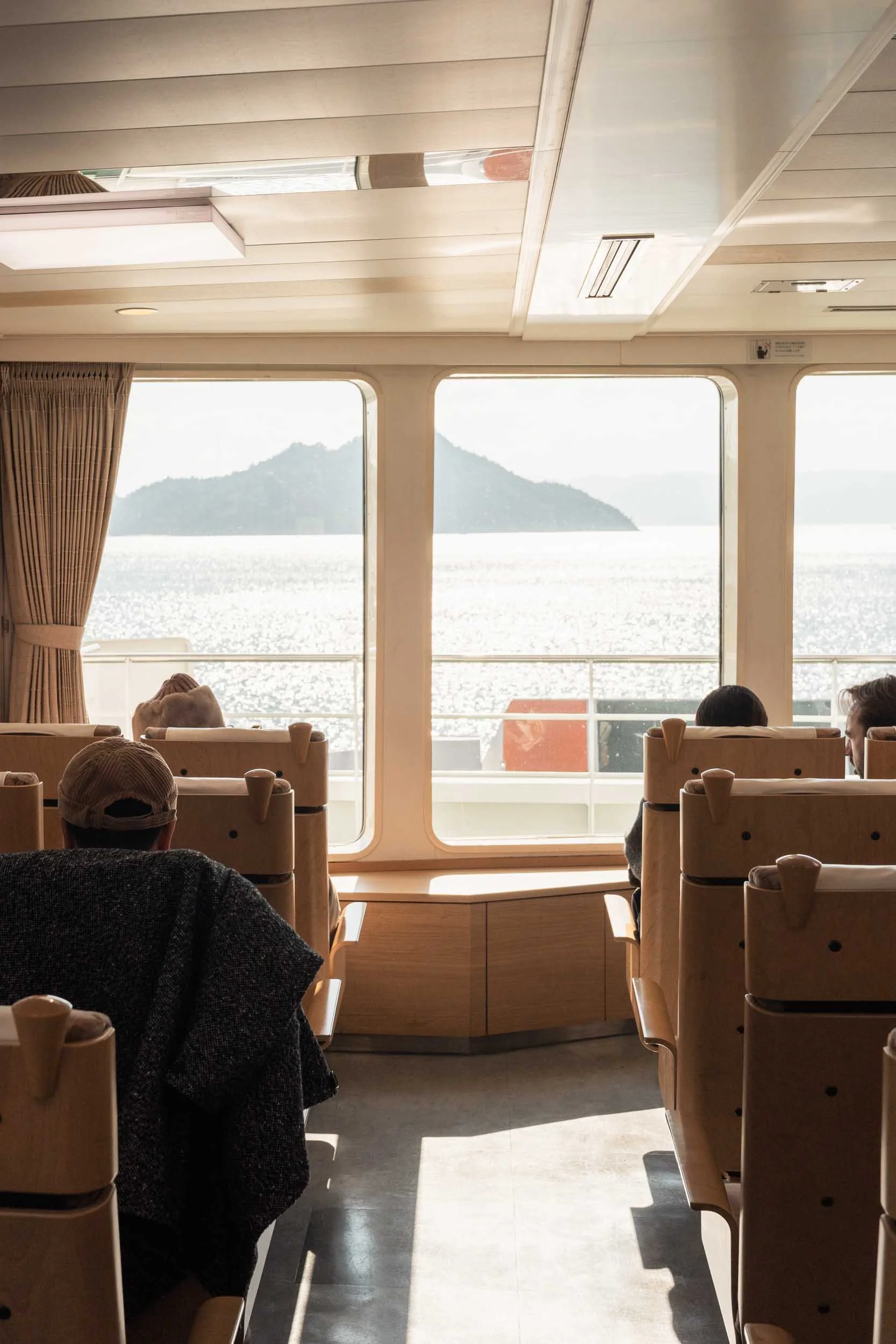
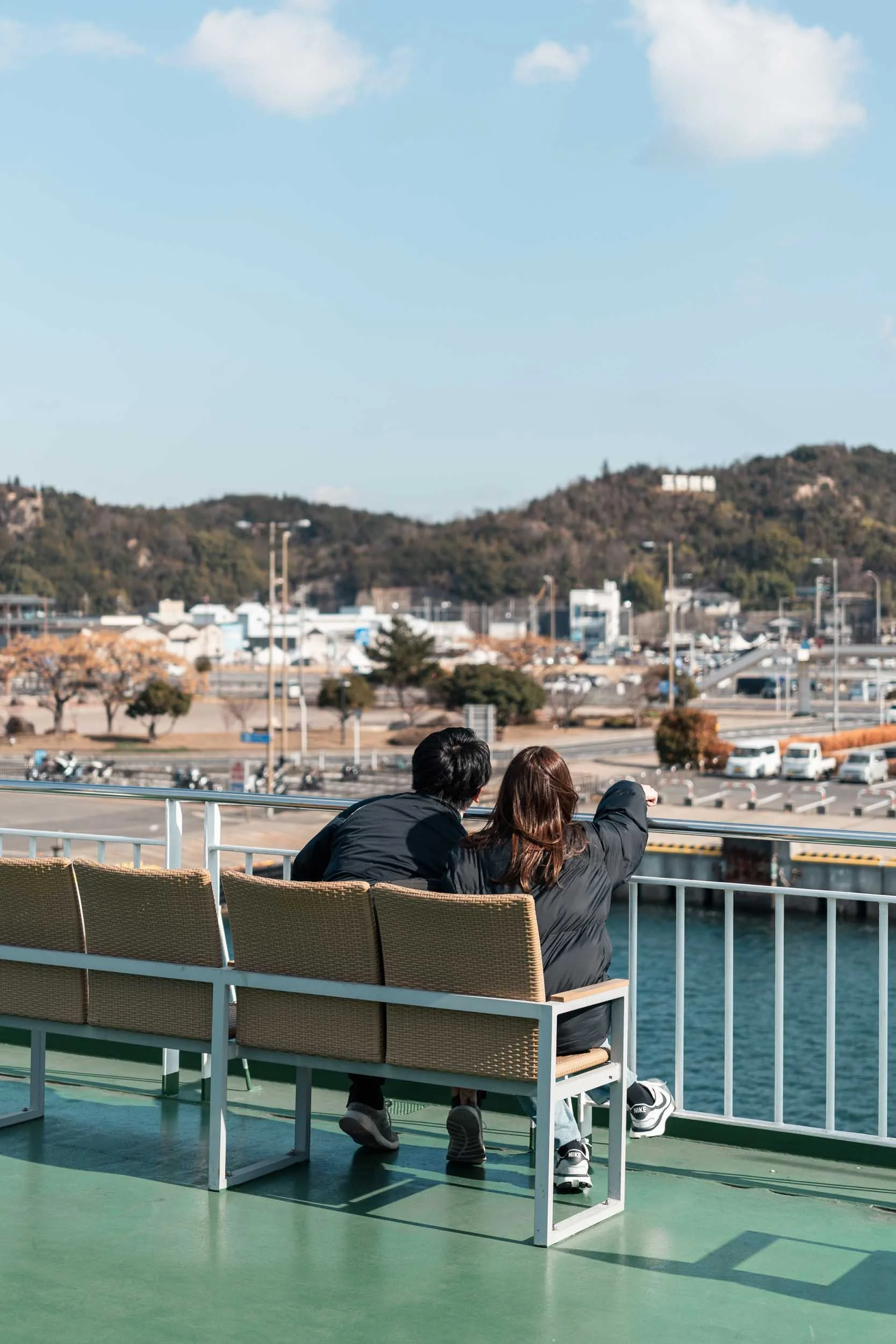
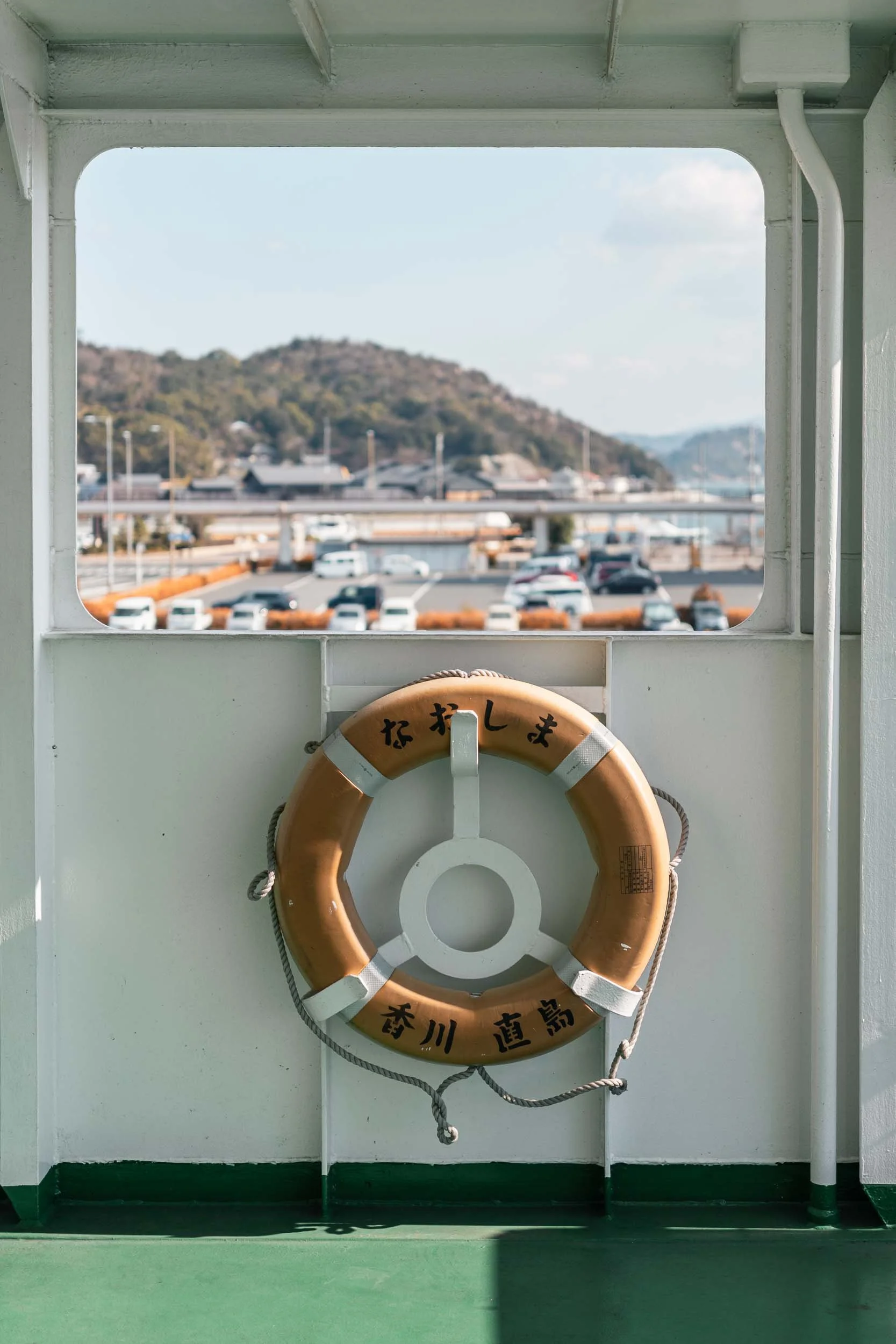
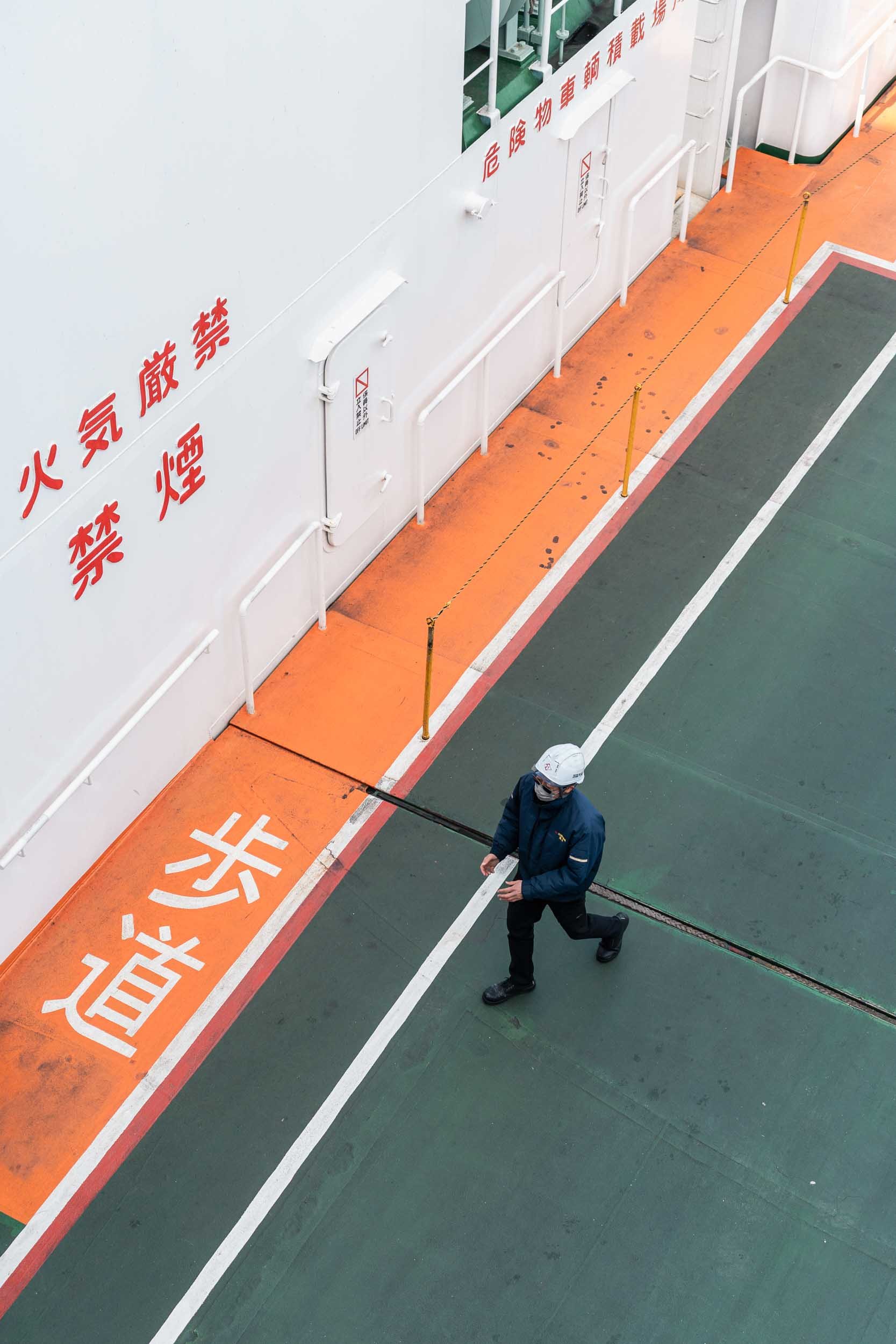
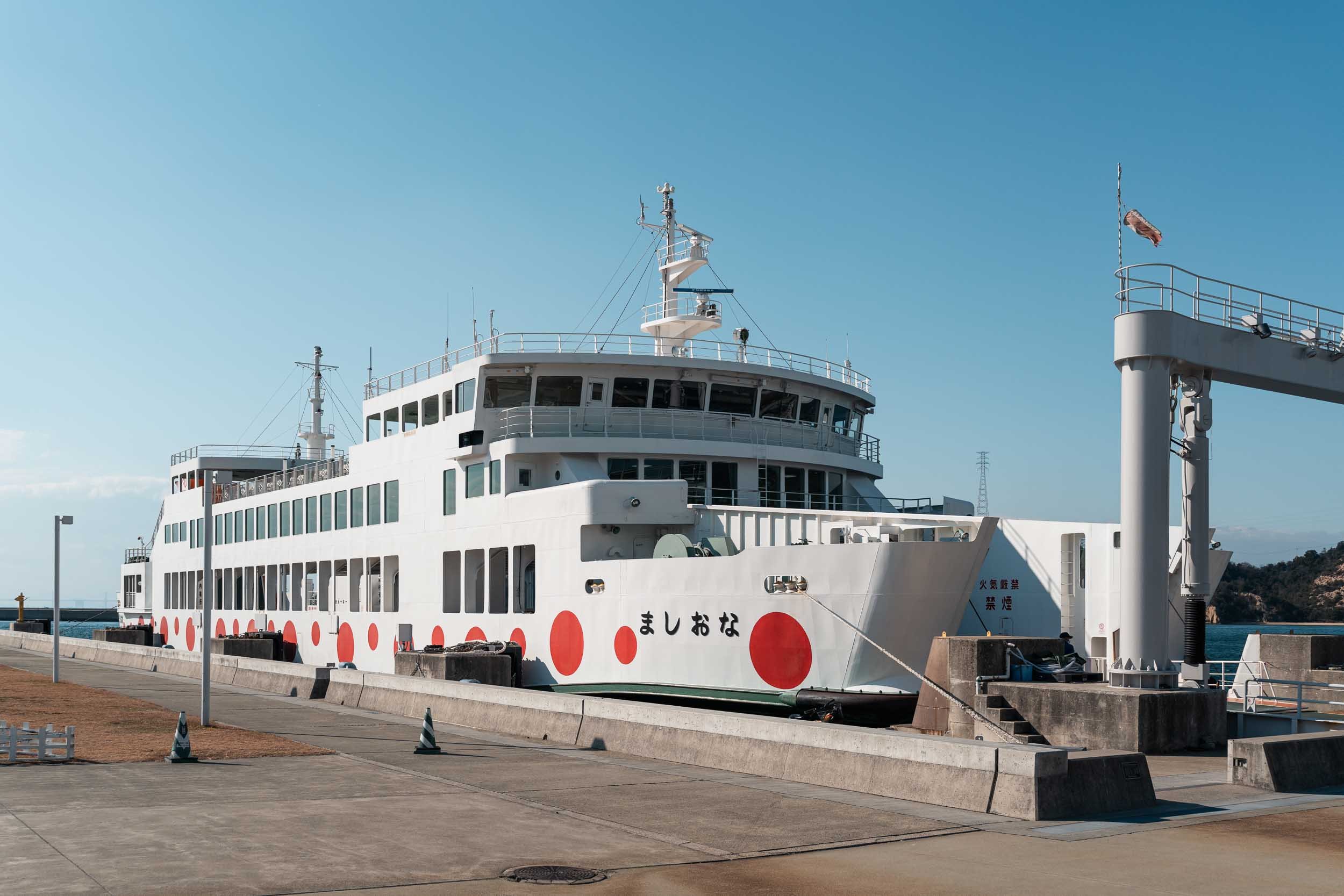
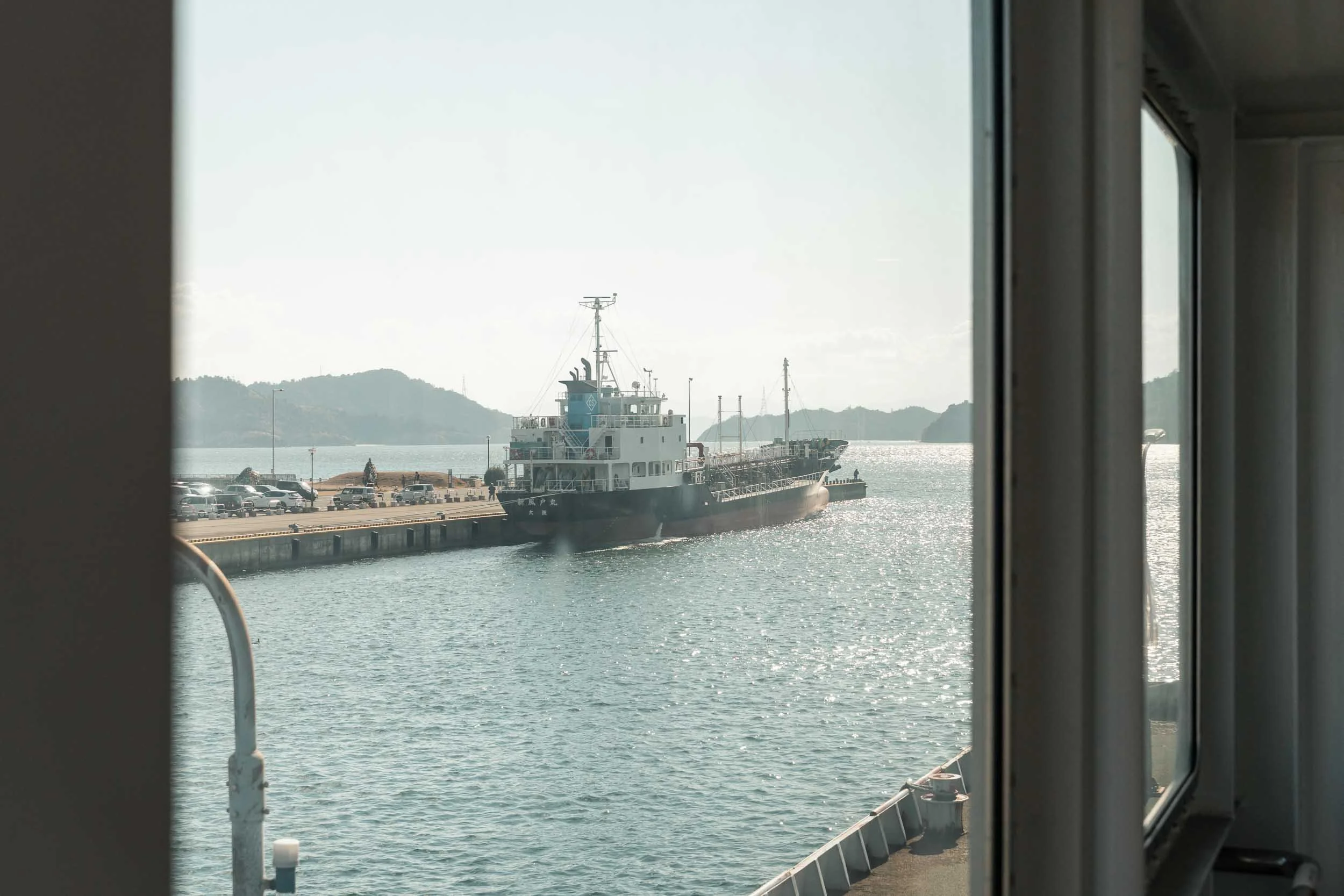
The ferry ride itself feels like a gentle reset, and it’s worth heading out on deck if the weather’s good—the Seto Inland Sea has that calm, hazy-blue beauty that makes you exhale more deeply. The journey lasts about 20 minutes—just enough time to watch the coastline shrink, the water deepen to that inky Setouchi blue, and the pace of the day slow down before you even step off the boat at Miyanoura Port.
From Takamatsu (Shikoku Side)
Step 1: Reach Takamatsu Station / Port
Takamatsu is connected to other parts of Shikoku and Kansai by long-distance buses. From JR Takamatsu Station (高松駅), it’s a short walk to Takamatsu Port.
Step 2: Takamatsu to Naoshima (by ferry)
Ferries from Takamatsu Port (高松港) also depart for Miyanoura and Honmura on Naoshima. The trip lasts around 50–60 minutes, making it a very feasible day trip from Takamatsu if you plan your connections well.
Getting Around Naoshima
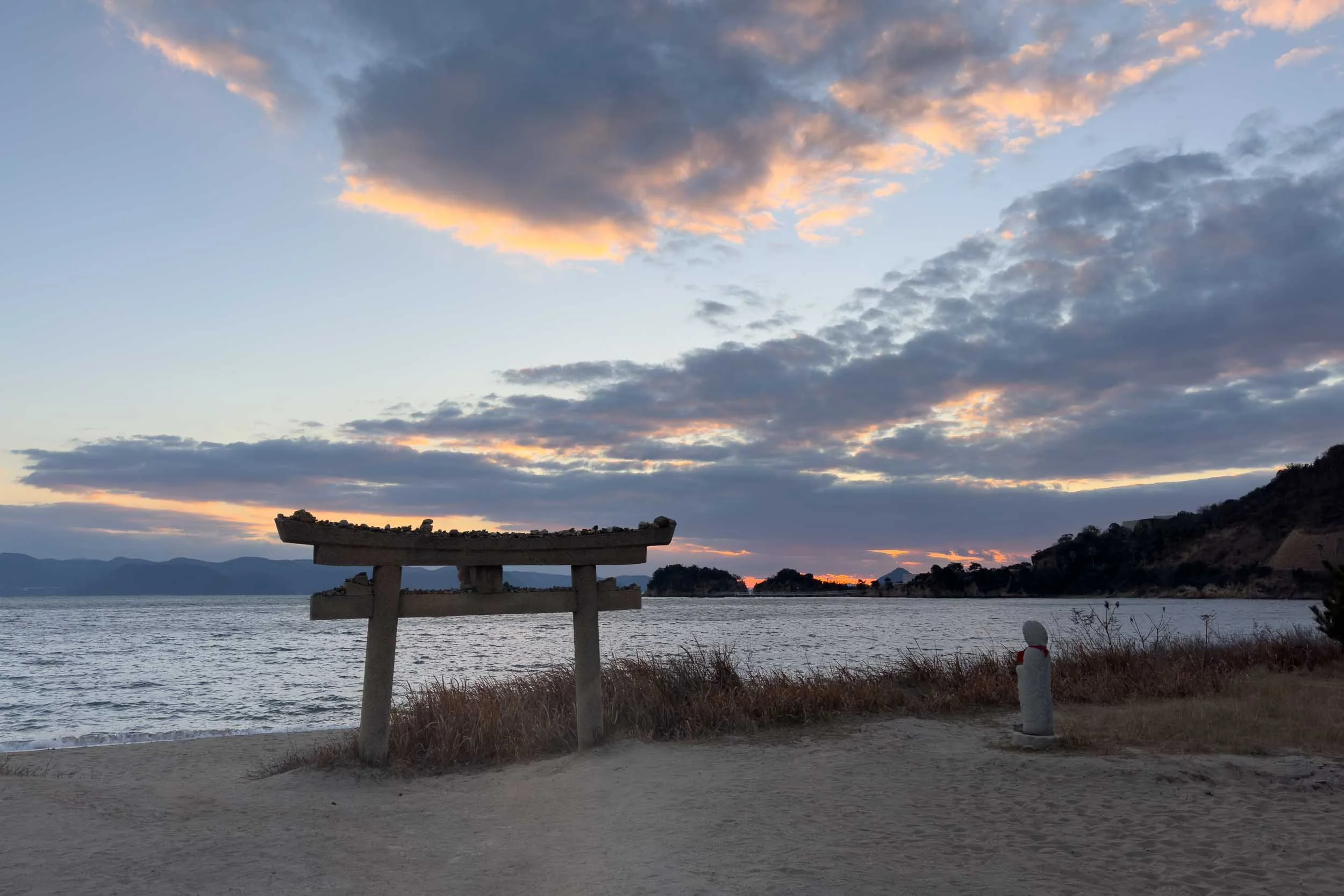
Naoshima is small, but not quite walk-everywhere-in-one-afternoon small—especially if you’re trying to hit the big museum triangle (Chichu, Benesse House, Lee Ufan) as well as Honmura and Miyanoura in a single day. Think of it as a layered island: port towns at the edges, museums on the hilly middle, and narrow roads winding between them. How you move matters.
By Town Bus
The local bus is the main form of transport on the island, operating a loop mainly between Miyanoura (bus stop 2), Honmura, and Tsutsuji-so (つつじ荘), the stop nearest to the Benesse Museum area. It’s inexpensive, simple, and surprisingly efficient for such a small island. Signage in English is limited, but the route is clear, stops are generally announced, and you pay a small flat fare in cash when you get off.
By Benesse Shuttle Bus
From Tsutsuji-so, you can transfer to the free Benesse shuttle bus, which serves the Hiroshi Sugimoto Gallery, Benesse House Museum, Lee Ufan Museum / Valley Gallery, and Chichu Art Museum.
This shuttle is designed for museum visitors, making it the easiest way to move between the hillside museums, but it runs infrequently (like everything else on Naoshima). If you miss a bus and have time to spare, I’d recommend walking directly, as a one-way trip takes only about 30 minutes on foot, and the short stretches between galleries offer fantastic views along the way.
By Foot
Certain parts of Naoshima are a dream on foot: Miyanoura Port area (for outdoor artworks and cafés); Honmura Village (for the Art House Project); and coastal stretches near Benesse House (for seaside sculptures and sunsets). Walking is ideal within each area, but not suitable for visiting multiple art areas in one day. Combine walking with buses rather than relying solely on walking.
By Car
Car rental on Naoshima is limited—it’s a small island, and parking near the major museums is arranged around shuttle access. If you already have a car on the mainland, you can take it over on the car ferry, but why bother?
Taxis are also available on Naoshima, but, unsurprisingly, there are only two. So these won't appear out of nowhere when you need one, and should be considered a last resort if you miss a key transfer.
What to See and Do
Chichu Art Museum (地中美術館)
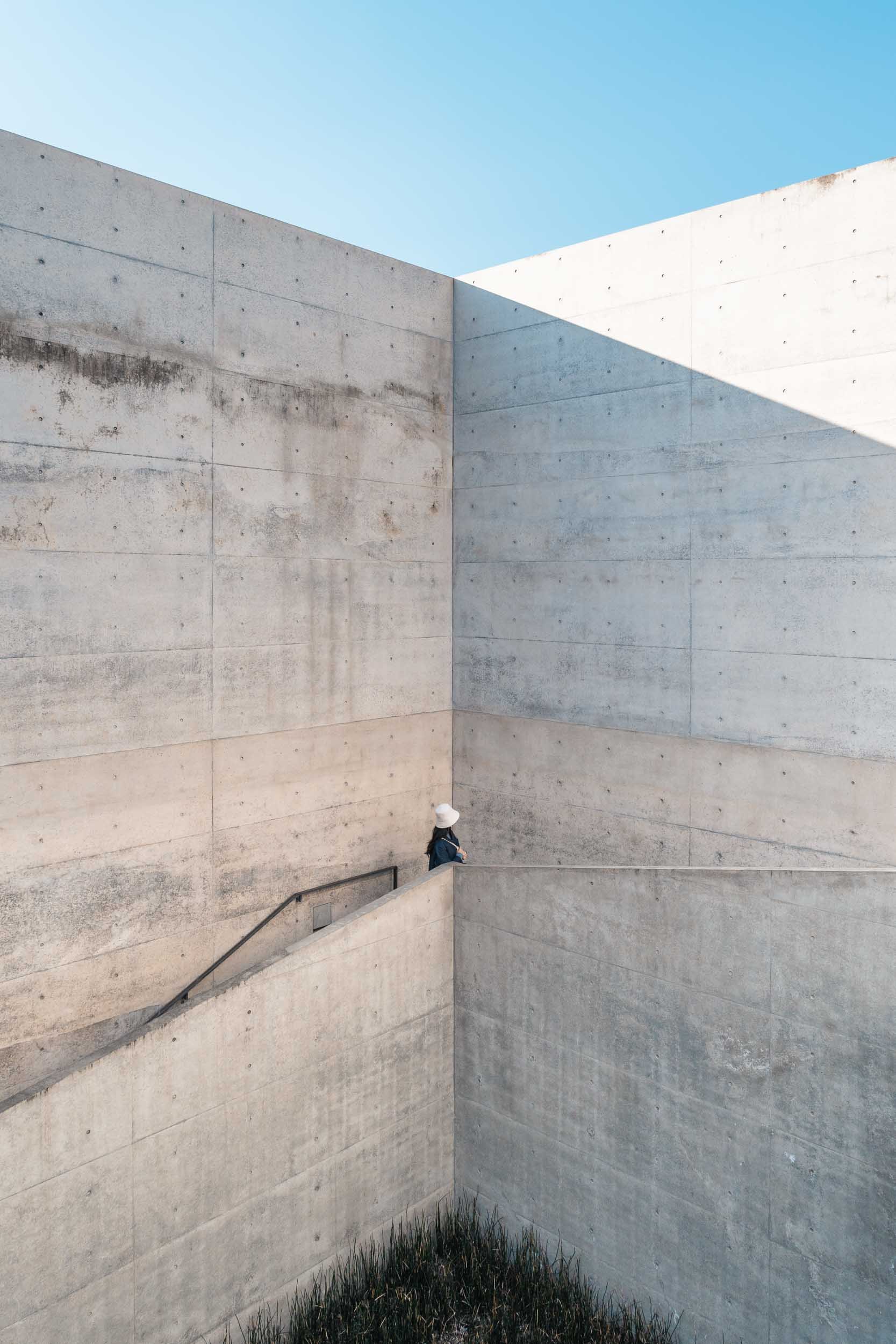
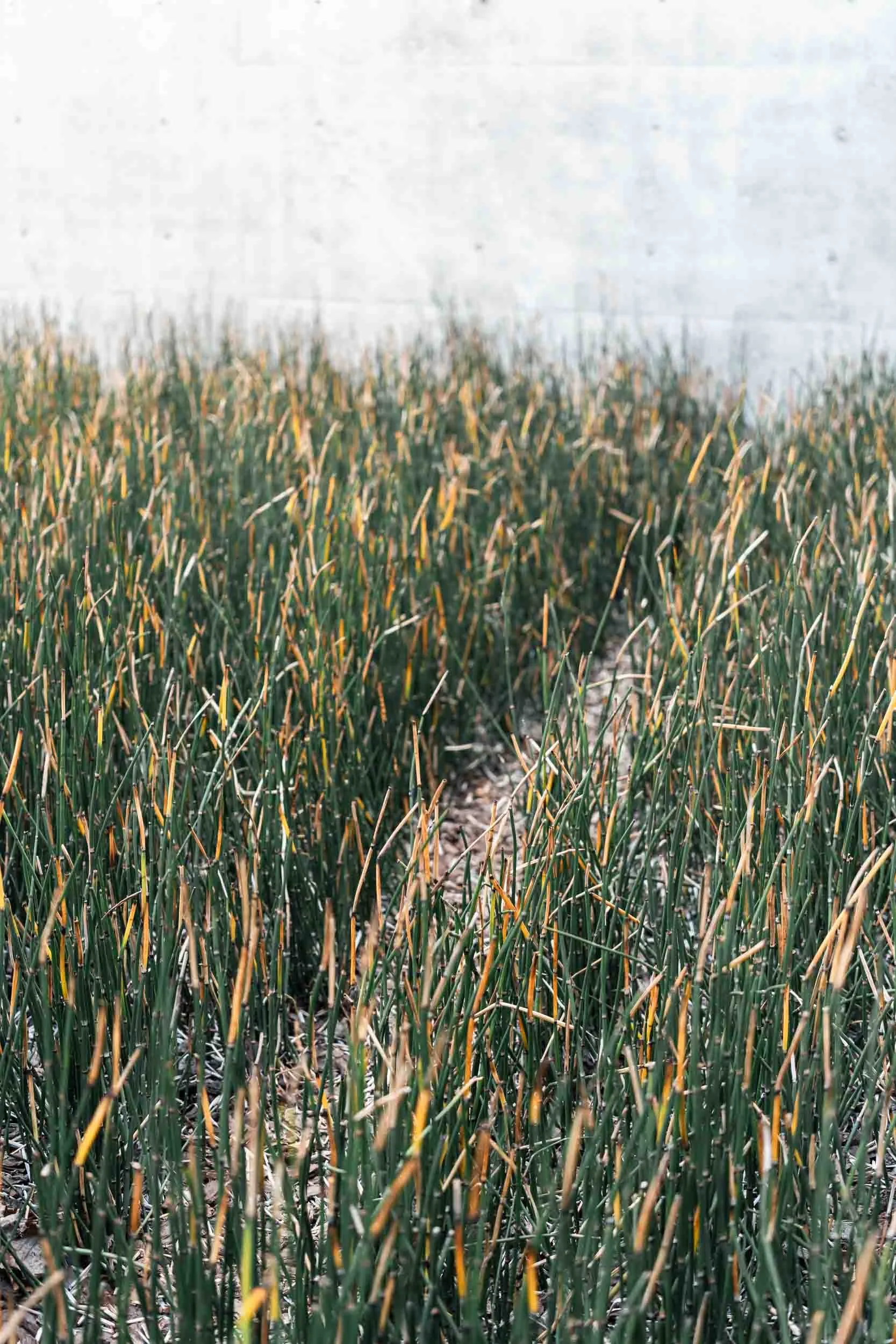
Perched on a hill overlooking the Seto Inland Sea but almost entirely buried underground, Chichu Art Museum feels less like a building and more like a quiet dialogue between light, space, and time. Designed by Tadao Ando, Chichu features sharp concrete lines, open-air courtyards, and carefully sliced skylights. From the outside, it is barely visible; from within, daylight tells most of the story. Inside, the collection is small but meticulously curated, with the physicality linking everything together. Corridors are hushed, footsteps echo softly, and every turn feels deliberate—no wasted angles, no decorative fluff, just architecture in its purest, almost monastic form.
In the heart of Chichu lies the Claude Monet room. You enter a white, chapel-like space, barefoot or in soft slippers, and suddenly the noise of the outside world just... disappears. The floor is covered with tiny white marble tiles, the walls are spotless, and the light is entirely natural, filtering in from above and gently shifting throughout the day. Large Water Lilies panels surround the room, their blues, greens, and lilacs blurring at the edges. Up close, the brushstrokes feel loose and human; from a distance, they become a kind of watery stillness.
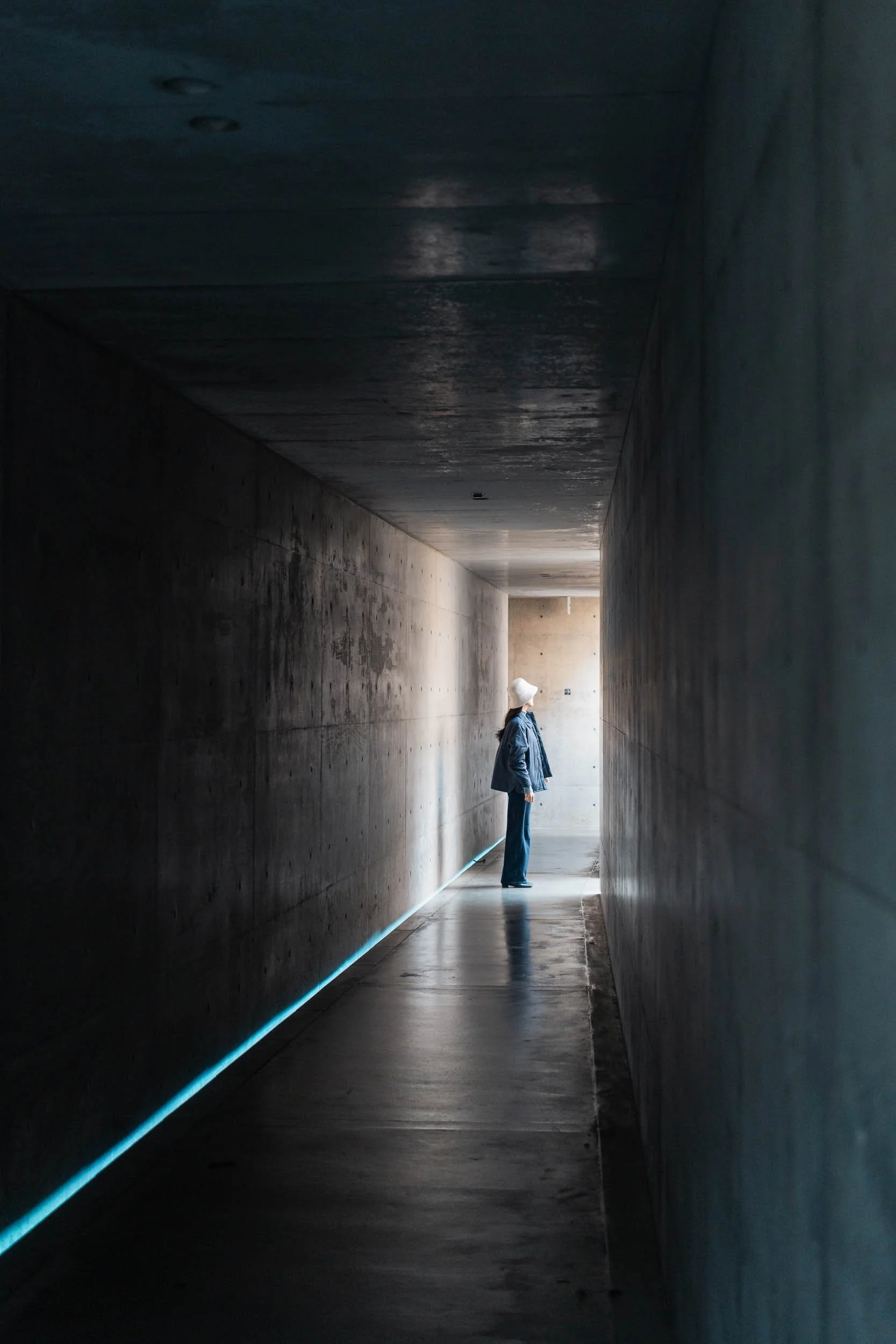
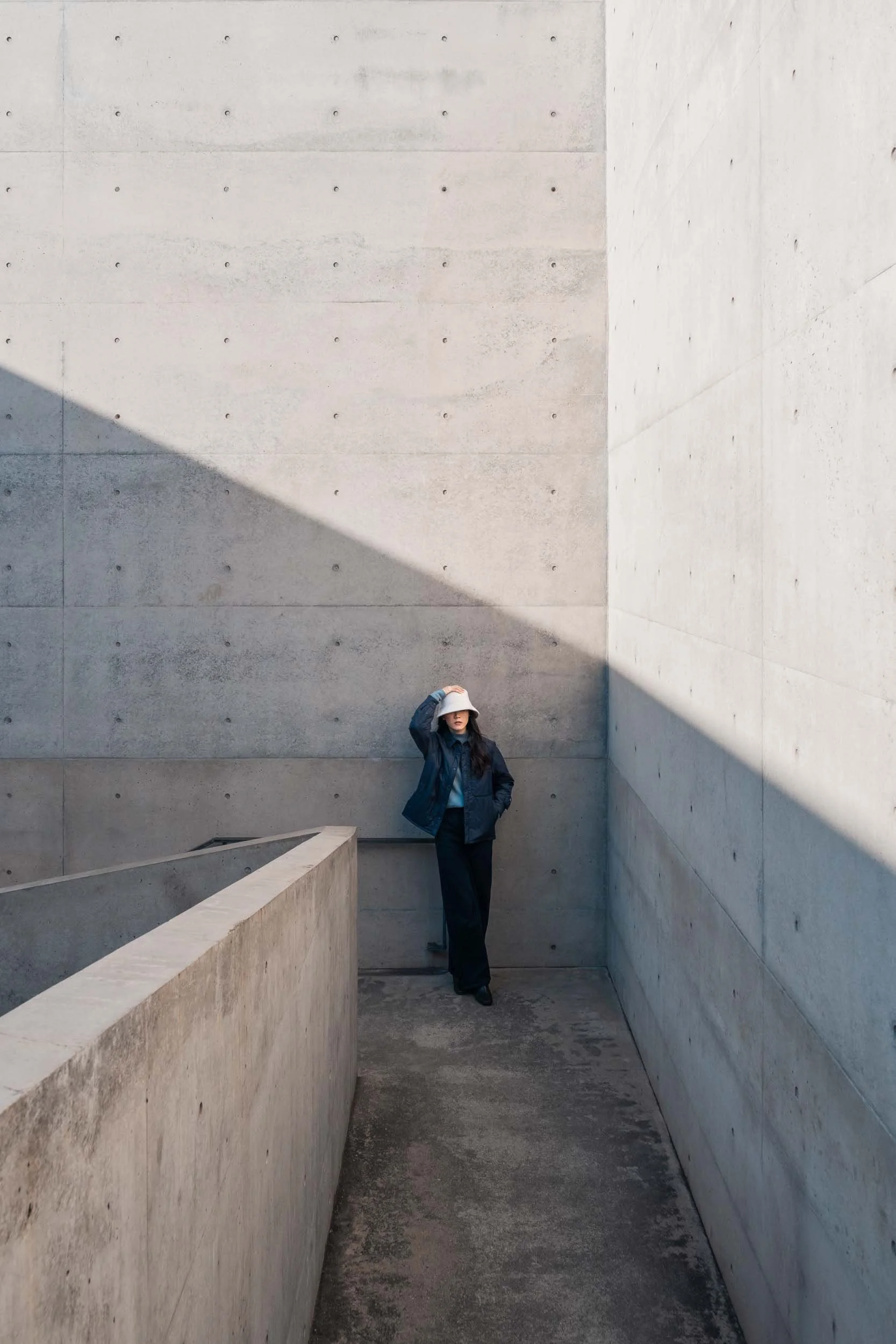
The James Turrell rooms reshape how we perceive light. In Open Field, you are guided into a dark space where a glowing, coloured plane appears like a flat, digital screen and seems to float on the wall, then slowly reveals itself as a deep, carved-out void. The surrounding field of coloured light is so soft and seamless that your perception begins to fade—edges blur, corners disappear, and you start doubting where the walls actually are. I recall this strange mix of calm and unease—as if my mind was gently being told, you don’t see as clearly as you think you do. Open Sky takes the opposite approach: instead of manufactured light, it frames the real sky in a stark, open-roofed space with a precisely cut rectangle overhead, and the ceiling becomes a living canvas of clouds, weather, and drifting colours. On a clear day, the blue appears impossibly saturated, and the edge of the opening becomes razor-sharp, almost surreal. Sitting there felt like watching time move in slow motion—nothing “happens,” but something inside you unwinds.
Then there’s Walter De Maria’s monumental installation Time/Timeless/No Time: a vast, echoing chamber of smooth concrete, punctuated by a single central sculpture and perfectly spaced golden spheres. You enter from above, descending stairs as if walking into a modern temple. The geometry is strict, almost severe, but the gold brings a surprising warmth—like miniature suns set in a disciplined universe. I felt tiny in the best way, acutely aware of my own presence in the room, the sound of my breath, the weight of the silence.
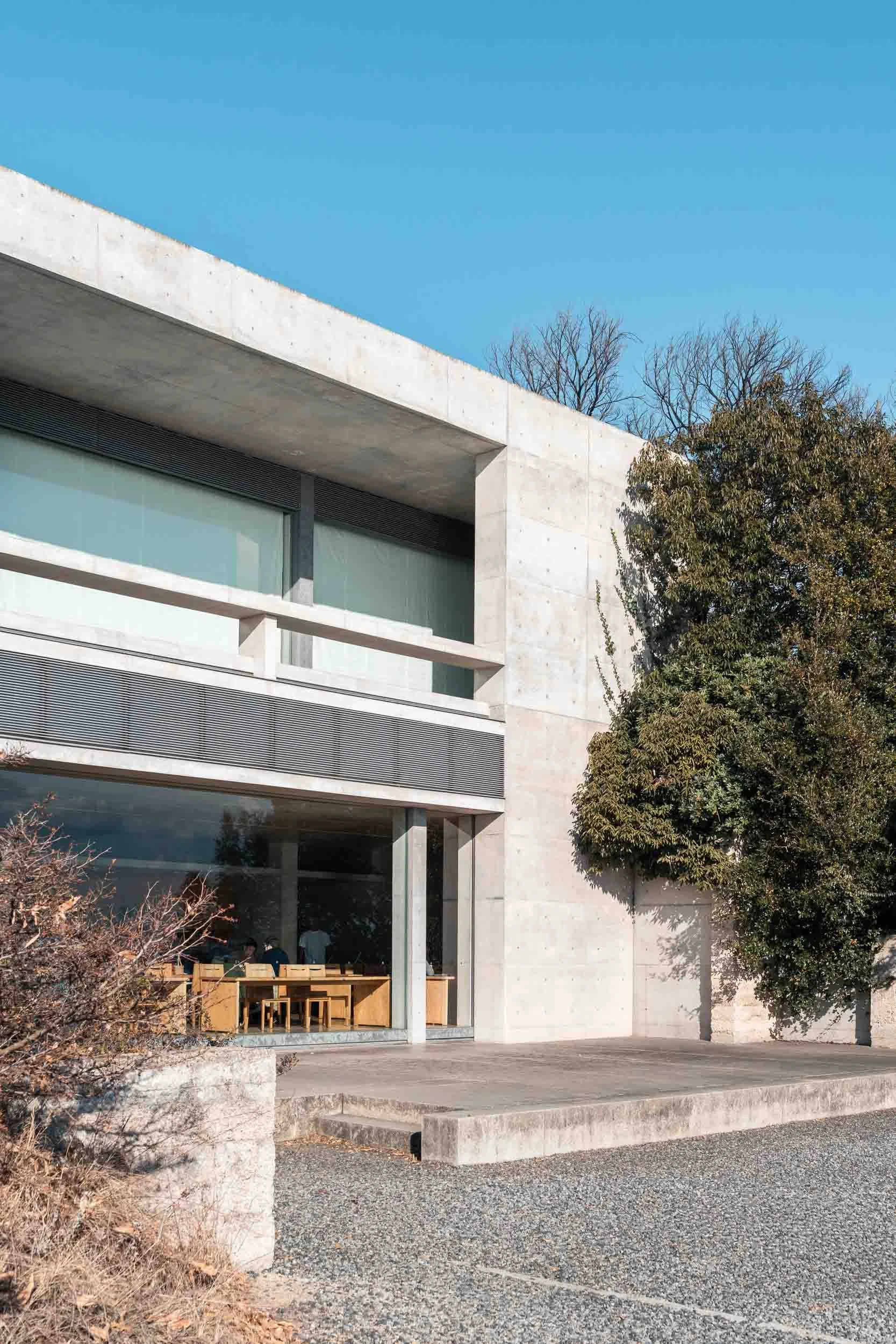
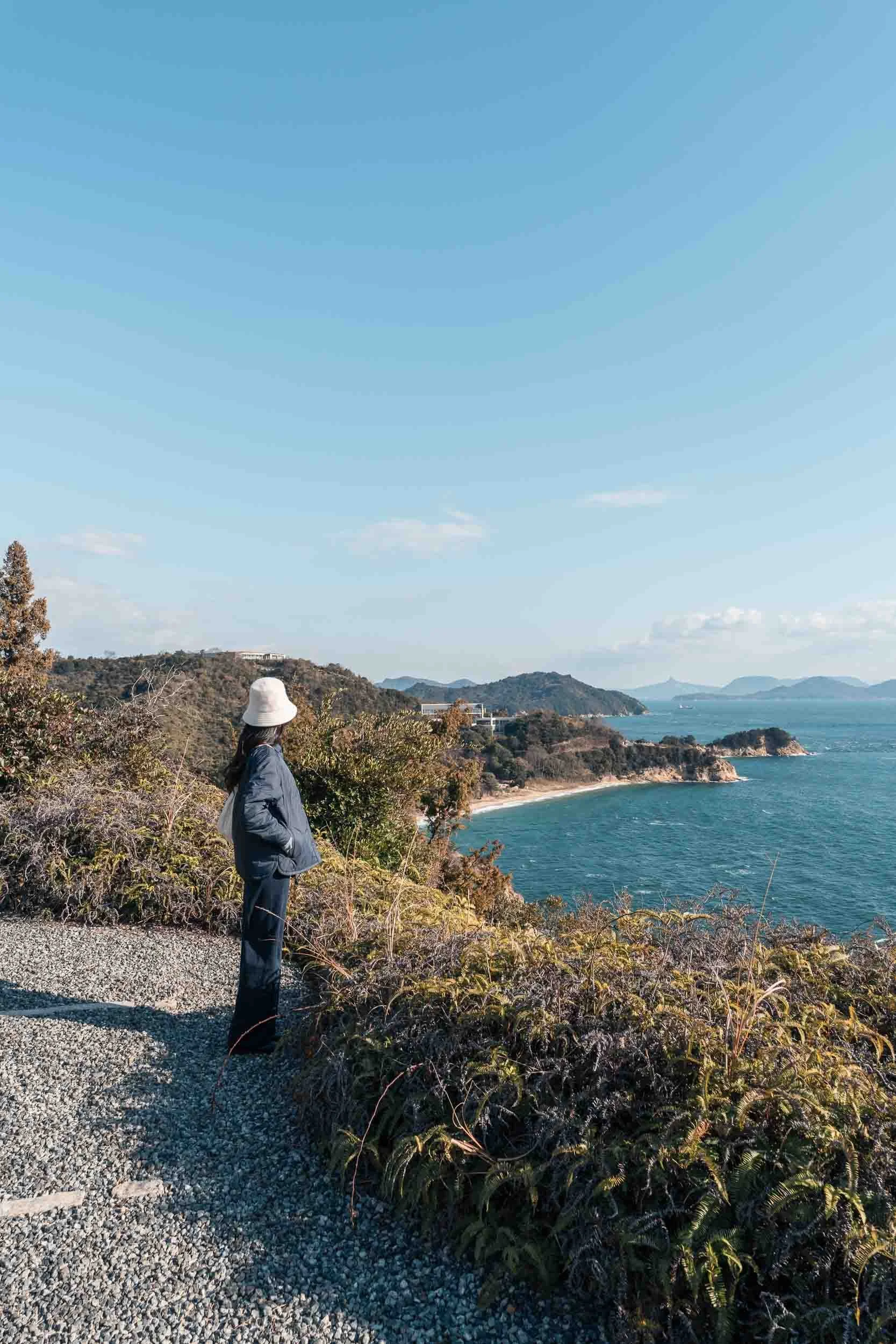
Photography is strictly forbidden inside galleries; it is only allowed in designated outdoor areas, and going without a camera indeed makes the experience more immersive. Light, scale, silence, and time become part of the artwork, and you leave with the feeling that something in your internal rhythm has been gently, yet permanently, realigned.
Online reservations for timed entry are strongly recommended (and slightly cheaper); otherwise, you won’t be permitted to walk up to the museum until the next available slot.
Benesse House Museum (ベネッセハウス ミュージアム)
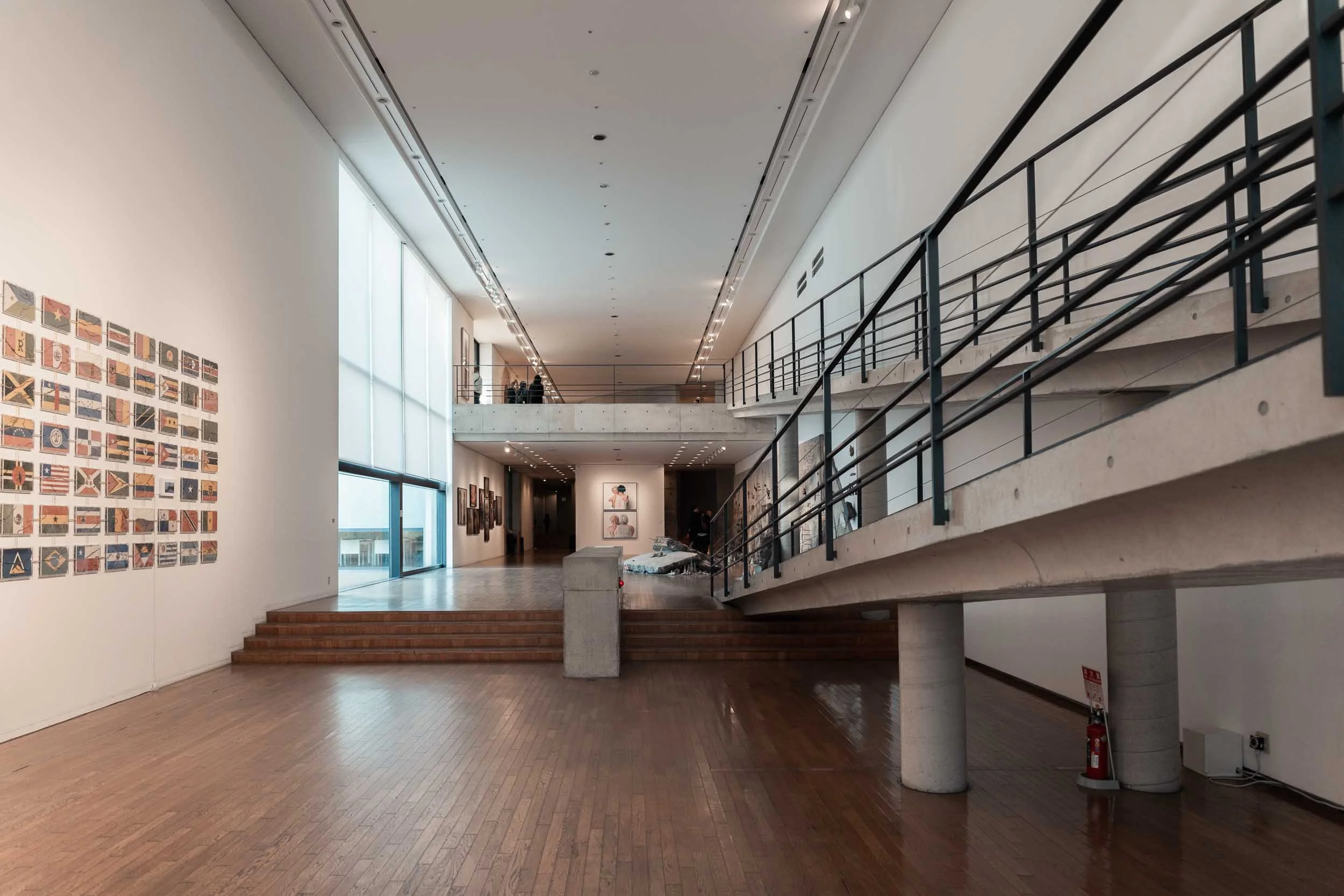
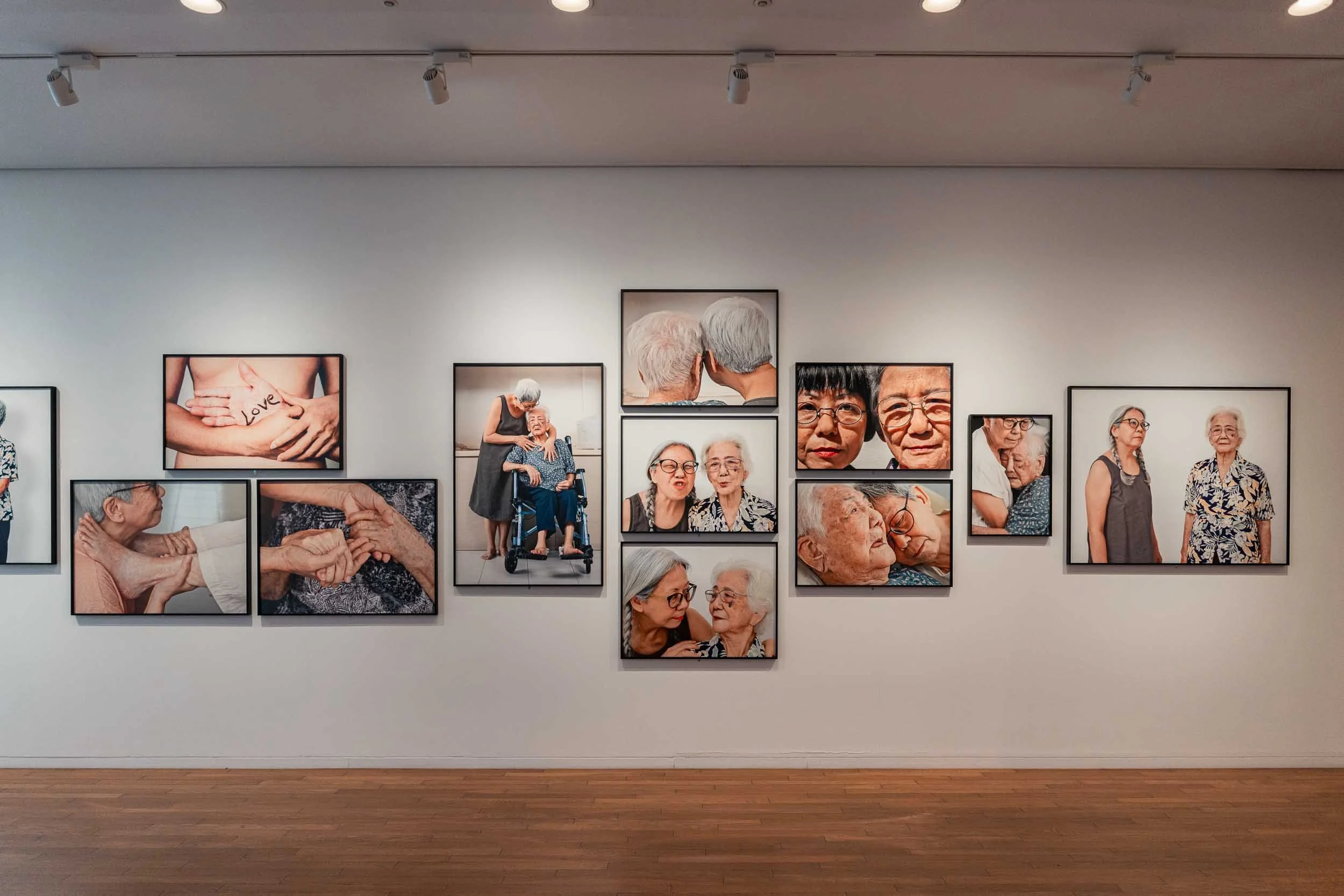
If Chichu is Naoshima’s quiet, subterranean soul, Benesse House Museum is its seaside heartbeat—part contemporary art museum, part hotel, part open-air sculpture park. Here, the architecture feels like a series of calm, geometric terraces unfolding towards the sea, with Tadao Ando’s concrete lines softened by wind, water, and the sound of waves rolling in below.
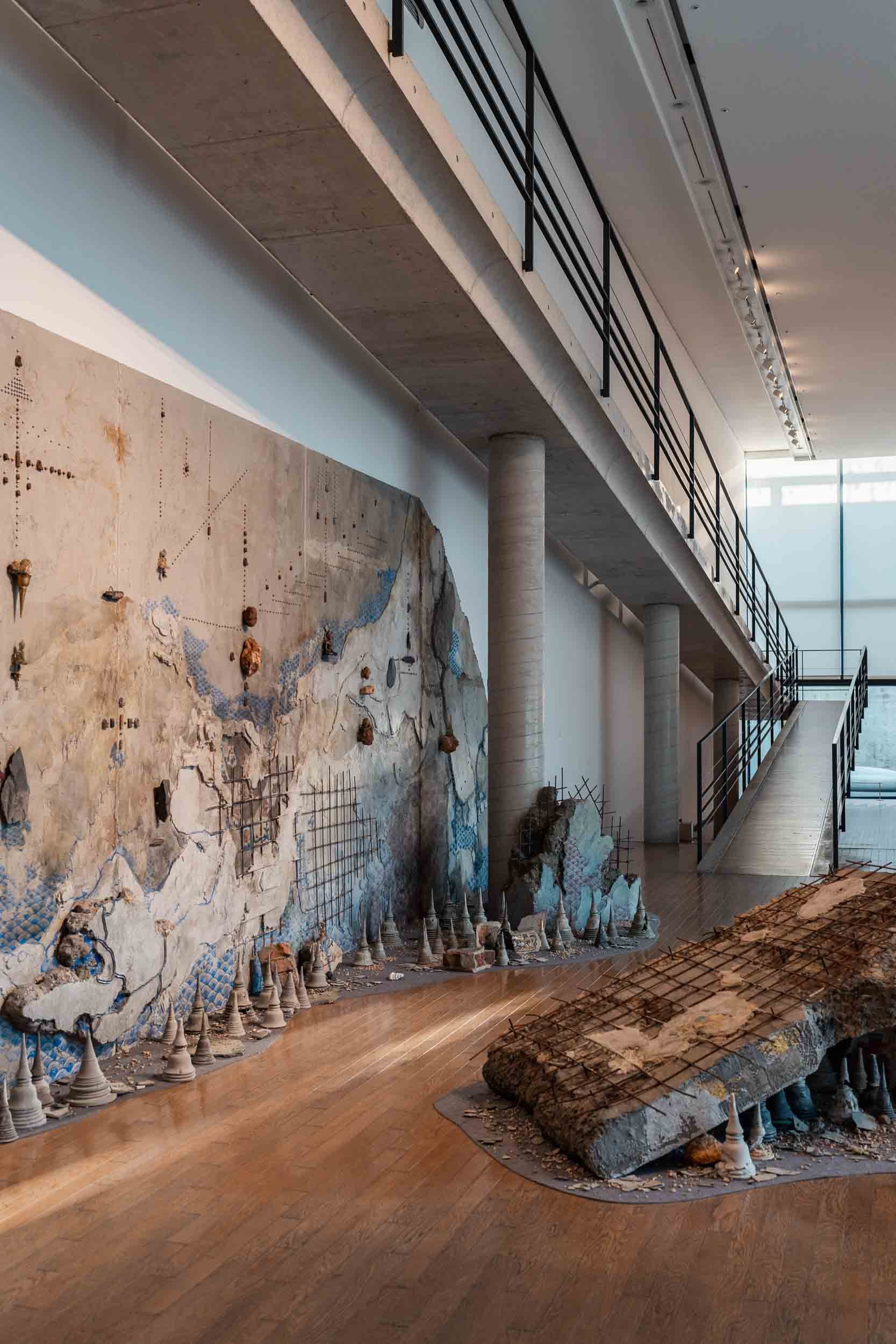
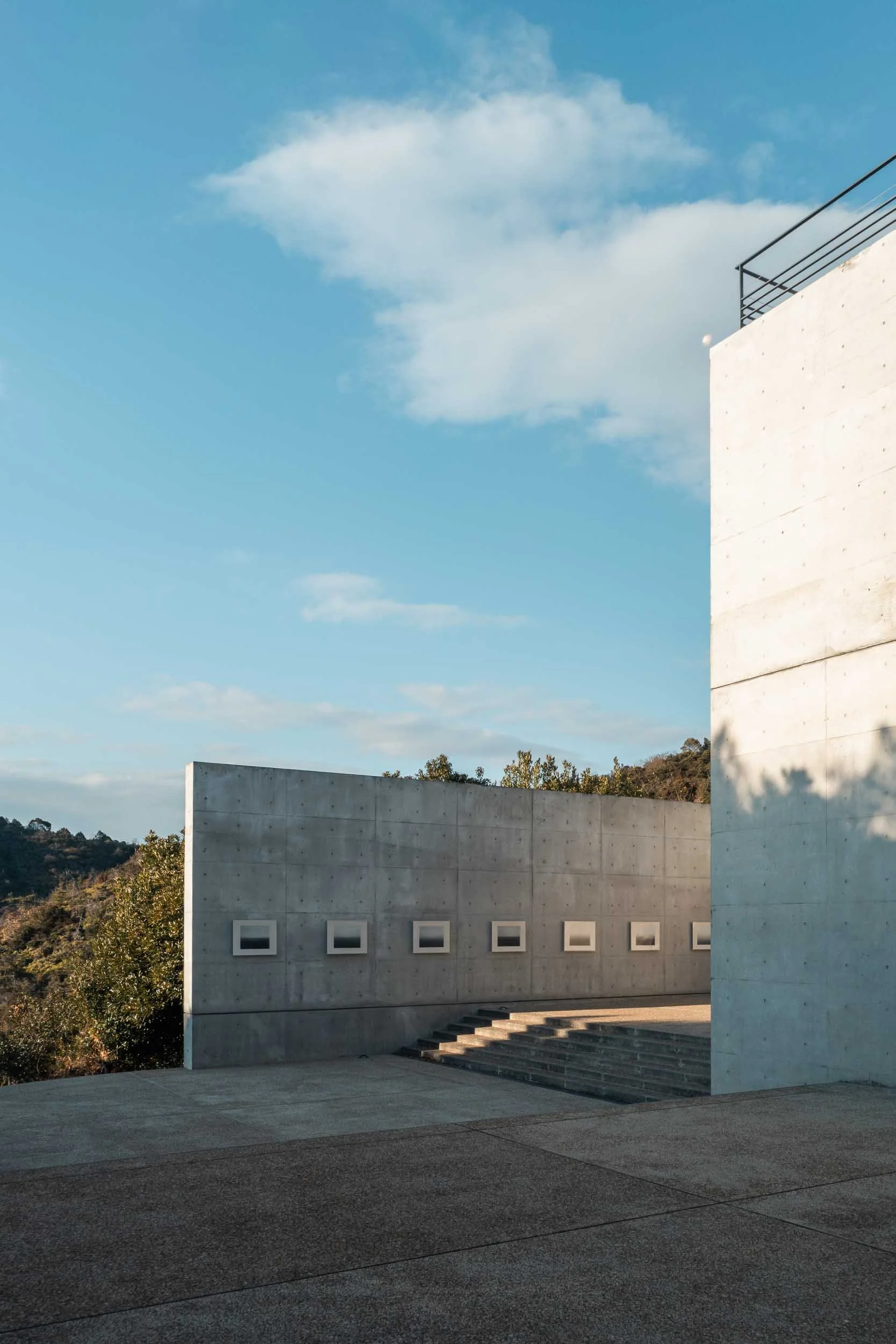
Inside, the collection embraces site-responsive contemporary art, including large-scale installations, thought-provoking sculptures, and paintings that merge with the architecture rather than compete with it. Artworks emerge in unexpected spots — sometimes indoors, sometimes spilling into courtyards and lawns, some so seamlessly integrated you almost stumble into them by accident.
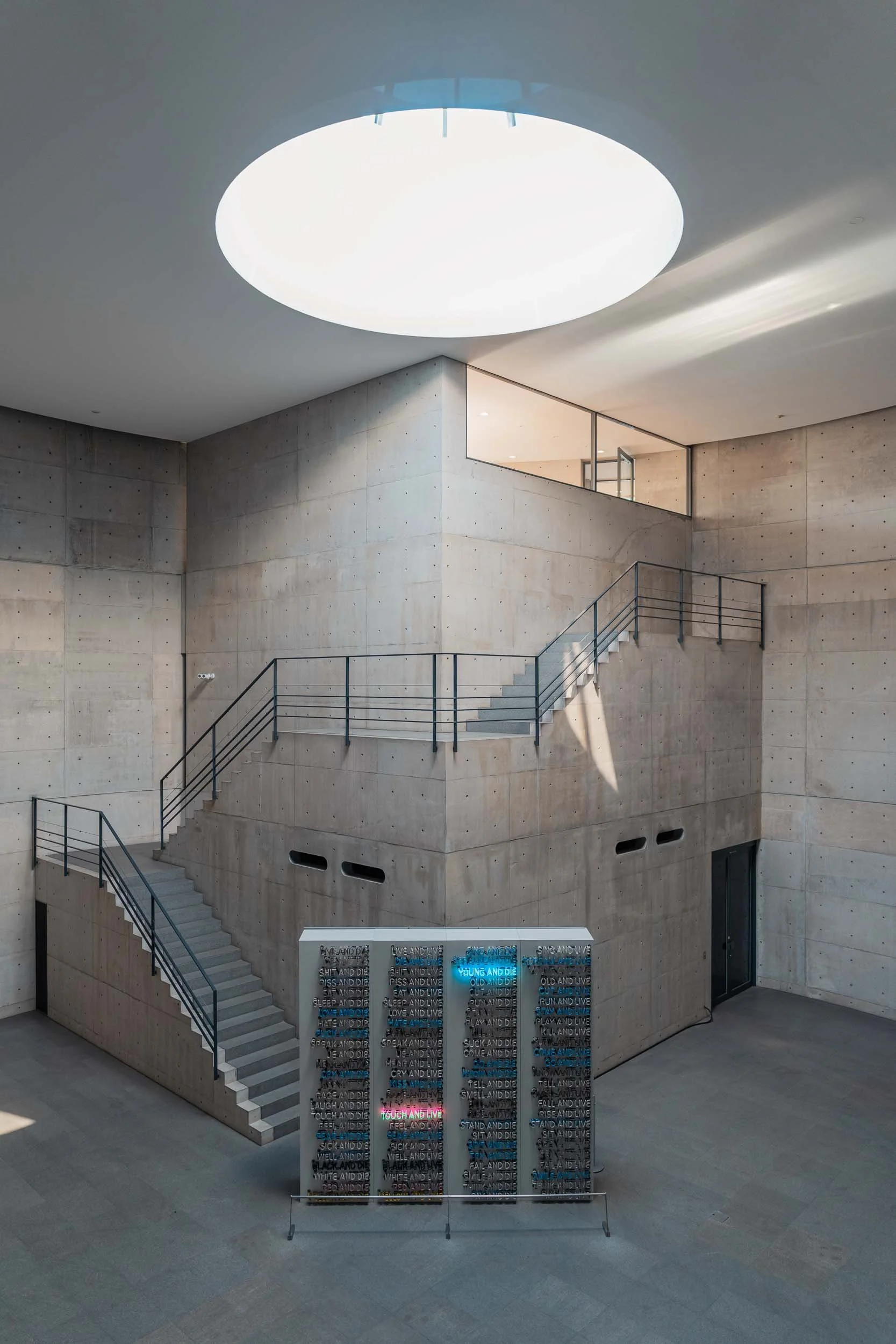
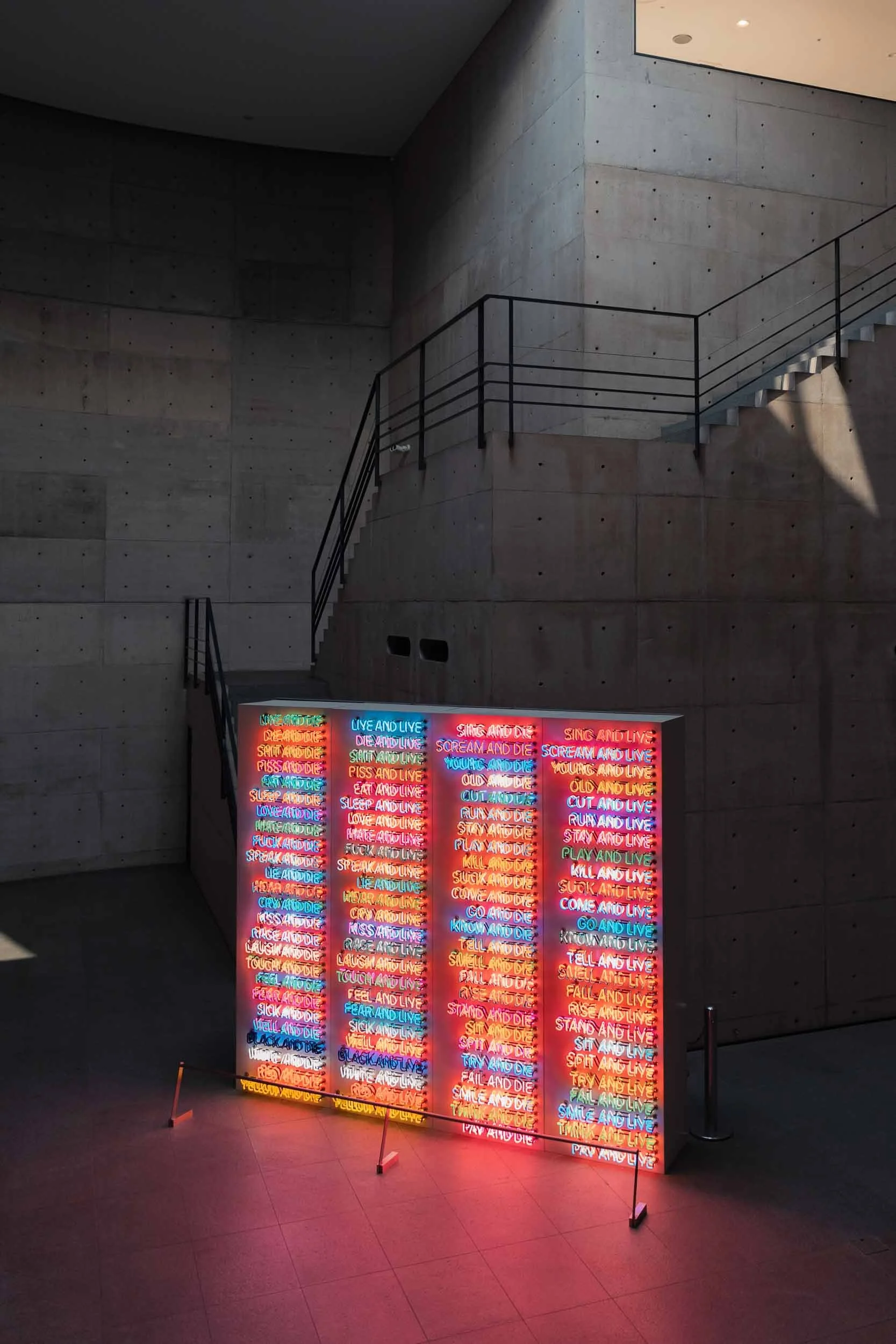
In the circular gallery near the entrance, Bruce Nauman’s 100 Live and Die is a neon grid of short phrases pairing “live” and “die” in shifting combinations. Flashing in harsh colours, it feels hypnotic and unsettling—like being exposed to a hundred compressed lives and endings at once, confronting mortality with deadpan intensity.
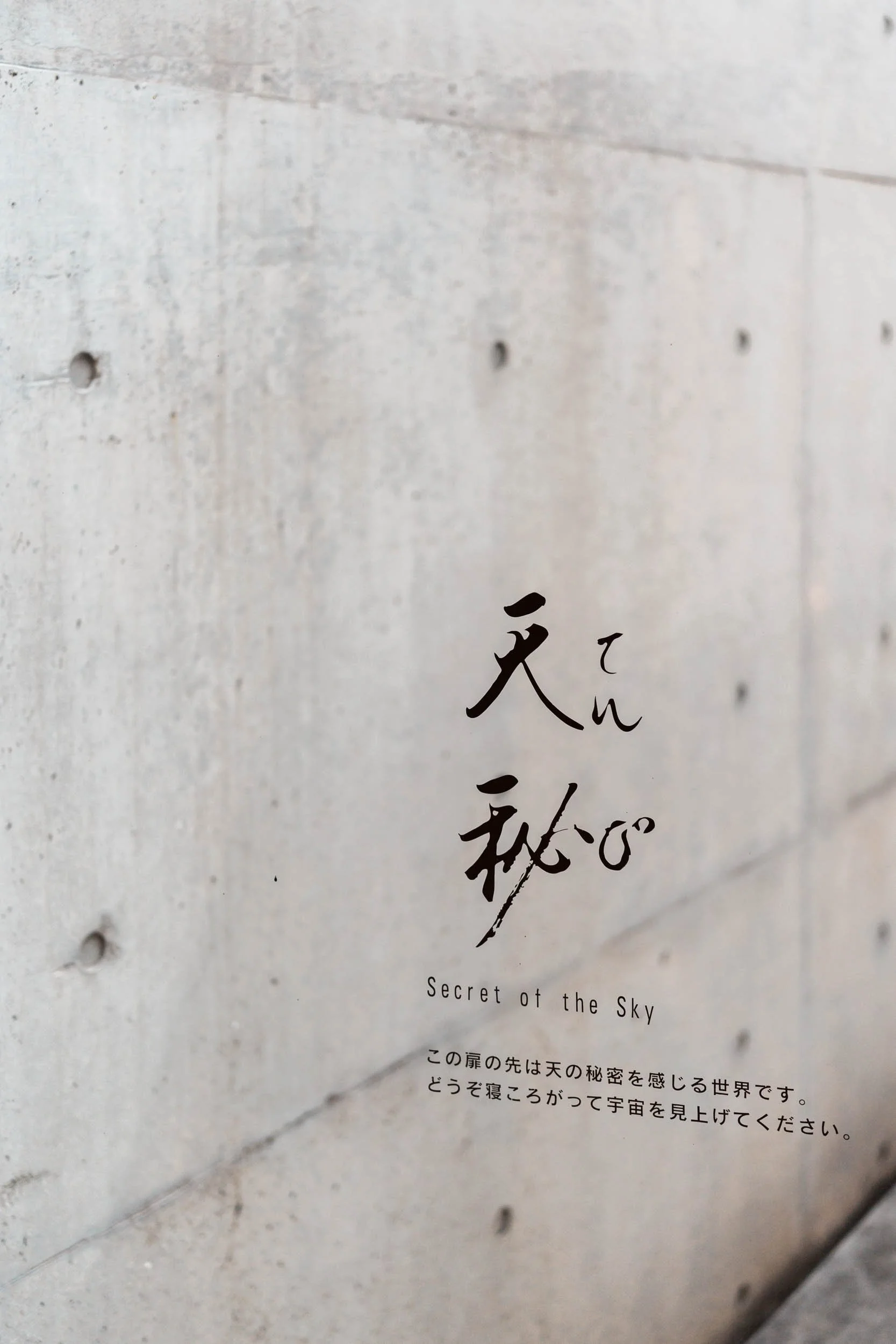
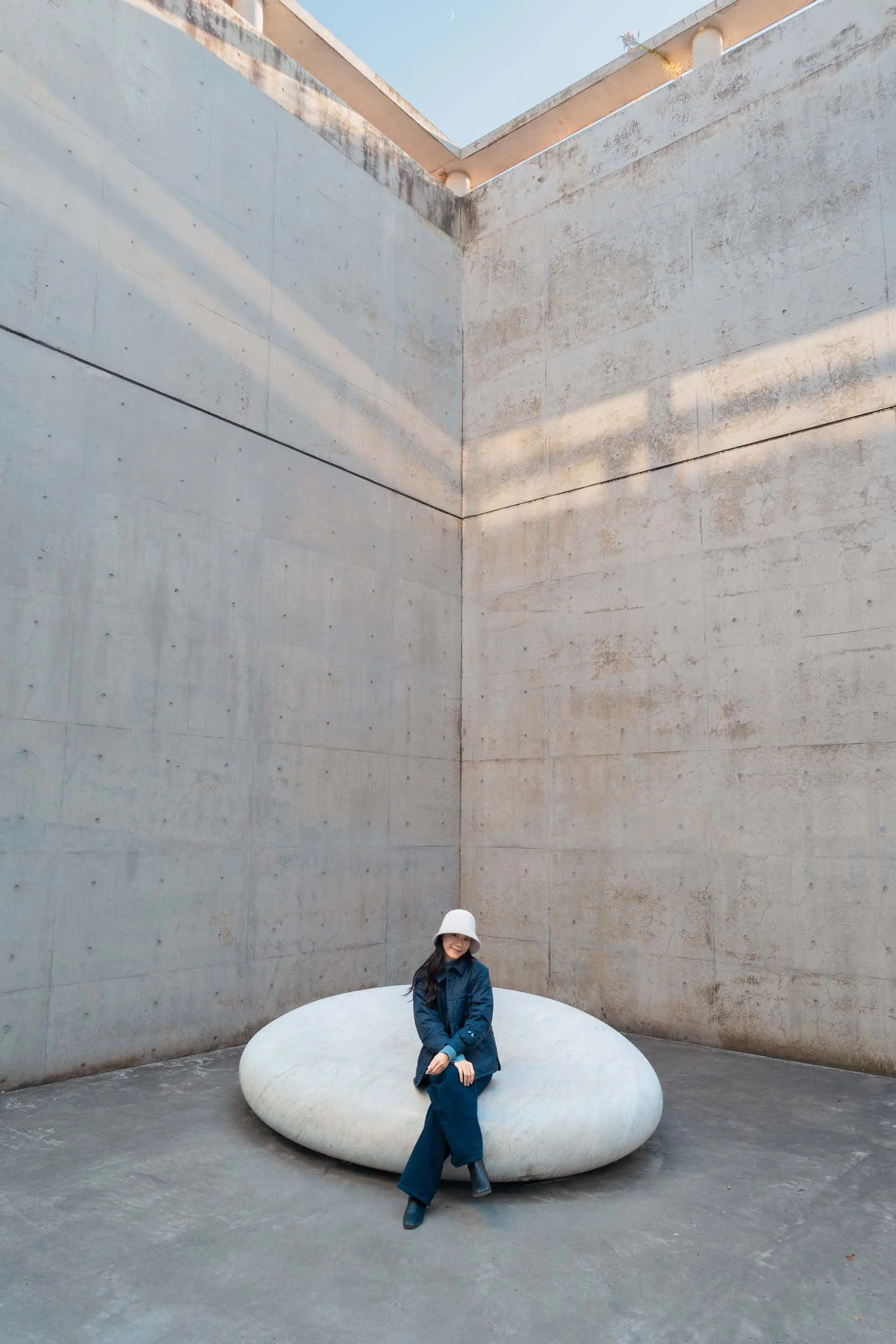
Kan Yasuda’s Secret of the Sky is in the end courtyard, where two marble stones frame the sky, inviting you to lie down and gaze upward. This act of pausing and observing embodies Naoshima’s core idea: the coexistence of art, Ando’s architecture, and the sea-driven landscape, all in a single contemplative moment.
On the outside terrace, you’ll see framed works from Hiroshi Sugimoto’s Seascapes series, where horizon lines divide water and sky. On Naoshima, with the real Seto Inland Sea outside, they feel eerily connected to the landscape, like timeless, distilled views.
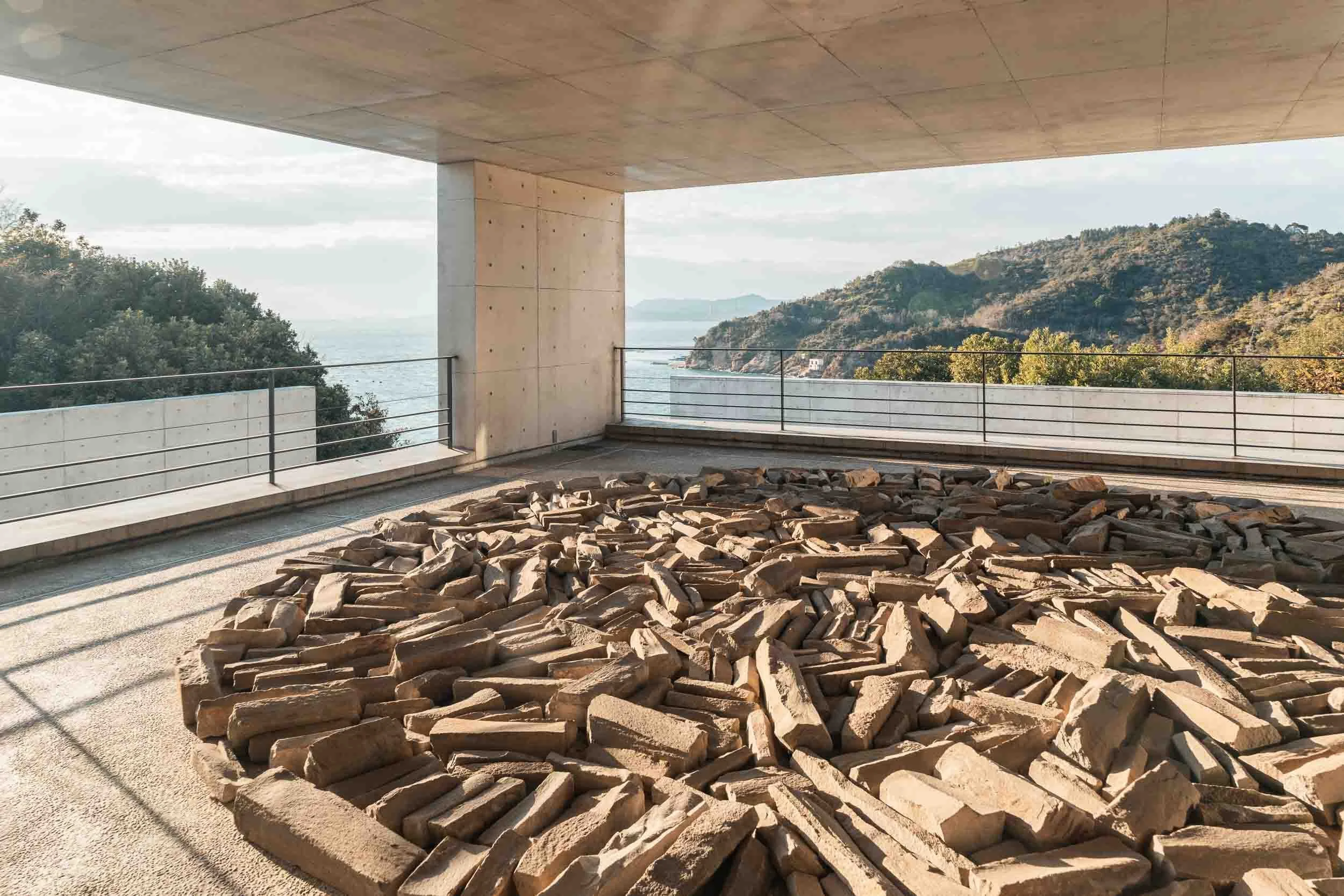
Moving upwards and gazing out of the principal gallery, one sees Inland Sea Driftwood Circle by Richard Long, a large ring made of locally gathered driftwood, which is part of his ongoing “Circles” series. Simple yet monumental, it links Naoshima’s shoreline to Long’s international walking practice, marking the landscape with a temporary, human-made form that quietly reflects Benesse House’s minimalist geometry and coastal environment.
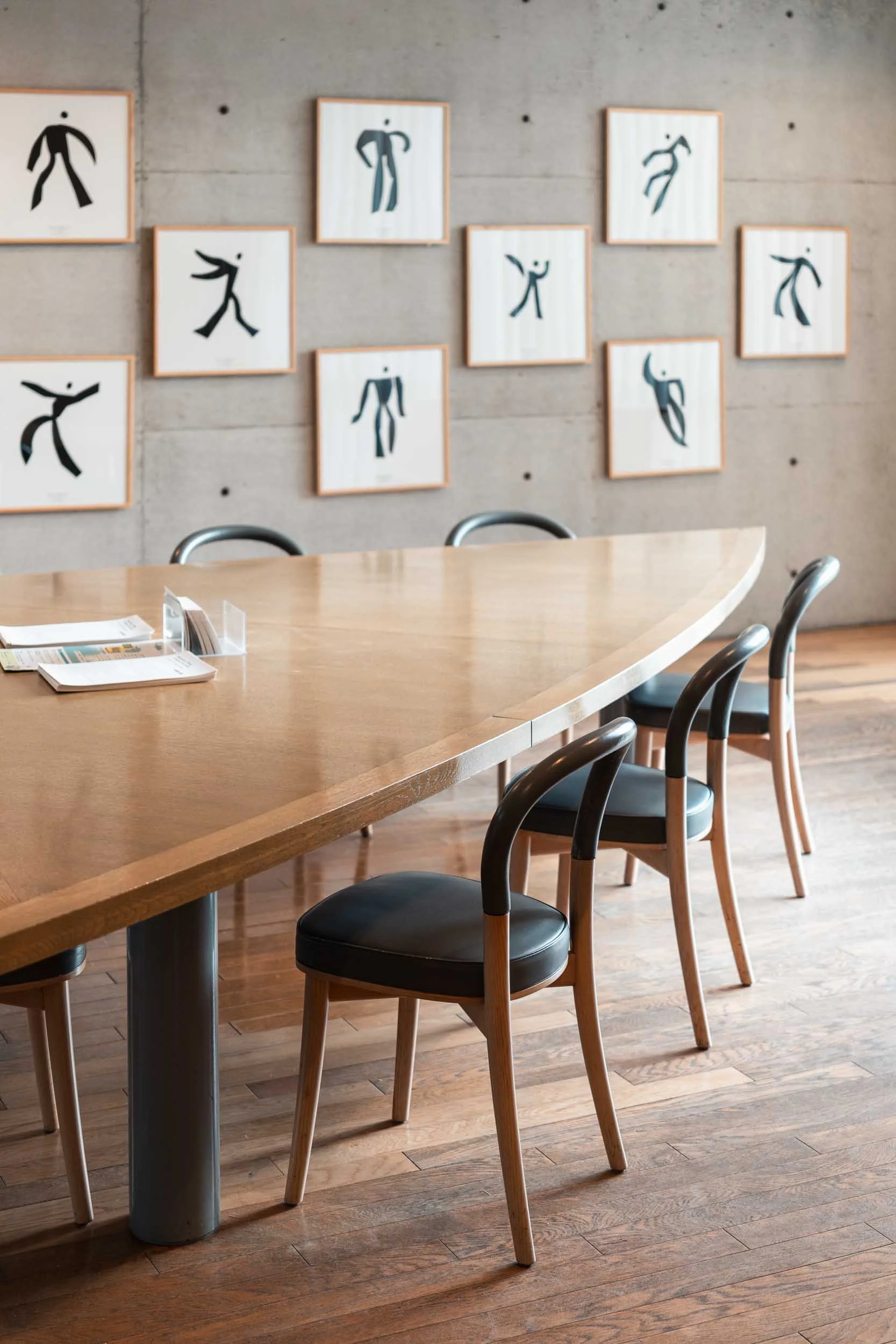
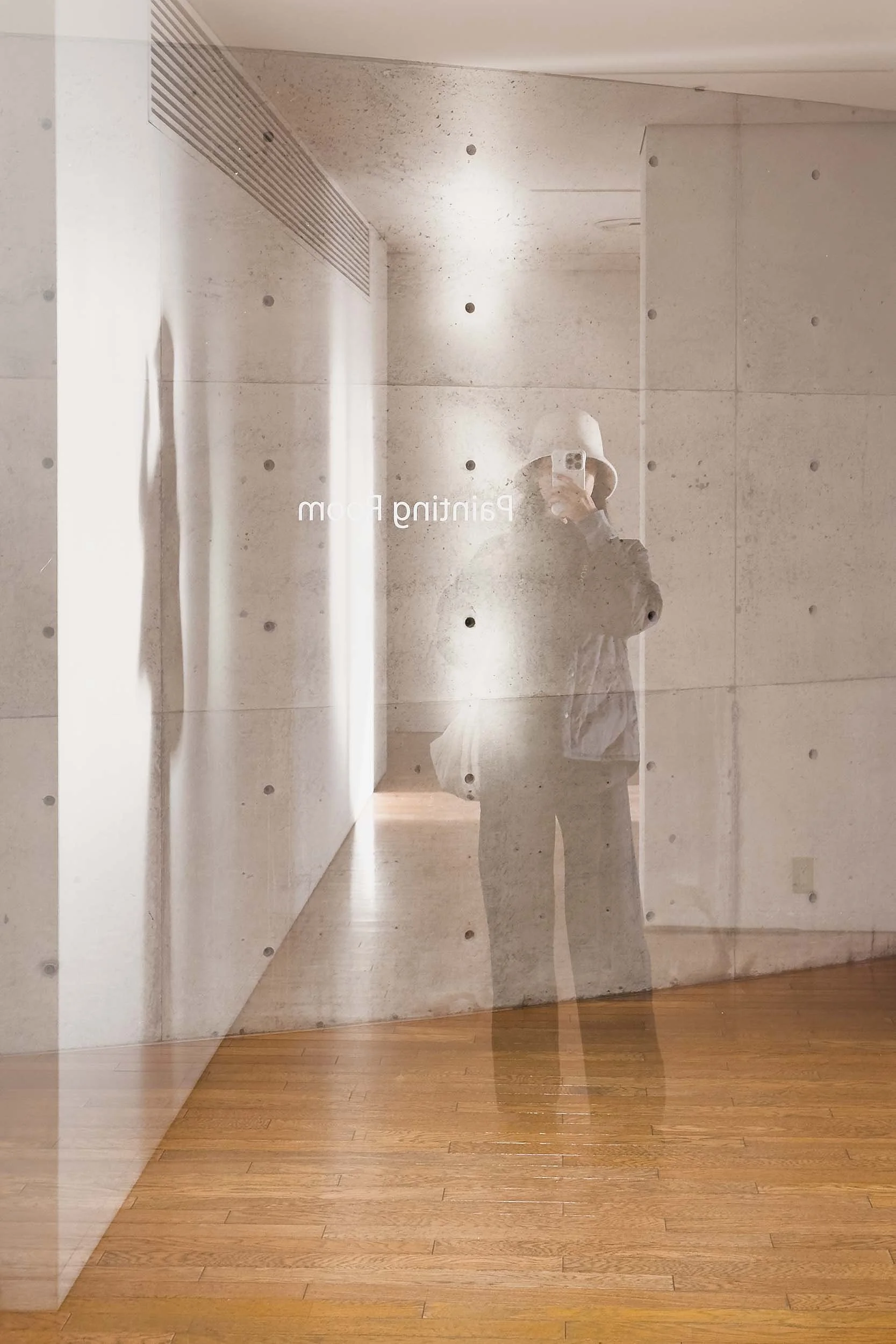
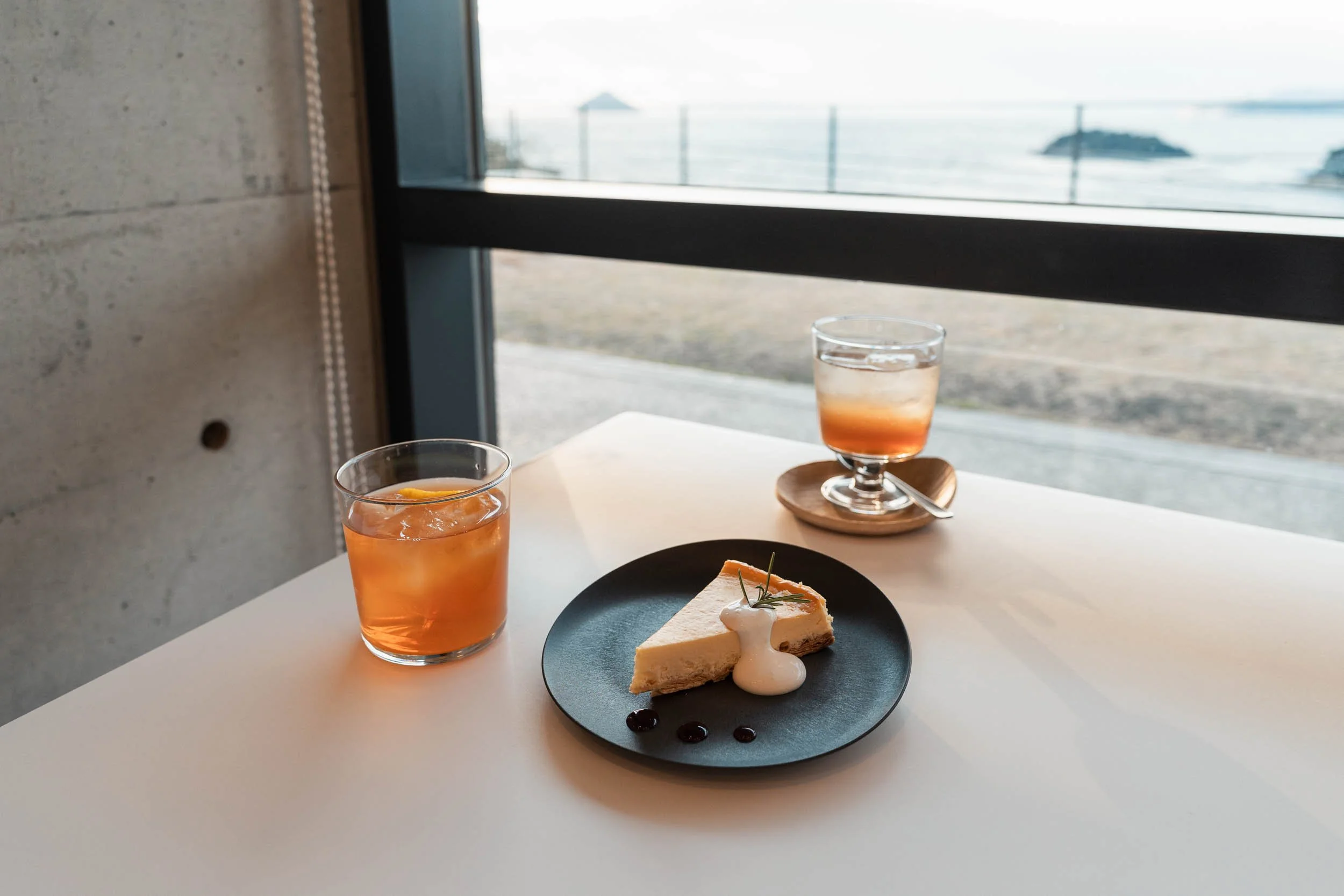
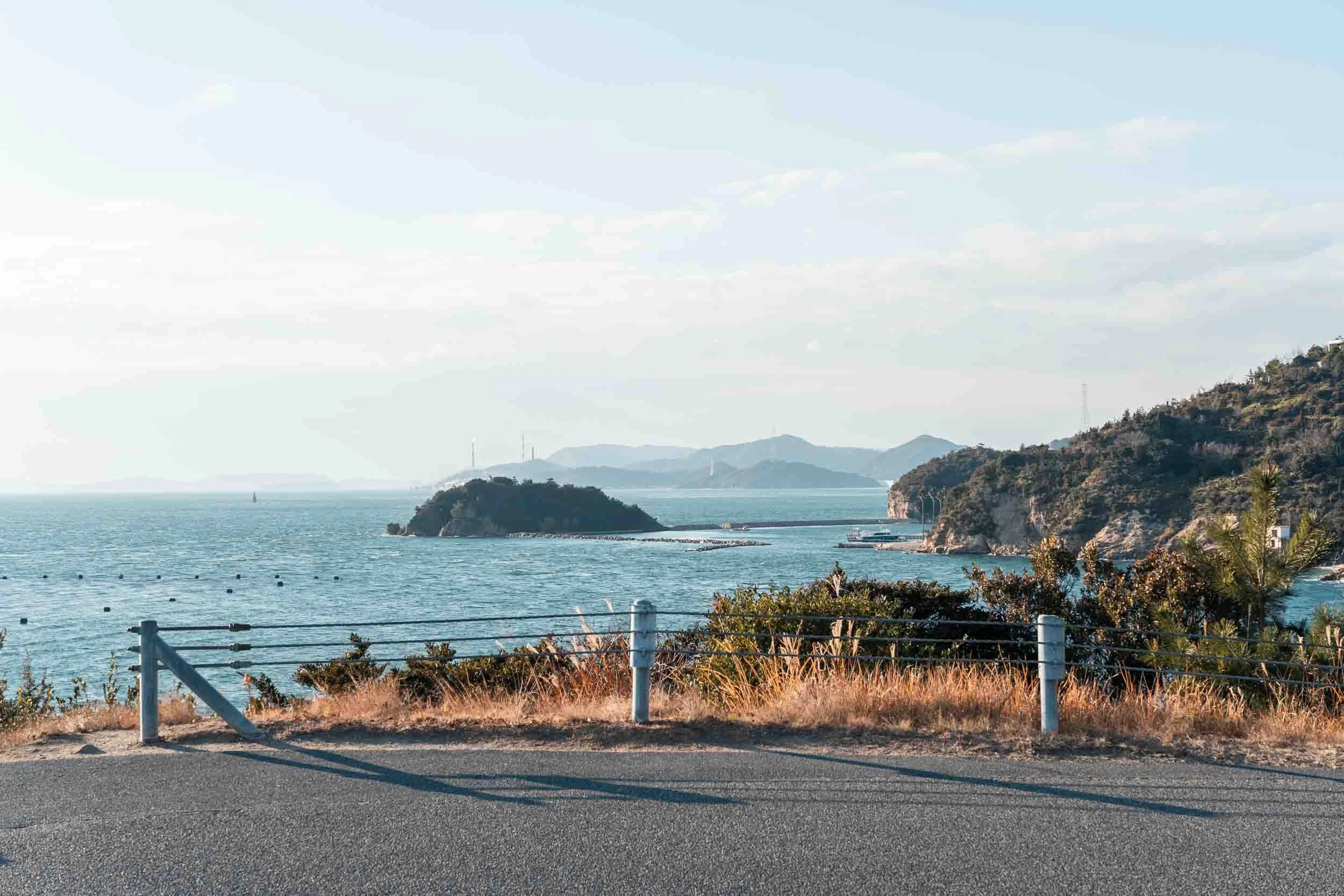
Benesse House also doubles as the island's art hotel, where overnight guests can explore the museum after hours.
Valley Gallery (ヴァレーギャラリー)
Nestled away from the main building, with its entrance beside the Lee Ufan Museum, the Valley Gallery feels like a peaceful detour into another realm — and the best part is that entry is included in the Benesse House Museum ticket. The architecture blends into the landscape, creating a sheltered, cocoon-like space where sound diminishes, making it perfect for slowing down after the visual feast of the main museum.
The highlight here is Yayoi Kusama’s Narcissus Garden: a field of mirrored silver spheres scattered across the outdoor space. They reflect the sky, the slopes, and your own reflection simultaneously, endlessly multiplying and distorting reality. Standing among them feels intriguingly introspective — you’re both part of the artwork and surrounded by it, watching your image shimmer, warp, and vanish with every change of light and breeze.
Outdoor Works (屋外作品)
The lawns around Benesse House feature outdoor art, including a Yayoi Kusama pumpkin. You can spend an hour strolling among the artworks, watching ferries on the water. I love how open it feels: art moves in and out of doors, and the museum blends with the landscape. It’s serious art without stiffness, and the area is free and walkable once you get off the bus at Tsutsuji-so.
Seaside Gallery (シーサイドギャラリー)
The Seaside Gallery fully embraces its waterfront setting: art, horizon, and sea breeze all merge into a single experience. Situated on the south side of Benesse House Museum, it offers an unobstructed view of the Seto Inland Sea, with the endless blue serving as a dynamic backdrop.
Tadao Ando designed a long, narrow space that runs north to south along the natural slope of the land, where light floods in through a large east-facing opening, transforming the interior into a luminous corridor where artworks are invigorated by daylight and the gentle rhythm of passing ferries. Outside, several sculptures and installations are spread across terraces and lawns, blurring the boundary between gallery and landscape.
One of the key pieces here is Walter De Maria’s Seen/Unseen Known/Unknown. Echoing the subtle monumentality of his work at Chichu, it employs precise geometry and repeated forms to evoke a sense of measured stillness. The combination of De Maria’s disciplined structure with the shifting sea and sky surrounding it makes the piece feel both rigorously controlled and quietly transcendent, as if it’s holding space for everything you can and can’t quite grasp.
Cultural Melting Bath: Project for Naoshima (文化大混浴 直島のためのプロジェクト)
Located on the coastline, it benefits from dynamic energy flows in accordance with the principles of Feng Shui. Cultural Melting Bath is one of those works that makes you grin before you even analyse it. A playful, conceptual hot spring-inspired installation, it riffs on communal bathing and cultural exchange. It’s witty and a little absurd, but underneath the humour, there’s a gentle reminder that art, like onsen, brings people together.
Exclusively available for hotel guests of the Benesse House and only on Sundays.
Yayoi Kusama Pumpkins (草間彌生南瓜)
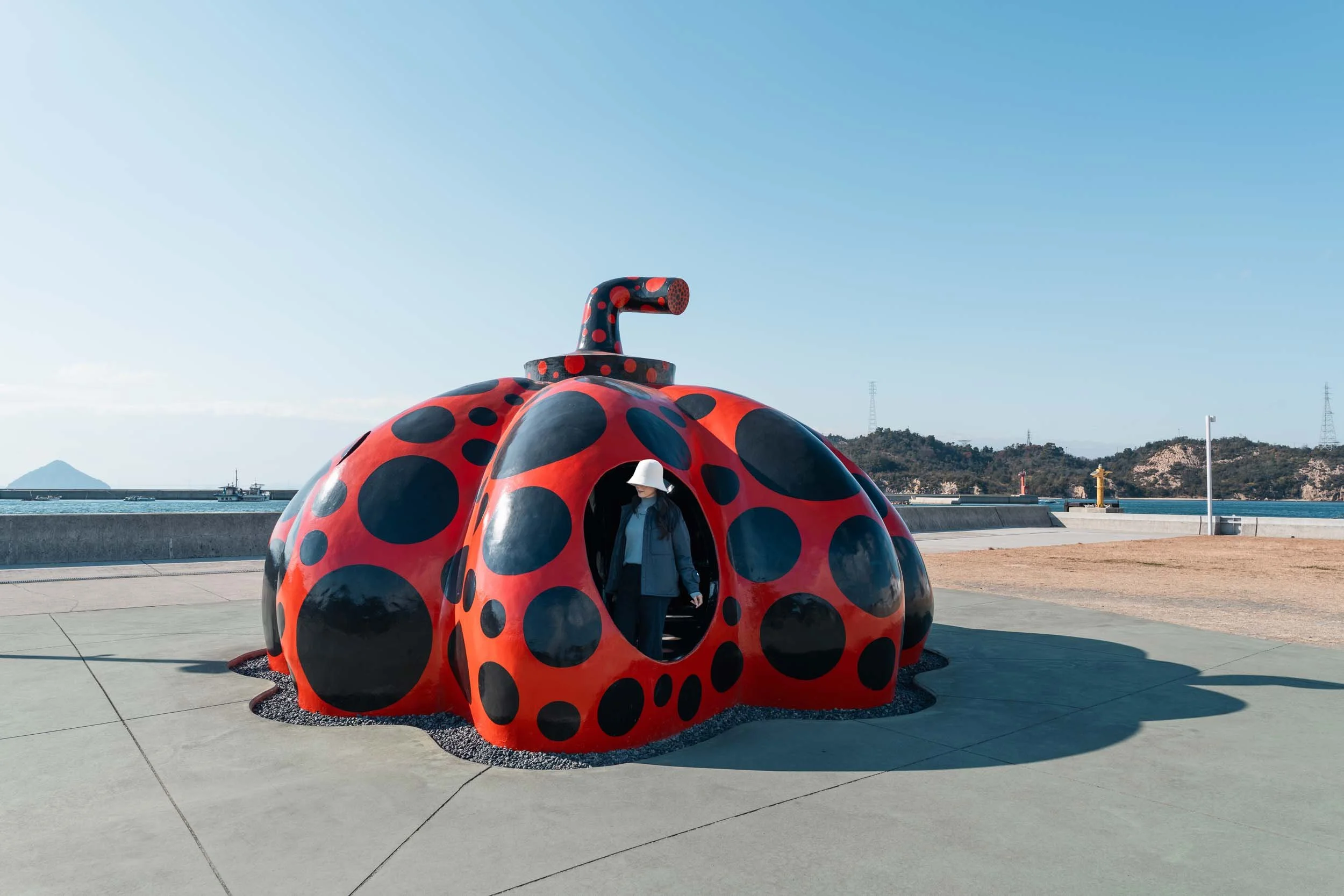
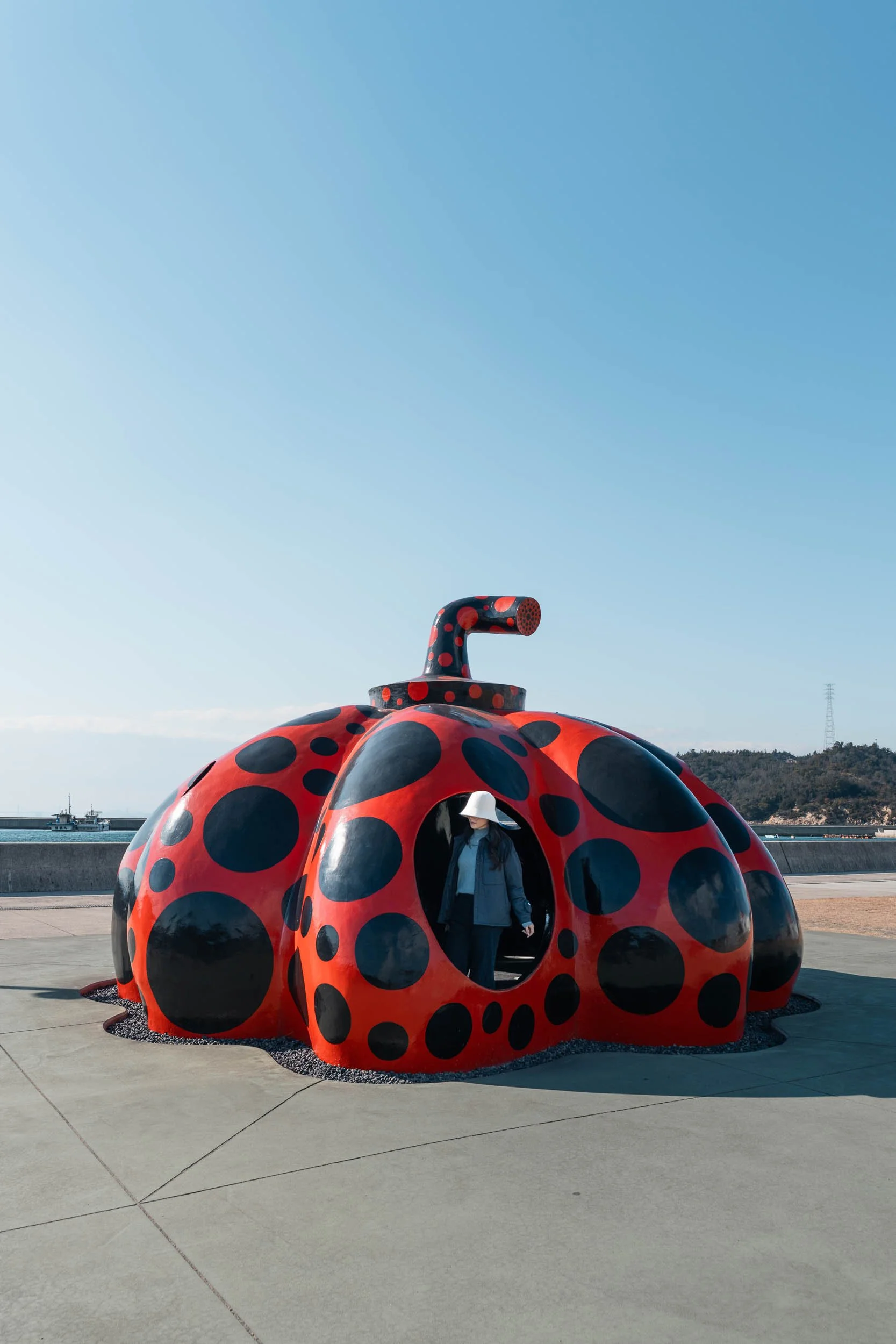
Even if you arrive in Naoshima knowing nothing else, you're likely familiar with the pumpkins. These pumpkins were brought to the island through the Benesse Art Site Naoshima project, part of the island’s long-standing collaboration with contemporary artists. Over the years, they’ve become the island’s unofficial mascots—bright, surreal symbols between the sea and sky.
The large red pumpkin near Miyanoura Port serves as a welcoming feature. Oversized and dotted, it sits by the water, like a pop-art portal indicating you’ve entered art-island territory. You can step inside, look through its circular windows at the sea, and experience a mix of childlike joy and eccentricity characteristic of Kusama’s work. Its roundness and repetition feel comforting, like a friendly extraterrestrial that landed and chose to stay.
The small yellow pumpkin, usually on a jetty near Benesse House, was closed for maintenance during my visit—a tiny heartbreak, given its iconic status. Photos never quite capture how quiet and contemplative that spot feels: a lone pumpkin at the pier’s edge, the Seto Inland Sea behind.
Lee Ufan Museum (李禹煥美術館)
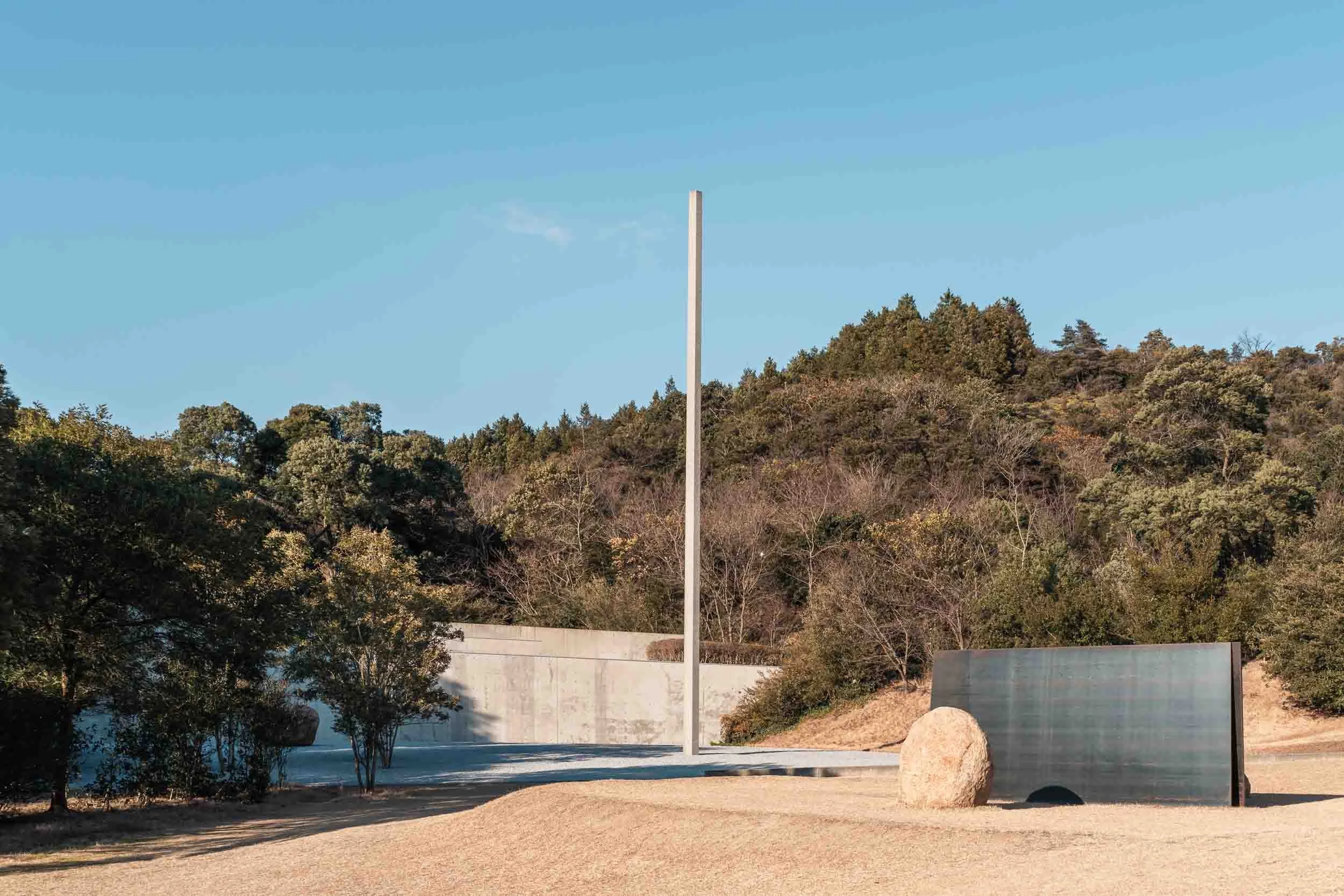
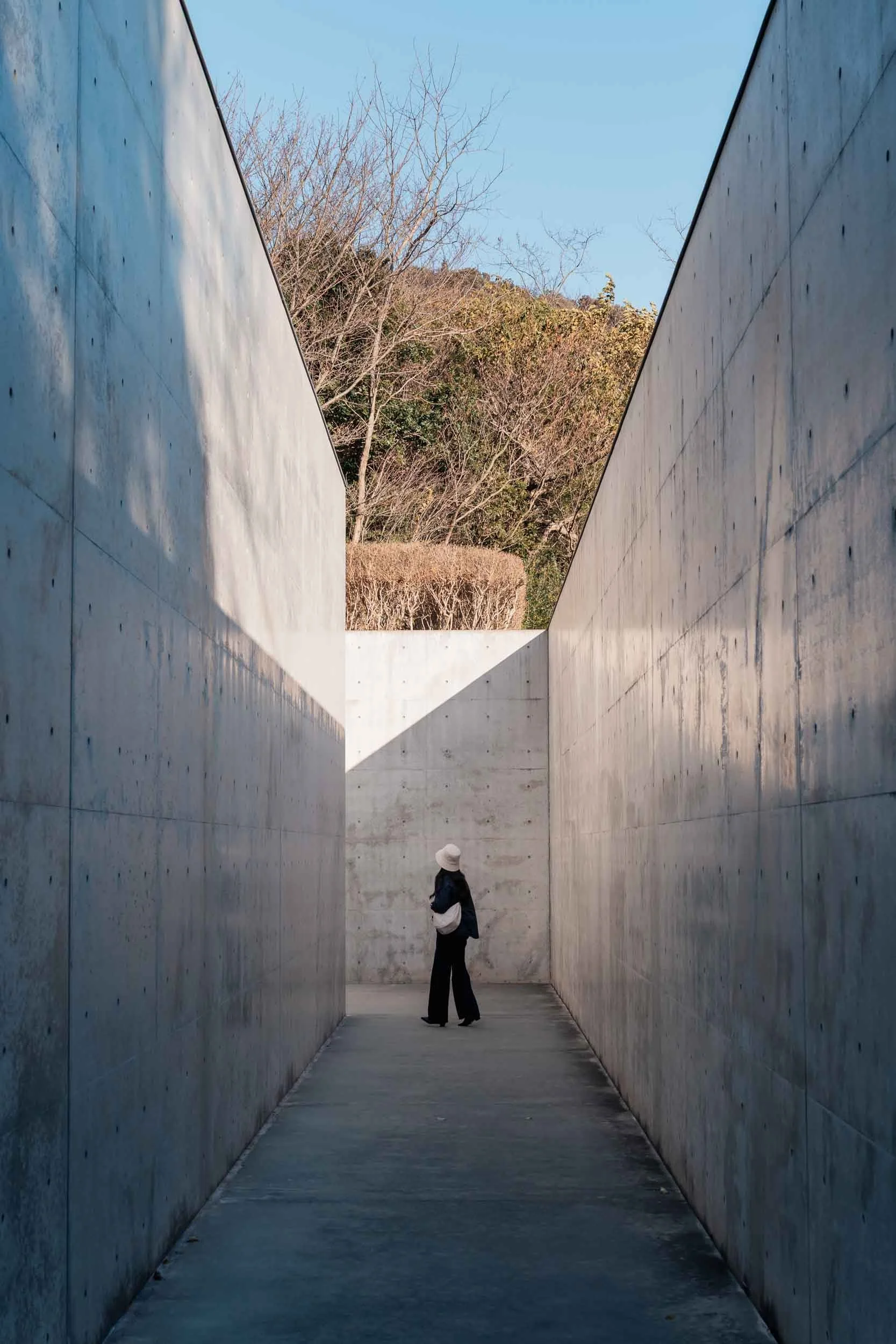
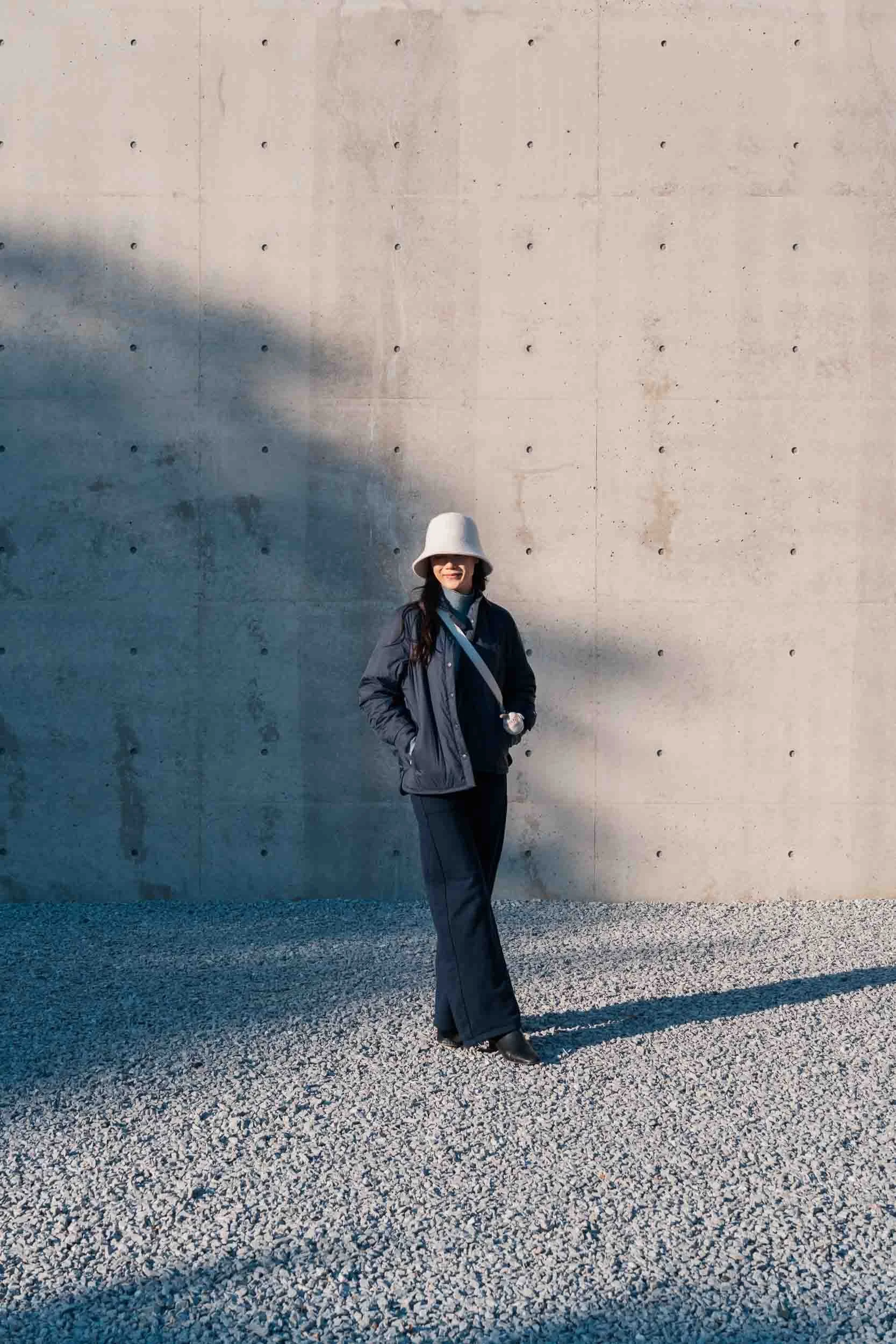
The Lee Ufan Museum emphasises subtraction over spectacle. Designed by Tadao Ando, the building is partially embedded in a hillside, featuring low, geometric concrete forms that create shadows and embody a subtle choreography of ramps, corridors, and courtyards. The Seto Inland Sea is glimpsed through framed views, never fully revealed.
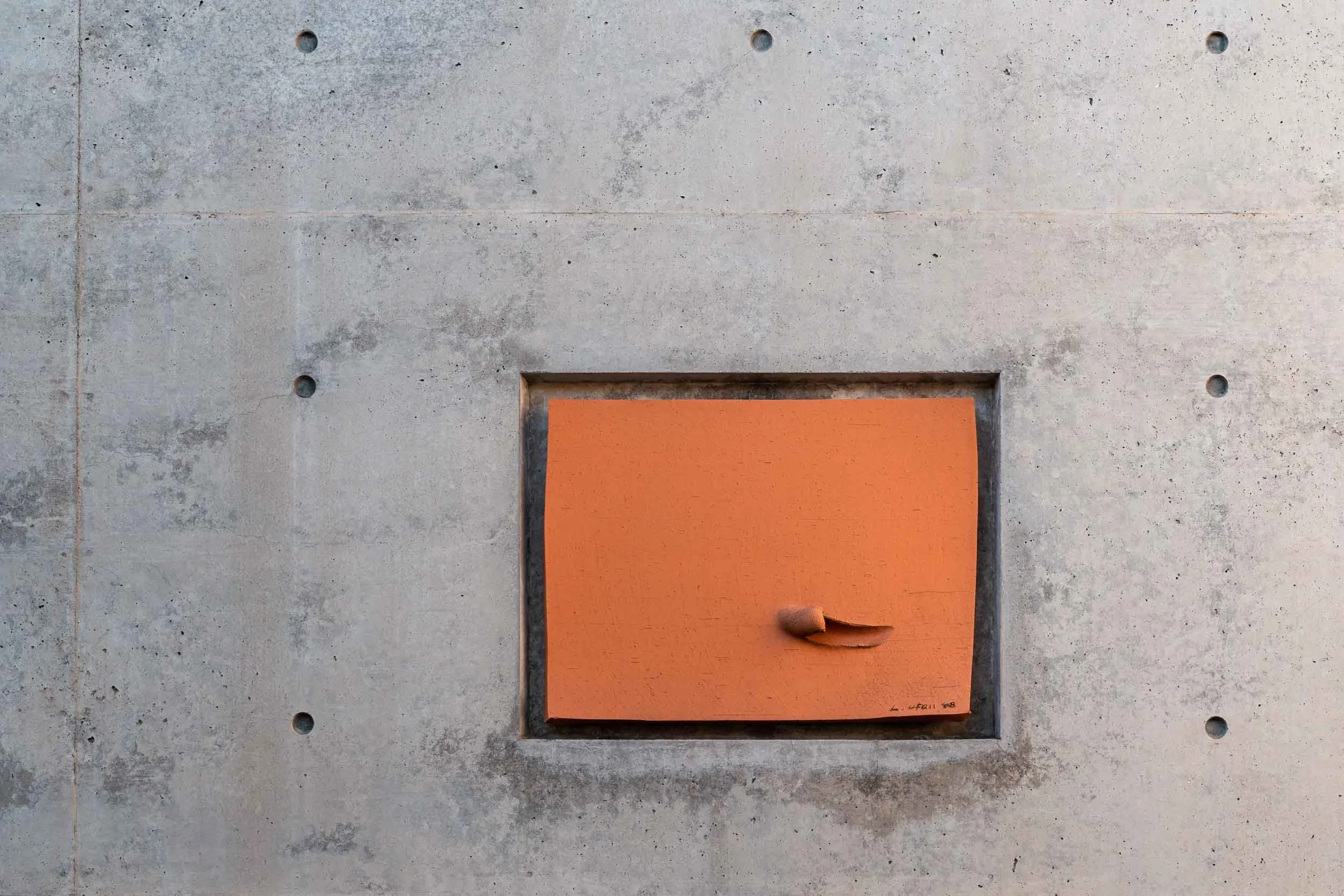
Inside, Lee Ufan’s brushstroke paintings are spacious and restrained: vast fields of white or pale colour punctuated by a few deliberate, weighty strokes. Each stroke feels like a held breath—thick, fading at the edges, as if it bears the memory of the arm that moved across the canvas. Standing before them, I felt hyper-aware of silence and time; you don’t consume these works, you sit with them.
Outside, Lee’s sculptures embody that same philosophy in three dimensions. His Relatum series, arguably his most renowned works, features steel plates and natural stones arranged with almost ceremonial precision. There’s a sense of negotiation between industrial and organic materials, mass and emptiness, impact and restraint.
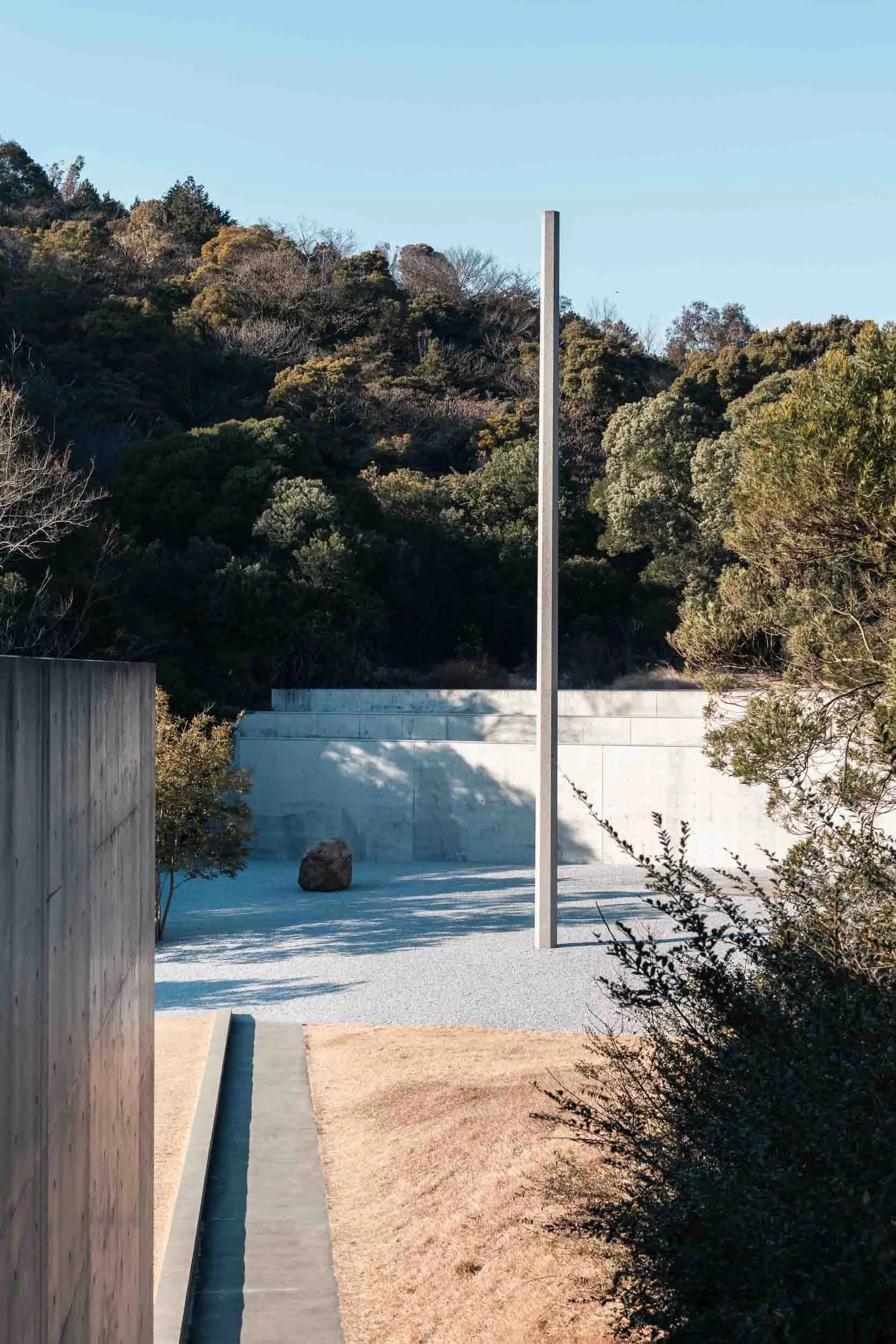
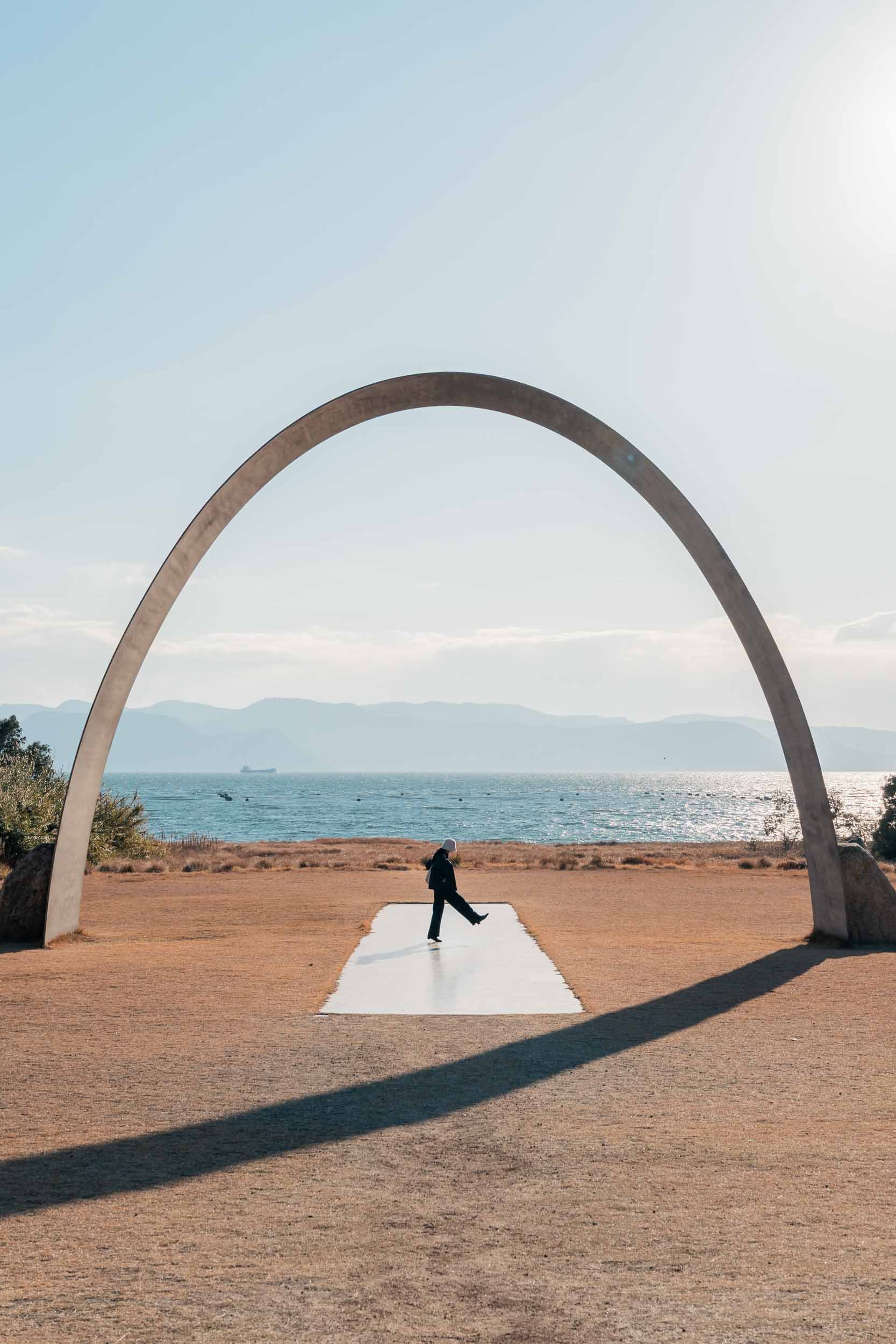
The obvious standout piece is Porte vers l’infini (2019): a gate-like steel structure placed in the landscape, opening towards the sky and sea. Walking around it, the view continually shifts through its frame, making it resemble a threshold to nowhere and everywhere at once—a quiet, physical metaphor for looking beyond what’s immediately visible.
Art House Project (家プロジェクト)
The Art House Project is where Naoshima feels most like a living village woven together with contemporary art. Scattered through the narrow lanes of Honmura, old houses, shrines, and empty buildings have been transformed into artworks by different artists—each responding to the history and atmosphere of its space rather than simply inserting something shiny and new.
Instead of a white-cube gallery, you step into former homes, a dentist’s clinic, or even a shrine, where light, sound, and memory become part of the work. Some pieces are quiet and meditative, while others are more immersive or disorienting, but all share a sense of intimacy. You’re walking through someone’s old front door, past tatami and wooden beams, into something unexpected. Honmura is Naoshima at its most human—art intertwined with local life, with residents hanging laundry just around the corner.
I recommend getting a multi-site ticket covering several houses; it offers better value and allows you to experience the project as a connected whole.
Ando Museum
The Ando Museum is a quiet, hidden gem in Honmura, just a short walk from the Art House Project sites. From the outside, it resembles a traditional wooden Japanese house—tiled roof, dark timber, nothing ostentatious. But step inside, and you’re immediately immersed in Tadao Ando’s signature concrete, light, and sharp geometric forms, snugly housed within the old structure. It embodies a dialogue between past and present: heritage exterior, modernist core.
The museum showcases Ando’s connection with Naoshima and the Benesse Art Site, displaying models, drawings, and photographs of his projects across the islands. You can see how his buildings are seamlessly integrated into the landscape, and how the entire “art island” vision gradually came to fruition. The interiors are subdued and carefully controlled, with beams of light piercing through concrete and timber—subtle, almost chapel-like. The atmosphere is intimate and contemplative, especially when compared to the more expansive spaces of Chichu or Benesse. It is unexpectedly moving, like stepping into Ando’s thought process and into Naoshima’s story of transformation.
Naoshima New Museum of Art (直島新美術館)
The Naoshima New Museum of Art signifies a new chapter in the island’s art scene—more a continuation than a standalone attraction, expanding the dialogue between landscape, architecture, and contemporary art. Located near Benesse and Chichu, it subtly integrates into Naoshima’s art circuit rather than overshadowing it.
Architecturally, the museum reflects the island’s restrained aesthetic: low forms, clean lines, thoughtful use of topography and light. It does not have a towering façade but slowly reveals itself through courtyards, circulation routes, and sky views that guide visitors. The spacious, contemplative design encourages slowing down and noticing movements. Inside, the focus is on contemporary art engaging with current issues, with ever-changing exhibitions. The calm atmosphere fosters reflection and emotion, complementing Chichu and Benesse.
Hiroshi Sugimoto Gallery: Time Corridors (杉本博司ギャラリー 時の回廊)
The Hiroshi Sugimoto Gallery: Time Corridors on Naoshima offers a peaceful link between past and future, blending Sugimoto’s photography, sculpture, and design into a journey through time and perception. The architecture, a dialogue between Sugimoto and Tadao Ando, features sleek concrete, sharp lines, and openings that choreograph light and shadow, with courtyards drawing in wind, sky, and the Seto Inland Sea.
As visitors traverse these “time corridors,” the building becomes an instrument measuring light and weather. Inside, key works display layered memory, history, and the present—cinema screens with long exposures, historical forms, and archaeological-like sculptures. A highlight is the lounge, redesigned by Sugimoto’s laboratory, featuring the Three Divine Trees table, and the Glass Tea House “Mondrian,” which create a calm, temple-like atmosphere. The overall mood is contemplative, inviting a stroll through time.
Ring of Fire – Solar Yang & Lunar Weerasethakul (ヤンの太陽 & ウィーラセタクンの月)
Ring of Fire near Honmura port features a modest, semi-industrial building, emphasising sound, image, and light over a polished museum. It showcases works by Haegue Yang and Apichatpong Weerasethakul, thematically centred on memory, place, and unseen forces, such as the seismic ring of fire.
Yang’s installations use everyday materials, subtle movement, and shifting light to create environments that feel domestic yet uncanny, hinting at stories and history through textures and sensations.
Weerasethakul’s work involves dreamlike, time-blurred video and sound, resembling a half-remembered dream in which nature, ghosts, and humans blend in slow, meditative sequences. The ambient sound, darkness, and flickering images evoke an intimate, eerie, and atmospheric mood, focused on sensations rather than questions.
Miyanoura Gallery 6 (宮浦ギャラリー六区)
Just a five-minute walk from Miyanoura Port, Miyanoura Gallery 6 sits in the heart of Naoshima’s everyday life. Once a pachinko parlour, it’s been redesigned by Taira Nishizawa into a light-filled exhibition space, its familiar façade preserved while the interior is completely reimagined.
Inside, the Setouchi “ ” Archive project by Motoyuki Shitamichi gathers books, photos, and materials on the landscape, folklore, and history of the Seto Inland Sea. Sunlight filters through some 400 ceiling louvres, changing with the seasons and the time of day, while the exit opens to a children’s park, blending archives, community, and gentle nostalgia.
Naoshima Pavilion (直島パヴィリオン)
The Naoshima Pavilion, located near Miyanoura Port, welcomes visitors with a subtle, futuristic glow. Designed by artist Sou Fujimoto, this faceted white structure looks like a floating cloud or crystalline shell resting on the water's edge. Inside, the latticework blurs the lines between sea, sky, and land. Light passes through the geometric metal mesh, creating shifting shadows that feel surprisingly intimate despite the open design. It functions as both a landmark and a peaceful pause, serving as a reminder that on Naoshima, even the ferry terminal is part of the island’s ongoing dialogue between art, landscape, and arrival.
The Naoshima Plan “The Water”
Tucked in Honmura, near the Art House Project, The Naoshima Plan “The Water” by architect Hiroshi Sambuichi transforms an old house into a living study of “moving materials”: wind and water. Sambuichi reveals Honmura’s traditional north–south room layout and adds a shallow pool fed by rich groundwater, reached via a windblown pier.
Bare timber, soft light, and quietly shifting reflections make the space feel part home, part observatory. With your feet in the cool water, you sense air currents, temperature, and sound more keenly. Entry is free, and the experience is calm, elemental, and deeply grounding.
Naoshima Public Bath “I Love Yu” (直島銭湯「I♥︎湯」)
Near Miyanoura Port, Naoshima Public Bath has both everyday sentō and full-body artwork. Created by artist Shinro Ohtake, it turns a neighbourhood bathhouse into a surreal collage: mosaics, murals, sculptural fixtures, and exuberant signage inside and out.
Ohtake’s scrapbook approach explodes across tiles, tubs, and even the toilets, mixing pop imagery, found objects, and bold colour. Operated by the local tourism association, it’s meant as a shared space for residents and visitors to literally bathe in art. Soaking here feels playful, communal, and slightly hallucinatory—like stepping into Naoshima’s subconscious after a day of pristine museums.
What to Eat
naoshima gelato (直島ジェラート)
Right next to the Honmura Port, naoshima gelato is a tiny stand known for its clean, not-too-sweet flavours. Seasonal Japanese ingredients—like citrus, matcha and local milk—make it a popular refreshment stop for cyclists and day-trippers exploring the island.
Mikazukishoten (ミカヅキショウテン)
A stone’s throw from the public bath, Mikazukishoten is a cosy café-meets-gallery where coffee, curry and craft share the same table. The atmosphere is relaxed and creative, making it a gentle pause between art sites in the Miyanoura area.
Naoshima Coffee (直島コーヒー)
Naoshima Coffee is within easy reach of Honmura Port, drawing visitors with its minimalist interior and thoughtful brews. It’s a natural place to start the day—order a hand-drip coffee, check your ferry times, and map out your museum-hopping in a calm, unhurried setting.
Naoshima Noodle (直島ヌードル)
Located uphill from Miyanoura Port, Naoshima Noodle feels like a casual canteen with a creative island twist. Ramen bowls are generous, broths comforting, and its convenient location makes it an easy stop before catching a ferry or heading further inland.
Cafe Salon Nakaoku (中奥)
Tucked inland from Honmura, Café Salon Naka-Oku feels like a secret hideout surrounded by greenery. Inside, it’s all warm wood, books, and relaxed music, with generous curry and pasta plates. It’s a rewarding detour if you want to step away from the primary art circuit for a slower, quieter lunch.
Aisunao (あいすなお)
Aisunao specialises in wholesome, mostly organic set meals—think brown rice, seasonal vegetables, and gentle, home-style flavours served in a traditional house. It’s calm, compact, and quietly nourishing, the kind of place where you sit on tatami, exhale, and realise you’ve been rushing Naoshima more than you meant to.
Sarrasin
Sarrasin, nestled in the Honmura district, brings a touch of Brittany to Naoshima with its buckwheat galettes and crêpes. The menu is simple yet carefully crafted, and the relaxed setting suits a leisurely lunch between visits to the nearby Art House Project sites.
Kon'nichiwa (コンニチハ)
Right in Honmura’s narrow streets, Kon'nichiwa feels like a cosy living room for art travellers—wood, books, and a gentle hum of conversation. Simple Japanese-style lunches, coffee, and cakes anchor the menu, making it a perfect pause between Art House Project visits or a soft landing at the end of the day.
Terrace Restaurant (テラスレストラン)
Overlooking the sea from the Benesse House Park building, Terrace Restaurant pairs clean, contemporary interiors with a relaxed resort vibe. Western-Japanese fusion dishes, pastas, and well-composed plates are served with big windows onto the Seto Inland Sea—ideal for a fancy meal after wandering through Benesse House’s art and sculpture fields.
Where to Shop
Museum Shops
Naoshima’s museum shops are destinations in their own right, pairing sharp curation with beautiful everyday objects. Expect art books, limited-edition prints, design-forward stationery and refined souvenirs that echo Tadao Ando’s architecture and the island’s light. They’re where you find keepsakes that feel like tiny artworks.
Naoshima Public Bath “I Love Yu” Shop
Attached to the playful public bath, this shop leans into colour and quirk. Think graphic towels, bath products and souvenirs featuring the bathhouse’s bold motifs. It’s the spot for fun, slightly offbeat mementoes that channel Naoshima’s more whimsical, pop-art side.
Miyanoura Port Souvenir Stalls
Clustered around Miyanoura Port, these small stalls and kiosks specialise in easy-to-pack island souvenirs: Naoshima-branded snacks, keychains, postcards and local crafts. It’s a casual, come-as-you-are shopping stop, perfect for last-minute souvenirs before boarding the ferry or for a quick browse between connections.
Where to Stay
Benesse House
Benesse House is Naoshima’s ultimate art-sleep experience, with four distinct wings—Museum, Park, Beach and the elusive Oval—scattered across a hillside overlooking the Seto Inland Sea. Designed by Tadao Ando, it blurs the boundaries between gallery and guestroom: think concrete, ocean light and site-specific works outside your door. Staying here means after-hours access to the Benesse House Museum, quiet moonlit walks past sculptures, and waking to a horizon that feels almost painted. Rooms range from minimal and contemplative to more resort-like, but the constant is a sense of living inside Naoshima’s art narrative rather than simply visiting it.
Naoshima Ryokan Roka (直島旅館 ろ霞)
Naoshima Ryokan Roka is the island’s refined, design-forward ryokan, located near Honmura. Expect a modern take on traditional Japanese hospitality: spacious suites, private open-air baths, seasonal kaiseki-style dining, and carefully framed views of nature and art.
Minshuku Yokonbo (民宿よこん坊)
Minshuku Yokonbo offers a simple, home-style stay near Miyanoura, with tatami rooms and a garden that opens onto the beach. Villas accommodate groups and suit travellers who prefer no-frills comfort and a quiet local feel rather than design-focused accommodation. It’s a 15-minute walk from the port along flat, straight roads. Being near the bottom of the island also means it’s within walking distance of Chichu (the farthest point you can reach on the combination of buses), though I would recommend walking from the museum for a leisurely downhill stroll.
Quaint House Naoshima (クイントハウス直島)
Quaint House is a compact, design-conscious guesthouse near Miyanoura Port, just around the corner from the public bath. Rooms are simple yet stylish, making it a comfortable option for travellers who prioritise location and value while still seeking a bit of character.
My Lodge Naoshima
Perched on a hill near Miyanoura Port, My Lodge offers clean, contemporary rooms with sweeping sea views. It has a holiday-home vibe, but since it’s a bit of a walk up the hill, it’s best to go light. It serves as a practical base with a touch of boutique charm—particularly attractive if you’re seeking sunset balconies.
Wright Style (ホテル ライトスタイル)
Wright Style is a ten-minute walk from the Momoyama (桃山) bus stop and has a relaxed, artsy guesthouse vibe. With a mix of Western-style rooms and communal spaces, it suits small groups or solo travellers seeking an easygoing, sociable base on the island.
This post may contain affiliate links, meaning we receive a commission when you click and make a purchase.
Related Posts
![My Ultimate Shopping Guide to Japan Konbinis [2026 Edition]](https://images.squarespace-cdn.com/content/v1/5fa57aacf5b0a90a76b0d7cc/41592b29-051b-450b-bdf4-7929a4cbf953/travel_japan_konbini_portrait.jpg)



Soak your feet above the railway tracks at a new museum space, whose whimsical debut show will take you on a guru-guru ride.