
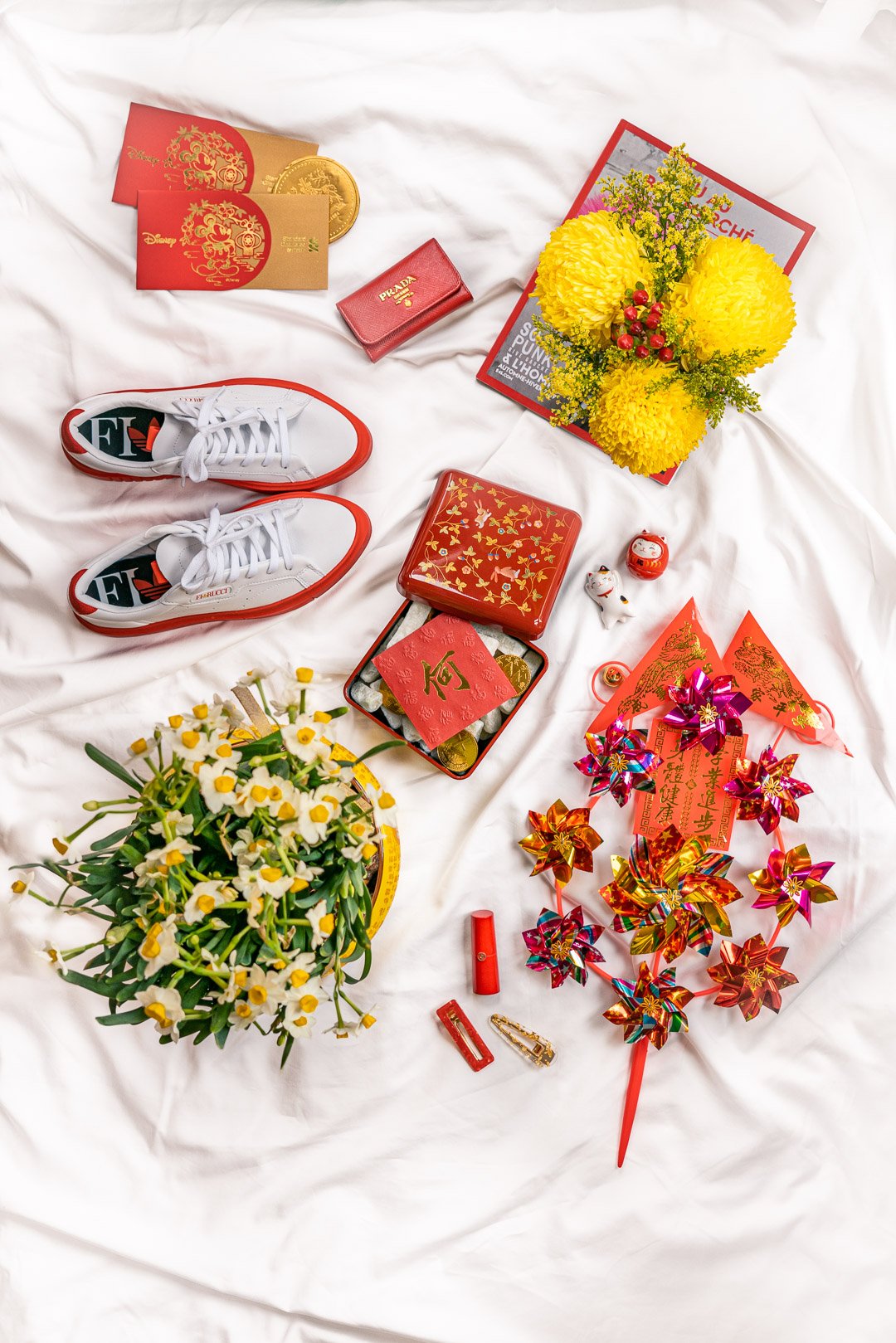
Chinese New Year is hands down the most important festival in the Chinese calendar, and Hong Kong celebrates it with full theatrical flair.
Think fire‑red decorations, fortune‑laden snacks and a long list of rules your mum insists you follow “or else”.
Most visitors only see the highlight reel: the reunion dinner on New Year’s Eve and lion dances on New Year’s Day. But the real magic starts much earlier, on the 23rd day of the last lunar month, when the city quietly slips into New Year mode. From worshipping the Kitchen God to spring cleaning with pomelo leaves, every tiny ritual is steeped in symbolism, superstition and, frankly, a lot of food.
Call it folklore, call it superstition – but where’s the fun in a festival you can’t over‑dramatically prepare for?
23rd Day of the Last Month: Worshipping the Kitchen God (年廿三:祭灶)
Chinese New Year in Hong Kong quietly kicks off with the Kitchen God (灶君), the ultimate household inspector who has been monitoring your behaviour all year. According to folklore, he oversees the family hearth and what you eat, and on this day, he flies to heaven to report everything to the Jade Emperor. Yes, even the late‑night instant noodles.
To secure a glowing annual review, families used to bribe him with rice puddings and sugarcane, hoping his mouth would be too sweet – or too glued shut – to say anything bad. In modern Hong Kong, you’ll still spot festive rice cakes piled high in markets and traditional bakeries, symbolising both sweetness and steady progress in the year ahead.
So if you’ve been a little too addicted to takeaway, this is the time to make amends. With sugar.
24th Day of the Last Month: Fry Foods (年廿四:開炸)
If the 23rd is about diplomacy, the 24th is unapologetically about deep‑fried joy. Traditionally, this is the day families “open the fryer” (開炸) and stock up on classic Chinese New Year snacks to fuel days of visiting, gossiping and pretending calories don’t exist.
On the menu: sesame balls (煎堆) for rising fortunes, crispy pastry dumplings (油角) stuffed with sweet coconut and peanut, and egg twists (蛋散), which shatter delicately with every bite. They’re golden, crackly and symbolically auspicious. If you’re curious about what snacks (and healthier options) belong on the Chinese New Year table, check out this guide to auspicious foods for the festive season.
In Hong Kong, you’ll find them everywhere, from old‑school neighbourhood bakeries to wet market stalls. I always tell myself I’ll “just buy a small box”, then leave with a family‑sized tin as if I’m catering for an entire village.
Delicious? Absolutely. Healthy? Let’s just say moderation is very, very theoretical at this point.
25th Day of the Last Month: Steam Puddings (年廿五:蒸糕)
The 25th is all about steaming, not deep‑frying – a tiny nod to balance before the feasting gets out of hand. Families prepare puddings (年糕), the iconic New Year pudding whose name sounds like “year higher” (年高), symbolising progress, promotions and general life upgrades.
There are two main celebrity puddings in Hong Kong: the classic brown cane‑sugar version and the savoury turnip cake (蘿蔔糕) dotted with Chinese sausage and dried shrimp. Both are steamed ahead of time, chilled, then pan‑fried to crisp‑edged perfection as guests start to arrive.
For locals, the question isn’t whether you’re having New Year pudding, but how many variations your relatives insist you taste “for luck”. I’ve lost count of how many aunties have pressed plates of puddings into my hands with the same intensity people reserve for limited‑edition handbags.
If you’re visiting Hong Kong, keep an eye out in bakeries and cha chaan tengs – it’s an edible crash course in New Year symbolism.
26th Day of the Last Month: Washing for Good Fortune (年廿六:洗福祿)
By the 26th, it’s not just the flat that needs a refresh – it’s you. Washing for good fortune is exactly what it sounds like: people bathe to rinse off the old year and step into the new one, both literally and symbolically, squeaky clean. Traditional Chinese society had sayings like “wash inside and out on the 26th” (臘月二十六,裏外洗一洗) and even “clean the livestock sheds on the 26th” (臘月二十六,洗淨禽畜屋), because if luck is coming, the whole household had better look ready.
There’s also the very important business of “cutting New Year’s meat” (割年肉). In the past, meat was a luxury, so buying it signalled genuine prosperity. Families would head to the market on this day to choose their New Year’s meat, with glossy braised pork being the undisputed favourite. Its rich red colour is a visual wish for a prosperous, thriving year – and, frankly, a delicious one, too.
27th Day of the Last Month: Final Preparations and Grooming (年廿七:洗疚疾)
Day 27 is the calm before the decorative storm. Traditionally, this is when last‑minute chores and grooming kick in: think haircut, new clothes, and finishing any lingering housekeeping before proper New Year taboos begin.
In Chinese culture, cutting hair on or after New Year’s Day is frowned upon in many families, as it’s thought to “cut away” your luck. So salons in Hong Kong are notoriously packed in the days leading up to the festival. I’ve learnt the hard way that walking in for a trim on the 27th without a booking is pure wishful thinking.
It’s also when families double‑check supplies – from mandarins and candies to tea and nuts – to make sure there’s enough to host the onslaught of relatives and friends. If you’re travelling in Hong Kong at this time, you’ll notice the city shifting gears: offices getting quieter, people heading home earlier, and shopping bags getting progressively larger.
28th Day of the Last Month: Spring Cleaning (年廿八:洗邋遢)
You may have heard the phrase “年廿八,洗邋遢” – literally, “wash away the grime on the 28th”. This is the official spring‑cleaning day and arguably the second‑most important ritual after the reunion dinner.
The idea is simple: clear out old energy, clutter and cobwebs to welcome good fortune into a fresh, cleansed space. In Hong Kong, that means flats being scrubbed within an inch of their lives, wardrobes edited (in theory) and long‑ignored corners finally seeing daylight.
There’s also a lovely bath ritual: some families use water boiled with pomelo leaves to “wash away bad luck”. You’ll see small pomelo leaf bundles at fruit stalls in local markets, and for a modern twist, pomelo‑scented body washes line drugstore shelves. I can confirm it’s a very soothing way to pretend you’re doing spiritual cleansing and skincare at the same time.
Once the New Year starts, serious cleaning is avoided – sweeping then would symbolically sweep your luck right out the door.
29th Day of the Last Month: Hang up Spring Couplets (年廿九:貼春聯)
Day 29 is the day for decoration, when Hong Kong homes get their red makeover. Households hang spring couplets (春聯), auspicious red papers, handwritten or printed, bearing poetic blessings for the year ahead.
Traditionally, they’re written in black or gold ink on red paper with calligraphy brushes, though modern Hongkongers are not above foil lettering or cute cartoon characters. More traditional families will even consult an auspicious time to start decorating and follow a particular order:
Right scroll (上聯) – the first line of the couplet
Left scroll (下聯) – the second line, matching in rhythm and character count
Top scroll (橫批) – a punchy four‑ or seven‑character blessing above the door
Single characters like 福, 滿, 春 – scattered around the home
You’ll often see 福 hung upside down – “inverted fortune” (福倒) sounds like “fortune has arrived” (福到). Cheesy wordplay? Absolutely. Do we love it? Of course.
New Year’s Eve, 30th Day of the Last Month: Reunion Dinner and Getting Rid of Laziness (年三十:團年、賣懶)
New Year’s Eve is when everything slows down and zooms in on one thing: family. In Hong Kong, the reunion dinner is non‑negotiable; companies let staff off early, trains fill with people heading home, and every dining table suddenly seems too small for the number of dishes being served.
The meal is a glorious parade of symbolism: fish for surplus, prawns for laughter, fat choy for prosperity – and at least one relative insisting you eat more for luck. Parents and elders also give lai see (壓歲錢) – red packets filled with money – for safety and good fortune, usually tucked under pillows or by the bedside for extra auspicious points. You’ll find the full backstory in this deep dive into Chinese New Year folklore.
Then there’s the wonderfully obscure custom of “selling laziness” (賣懶). In the old days, children would walk down the street with a lantern, incense sticks and a red‑dyed egg, chanting “Selling laziness until New Year’s Eve!” before burning the incense and eating the egg. I’ve personally never seen anyone do this, but the message is clear: start the new year without baggage – including your bad habits.
It’s also the final night for the big Chinese New Year flower markets, which stay open past midnight. Think dense crowds, armfuls of flowers and kumquat trees, and a very real chance of being whacked by someone’s oversized peach blossom branch. For plant‑shopping inspo before you brave the flower markets, bookmark this guide to the best auspicious plants around.
New Year’s Day: Visiting Relatives (年初一:拜年)
New Year’s Day in Hong Kong is all about fresh starts and carefully curated behaviour. You dress in something new (preferably red or bright colours), avoid anything too gloomy, and head out to visit relatives and close family friends.
The star of the show is red packets handed by married couples and elders to juniors, unmarried relatives, and sometimes even doormen or staff, as a gesture of goodwill. Each packet carries wishes for smooth sailing in the year ahead, though no one’s complaining about the cash either.
The conversation is peppered with auspicious greetings such as “Gong hei fat choy” (恭喜發財) and a dozen variations tailored to careers, studies and romance. It’s loud, nosy and relentlessly social – which is precisely the point. The more warmth and connection you pile into the first day, the more it’s believed to echo through the rest of the year. I’ve rounded up a cheat sheet of auspicious greetings that work for bosses, in-laws and everyone in between, so you’re never stuck repeating the same line all day.
2nd Day of the New Year: Visiting the Wife’s Family and Spinning Windmills (年初二:回娘家、轉風車)
The second day belongs to married daughters. Traditionally, couples return to the wife’s family home for lunch, bearing gifts and New Year treats, then politely leave before dinner. It’s a delicate balance of respect, logistics and avoiding anyone’s mother feeling neglected.
In Hong Kong, Che Kung’s (車公) Birthday also falls on this day, and that’s when things get lively. Crowds flock to Che Kung Temple in Sha Tin to pray for good fortune and spin colourful pinwheel windmills to literally “turn their luck around”. Clockwise or anticlockwise, it doesn’t matter – sincerity trumps technique here.
I’ve visited in busy years, and the energy is electric: clouds of incense, stalls selling glittery windmills, fortune sticks rattling in bamboo cups. Many people take their windmills home and display them for the rest of the year as a visual reminder that luck is, at least symbolically, on their side.
3rd Day of the New Year: Chigou’s Day (年初三:赤口)
Day three is also known as Chigou’s Day, and it comes with a simple advisory: minimise human interaction unless you enjoy drama. Tradition holds that people are more prone to arguments on this day, so visiting friends and relatives is generally avoided.
Instead, families keep things low‑key – staying home, resting, or quietly heading to temples rather than hosting big gatherings. Some see it as a built‑in social detox in the middle of what is otherwise a marathon of small talk, snacks and forced enthusiasm.
Growing up, I always thought of day 3 as the festival’s “do not disturb” day: a chance to breathe, regroup and avoid saying anything you might regret – supposedly because quarrelling this early in the year could sour your luck. Whether or not you buy the superstition, a sanctioned rest day after so much feasting is quite civilised.
4th Day of the New Year: Welcoming the Kitchen God Back (年初四:接灶)
Remember the Kitchen God from the 23rd? On the fourth day of the New Year, he finally clocks back in. After his brief annual “business trip” to heaven, families symbolically welcome him back to the hearth with offerings of food, wine and incense.
The mood is a mix of gratitude and damage control: you’ve just had days of visitors, feasting and general chaos, and now the spiritual manager of your household is back on duty. In the past, people would light firecrackers to mark his return and ward off bad spirits, though that tradition has largely disappeared in Hong Kong because of safety regulations.
For many, this day also marks the psychological end of pure holiday mode. The kitchen is back in full swing, leftovers are attacked with renewed efficiency, and there’s a subtle shift towards easing back into normal rhythms – albeit with a pantry still suspiciously full of turnip cake.
5th Day of the New Year: Breaking Taboos and Sending Away the Five Poverties (年初五:破五送窮)
By the fifth day, everyone is ready to stop tiptoeing around New Year taboos. This is Po Wu (破五), when many earlier restrictions – such as not sweeping, not taking out the rubbish, or avoiding sharp words – are finally lifted.
Culturally, it’s also the day to “send away the five poverties”:
Poverty in wisdom (智窮)
Poverty in learning (學窮)
Poverty in literature (文窮)
Poverty in fate or life (命窮)
Poverty in friendship (交窮)
In the past, households would let rubbish pile up over the first few days, then ceremoniously throw it out on this day so they weren’t “tossing away” luck earlier. These days, most Hongkongers are a bit more pragmatic (and hygienic), quietly breaking that rule on day two or three.
It’s also customary to eat dumplings, especially in northern traditions, because their ingot‑like shape symbolises wealth. They’re also said to ward off gossip and slander – which, frankly, is a pretty strong selling point for a bowl of comfort food.
7th Day of the New Year: People’s Day (年初七:人日)
The seventh day of the New Year is essentially humanity’s collective birthday. According to legend, the goddess Nuwa created animals on the first six days – chickens, dogs, pigs, sheep, cows and horses – and finally humans on the seventh. Hence: happy birthday, everyone.
As it’s considered the birthday of mankind, people are expected to treat each other with extra respect. Quarrelling, scolding and harsh words are strongly discouraged. In more traditional beliefs, scolding anyone during the first lunar month could sabotage your fortune for the whole year, which is why parents are not supposed to tell children off, even if they’ve just broken something irreplaceable. Theoretically.
Some families celebrate People’s Day with symbolic foods or simple family meals. In Hong Kong, it’s a quieter moment amid the festivities – a reminder that beyond money, success and dumplings, the real blessing is simply being here with the people around you.
15th Day of the New Year: Lantern Festival (正月十五:元宵節)
Just when you think Chinese New Year must surely be over, the Lantern Festival arrives on the 15th day of the first lunar month, closing the season with a soft, glowing finale.
This is the first full moon of the new year, and families traditionally eat sweet glutinous rice balls (湯圓) in a light, syrupy soup. Their round shape mirrors the moon and symbolises reunion and completeness, a poetic justification for a second dessert.
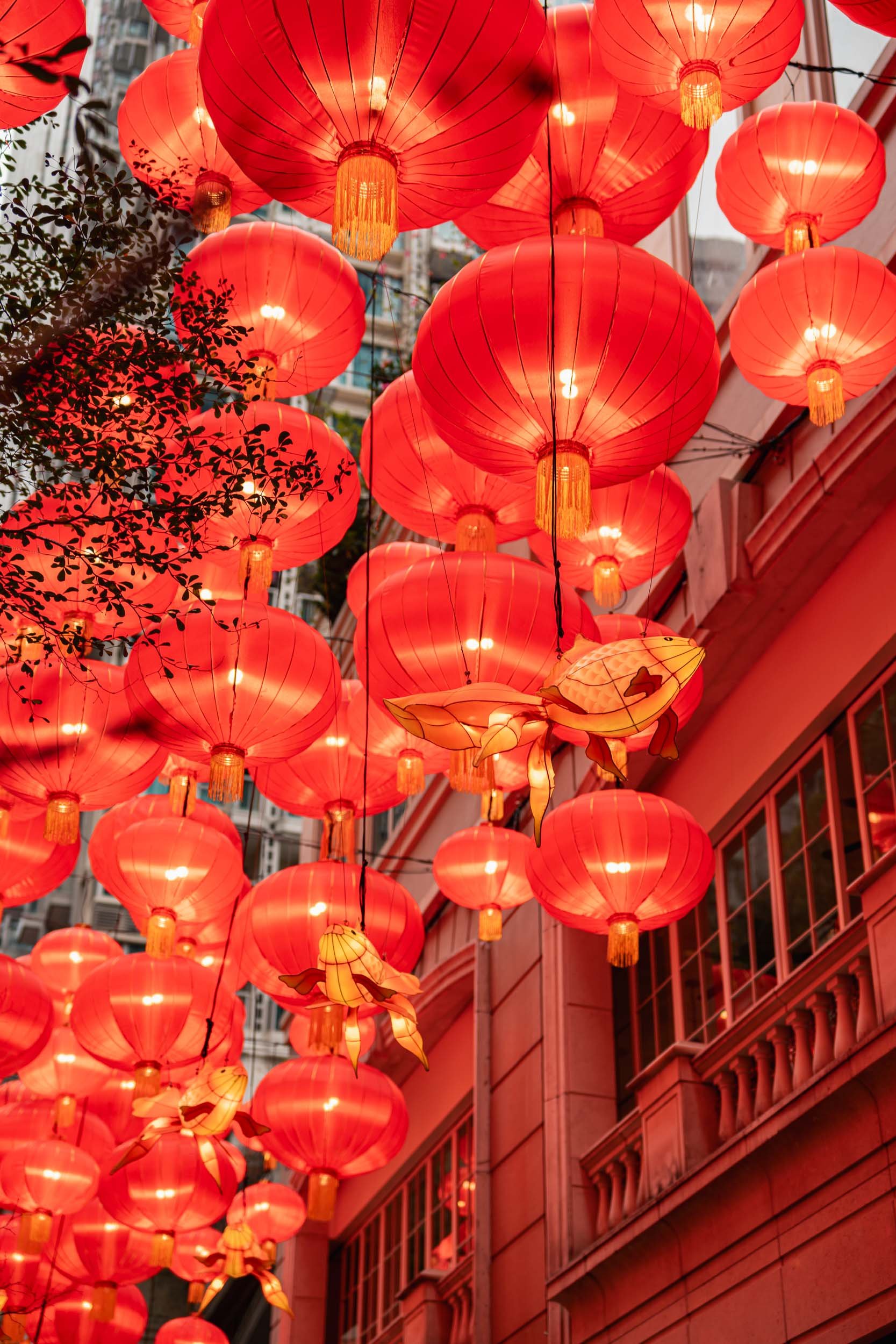
Lanterns are the stars of the evening. In some dialects, “lantern” (燈) sounds like “male descendants” (丁), so hanging lanterns was once seen as a subtle wish for many sons and a thriving family line. These days, it’s more about aesthetics and nostalgia: strolling under glowing lantern displays, solving riddles (猜燈謎) dangling beneath them, and taking far too many photos.
In Hong Kong, the Lantern Festival blends folklore, family time and a soft landing back into normal life. After weeks of noise, firecrackers (elsewhere), markets and constant visits, it’s a gentle, luminous full stop to the New Year story.
Related Posts



Wishes galore for the Year of the Horse! Wow friends and family with fail-safe greetings that will keep you prepared for all your prospective red packets.