The Complete Guide to the Folklore Behind Chinese New Year

Chinese New Year isn’t just about feasting on dumplings, dodging relatives’ questions about your love life, and seeing how much ang bao money you can rake in. It’s the most important festival of the year for Chinese communities around the world, and its customs date back roughly 3,500 years, evolving through dynasties, myths, and more superstitions than you can shake a mandarin at.
Over the centuries, all that history has woven itself into a rich tapestry of Chinese New Year folklore—stories that explain why we hang red couplets, set off firecrackers, hand out red packets, and obsess over zodiac signs. These tales aren’t just entertainment; they’re a way of passing down values, beliefs, and family traditions from generation to generation.
Folklore gives the festival its emotional backbone. Stories are shared at family gatherings, retold in stage performances, hinted at in decorations, and baked (sometimes literally) into New Year rituals. They reinforce identity, continuity, and that warm, fuzzy sense of belonging to something much bigger than yourself.
So the next time you’re taking photos under an over-the-top Chinese New Year display in a mall or temple, remember: behind every dancing lion and every piece of red paper is a story—and usually, a monster.
The Monster Nian and the Power of Red
Let’s start with the diva of Chinese New Year legends: Nian (年). The name literally means “year,” and this creature is why your neighbourhood sounds like a war zone every New Year’s Eve.
Nian is usually described as a ferocious, horned beast resembling a lion, living deep in the sea for most of the year. Charming, right? But every New Year’s Eve, it would crawl from the depths to terrorise nearby villages—eating livestock, smashing homes, and occasionally snacking on humans. Understandably, villagers would escape to the mountains before the New Year, barricading doors and windows and hoping Nian picked another postcode.
One year, as everyone packed to flee, an old man with silver hair appeared in the village. While the villagers panicked, he stayed completely unbothered and asked to spend the night, promising he could handle the beast. (There’s always that mysterious stranger in a good story.)
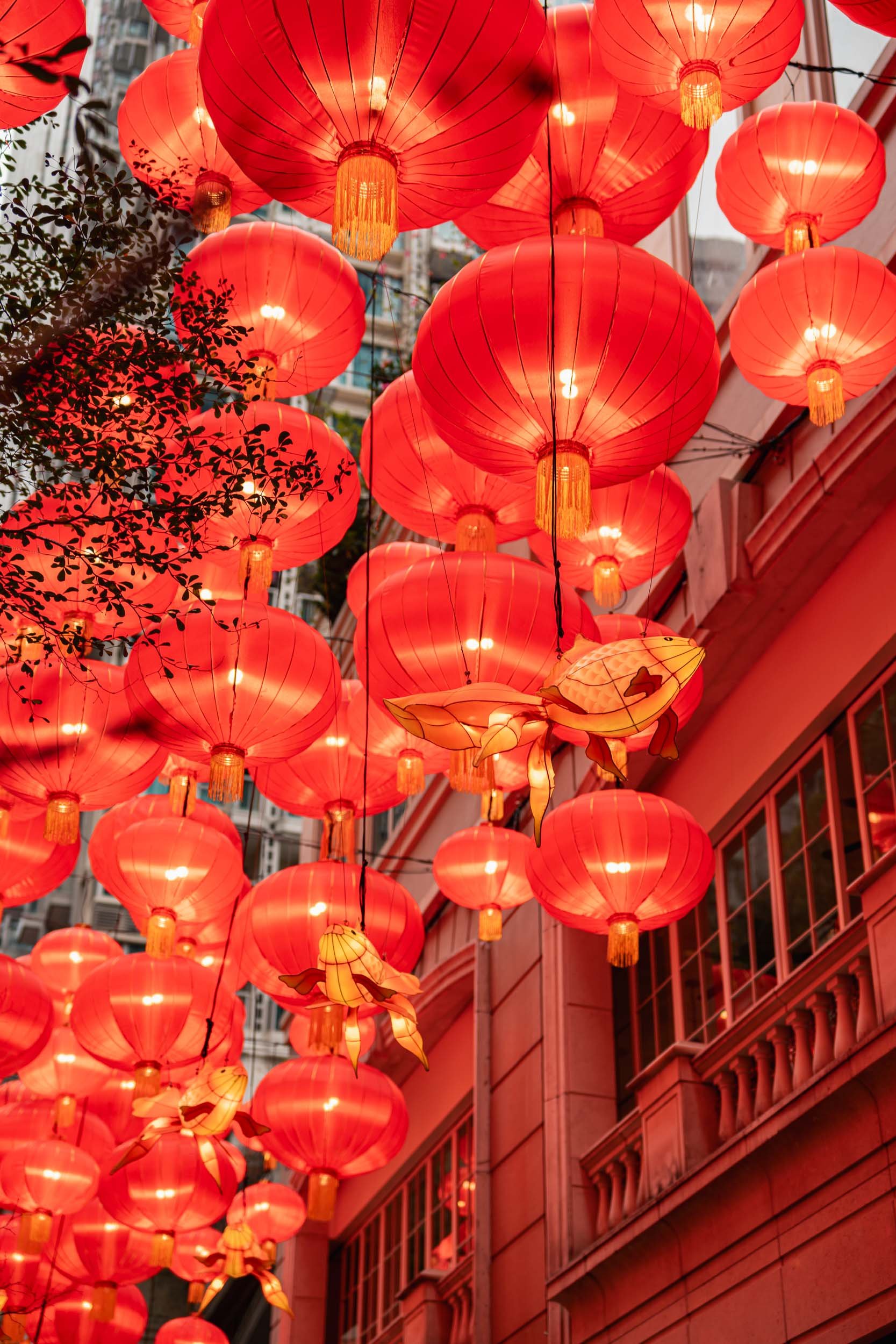
That night, instead of hiding, the old man decorated a house with red paper, lit candles, and dressed head to toe in red. When Nian arrived, it was drawn to the only house still lit. As the creature approached, firecrackers exploded, the old man laughed loudly, and the red decorations blazed in the firelight. Overwhelmed by the noise, brightness, and colour, Nian fled in terror.
The next morning, the villagers returned expecting to find ruins and found… nothing destroyed. Their homes and livestock were intact, and the old man was gone—revealed to be a celestial being in disguise. From that year on, the villagers adopted his tactics: red decorations on doors and windows, candles and lanterns to light up the night, plus firecrackers and loud noises to scare away anything with bad vibes.
And that’s why red has become the star of Chinese New Year decor. It’s not just “festive”—it’s believed to ward off evil and bad luck, serving as a visual shield of prosperity and protection.
The Demon Sui and the Origins of Red Packets
Now, onto another unwelcome visitor: Sui (歲). The character means “age,” which already sounds ominous enough. According to legend, Sui was a malevolent demon that emerged on New Year’s Eve to torment children.
Sui would creep into homes at night and scratch sleeping children’s foreheads with its sharp claws. The result? Fevers, illness, and terrified parents. So families did what parents have always done: improvise.
One year, a couple gave their child eight copper coins wrapped in red paper as a protective charm (eight is considered a lucky number in Chinese culture, symbolising prosperity). The child clutched the packet and fell asleep with it on his pillow. When Sui appeared and reached for the child, the coins suddenly burst into a powerful, dazzling light that drove the demon away. The child was unharmed, and the parents—probably exhausted but relieved—shared the story.
This gave rise to the belief that money wrapped in red paper could protect children from evil spirits and bad luck. Over time, this evolved into the custom of giving New Year’s money (壓歲錢)—literally “money to suppress Sui”—to children on New Year’s Eve.
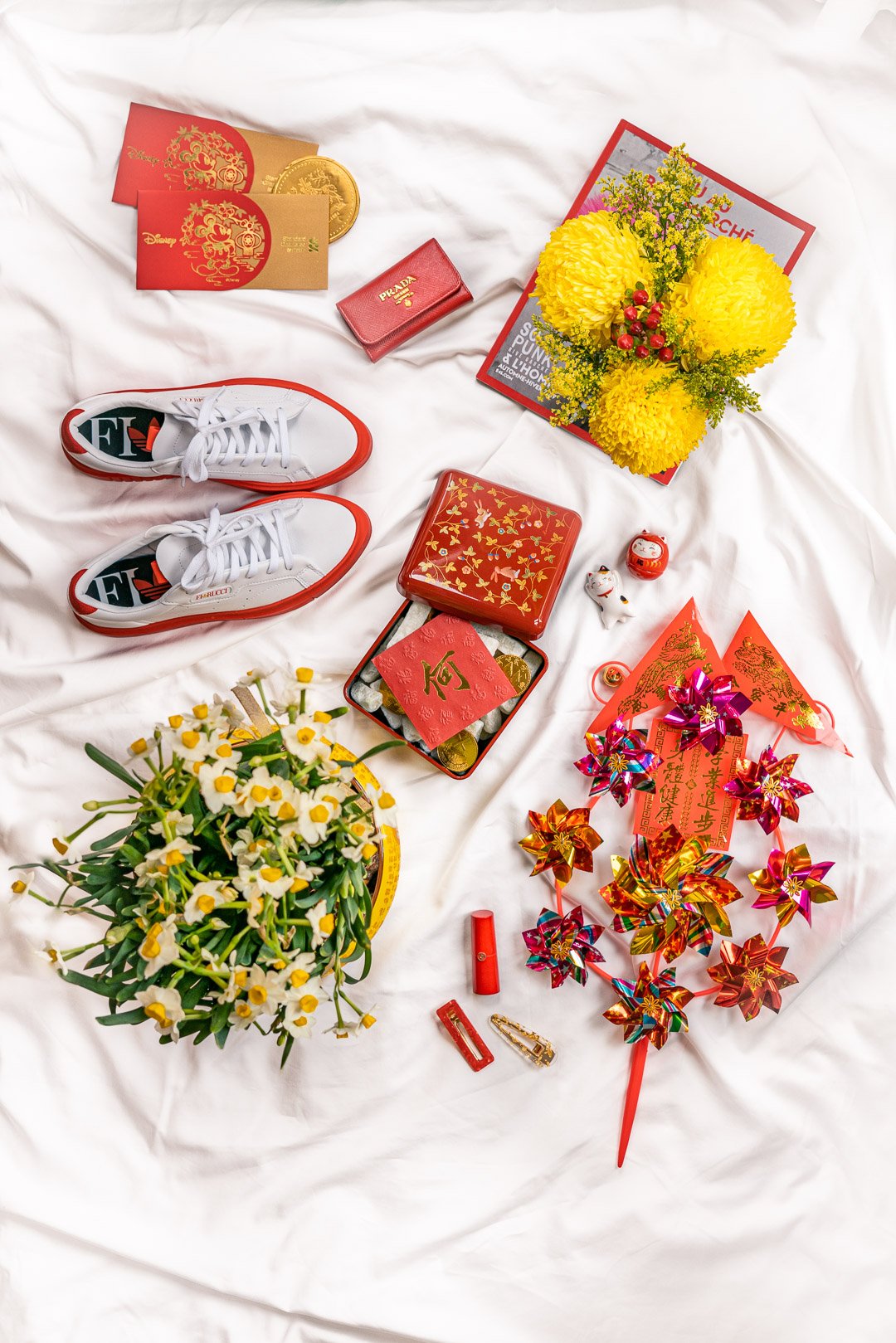
Today, those protective talismans have become the red packets we all know, love, and subtly judge by weight. For context, in Hong Kong, red packets are called lai see (利是) in Cantonese, and more widely known as hong bao (紅包) in mainland China and among Mandarin speakers globally, but also ang pao (Hokkien for 紅包) in Singaporean/Malaysian/Indonesian communities.
Red packets not only symbolise good wishes and blessings for the new year, but also luck, prosperity, and protection, and act as a way to strengthen family and social ties (and mildly embarrass unmarried adults). They’re traditionally handed out to children, younger relatives, and sometimes colleagues and service staff. Over time, the custom has gone far beyond Chinese New Year—you’ll now see red packets at weddings, birthdays, and milestone celebrations.
And because modern life comes with Wi-Fi, we now also have digital red envelopes, sent through payment apps. The sentiment is the same; only the delivery has gone cashless. Sui, presumably, has not updated his software.
The Great Race of the Zodiac Animals
No guide to Chinese New Year folklore is complete without the Chinese zodiac—the 12-year cycle in which each year is represented by an animal. If you’ve ever blamed your personality on being a “Dragon” or “Rabbit,” this one’s for you.
The zodiac animals are:
Rat, Ox, Tiger, Rabbit, Dragon, Snake, Horse, Goat, Monkey, Rooster, Dog, Pig
According to legend, the Jade Emperor (玉皇大帝) wanted to choose 12 animals to serve as his guards. He announced that the order of the zodiac would be determined by a race: whichever animal reached the Heavenly Gate first would come first in the cycle, and so on.
On the day of the race, the animals set off. Naturally, chaos and scheming ensued:
The Rat, clever but tiny, reached a river it couldn’t cross. Spotting the hardworking Ox wading through the current, it hitched a ride by jumping into the Ox’s ear. Just as they reached the other side, the Rat leapt out, sprinted ahead, and claimed first place, leaving the Ox in second.
The Tiger battled through strong currents and came third, followed by the nimble Rabbit in fourth, who cleverly hopped across stones and floating logs.
The Dragon, despite being able to fly (and theoretically win easily), stopped mid-race to bring much-needed rain to a village and help the Rabbit cross the river, turning up in fifth. Hero behaviour, but not great for rankings.
The Horse galloped towards the finish line, but just as it was about to arrive, the Snake, which had been coiled secretly around its hoof, slithered ahead at the last second—taking sixth place and leaving the startled Horse in seventh.
The Goat, Monkey, and Rooster worked together to cross the river on a raft, arriving in eighth, ninth, and tenth place, respectively.
The Dog, distracted by a very tempting bath in the river (very on brand), arrived eleventh.
Finally, the Pig, who had stopped for food and a nap, wandered in last and took twelfth place.
And just like that, the zodiac order was set.
Each animal is associated with specific traits—almost like an East Asian cousin of the Western horoscope, but based on lunar years rather than birth months. A quick snapshot:
Rat – Charming, intelligent, resourceful, and annoyingly good at getting what they want
Ox – Diligent, reliable, patient, and quietly unstoppable when they commit
Tiger – Bold, competitive, charismatic, and occasionally a bit hot-headed
Rabbit – Gentle, artistic, sensitive, and a touch cautious (in a cute way)
Dragon – Powerful, ambitious, magnetic, and sometimes a little too in charge
Snake – Wise, intuitive, strategic, and mysteriously hard to read
Horse – Energetic, adventurous, sociable, but easily restless
Goat – Kind, empathetic, creative, and fond of life’s pretty things
Monkey – Clever, curious, mischievous, and always thinking three steps ahead
Rooster – Hardworking, confident, detail-obsessed, and very honest (sometimes brutally so)
Dog – Loyal, just, dependable, and prone to overthinking right vs wrong
Pig – Generous, warm, easy-going, and occasionally too trusting
Beyond personality quizzes, the Chinese zodiac plays a real role in daily life: people consult it to pick auspicious dates for weddings, business openings, and major moves. The start of the Lunar New Year marks the transition from one animal to the next, symbolising a fresh cycle of energy, challenges, and opportunities.
You’ll often see the year’s zodiac animal featured on spring couplets, decorations, red packets, and festive displays, especially in cities like Hong Kong, where traditional symbolism and modern aesthetics collide in the most photogenic way possible.
Related Posts
![Auspicious Greetings for Chinese New Year [2026 Edition]](https://images.squarespace-cdn.com/content/v1/5fa57aacf5b0a90a76b0d7cc/5158d860-8c0f-475c-910e-4f02043d2e23/DSC05915-web.jpg)