
Disco by Vivian Suter: Tropical Weather under a Parisian Sky
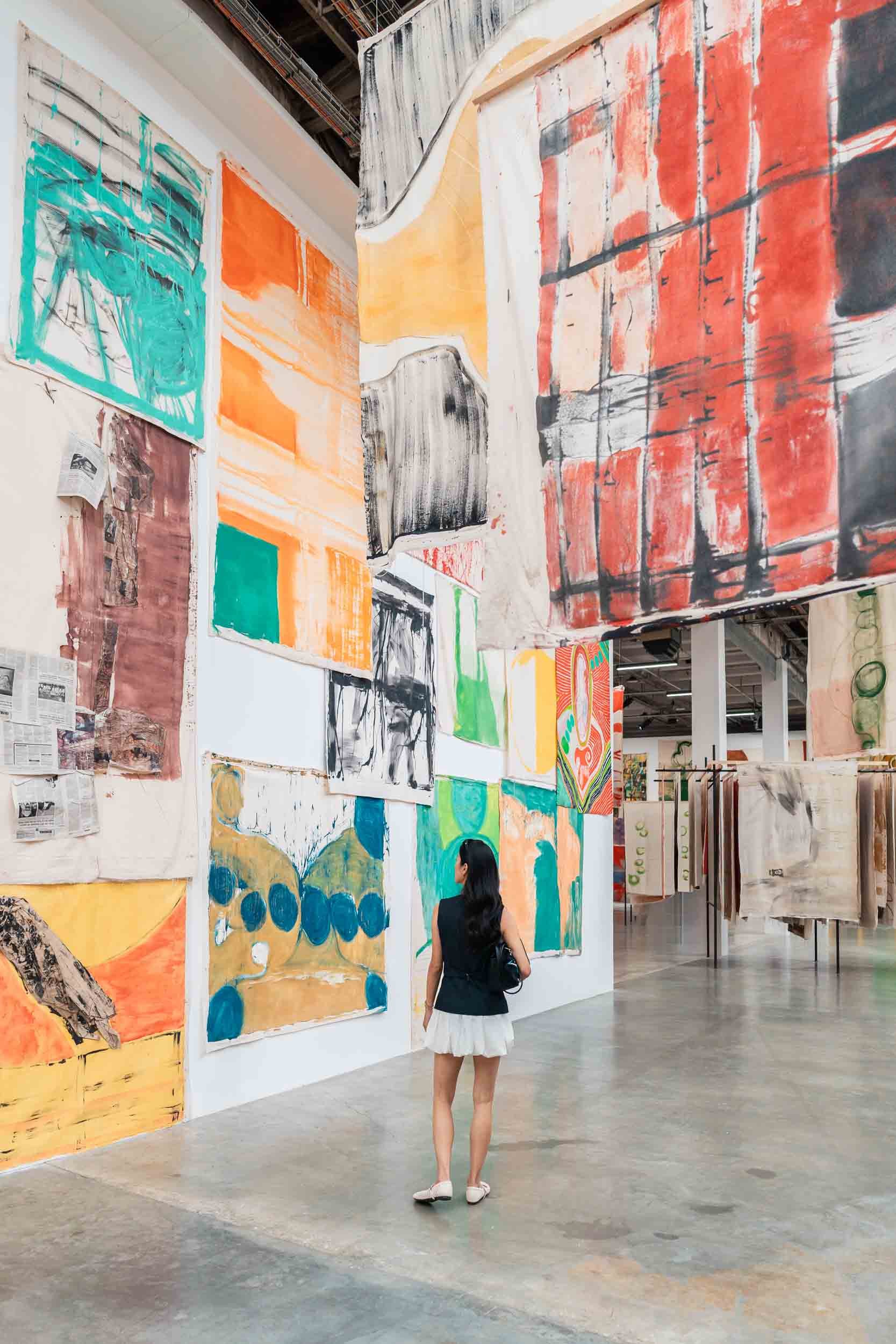
If you’ve ever wondered what would happen if a Guatemalan garden, a Parisian art museum, and a pack of enthusiastic dogs threw a party together, Disco at Palais de Tokyo provides your answer.
It’s partly a painting exhibition, partly a weather report, partly a jungle, and entirely the kind of show that makes even the gloomiest afternoon brighten with colour.
Walking in from the Trocadéro, I swapped the postcard-perfect Eiffel Tower view for a different spectacle: almost 500 canvases by Vivian Suter, billowing, overlapping, and rustling under the museum’s great glass roof. It feels less like visiting a French gallery and more like wandering into a hidden courtyard somewhere in Guatemala—except, of course, that everyone is effortlessly dressed to kill.
Palais de Tokyo: Brutalist Glam with a View
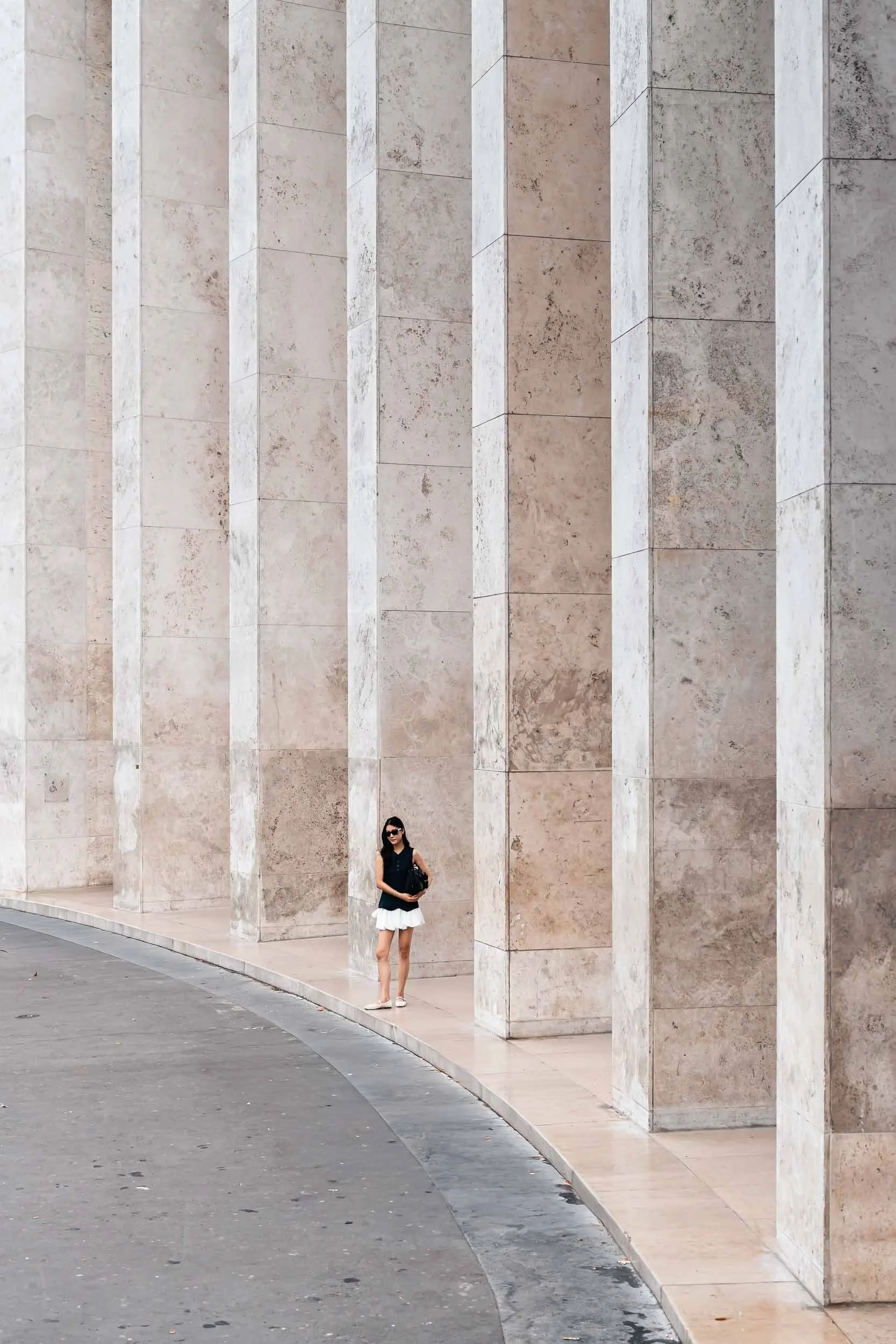
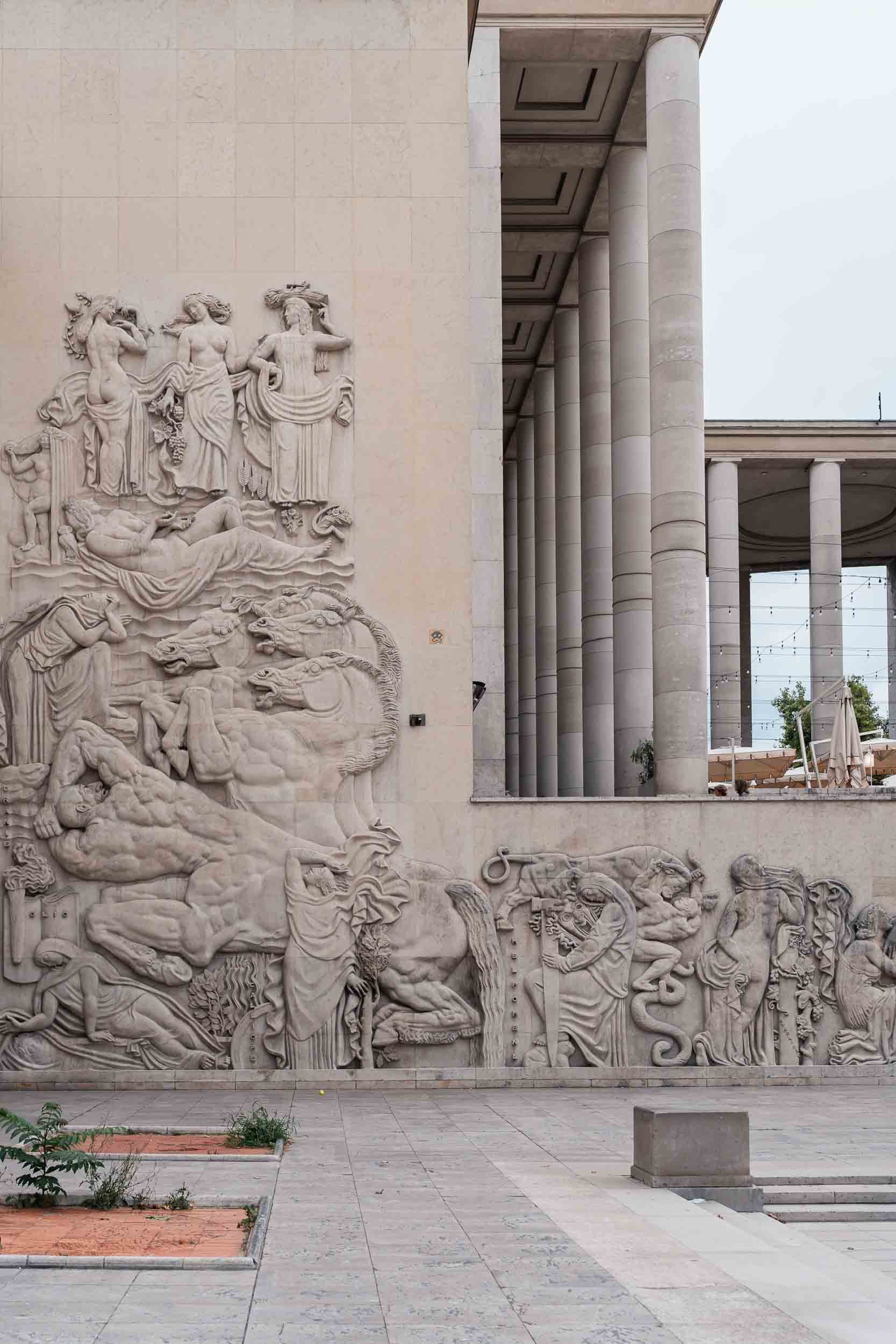
Palais de Tokyo is one of my favourite contemporary art spaces in Paris, mainly because it refuses to conform. Built for the 1937 International Exposition, this imposing palace on Avenue du Président Wilson features monumental colonnades, carved stone reliefs, and heroic façades on the outside, while the interiors are deliberately raw and industrial. Imagine soaring concrete halls, exposed beams, and a network of pipes overhead that make you feel as though you’ve slipped backstage at a large theatre.
The building borders the Seine between the Eiffel Tower and the Musée d’Art Moderne, but while its neighbours embrace polished museum decorum, Palais de Tokyo is always in exhibition mode. It functions as a contemporary art centre rather than a traditional museum, with expansive, adaptable spaces that artists can claim, stretch, and sometimes overstep. Natural light floods through its skylights, creating an ideal setting for large-scale installations and a slight challenge for anyone trying to photograph without blowing the highlights. It’s a perfect Paris stop if you seek culture that feels contemporary, immersive, and just the right amount of chaotic.
Vivian Suter: Painting with Weather, Dogs and Memory
From 12 June to 7 September 2025
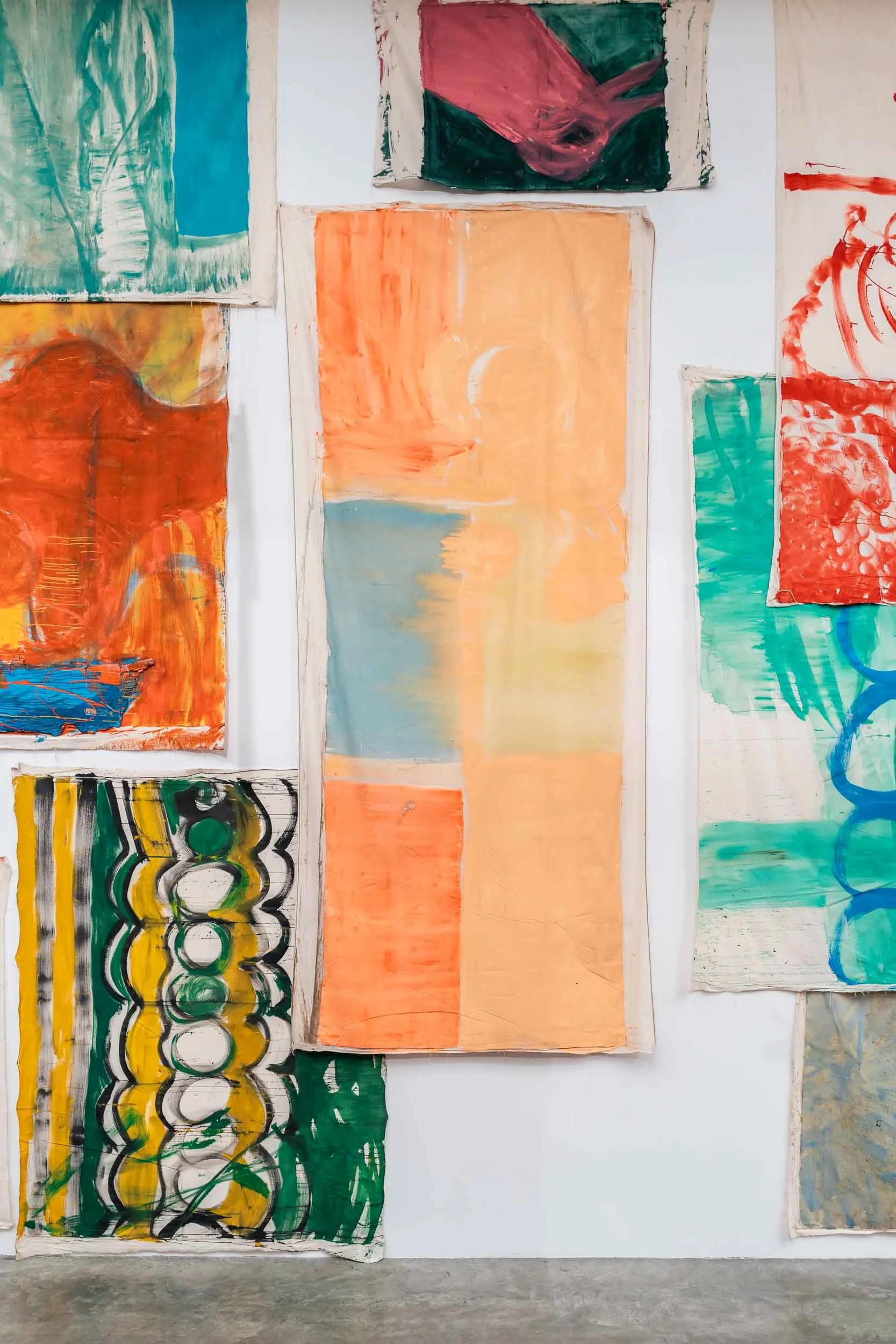
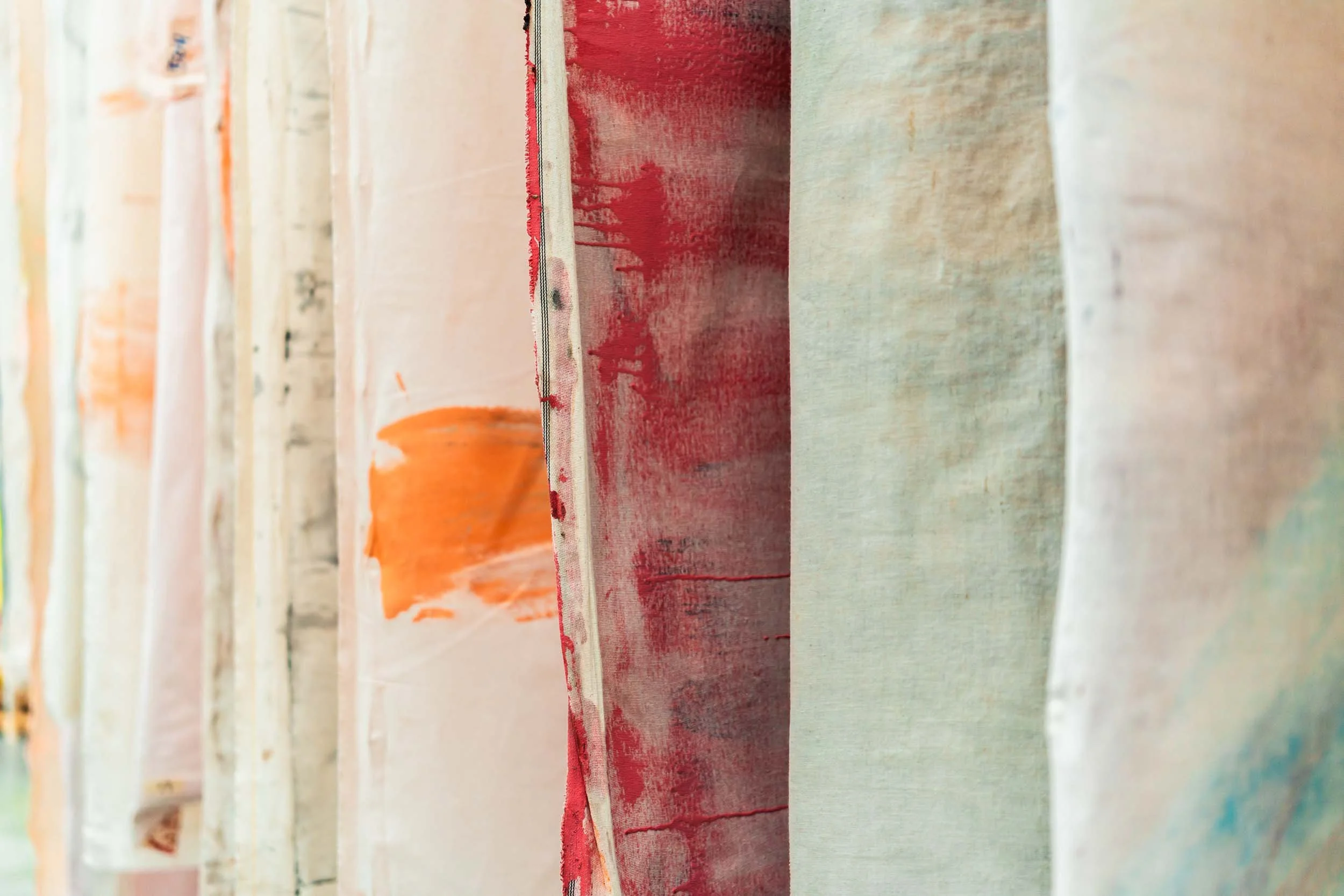
Born in Buenos Aires in 1949 and now based in Panajachel on the shores of Lake Atitlán, Vivian Suter paints outside every day in her garden. Her work mainly consists of large, unstretched canvases that function as both traditional paintings and fragments of landscape. She allows nature to collaborate: rainwater thins the pigments, mud adheres where it lands, leaves stick to wet fish‑glue surfaces, and her dogs happily trot over the works, leaving pawprints that no conservator could replicate.
Her paintings are untitled and undated, hung in whichever direction feels right at the time. Suter isn’t particularly interested in neat art‑historical timelines; she values the moment of creation—the dynamic impulse when colour, weather, and sound align. Recurring motifs appear intermittently: abstracted leaves, fruit, tree branches, watery grids, and looping marks that evoke wind or music. She speaks of painting sounds as much as scenes—the church bells from the village, barking dogs, birds calling from the hills. The outcome is a form of environmental abstraction: gestural, luminous, and defiantly unpretentious—even when the surfaces are fragile enough that a stiff breeze could shift them.
Disco: A Pictorial Jungle in Paris
From 12 June to 7 September 2025
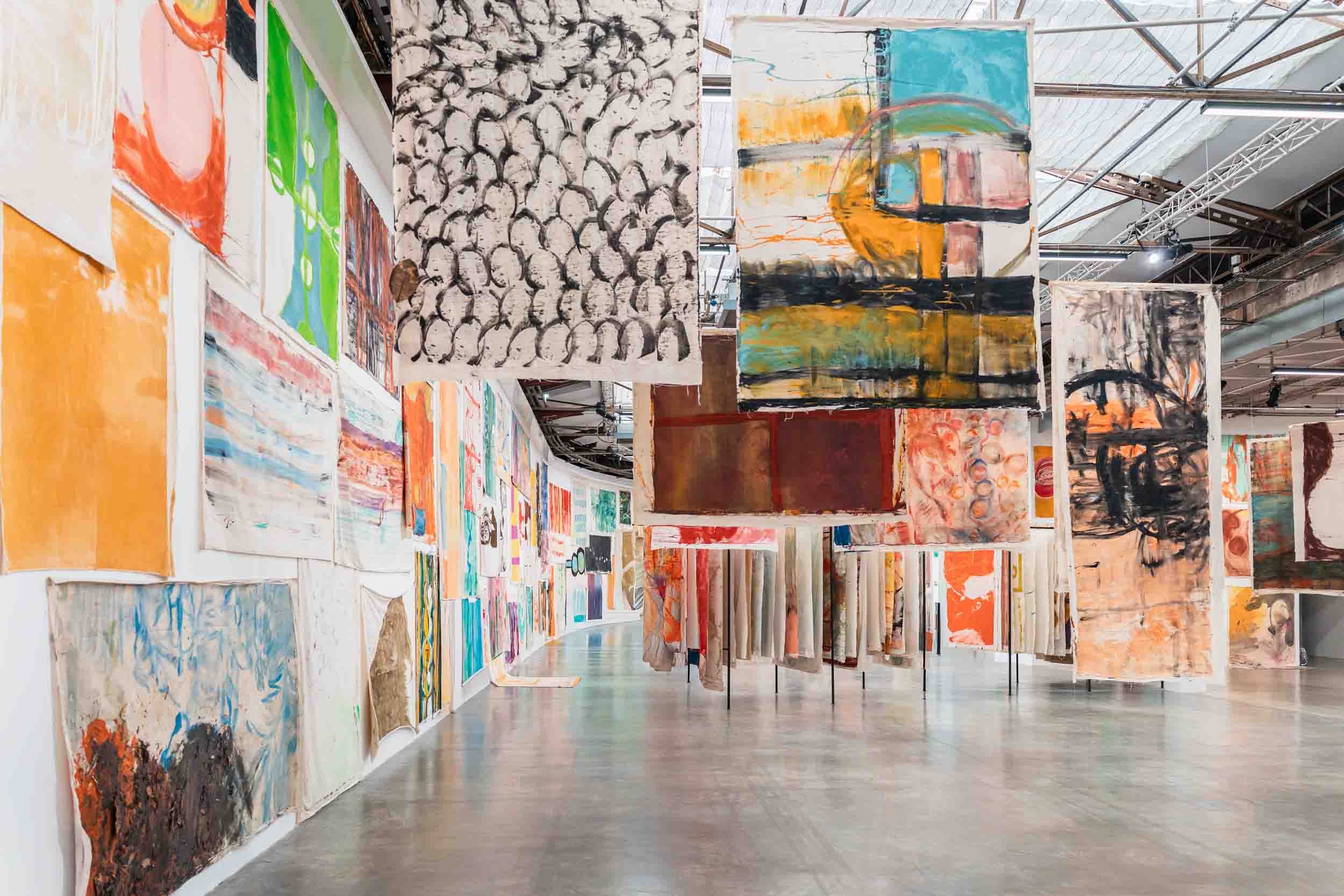
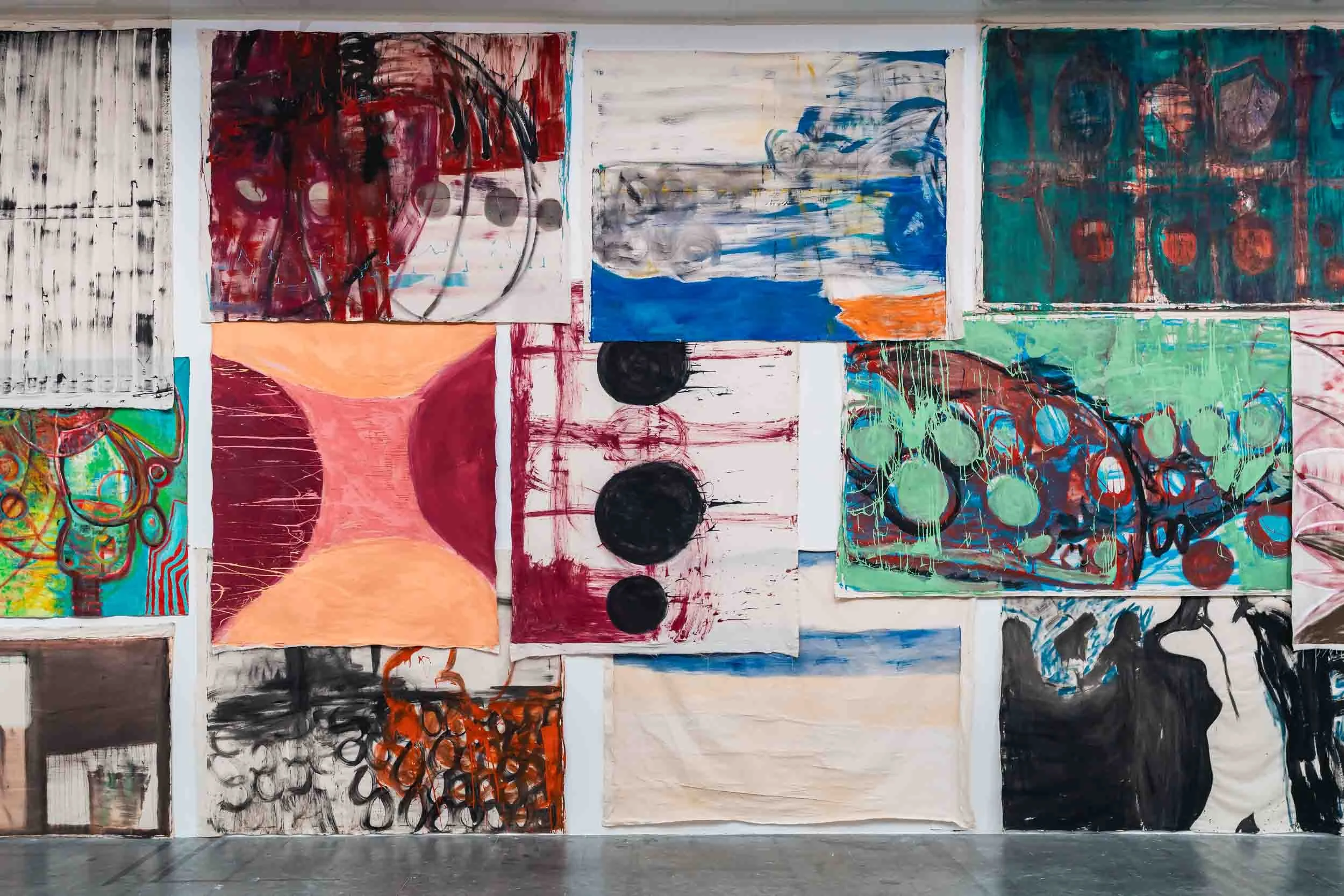
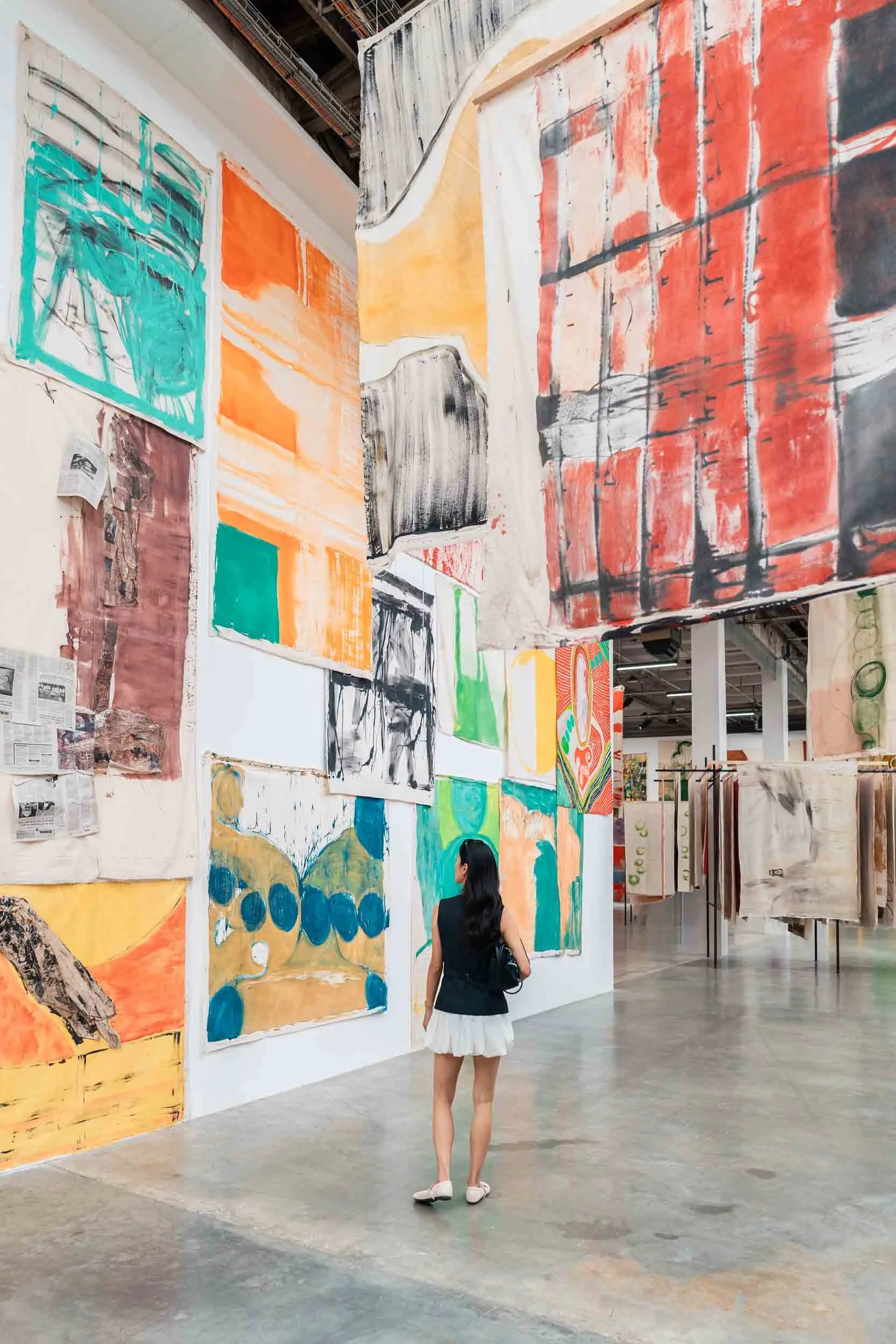
Disco at Palais de Tokyo is the largest retrospective of Suter’s work to date, showcasing around 500 canvases created over the past decade in her Guatemalan garden. The title pays homage to one of her dogs, Disco, and the whole exhibition feels somewhat like a pack of friendly animals that have taken over the building. Curator François Piron kept the rules relaxed: the installation had to be dense, filling the walls from floor to ceiling, embracing as many contrasts as possible – from dry to liquid, geometric to wild, thick with mud to almost translucent wash.
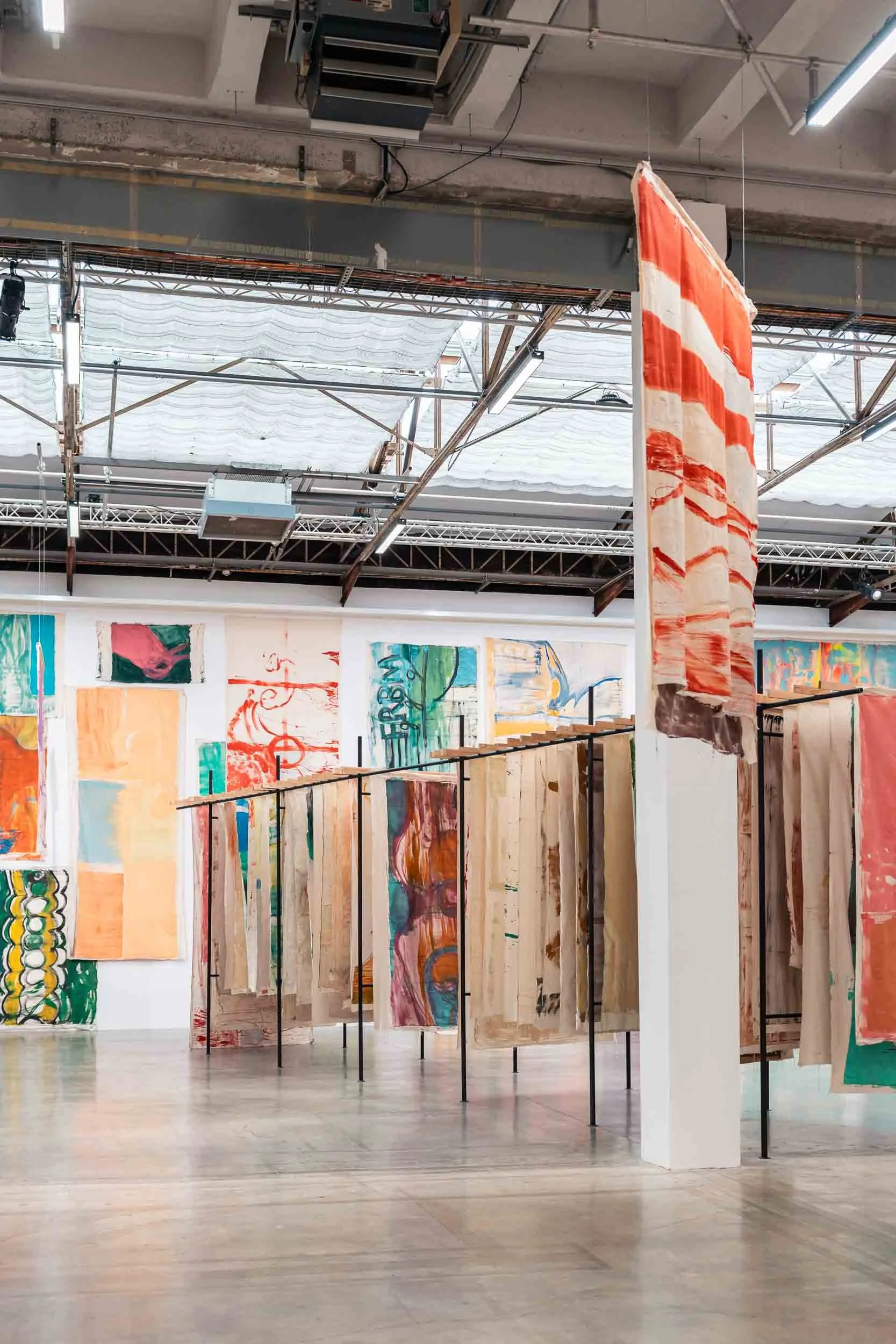
Walking through it, the first impression is overwhelming in the best way. Unframed canvases hang in layers, overlapping, stacked, drifting from the ceiling or suspended on metal racks. Some lean against the base of the walls where you can see crusted mud, embedded leaves, and those famous pawprints up close. Others float above your head, catching the natural light from the roof and shifting ever so slightly in the breeze. It’s less a conventional painting show and more a “pictorial jungle,” as Palais de Tokyo describes it – an environment you navigate rather than simply gaze at.
From certain angles, the layout resembles a field of enormous textiles. Long strips of canvas sway like vivid leathers and fabrics pegged out at a tannery, or oversized blankets airing under the sun, waiting to be inspected by a very discerning merchant. Wandering among them, I felt as though I’d stumbled into a secret market: a treasure trove of textures, stains, splashes of aquamarine and coral, rusty oranges, oceanic blues, acidic greens, and soft, foggy greys. The colour palette is undeniably tropical, but it’s tempered by the grittiness of weather and time – tide marks from rain, smoke-coloured drips, patches worn almost to nothing.
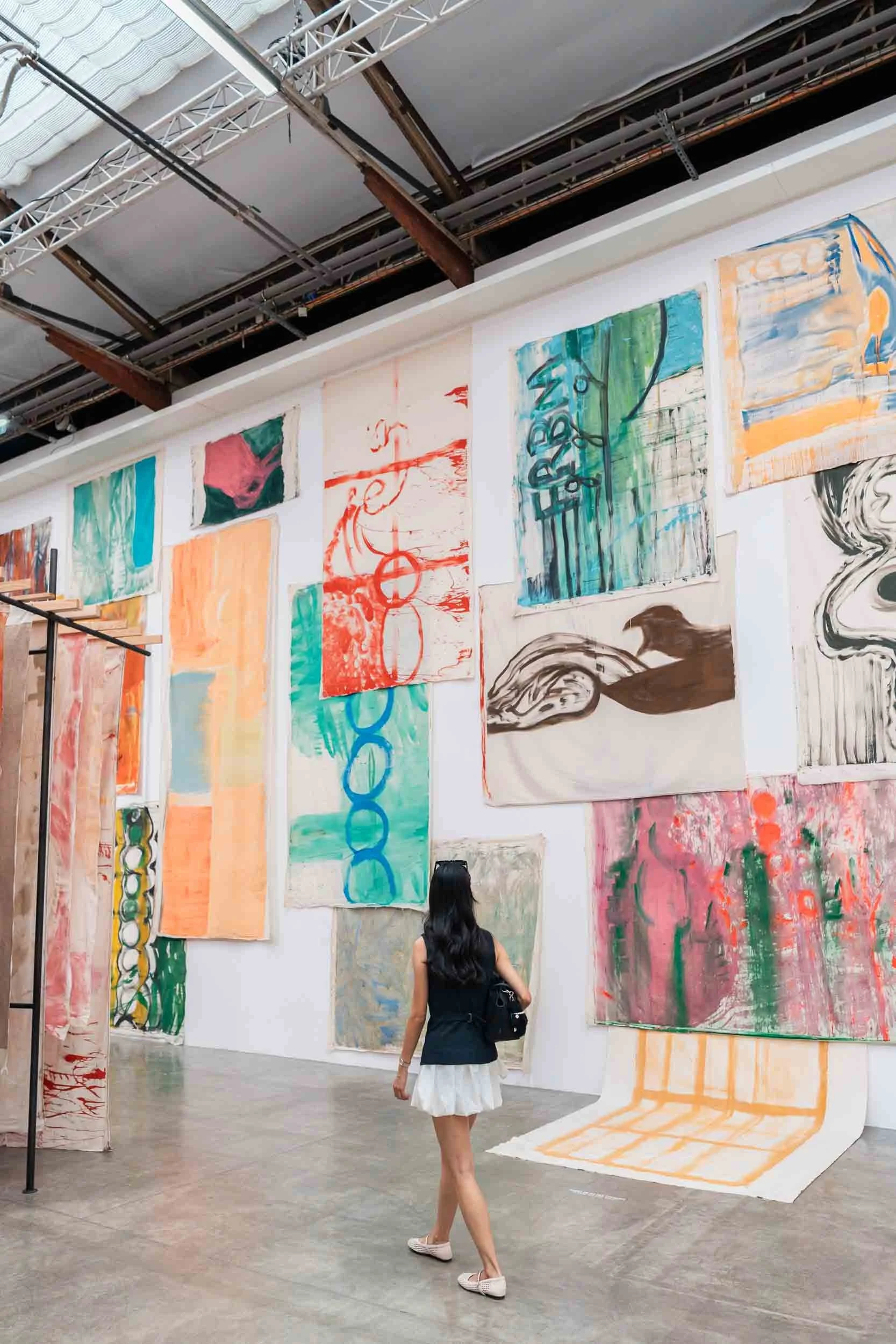
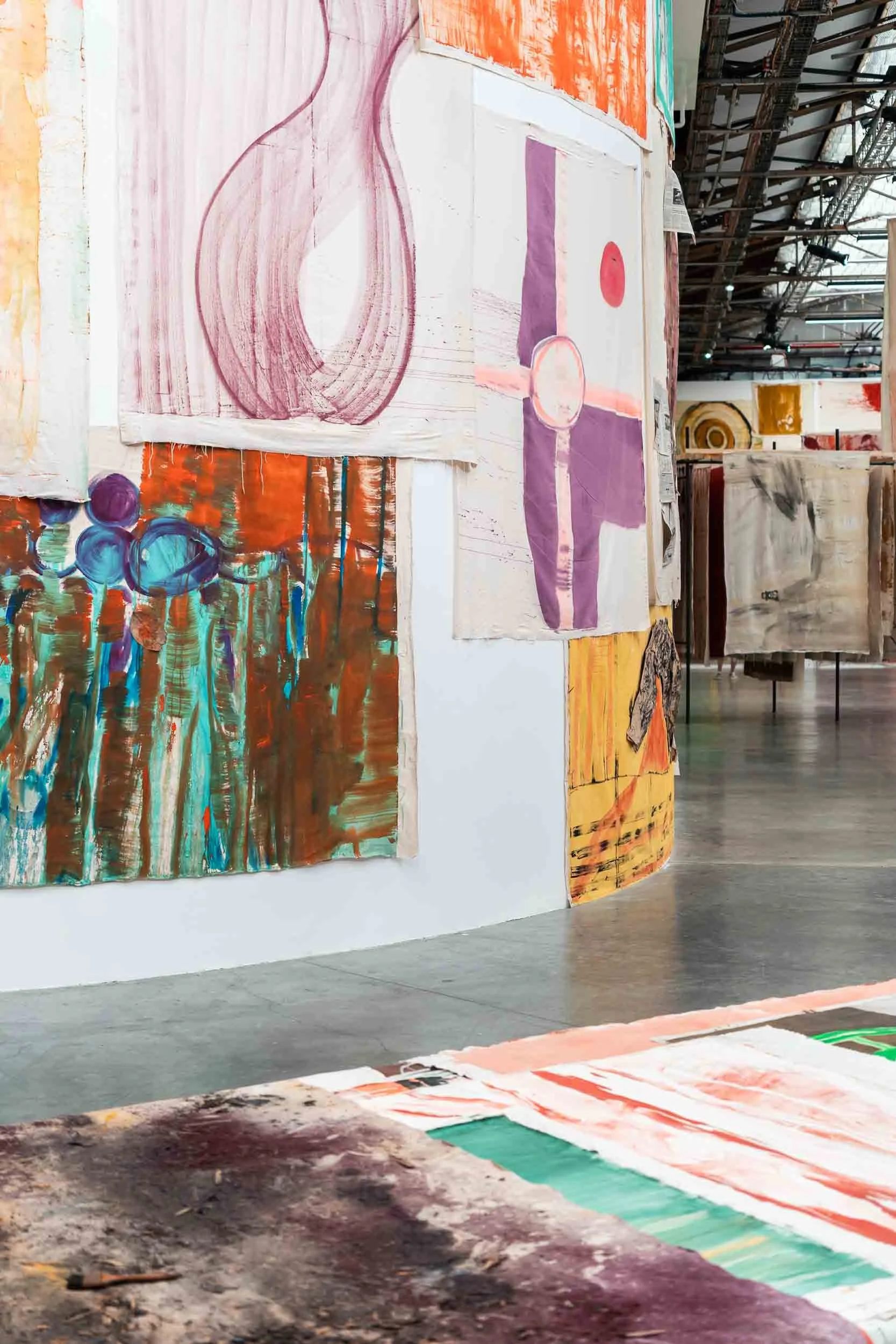
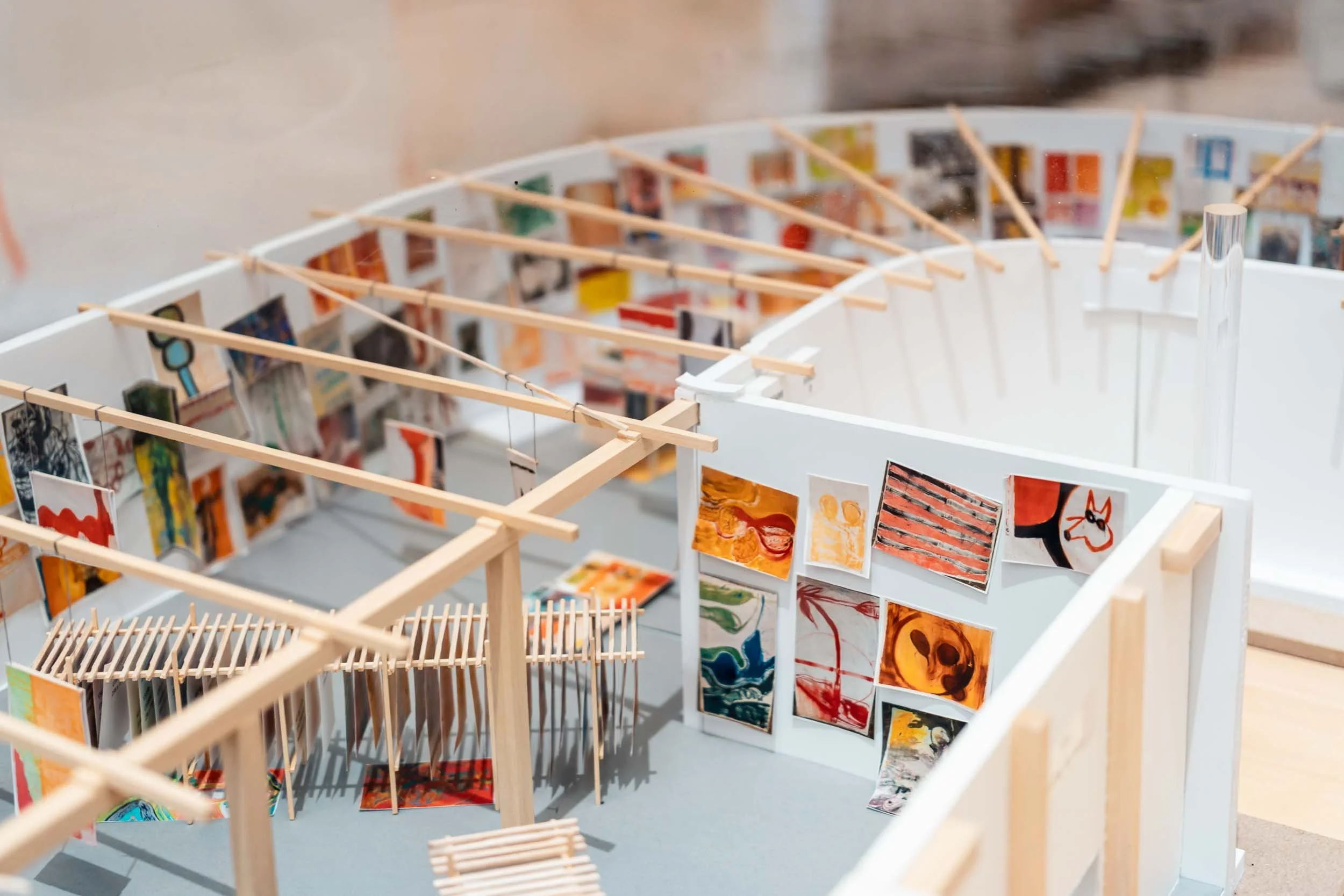
Having seen photos from her previous exhibitions in Lisbon and elsewhere, Disco clearly resonates with Suter’s past installations: the same habit of refusing frames, the same tilting of paintings into space, inviting viewers to wander through rather than around them. However, here the dialogue with Palais de Tokyo’s architecture is particularly sharp. The rough concrete floors and exposed ceiling infrastructure play off the canvases' raw edges, while the large glass roof floods everything with natural light. It’s as if her Guatemalan garden has sprouted inside a Parisian industrial framework.
One of my favourite moments occurs near the entrance, where a painting, thick with leaves and mud, sits almost at ground level. It’s alarmingly vulnerable, and that’s the point. Suter accepts the marks of weather and accident as part of the work, and seeing that fragility in a major institution feels quietly radical. A few steps away, another canvas is stamped with dog paws – an improvised certificate that these paintings truly did live outdoors before migrating to Paris.
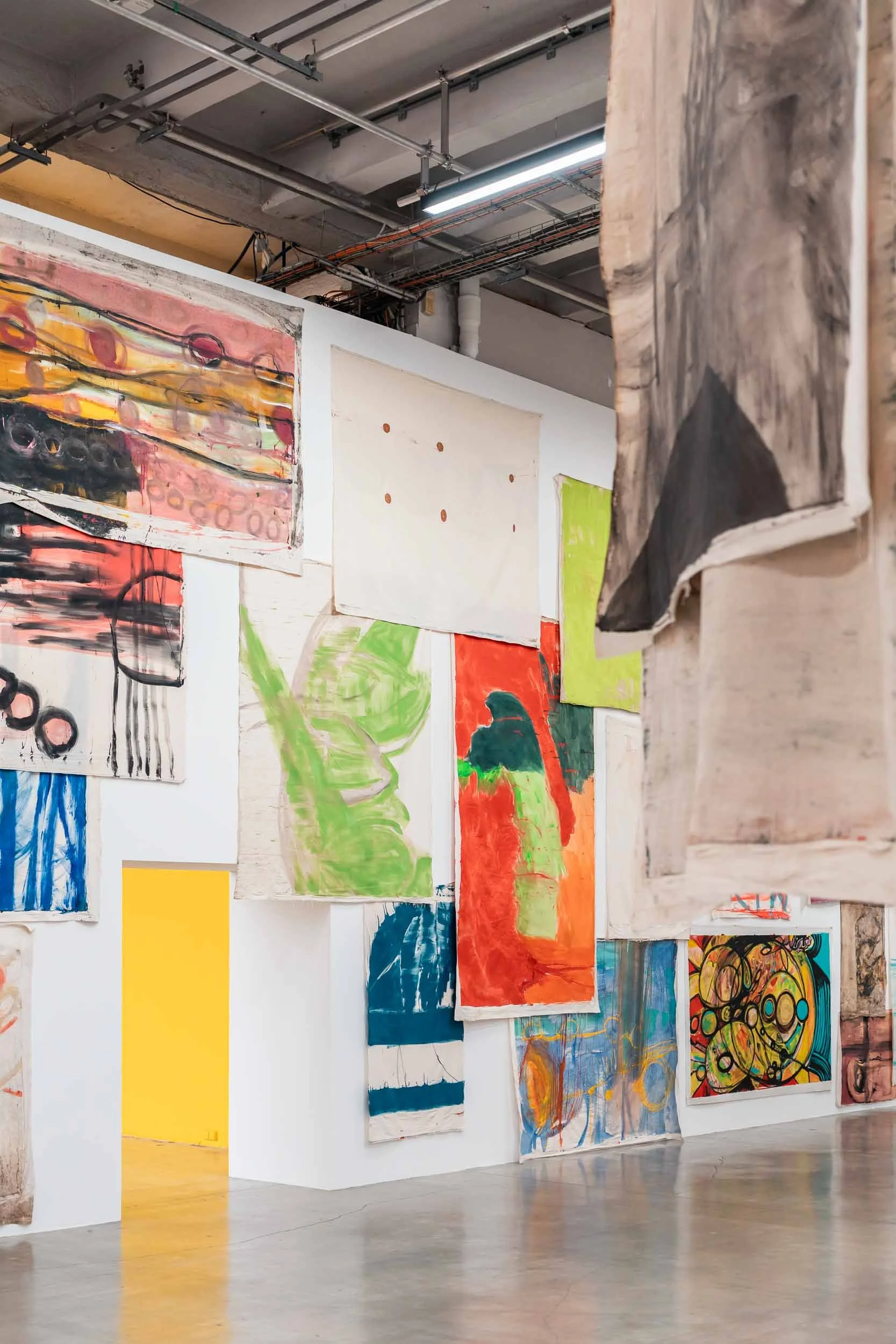
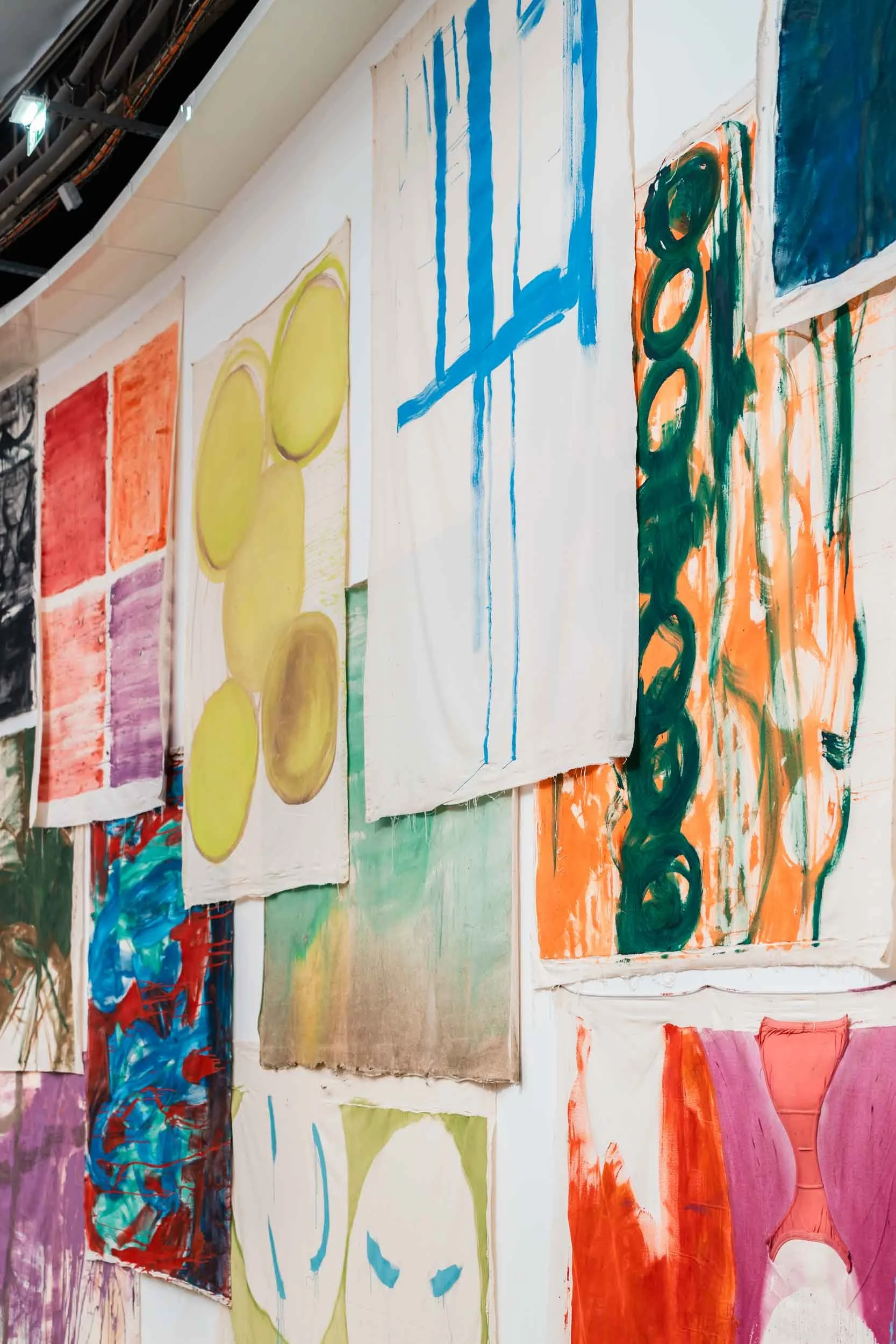
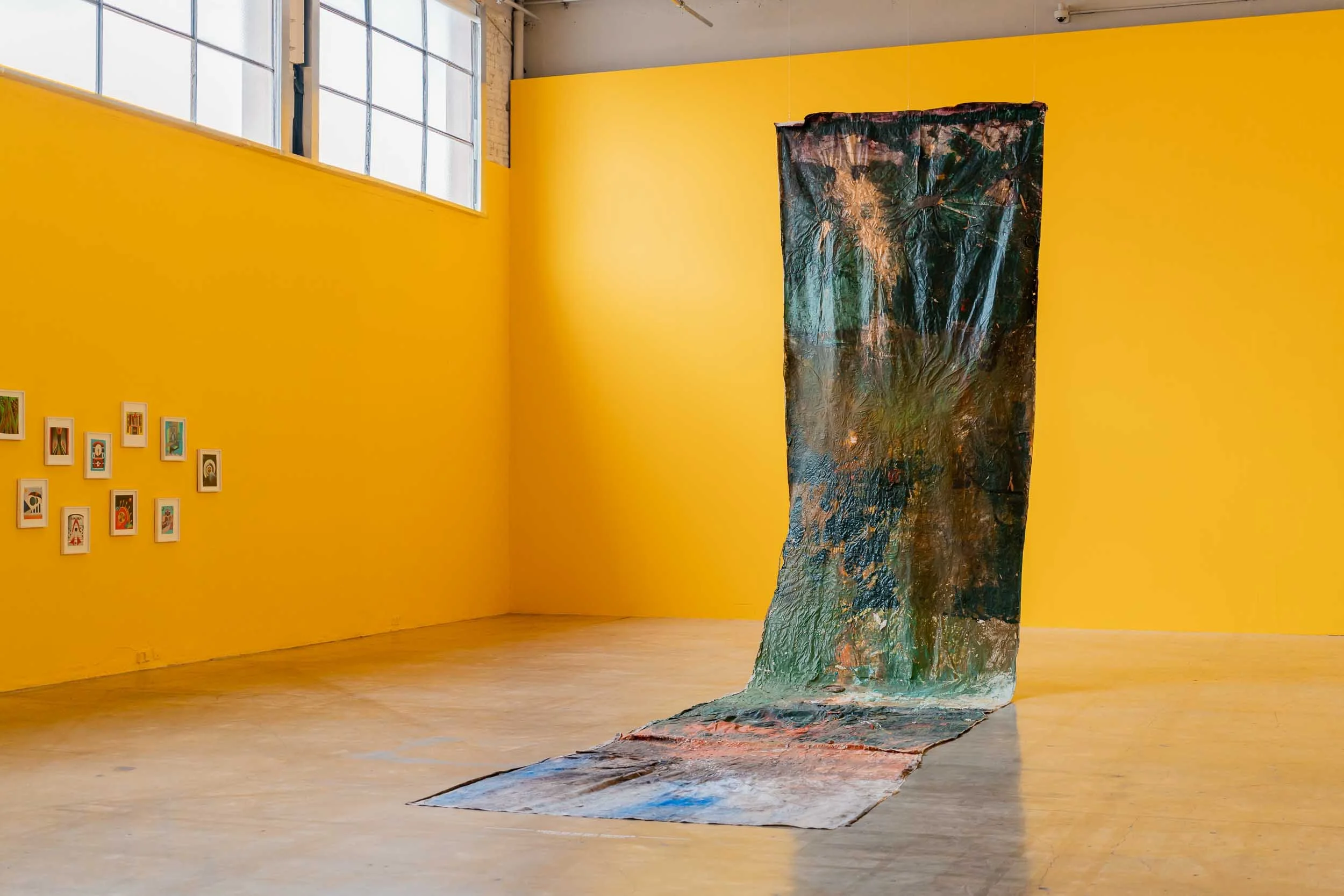
Then there is the yellow room, which feels like turning the page to a new chapter. After the dense, white-walled main space, you slip into a chamber painted a rich marigold yellow. Here, a single monumental canvas by Suter hangs dramatically from the ceiling, cascading onto the floor like a waterfall of dark, stormy colour. It’s theatrical and slightly melancholic, the surface thick and almost leathery, as though it’s survived a particularly emotional monsoon.
On one side wall, in a tight constellation, are collages by Suter’s mother, the artist Elisabeth Wild. Small, vivid rectangles made from cut-up magazines, they hum quietly beside their towering neighbour. Knowing that Wild created these late in life, working from fashion and lifestyle magazines because she no longer wanted to paint, adds a tender note. Suter has said that they lived in neighbouring houses in her garden, often finding uncanny correspondences between what each of them was creating at the same time, even though they worked separately. In this yellow room, that dialogue continues: mother and daughter in a visual conversation, one huge and weather-beaten, the other precise and jewel-like.
Thoughts: Leaving the Jungle, Keeping the Weather
As I stepped back out past the colonnades of Palais de Tokyo, Paris suddenly felt a little too well-behaved. Inside, Disco had been happily undoing everything I expected from a major retrospective: there are no didactic wall texts explaining each piece, no hierarchy of masterworks, no chronological progression. Instead, Suter’s paintings operate as a single organism, shaped by climate, chance, and relentless daily practice.
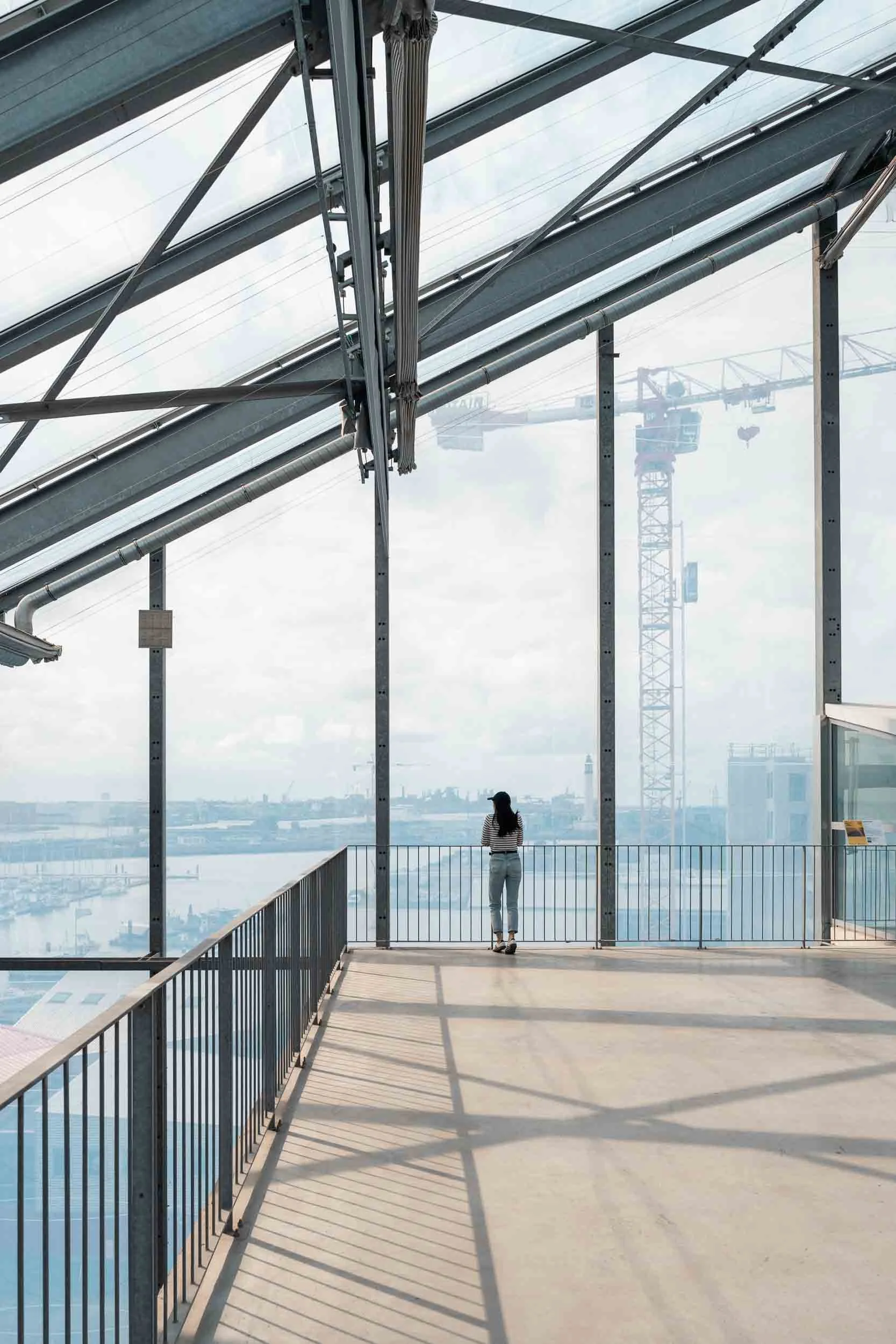
Disco is the kind of exhibition that justifies squeezing yet another museum into your Paris itinerary. It’s immersive without being gimmicky, rooted in place yet perfectly at home in the city’s contemporary art scene. The building itself remains a highlight: those sweeping terraces overlooking the Seine, the dramatic reliefs on the façade, the brutalist‑meets‑neoclassical columns that make you feel comically small in the best possible way. Palais de Tokyo proves, yet again, that contemporary art in Paris can shout, rustle, drip and flap in the breeze.
Related Posts


Three site-specific installations for the Museum of Fine Arts, each with its own personality. Optical illusions or a graphic designer's fever dream?