
Frac Grand Large: Art, Memory and Sea Spray in Dunkirk
There are cities you visit for the clichés, and then there is Dunkirk, where the clichés involve sinking ships and Christopher Nolan.
That’s why Frac Grand Large feels like such a subversive delight: a contemporary art space that transforms the old industrial harbour into something quietly glamorous, with concrete poetry and North Sea light.
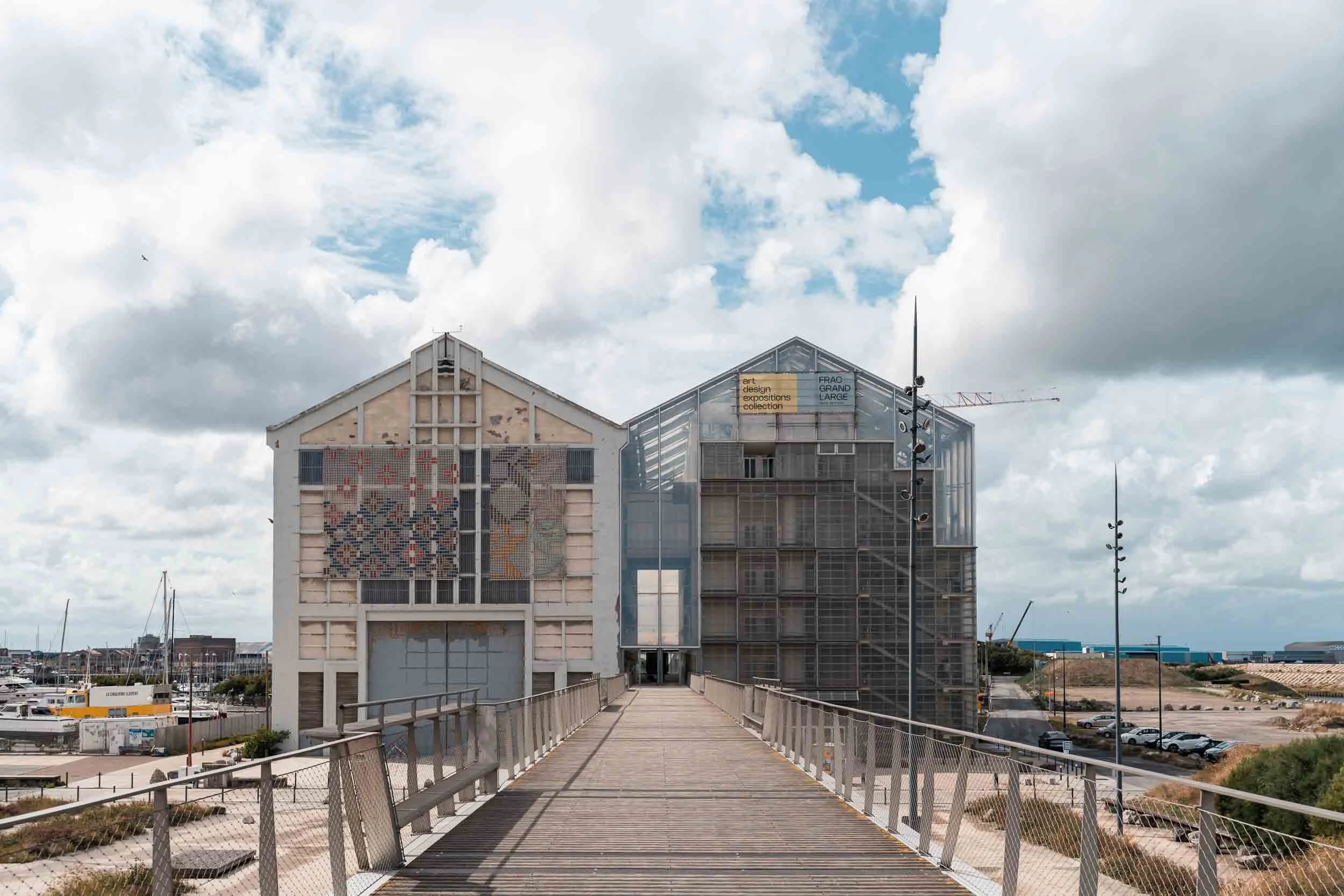
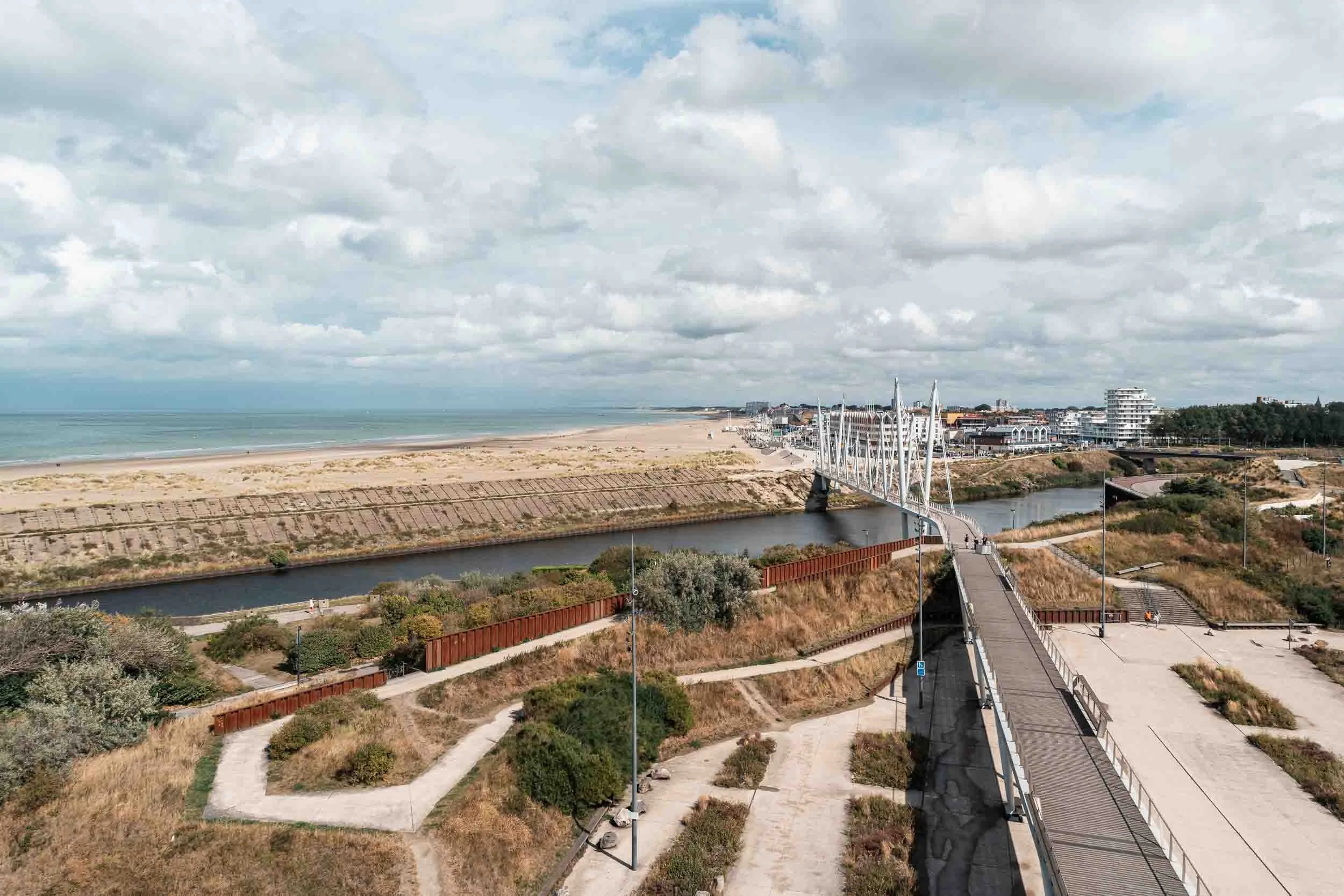
You reach it via a long footbridge, with the port on one side and sandy wasteland on the other, walking straight into a pair of old shipyard halls that now house one of France’s most interesting regional contemporary art collections. It already feels cinematic before you’ve even seen a wall label.
A Shipyard Turned Lighthouse for Contemporary Art
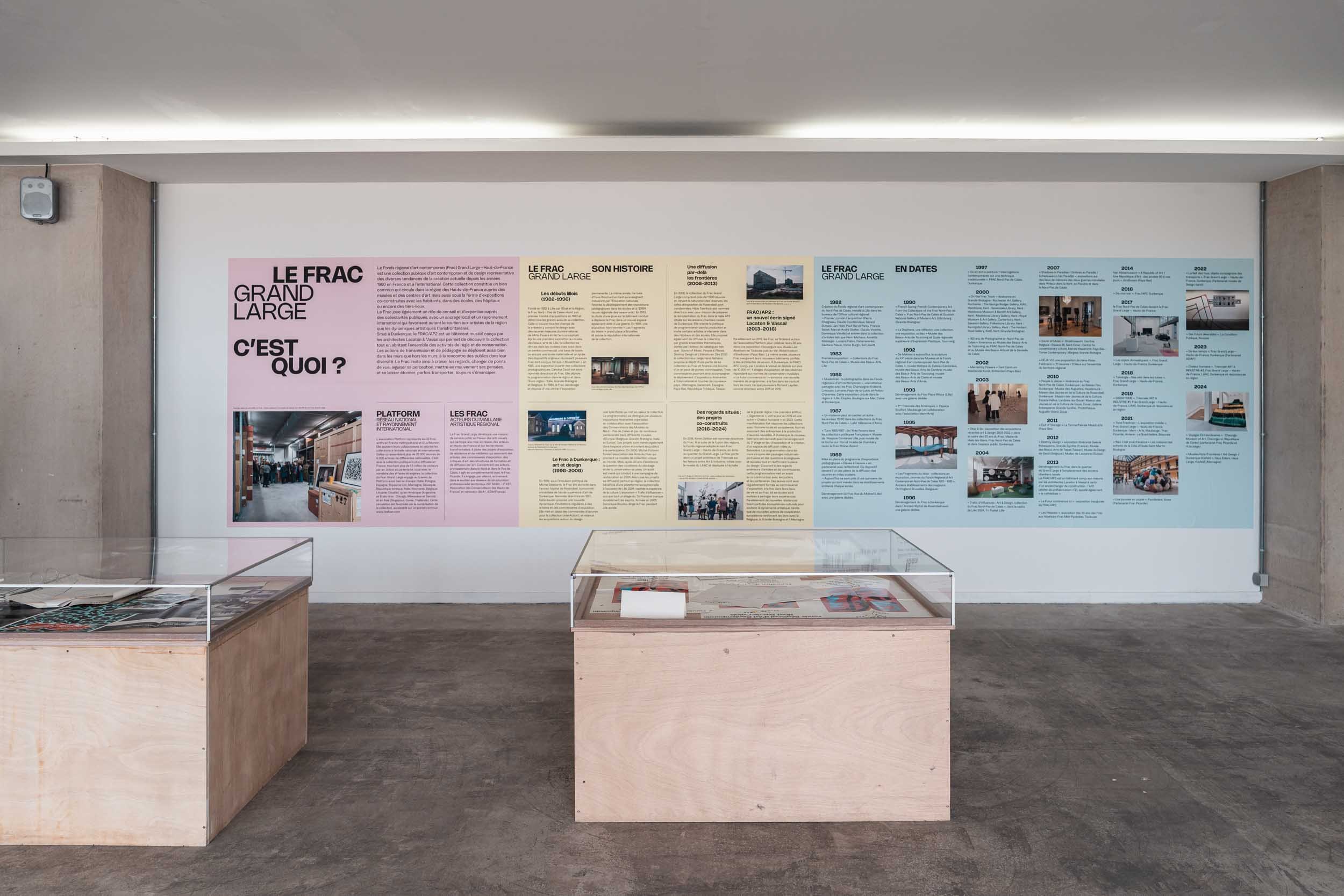
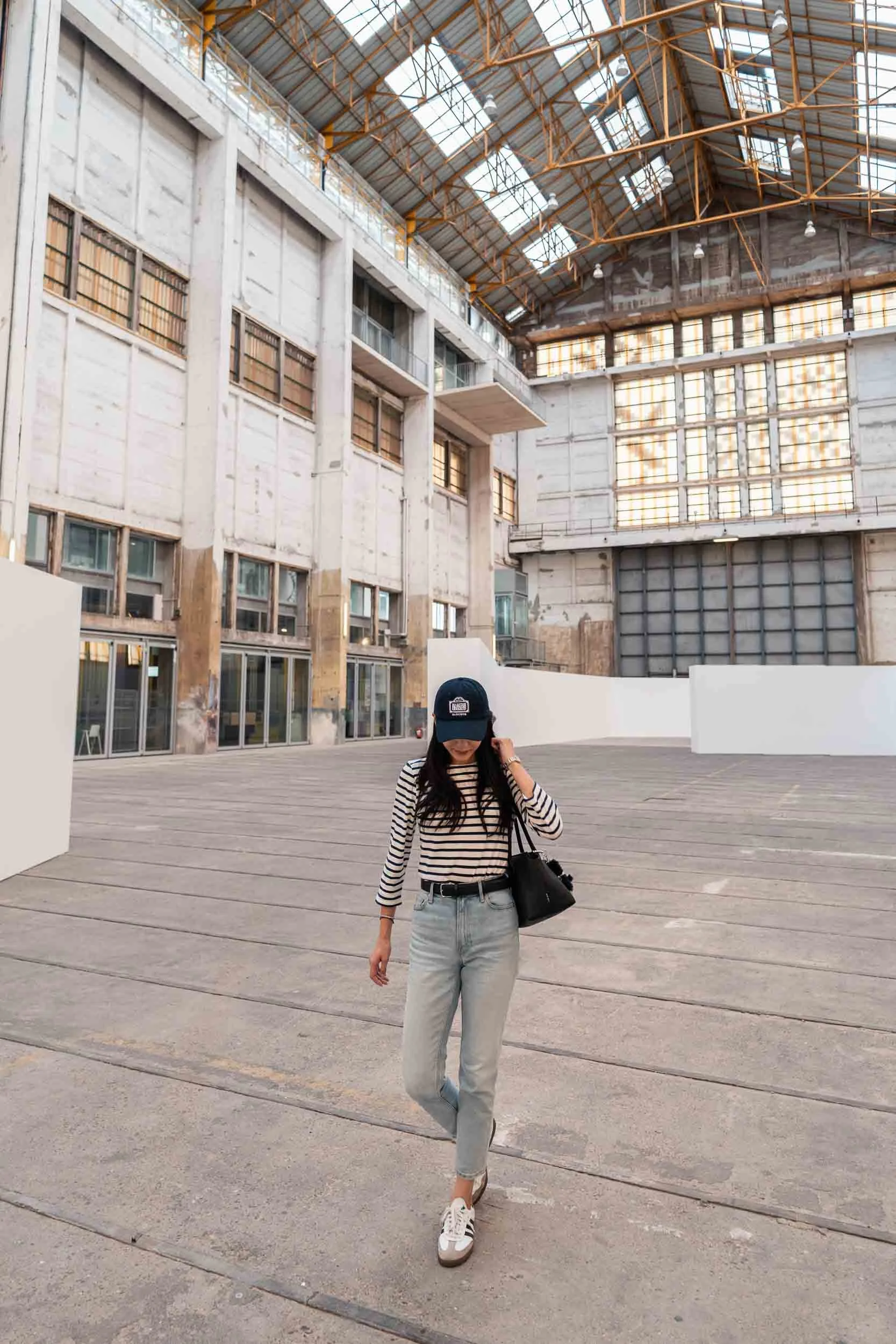
Frac Grand Large – Hauts‑de‑France is part of the national Frac (Fonds régionaux d’art contemporain) network, created to decentralise contemporary art across France. Here in Dunkirk, the collection is housed in a building that looks like a ship repair warehouse fused with a glass greenhouse—quite a modern hybrid. One side retains its rough industrial exterior, while the other is all gridded glass and steel, with the sea and cranes visible in the background.
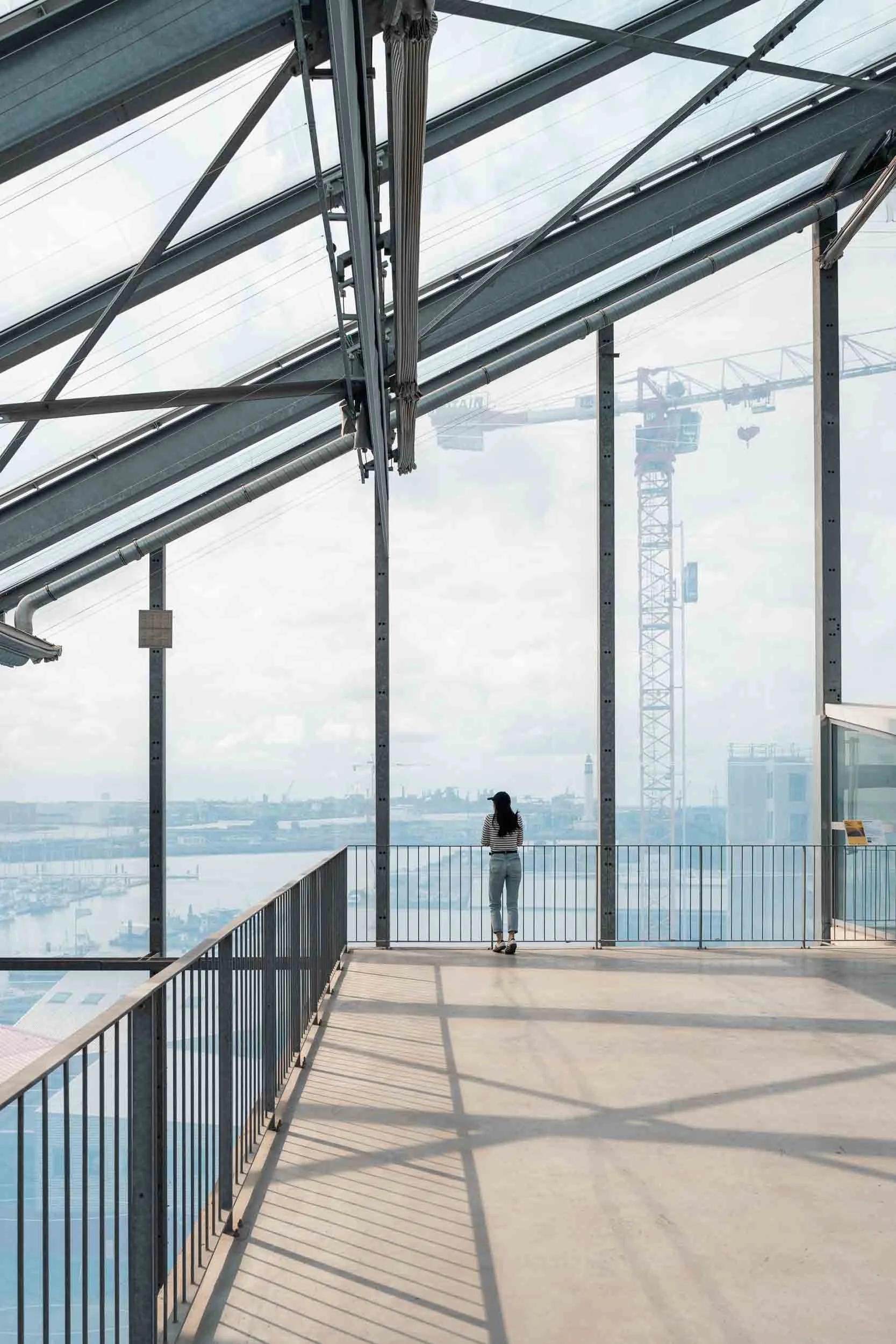
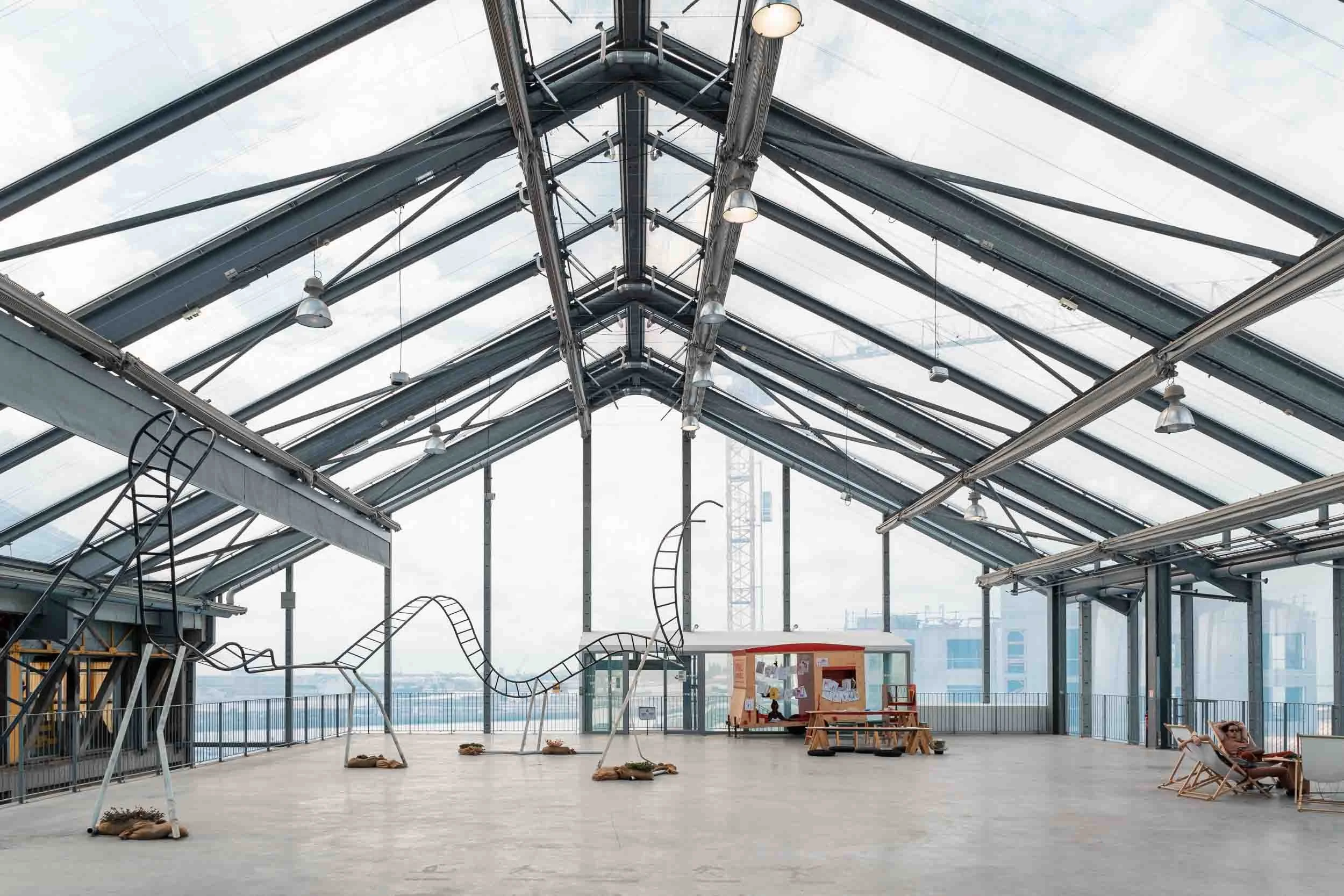
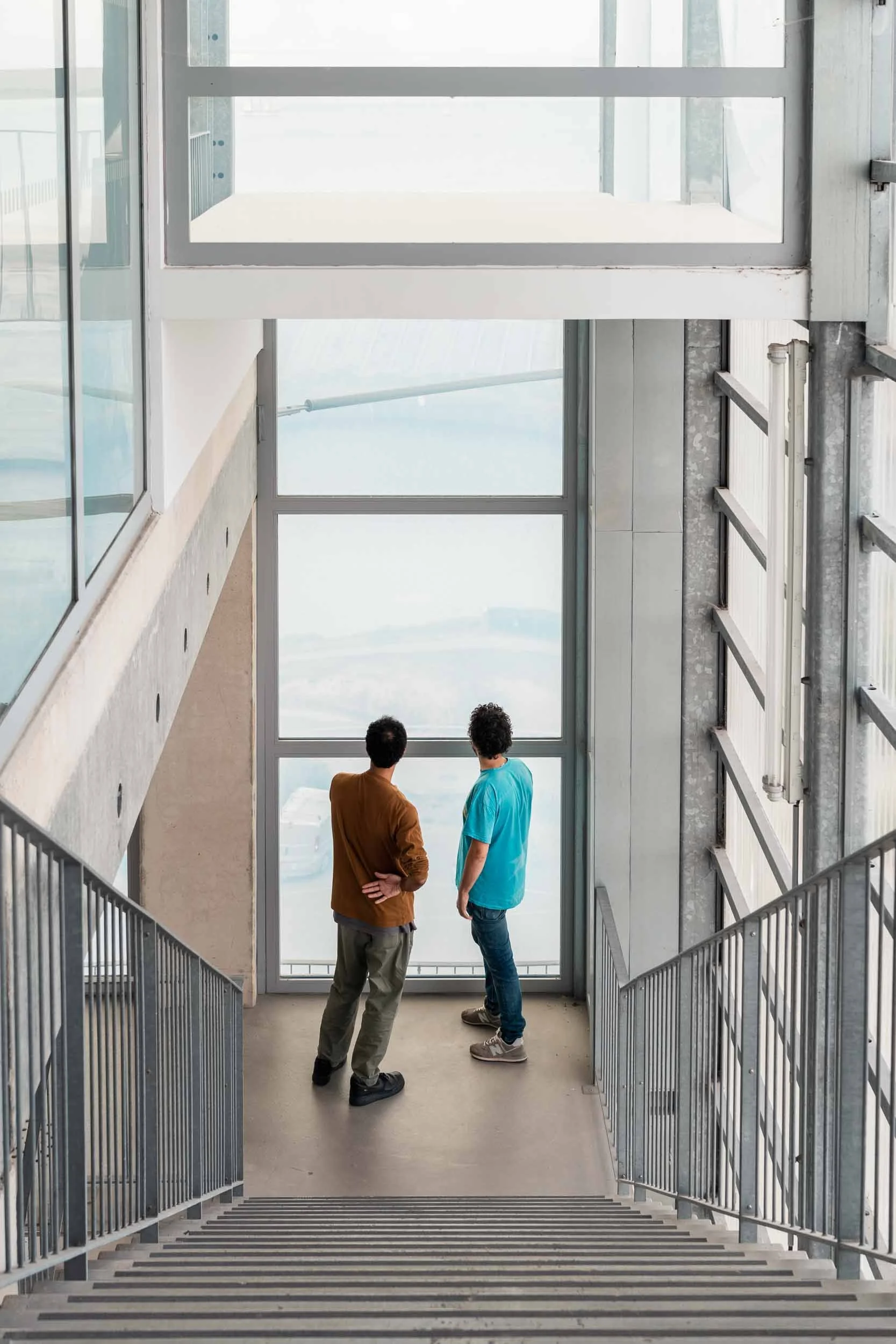
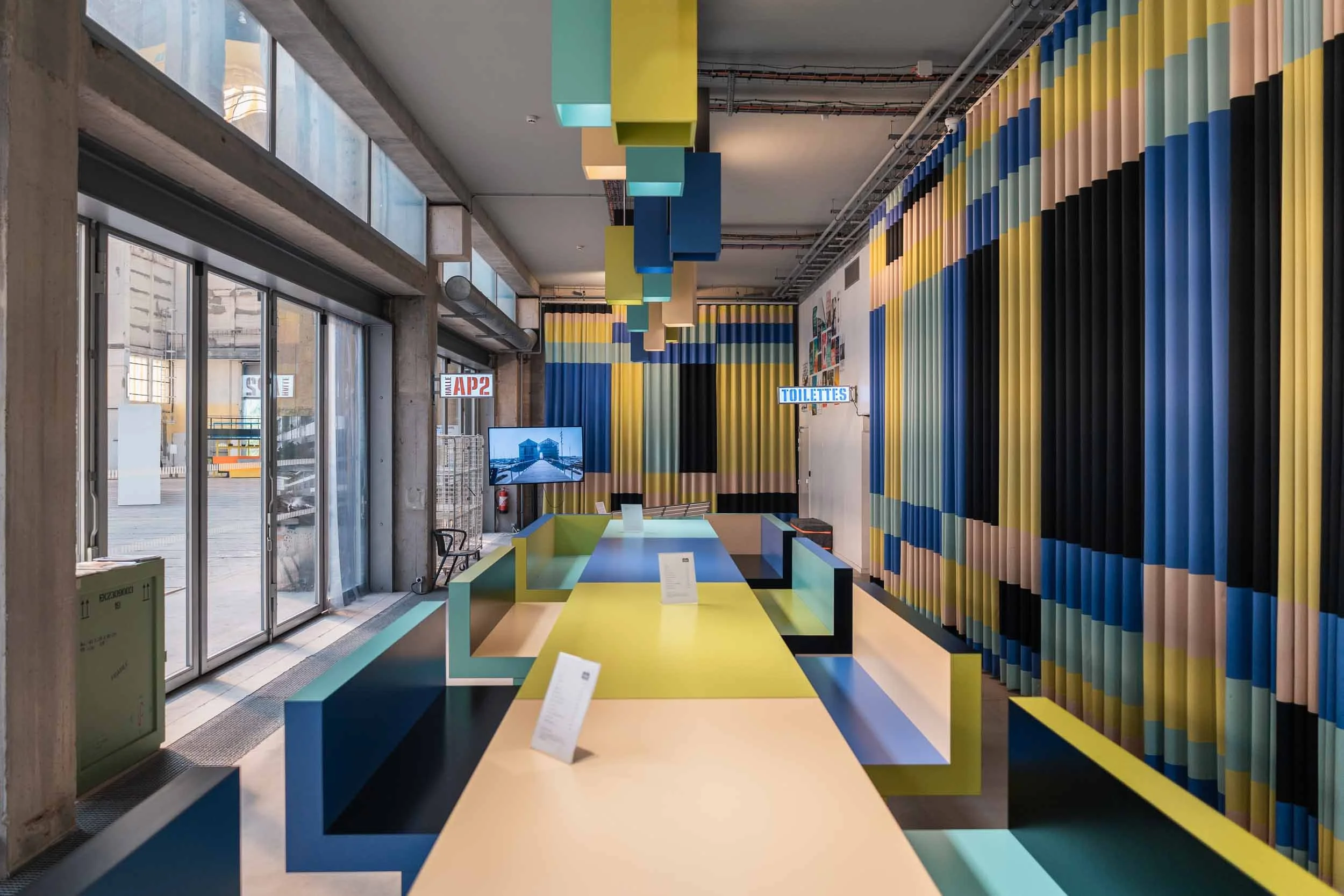
Inside, the design embraces that contrast. Raw concrete, exposed beams, and industrial fixtures sit alongside bold colour blocks and clear wayfinding. The vast AP2 hall next door feels like a cathedral dedicated to dock work, flooded with warm light and punctuated by splashes of saturated colour, while the main building guides you upwards through spacious stairwells and balconies. On a clear day, each landing offers an increasingly spectacular view over the harbour, culminating at the belvedere: a glass-roofed, open-sided top floor that transforms the entire museum into a lookout tower. It’s, honestly, a remarkably glamorous spot to observe container ships.
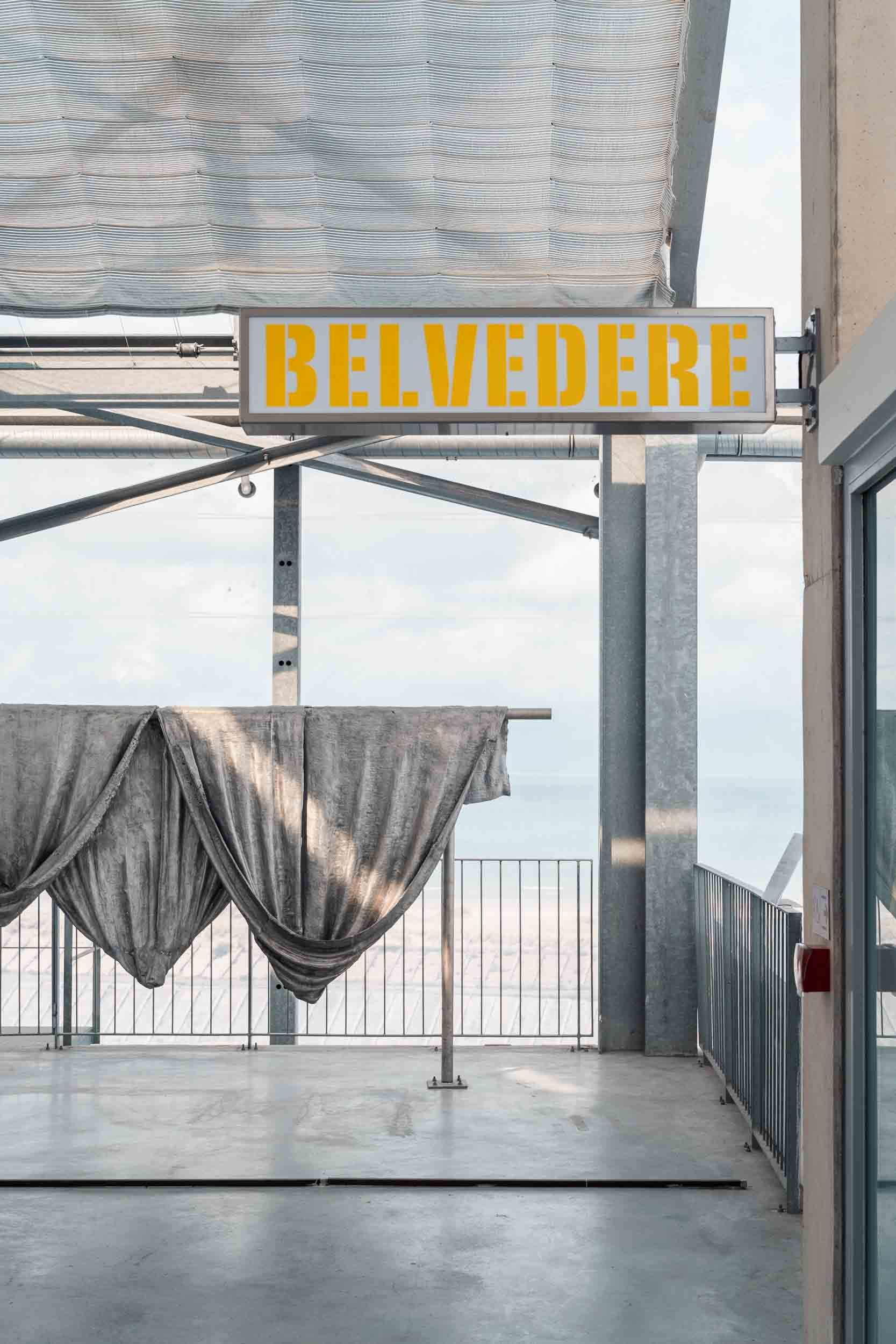
Ana Lupaș, Monument of Cloth, 1990
Over and Under the Waves: Drifting Between Sea and Psyche
From 13 June to 2 November 2025
Over and Under the Waves (Sur et Sous les Flots) occupies the top-floor belvedere, and the architecture does half the curating. With the glass roof above and the port stretching away on all sides, the exhibition reads like a slow panoramic shot: art, sky, sea, and ship masts continuously bleeding into one another.
Conceptually, the show traces three sea-related narratives, using video, installation, and sculpture to explore maritime transport, memory, and imagination. Capucine Vever’s Lame de fond (Groundswell) quietly maps the routes of cargo ships, transforming global trade into a ghostly form of drawing.
Nearby, Åbäke’s FACEBOAT & SAIL FACE sits in the space like a friendly chimaera, a hybrid vessel whose sail and hull bear a composite face composed of the features of all the artisans involved. In the belvedere light, it reads almost like a mascot for the museum itself: part-industrial, part-playful, very aware of the horizon.
Sarah Feuillas’s Martha dives under the surface, literally and emotionally. Knowing that the artist submerged sculptures made from traumatic memories in the Port of Dunkirk, in collaboration with neuroscience labs LiLNCOG and Cn2r, shifts the room’s temperature. The sea becomes not just scenery but an active participant in healing and erosion, mediating what we remember and what we let go.
Aesthetically, it is a calm, airy space: works are given enough breathing room so that you’re never fighting visual noise, only your own thoughts. I loved how the changing weather tinted everything: in bright sun, the whole space feels like a dreamy greenhouse, but when clouds roll in, the works take on a stormier undertone. If you come to Dunkirk for the contemporary art, you stay for that view.
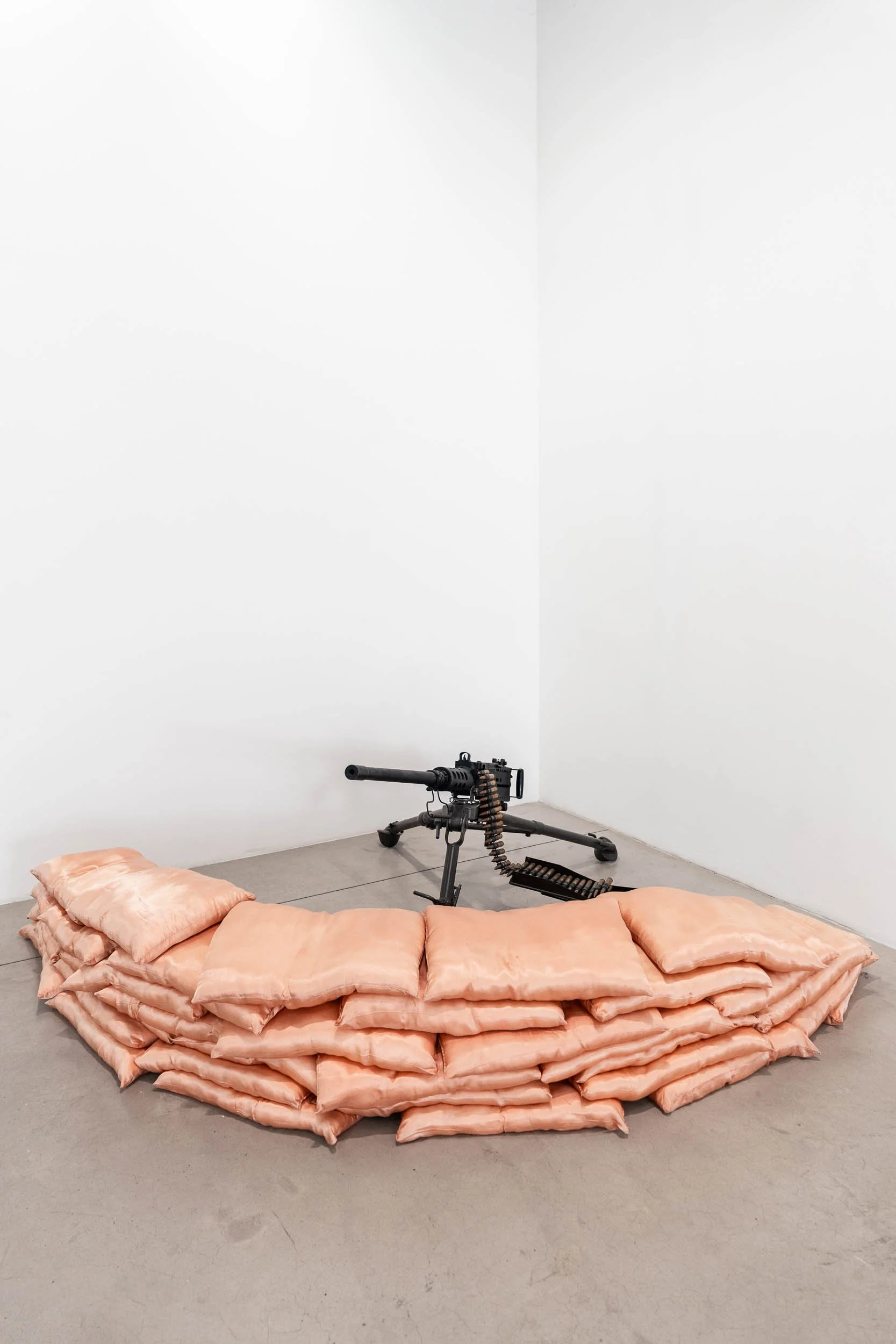
Leo Copers, Sans titre, 1986
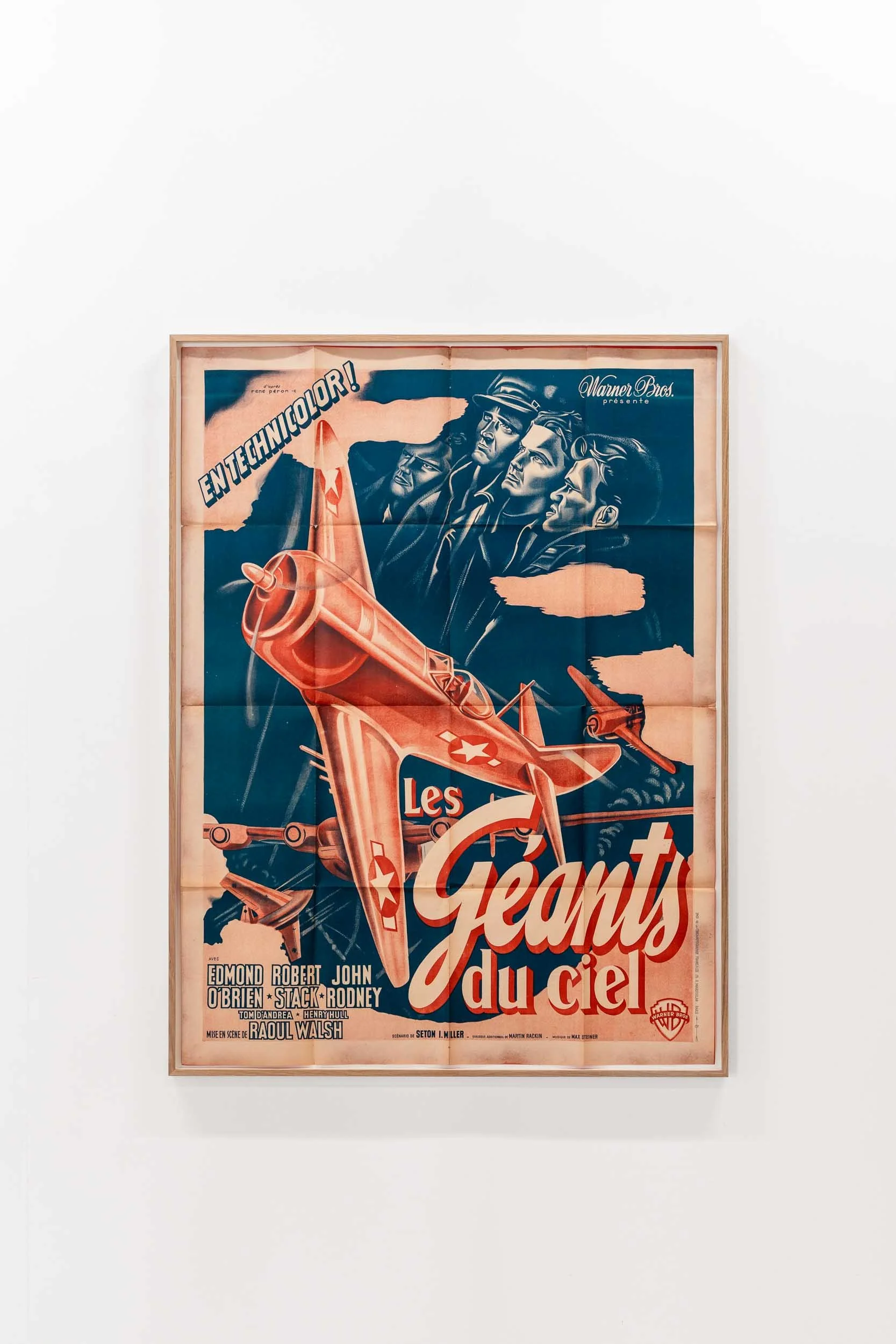
Clement Rodzielski, Untitled (The Giants of Heaven), 2011
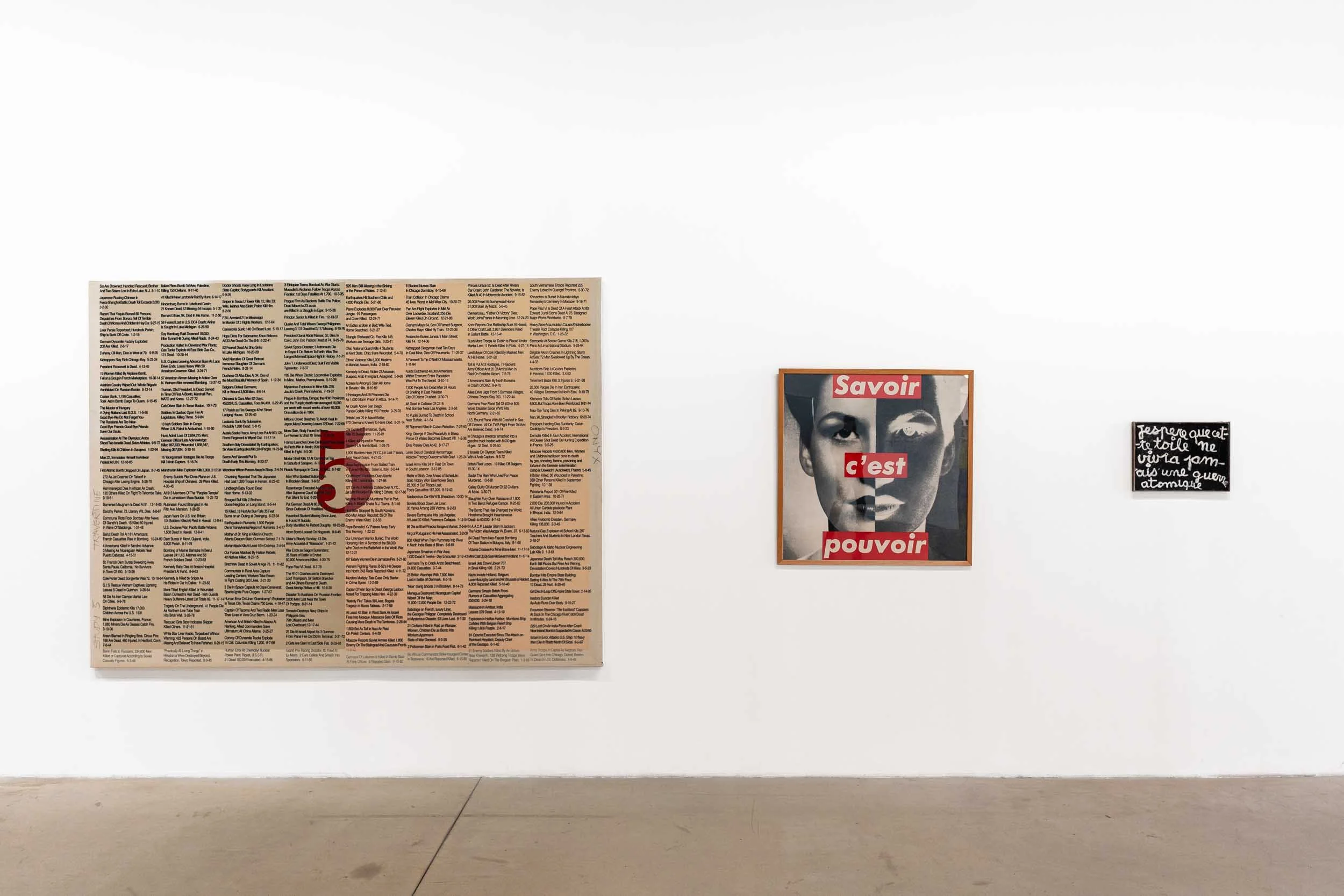
Allen Ruppersberg, Proofs, 1994
Barbara Kruger, Sans titre, 1989
BEN, J'espère que cette toile ne vivra jamais une guerre atomique, 1960
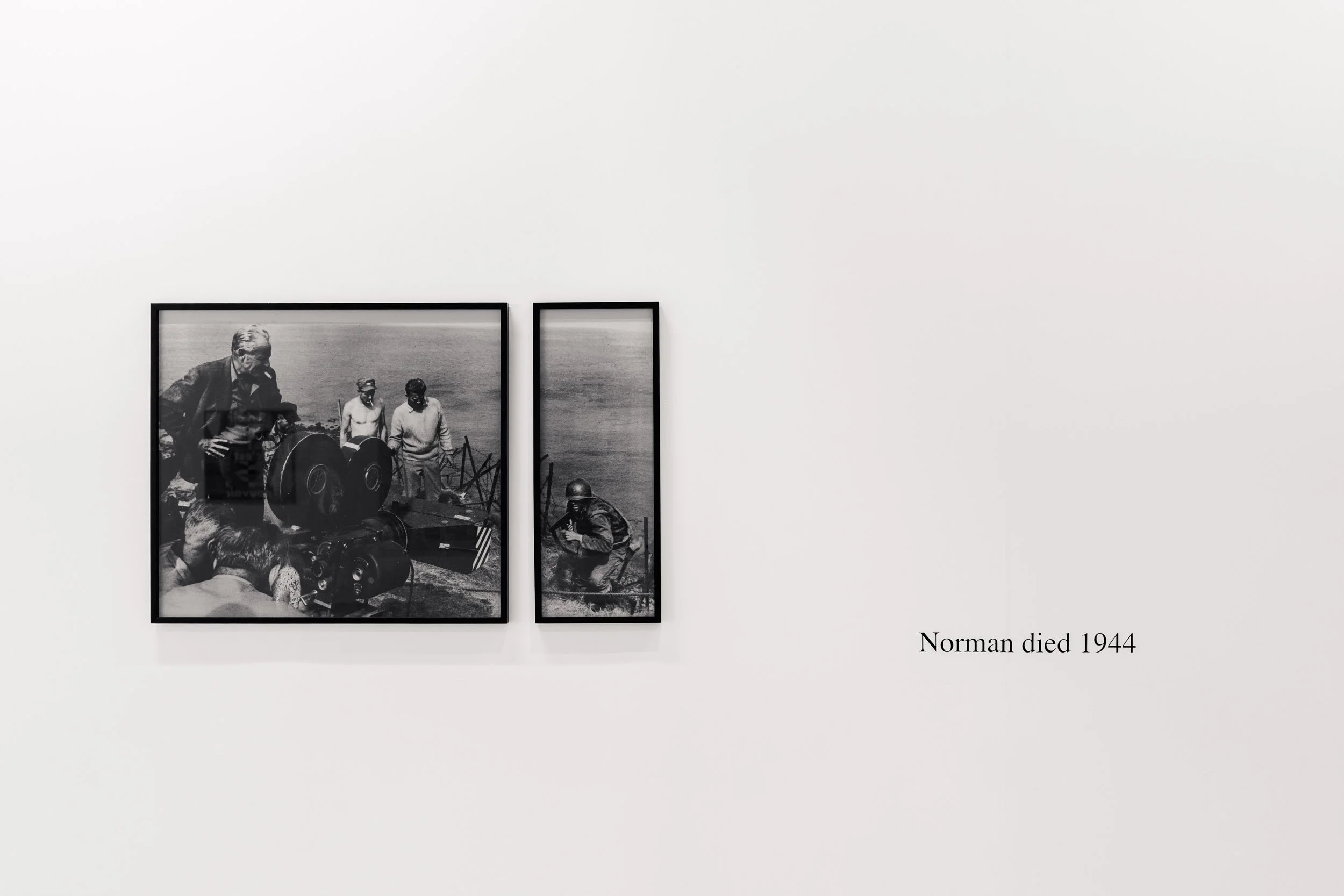
Thomas Galler, Norman Died 1944, 2002/2006
Resistances: Memories of Yesterday and Today
From 17 May to 31 August 2025
On the ground floor, the exhibition Resistances: Memories of Yesterday and Today (Résistances: Mémoires d’hier et d’aujourd’hui) is part of Dunkirk’s commemorations for the 85th anniversary of Operation Dynamo and the 80th anniversary of the Liberation. Where the belvedere speaks in tides and horizons, this level speaks in battlefields, propaganda, and personal stories. Using only works from the Frac collection, the show brings together artists in a rich, visual conversation about resistance to war, erasure, and the seductive neatness of official history.
Leo Copers’ Sans titre, with its unsettling pairing of weaponry and fleshy, peach-colored “sandbags”, appears both absurd and chilling in the pristine white corner – a reminder that violence is always uncomfortably close. Clément Rodzielski’s Untitled (The Giants of Heaven), riffing on a vintage war film poster, turns heroism into something more ambivalent and spectral. And Thomas Galler’s Norman Died 1944 combines archive-like photographs of war and cinema, prompting viewers to question how much of the conflict we understand only through staged images.
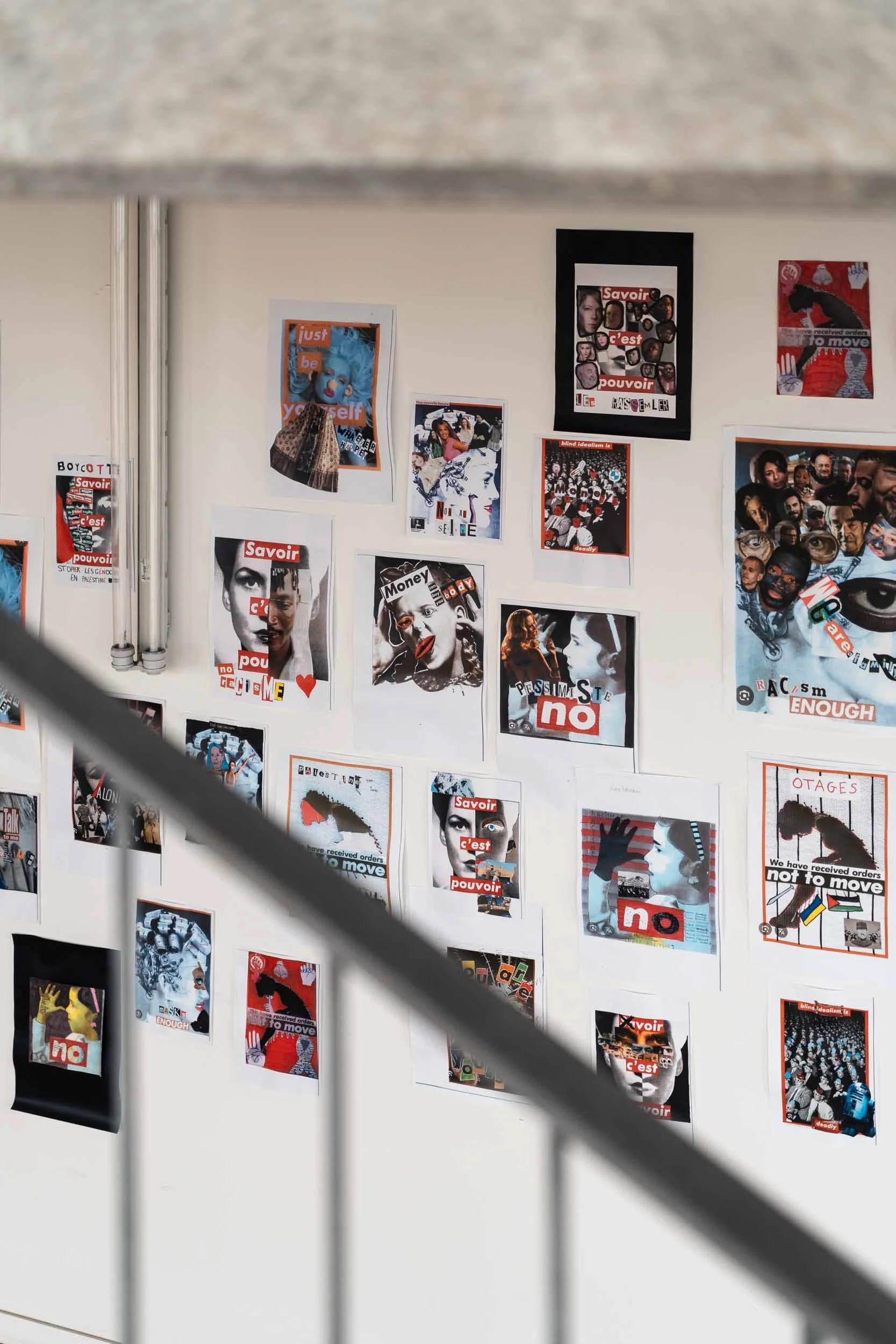
On another wall, Allen Ruppersberg’s text-heavy Proofs sits alongside Barbara Kruger’s iconic Savoir c’est pouvoir face, flanked by BEN’s small, handwritten plea that this canvas never witness atomic war (J'espère que cette toile ne vivra jamais une guerre atomique). When read together, they form a mini-essay on language, power, and the fine line between slogan and threat. For an exhibition about memory and resistance in Dunkirk during a year of significant anniversaries, that intensity feels authentic, as if you’re walking through a complex network of memories.
Living with the Collection: Permanent Works in Motion
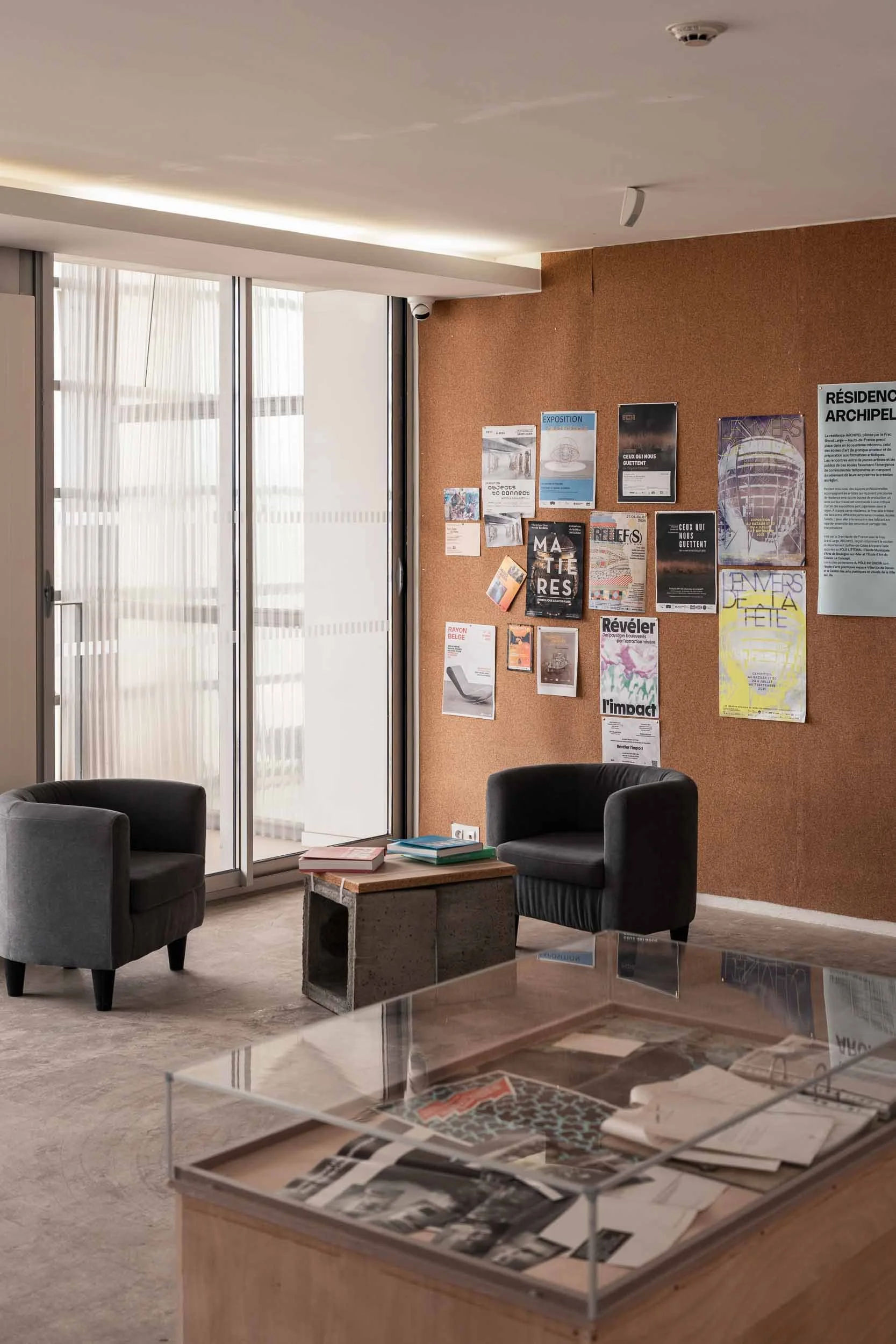
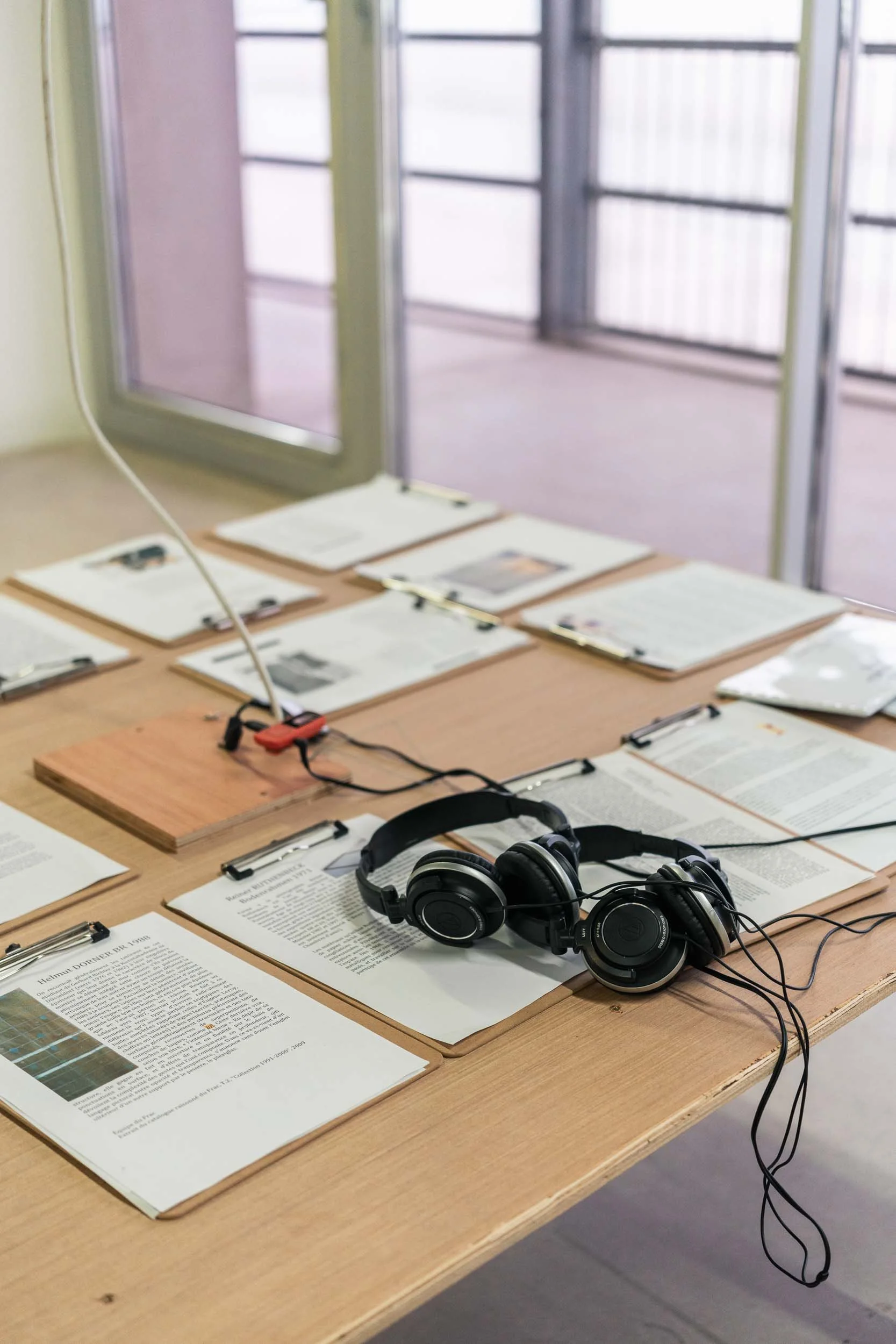
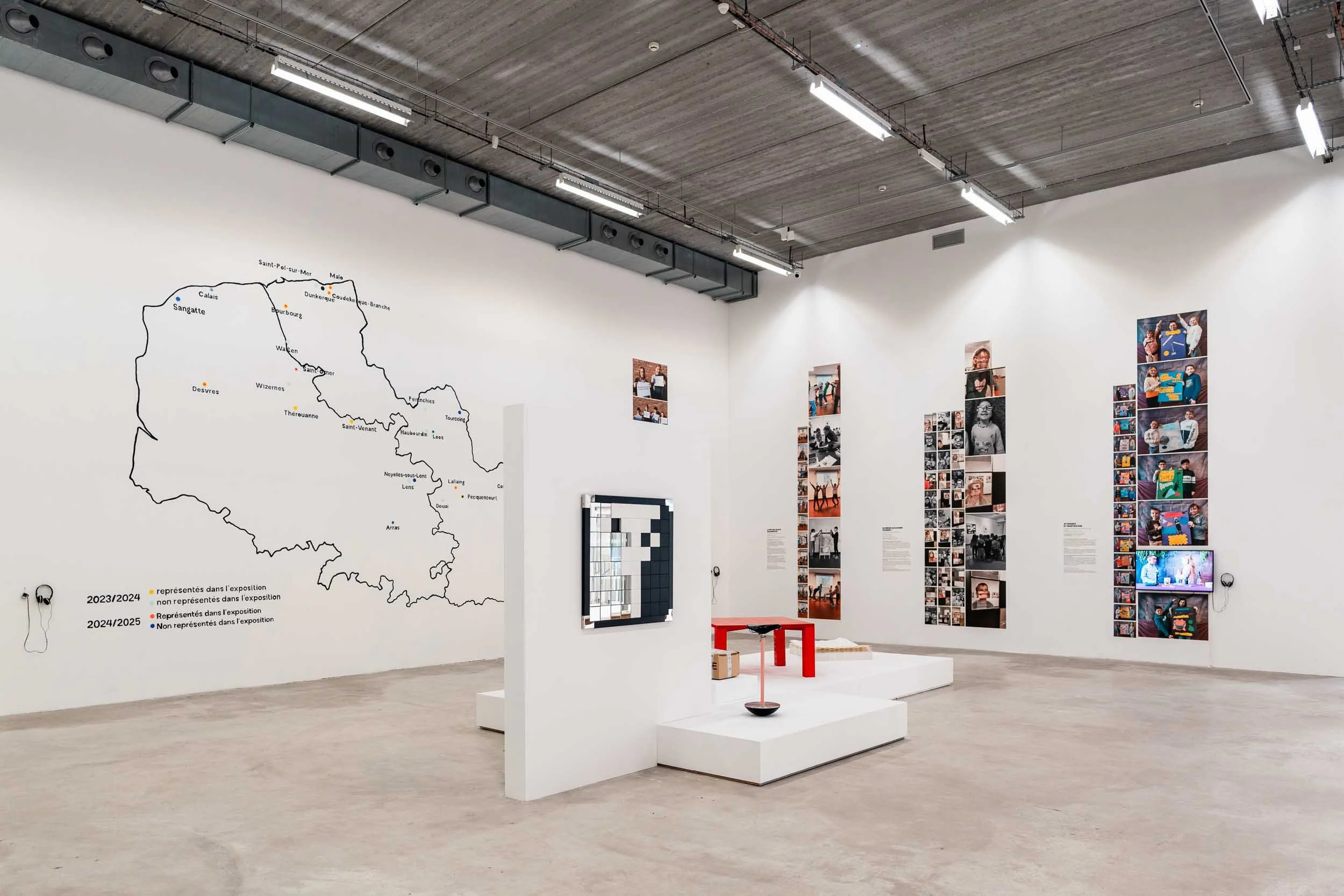
Frac Grand Large doesn’t hide its permanent collection in a museum bunker. Instead, works from its extensive holdings appear in hallways, transitional spaces, and even adjacent warehouses, weaving contemporary art through the architecture.
In the covered passage between the two buildings, Apolline Ducrocq’s Les Îlots bleus feels like a fragment of a construction site captured mid‑gesture. Made from casts of the bluish, quartz‑flecked concrete stairs of the 1950s Îlots bleus housing block in nearby Malo‑les‑Bains, the piece curves into a semi‑circular skeleton of paving stones and exposed rebar. Half‑ruin, half‑reconstruction, it echoes the shipyard architecture around it and transforms this in‑between space into a place for contemplating how cities shed, recycle, and remember their own materials.
Just next door, in the cavernous AP2 hall, matali crasset’s La cuisine en terrasse sets up a rainbow-coloured structure amid all that delicious post-industrial emptiness. Part kitchen, part bleachers, part stage, it feels like an invitation to gather, cook, argue, and perform – a design object that invites living in it. Against the weathered concrete and rust stains of the former construction hall, its saturated yellows, oranges, and blues look almost indecently optimistic.
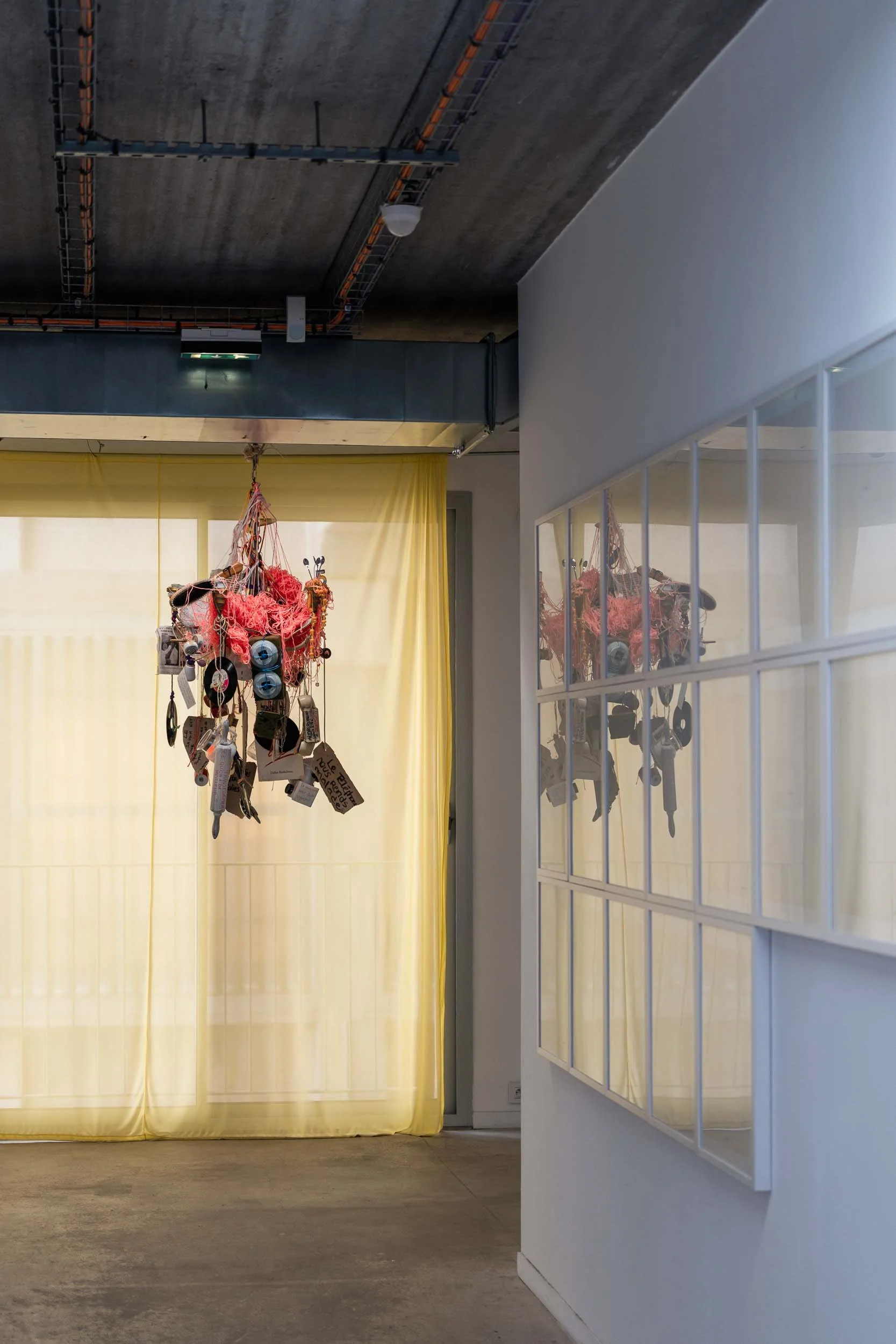
Back upstairs, Ana Lupaș’s Monument of Cloth takes full advantage of the top-floor light. Its draped textile forms recall banners, laundry, and shrouds all at once, grounding the airy belvedere with a sense of labour and time. It’s a quiet but powerful counterpoint to the sea views: a reminder that even the most ethereal spaces are supported by very real hands.
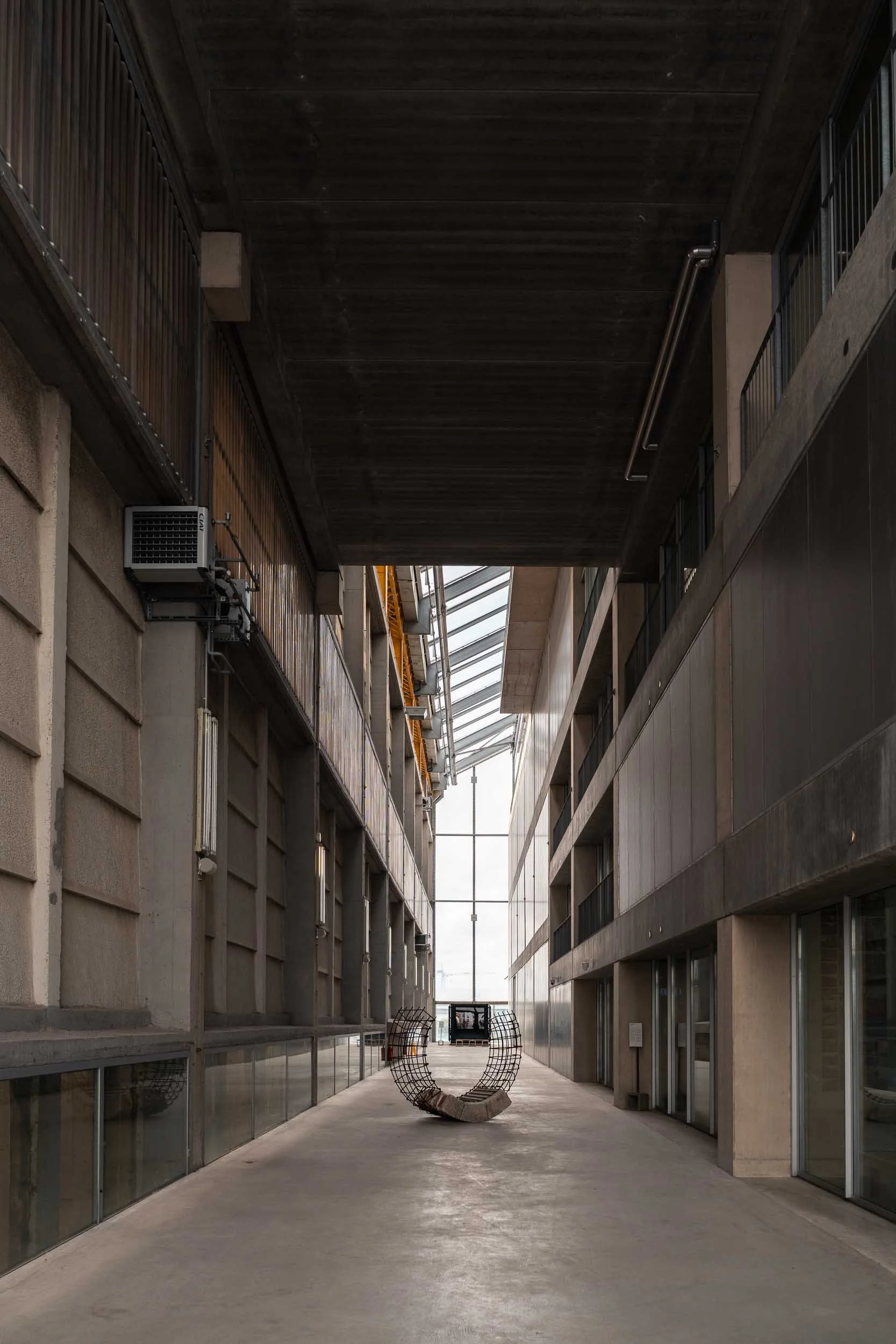
Apolline Ducrocq, Les Îlots bleus, 2023
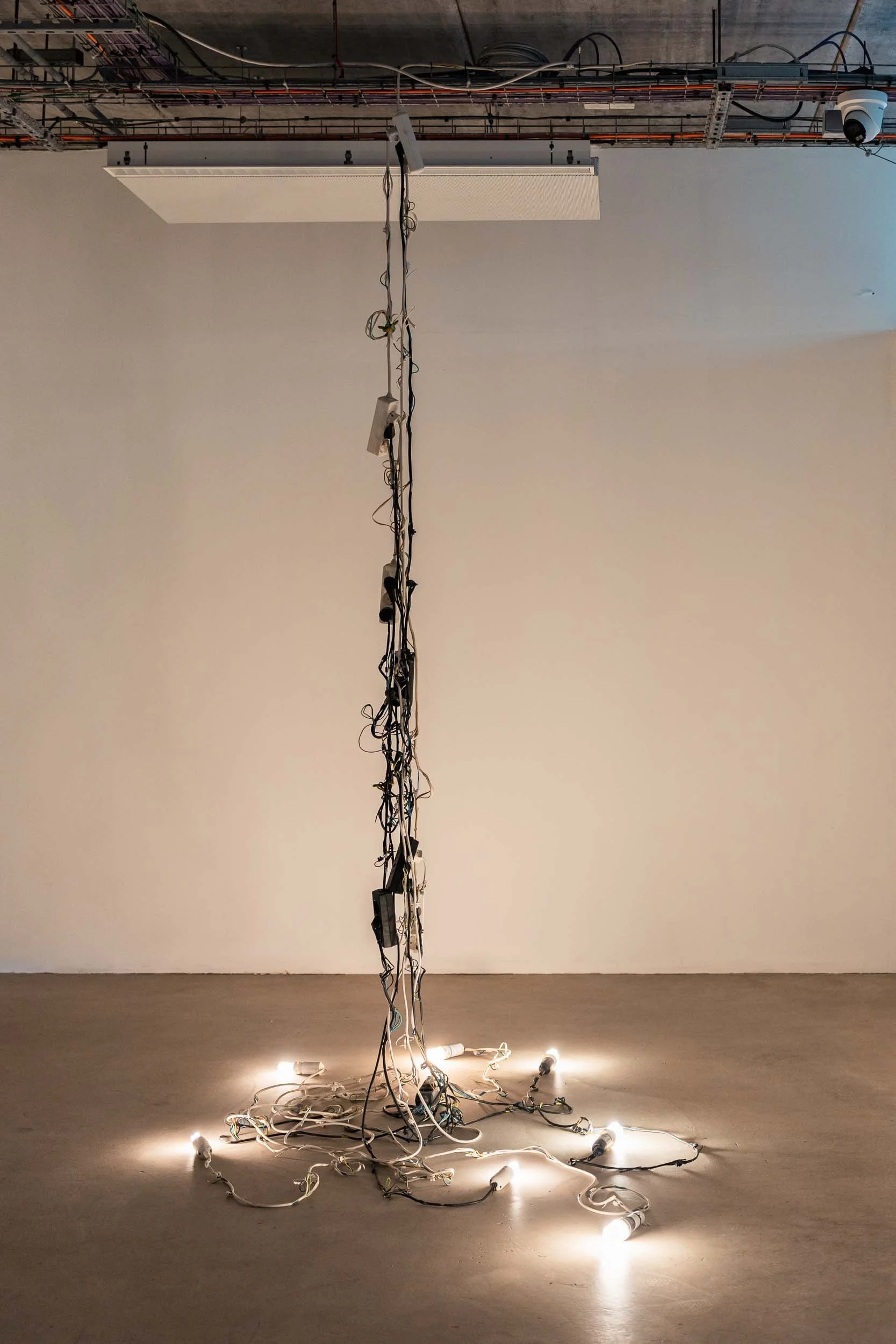
Antonia Low, Jugend forscht II, 2006
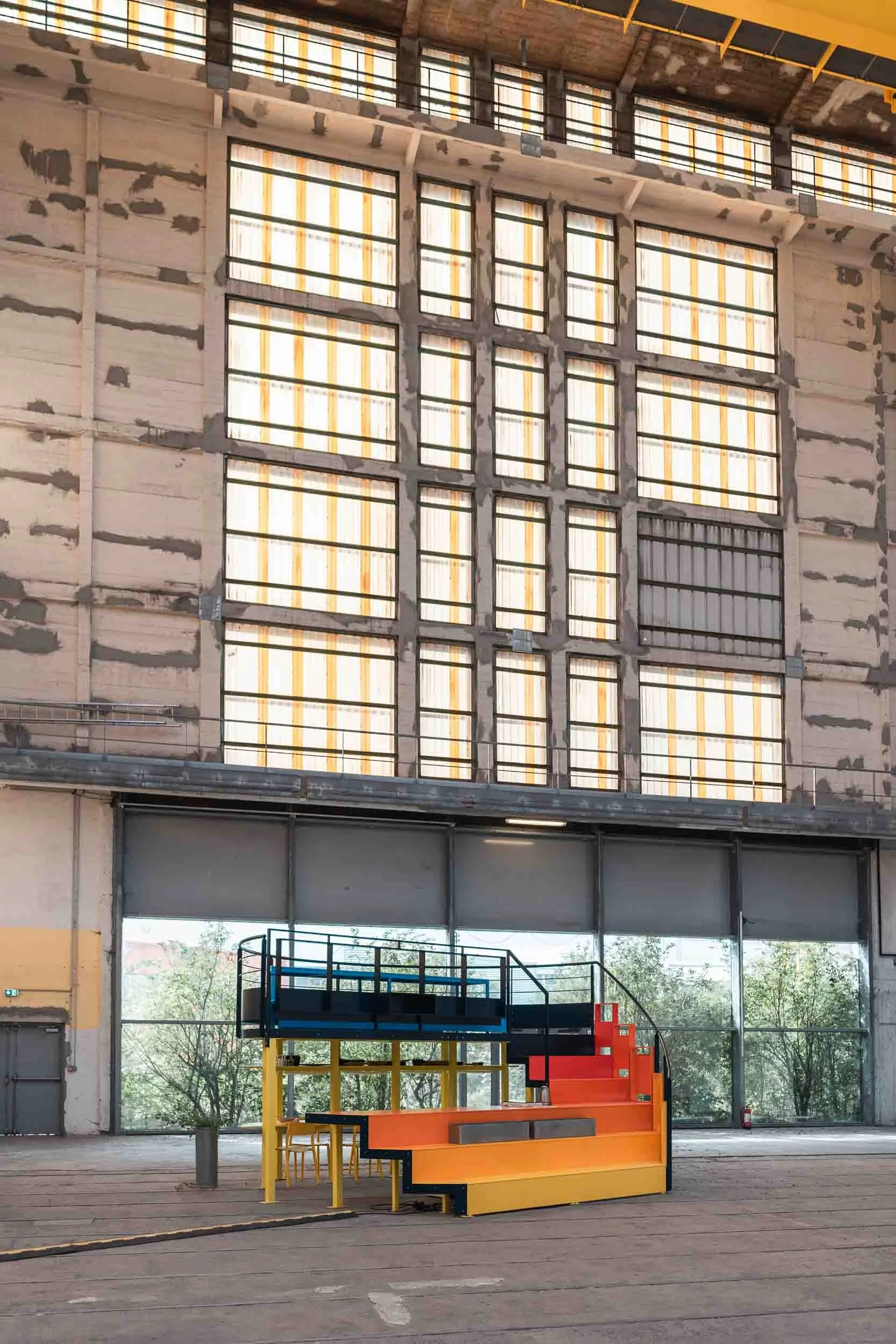
matali crasset, La cuisine en terrasse, 2024
Thoughts: A Multi-Faceted Dunkirk
Spending an afternoon at Frac Grand Large felt like being taken on a guided tour through Dunkirk’s many selves: the wartime city of headlines, the working port, the experimental design hub, the place where people simply live and remember. It gave me room to breathe and stare dramatically out of the windows, while also refusing to let me stay comfortable for long, stitching both moods into the building's very bones.
As I stood on the belvedere, watching ferries slide in and out under a sky doing its best Turner impression, I realised that this is exactly the kind of museum I love writing about: rooted in its landscape, a bit rough around the edges, quietly ambitious. If you’re plotting an escape to northern France, consider this your sign to swap one more Paris gallery for a day with sea spray, concrete, and contemporary art in Dunkirk.
Related Posts
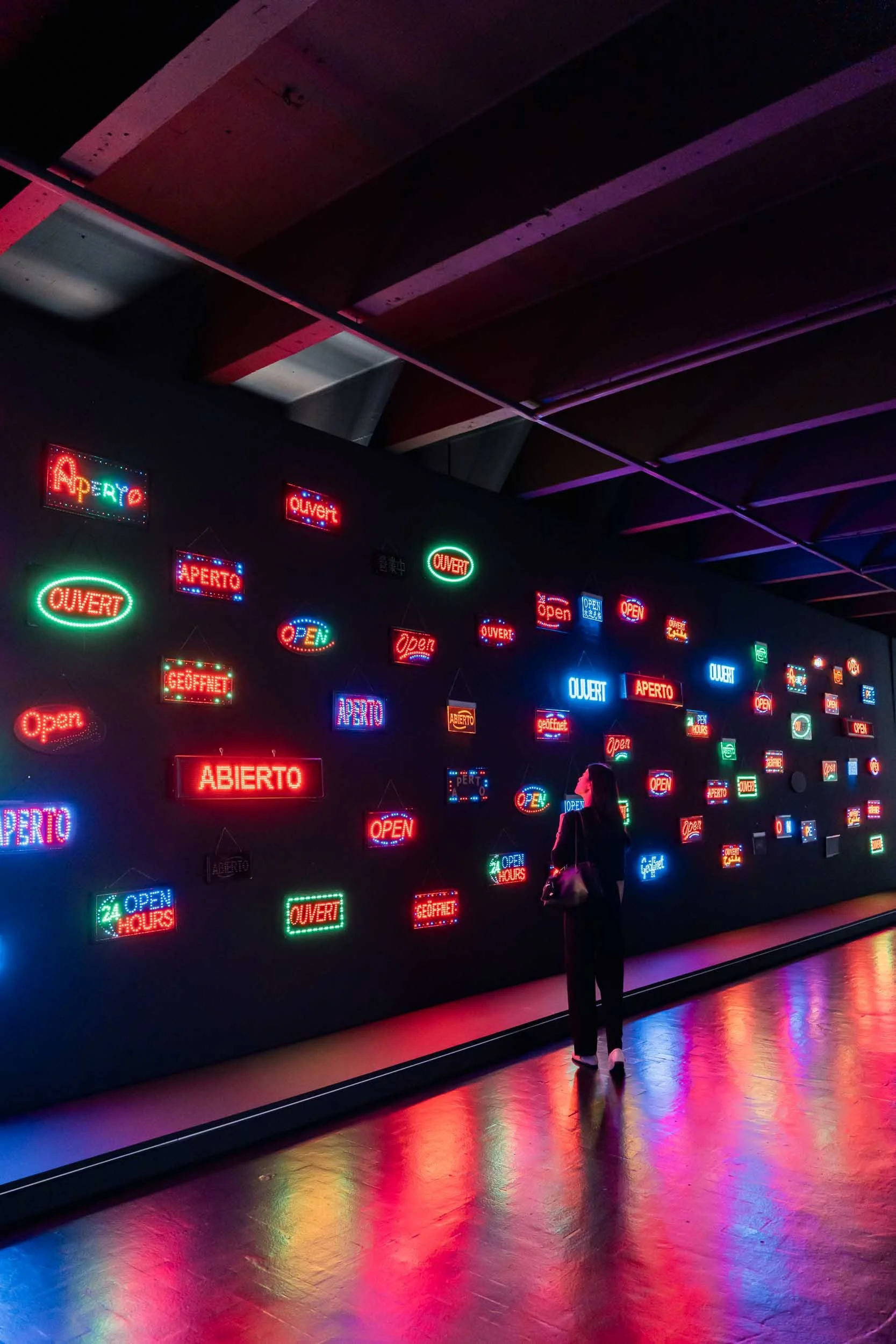

Three site-specific installations for the Museum of Fine Arts, each with its own personality. Optical illusions or a graphic designer's fever dream?