
Château Gaillard: Ruined Romance Above the Seine
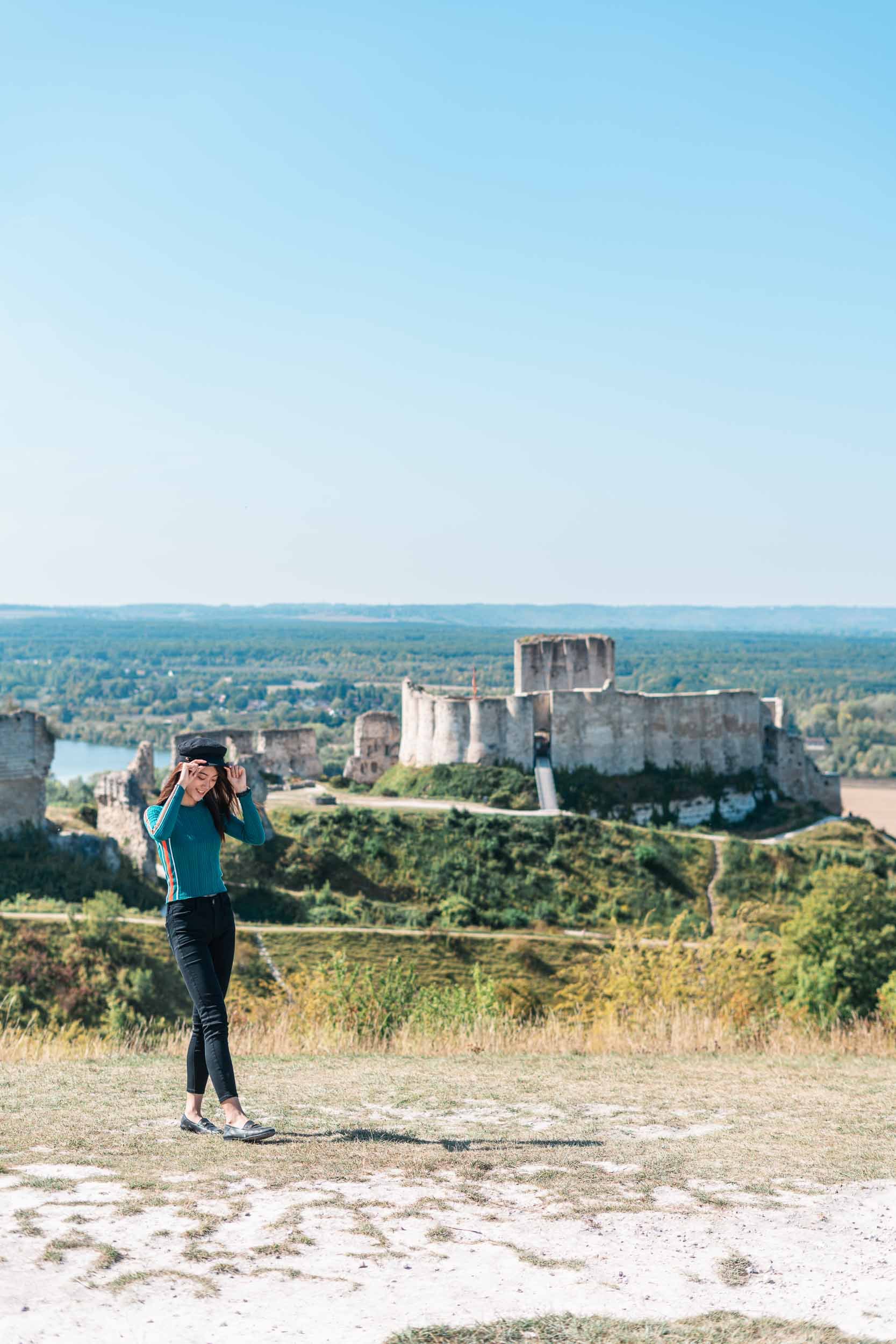
If you like your castles with a side of drama and a river view to match, Château Gaillard above Les Andelys is your Romanesque rom‑com location-scouting sorted.
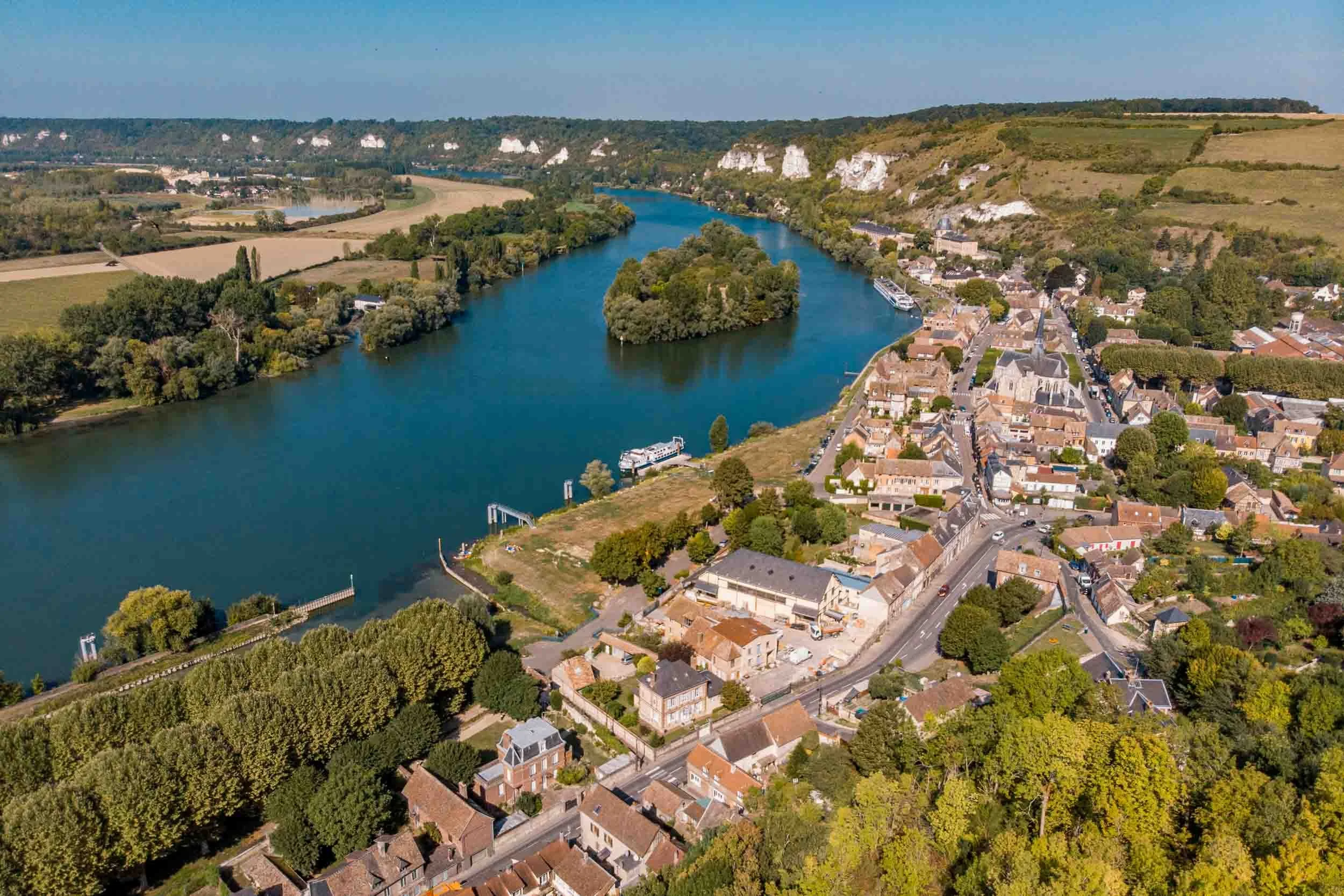
Les Andelys itself is a pretty little spot nestled in a meander of the Seine in Normandy. Technically, it’s two places in one: Grand-Andely, once a Roman cultural centre, and Petit-Andely, a former fishing village that sprang up when the castle arrived on the scene. The marshes that once separated them have long since disappeared, and the communes were officially united during the French Revolution, but you still feel the split personality – sleepy riverside charm below, craggy medieval ruin looming theatrically above.
Château Gaillard perches on a 100‑metre chalk cliff above a tight bend in the Seine, guarding what was once a crucial transport and trade route into Normandy. It sits just outside Les Andelys, less than an hour’s drive from Rouen and an easy detour if you’re road‑tripping from Paris into Normandy.
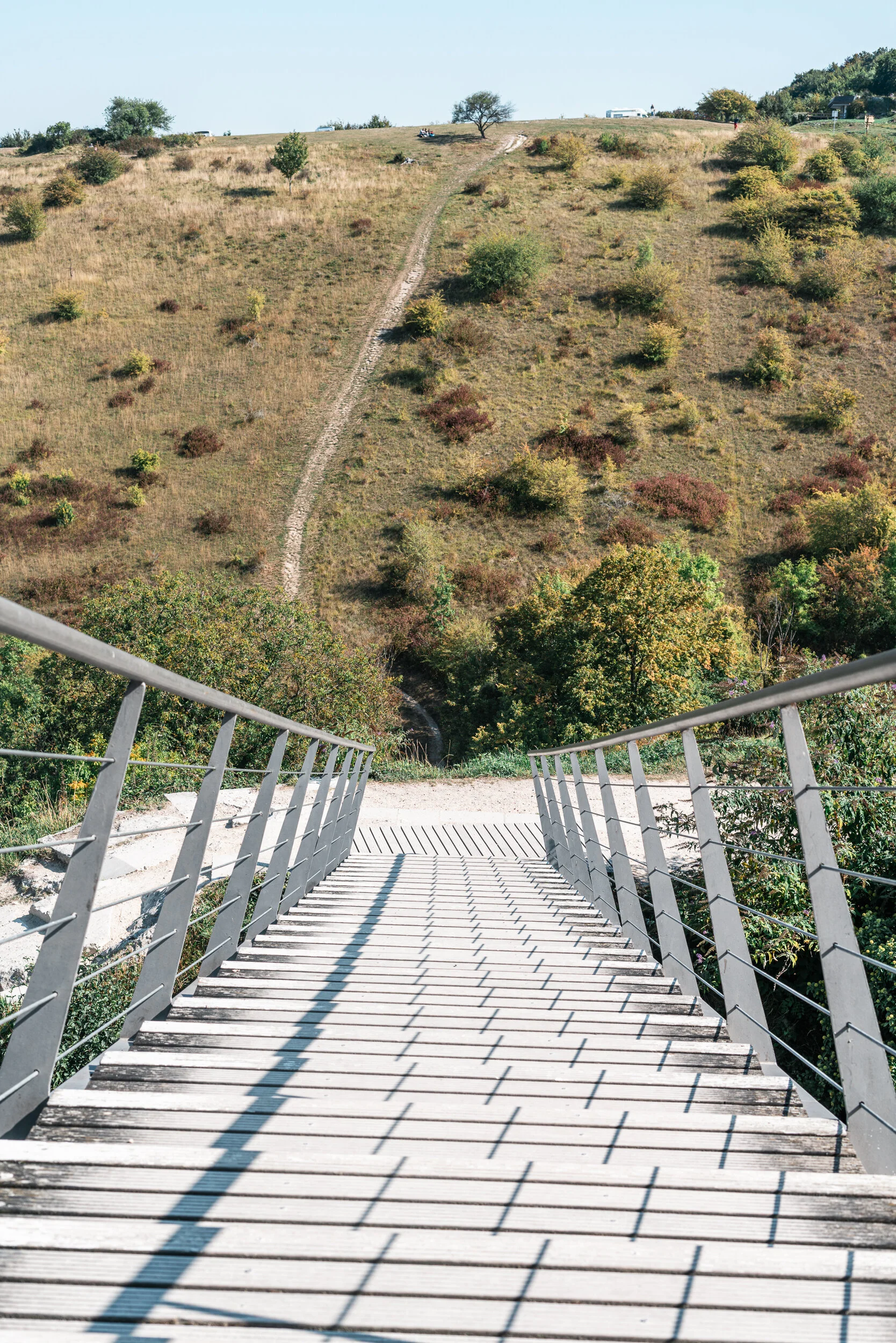
We arrived by car from Paris, parked on the opposite hillside, and crossed the valley like slightly overexcited extras in a low‑budget historical epic. The path up isn’t brutal, but your calves will know about it. The reward? One of the best views of the Seine you can get without sprouting wings.
From the ramparts and surrounding footpaths, you get a sweeping panorama: the river looping lazily around Les Andelys, limestone cliffs glowing pale against the greenery, and toy‑sized barges sliding along the water.
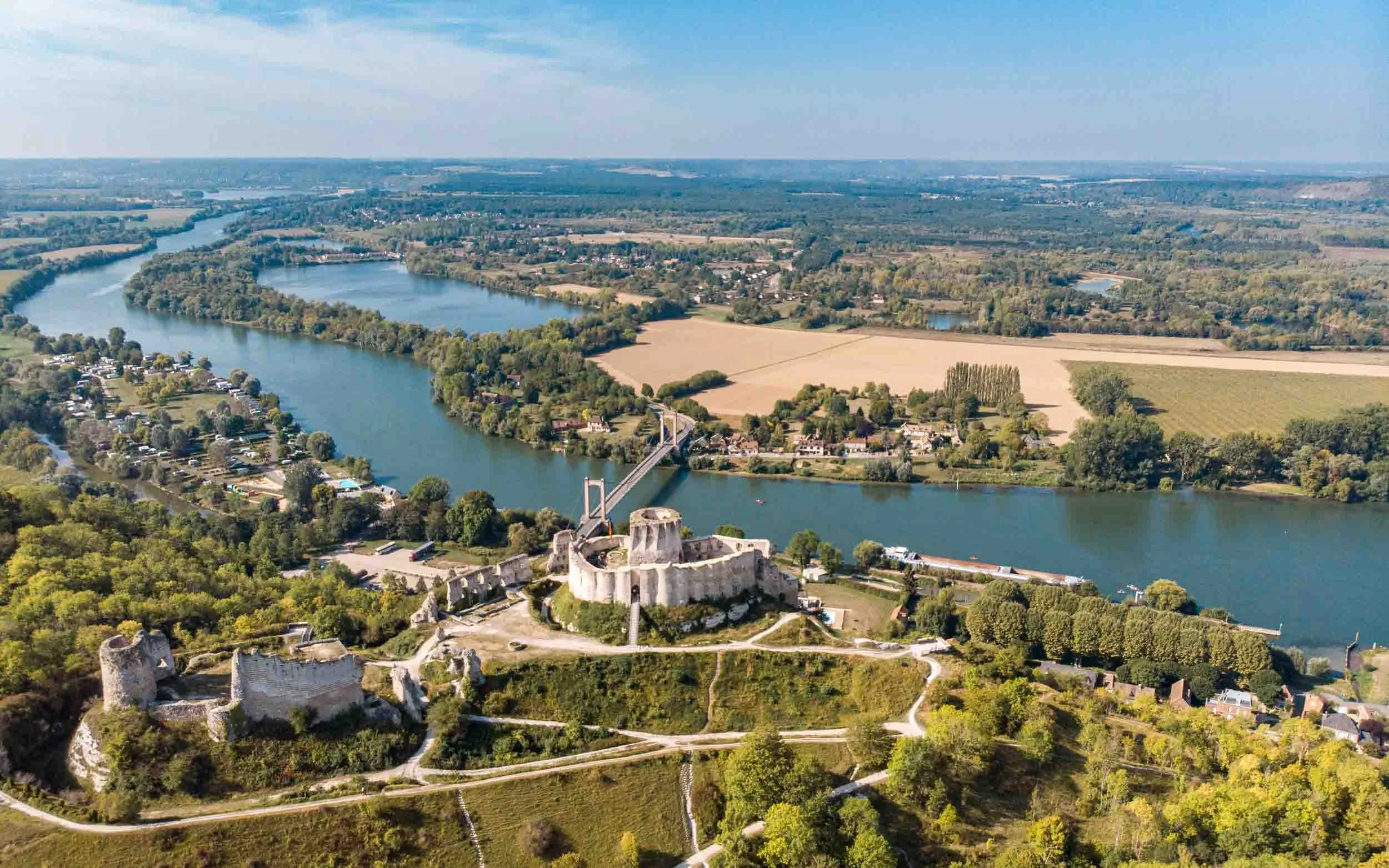
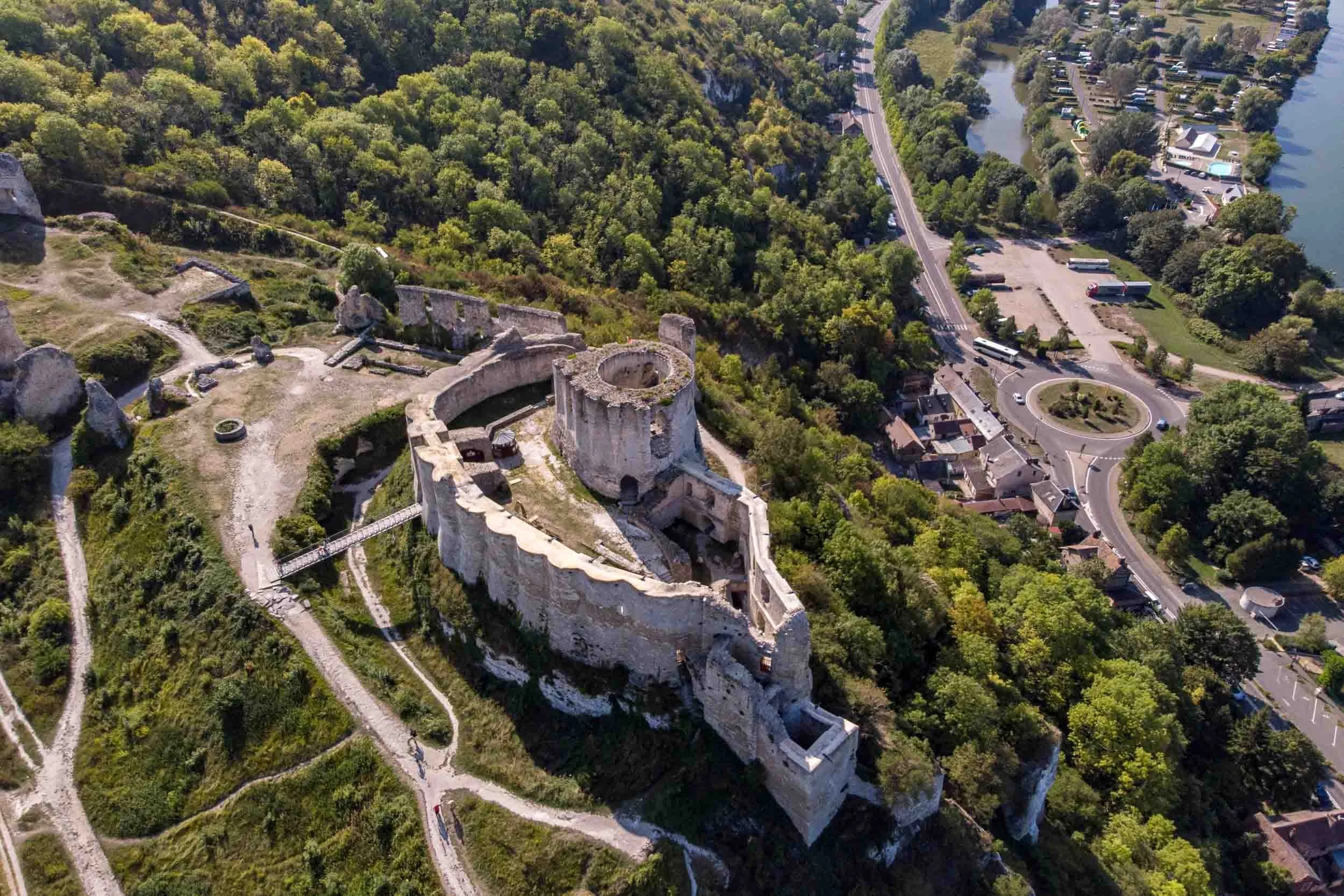
The concentric ruins of the baileys and keep stand proud above the Seine
Where on earth are the ruins?
Château Gaillard perches on a 100‑metre chalk cliff above a tight bend in the Seine, guarding what was once a crucial transport and trade route into Normandy. It sits just outside Les Andelys, less than an hour’s drive from Rouen and an easy detour if you’re road‑tripping from Paris into Normandy.
We arrived by car from Paris, parked on the opposite hillside, and crossed the valley like slightly overexcited extras in a low‑budget historical epic. The path up isn’t brutal, but your calves will know about it. The reward? One of the best views of the Seine you can get without sprouting wings.
From the ramparts and surrounding footpaths, you get a sweeping panorama: the river looping lazily around Les Andelys, limestone cliffs glowing pale against the greenery, and toy‑sized barges sliding along the water.
A castle with commitment issues
Château Gaillard was the passion project of Richard the Lionheart – the very same Plantagenet king who has a standing role in every Robin Hood adaptation. He ordered it built in the late 12th century to protect the Duchy of Normandy from his not‑so‑friendly neighbours, namely the French crown.
In a move that would make modern project managers weep, the main construction took only about two years. For a medieval fortress, that’s essentially overnight delivery. The castle didn’t just dominate the landscape; it also gave birth to Petit-Andely, the riverside settlement below that grew to serve the garrison and trade passing along the Seine.
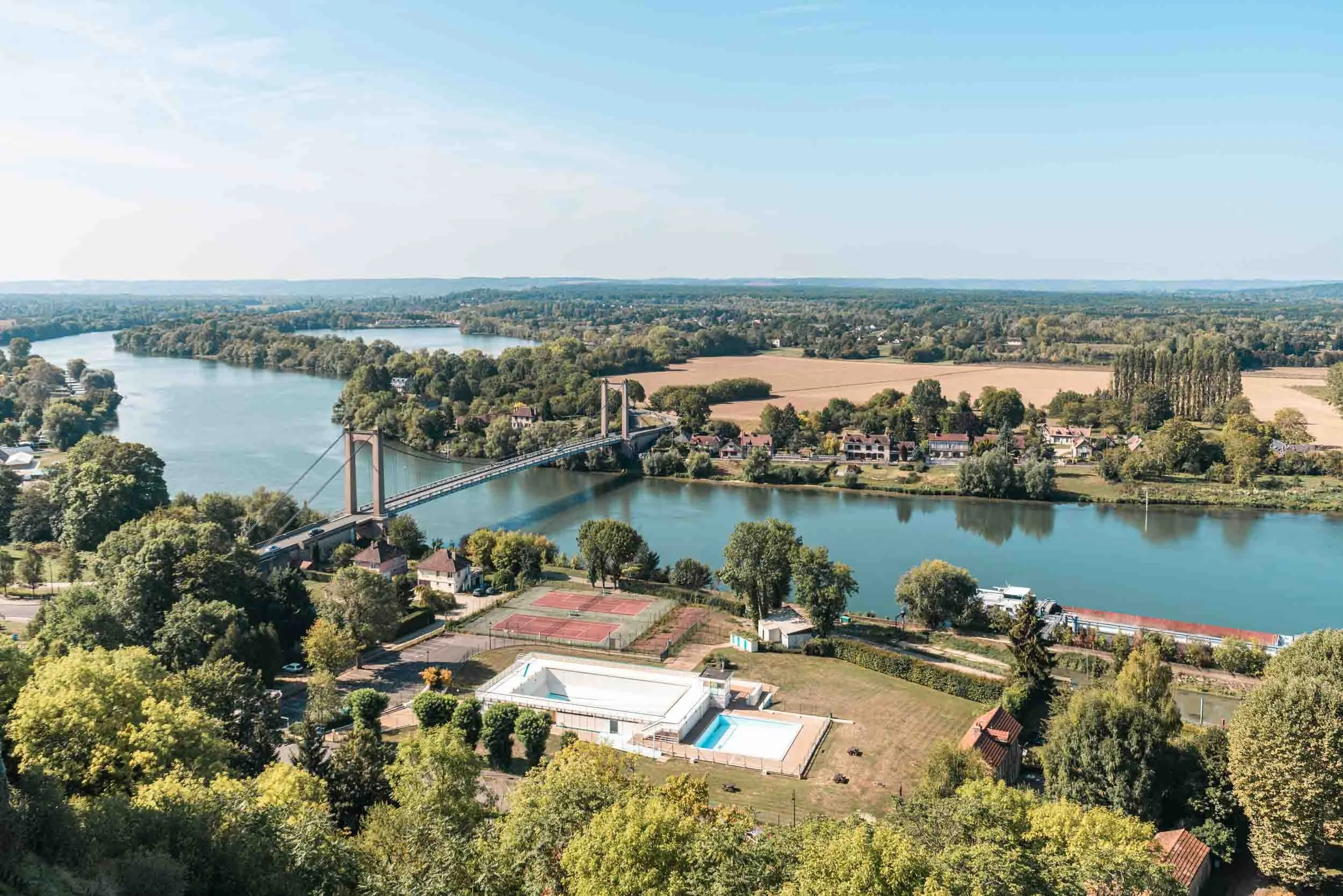
Stunning views of the Seine as viewed from the castle keep
What made it special (before it fell to bits)
Even in ruins, you can tell that Château Gaillard was not your average pile of stones. It was a pioneering example of medieval military architecture and one of Europe’s earliest castles to embrace concentric fortification – defensive walls set within one another like very aggressive Russian dolls.
Originally, the fortress had three baileys: outer, middle and inner, with curtain walls studded with mostly cylindrical towers. It also boasted early machicolations – those slightly sinister openings in the corbels at the tops of the walls, designed to drop stones, boiling liquids, or other unfriendly items onto attackers. Health and safety were not a thing.
The design was so advanced that historian Allen Brown described it as “one of the finest castles in Europe,” and it later influenced Crusader castles across the continent and the Levant. So yes, you’re wandering around the blueprint for later medieval fortifications.
Siege, stubbornness, and a dramatic downfall
Of course, being cutting‑edge and strategically placed made Château Gaillard the medieval equivalent of a ‘please conquer me’ sign. The fortress endured a famous siege by the French king Philip Augustus in 1203-1204, involving sapping, river blockades, and a frankly brutal winter for everyone involved.
Despite the castle’s clever design, it eventually fell – a reminder that no amount of masonry can entirely compensate for politics, logistics, and the occasional tactical blunder. During the Hundred Years’ War, Château Gaillard bounced between the English and French crowns like a geopolitical tennis ball until its military importance faded and neglect did the rest.
By the late 16th century, Henry IV of France ordered the already‑battered castle demolished to prevent it from being used against him. What remained slowly slumped into the picturesque ruin you see today – now safely protected as a monument historique rather than a handy siege target.
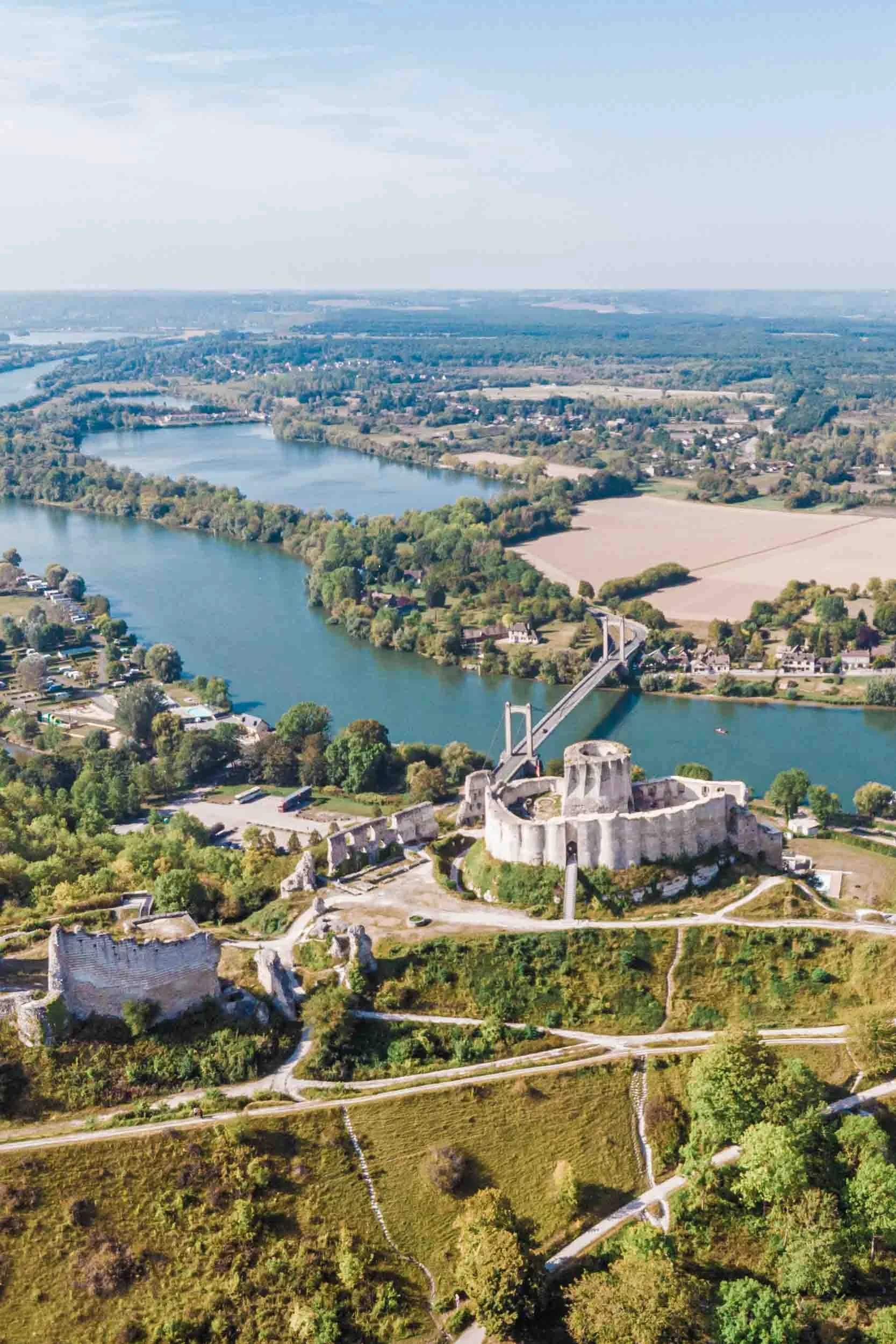
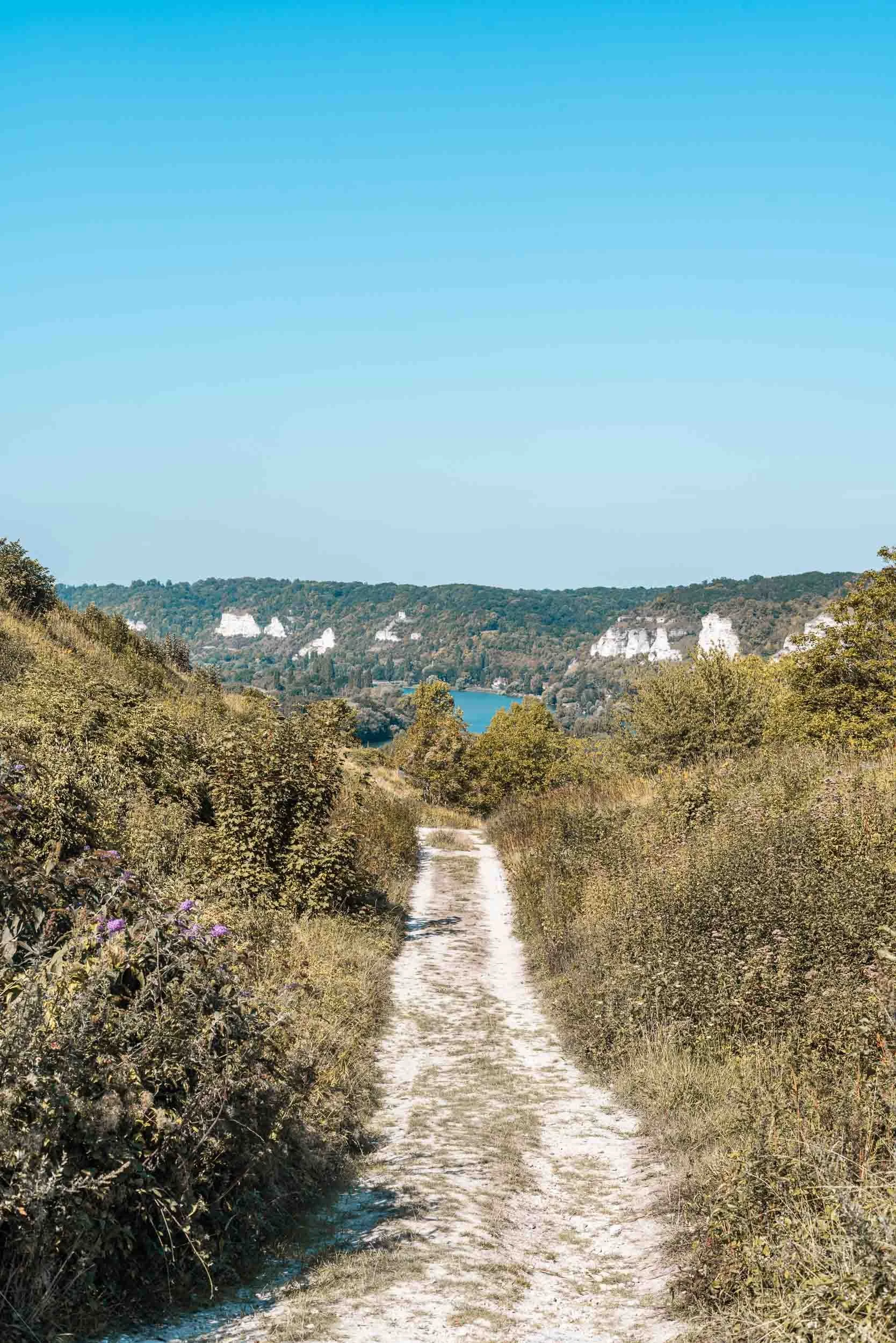
The limestone cliffs flanking the castle offer a stark contrast against the blue of the Seine and the sky
What is there actually left to see?
Let’s be honest: if you’re expecting a pristine fairy‑tale chateau with manicured gardens and perfectly preserved halls, you’ll be… disappointed. Mildly traumatised, even. Château Gaillard is very much ruined, in the most poetic sense of the word.
What you can still see:
The inner bailey – the area you pay to enter, open most months of the year.
Chunky curtain walls and towers – broken, yet still imposing enough to suggest how formidable the place once was.
Remains of the keep and gatehouse – the outlines are clear enough to let you mentally reconstruct the fortress with a bit of imagination.
Defensive ditches and earthworks – traces of the layered defences that once made this place such a headache for besieging armies.
When we visited, we spent a fair chunk of time wandering the keep area, ducking through archways and clambering along the remaining walls, trying to align the fragments with the romanticised images of medieval life in our heads. Spoiler: real medieval life would probably have smelled worse.
But honestly, the relative sparseness works in its favour. There’s very little in the way of over‑the‑top reconstruction; you actually feel the age of the place. It’s atmospheric, slightly melancholic, and just ruined enough to be cinematic without tripping over tour buses every five seconds.
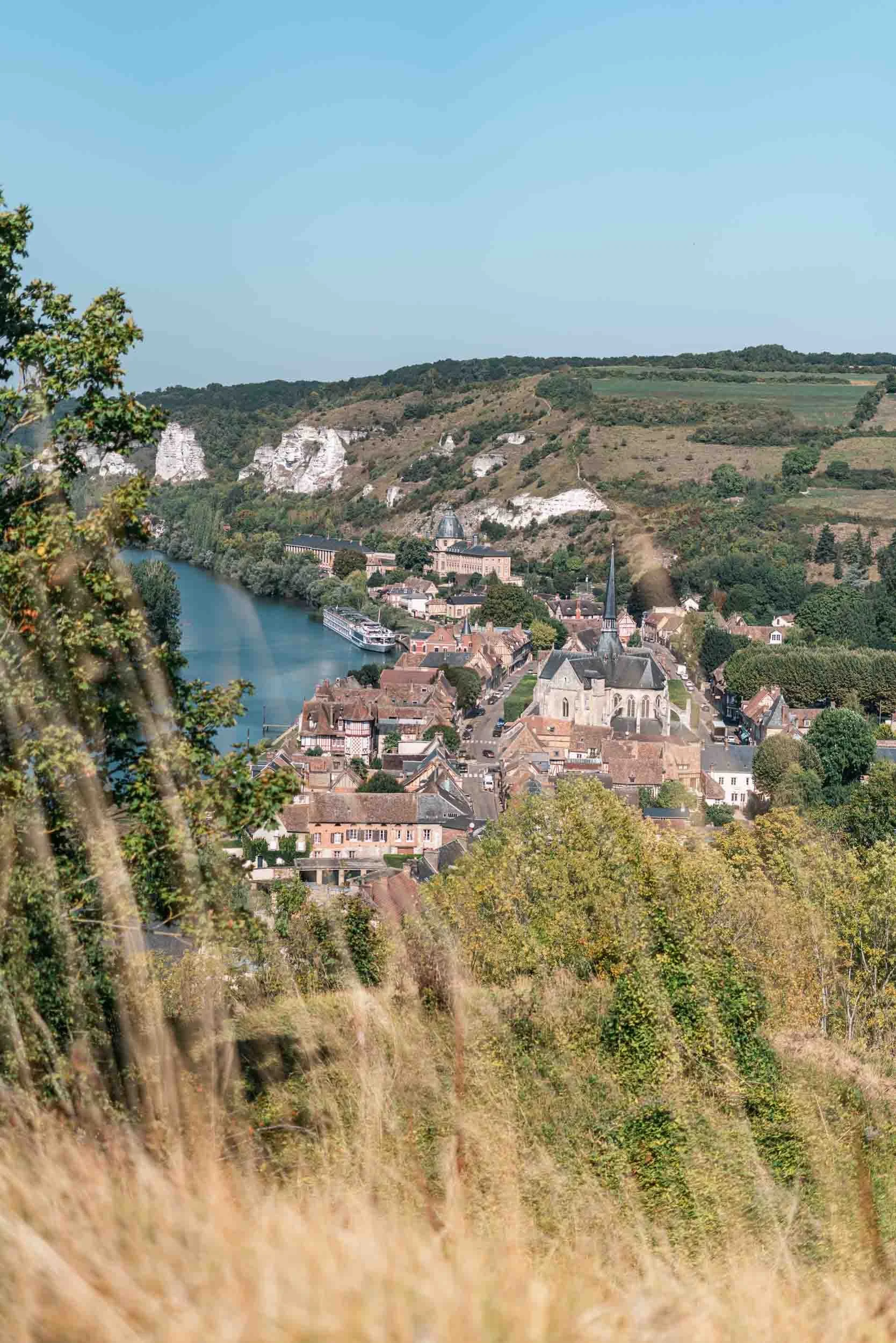
The town of Petit-Andely as viewed from the castle keep
Views, walks, and where to loiter
If the stones are the history, the views are the headliner. From the castle and the surrounding plateau, the Seine River bends below in a proper postcard panorama: Les Andelys, hugged by the curve of the water, lined with neat houses and the odd church spire, framed by white cliffs and forests.
We visited on a pleasantly warm autumn day, with just enough sun to make the chalk cliffs gleam but not enough heat to make the uphill trudge feel like penance. We wandered along the various walking paths that snake around the site – there are a few routes of differing steepness, so you can choose between “leisurely stroll” and “I definitely need a pastry after this”.
In hindsight, the gentler slopes near the viewpoint would have been an ideal picnic spot: wide skies, river views, and a breeze that kept things fresh without blowing your crisps into the next département. Naturally, we were jet-lagged and pressed for time, so we admired other people’s picnic skills instead.
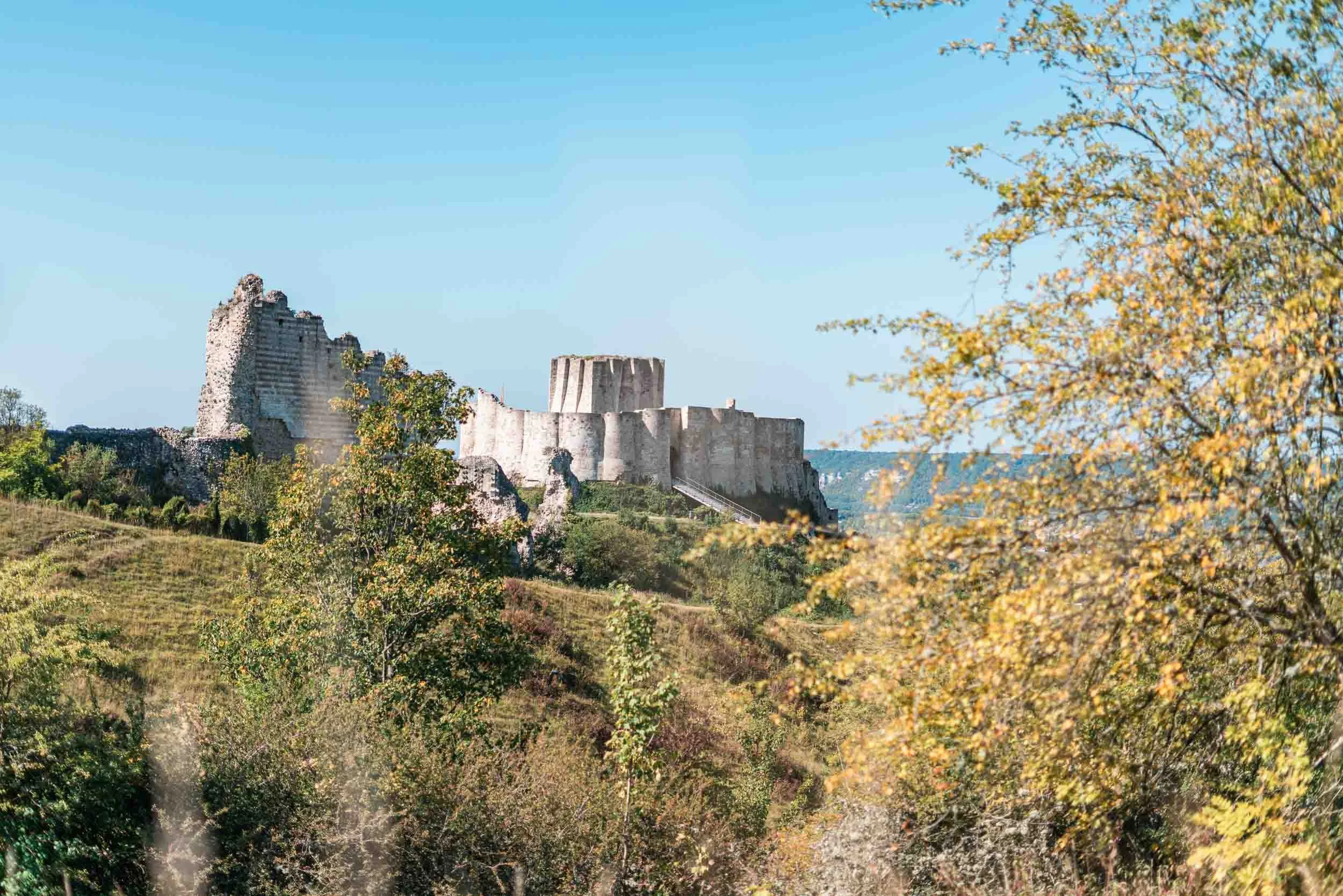
The castle’s outer bailey on the left, inner bailey and keep on the right
Thoughts: Is Château Gaillard worth the detour?
If you’re into medieval history, moody castle ruins, or simply like a good view with minimal crowds, then yes, absolutely. As a day trip from Rouen or a stop on a Normandy road trip from Paris, it’s a brilliant way to trade city bustle for countryside drama without driving for hours.
There isn’t a huge amount of “stuff” in the museum sense – no endless ornate rooms or furniture exhibits – but that’s precisely the charm. Château Gaillard is all about context: the strategic location, the river below, the ghost of its former might, and the feeling of standing where kings, soldiers and slightly terrified medieval builders once stood.
Come for the views, stay for the ruins, and leave with just enough wind in your hair to feel like a minor character in a historical novel.
Related Posts



Step inside Villa Cavrois, a sunlit modernist chateau of yellow brick, cinematic interiors and a water mirror that makes you stop and stare.