
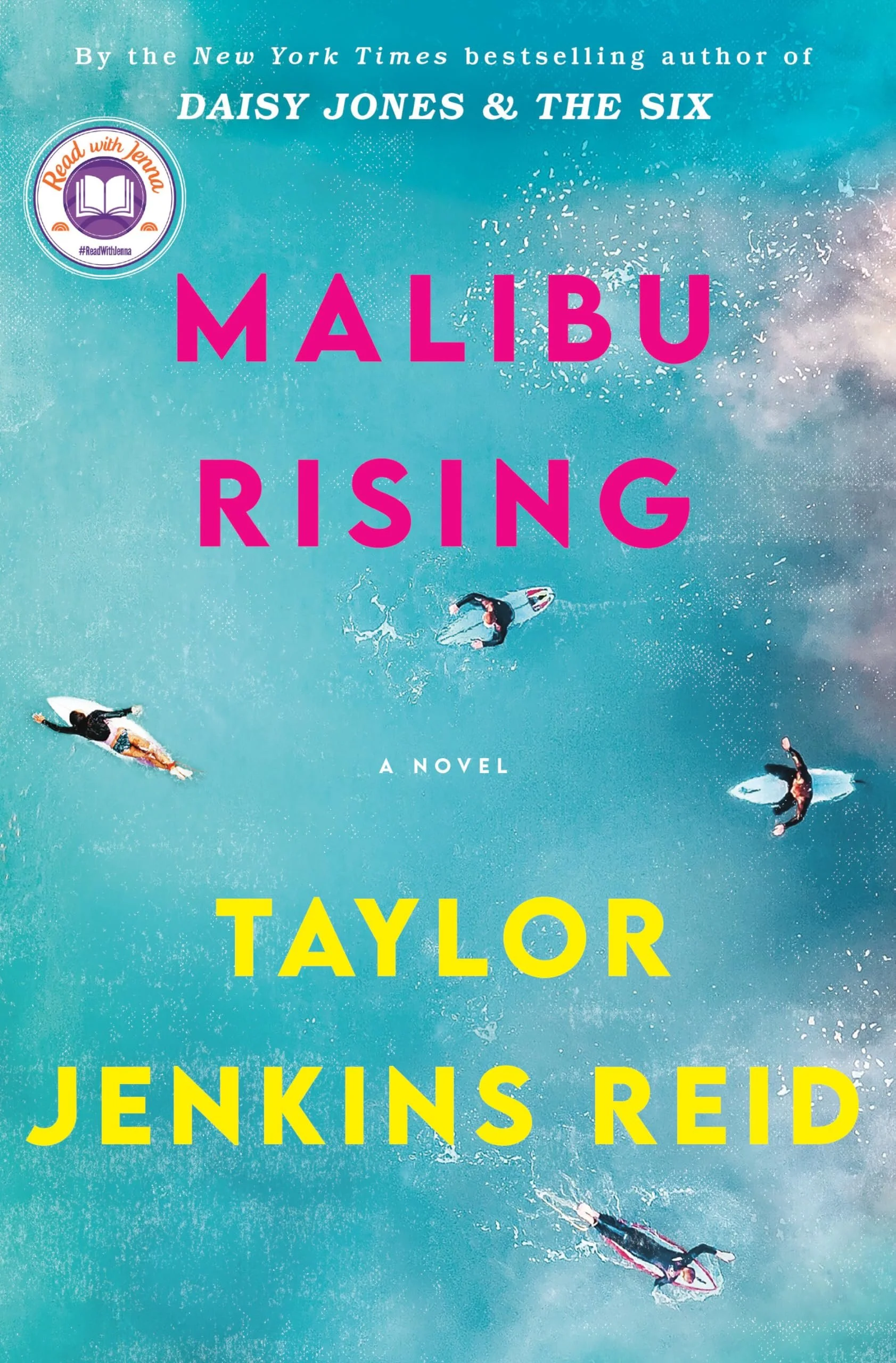
Growing up as an only child means you become very good at two things: entertaining yourself and having long, meaningful conversations with the mirror. So reading Malibu Rising by Taylor Jenkins Reid felt a bit like sneaking into someone else’s family WhatsApp chat—specifically, a famously messy, sun-drenched, surf-obsessed one in 1980s Malibu. While I never had siblings breathing down my neck for bathroom time or parental approval, this novel made me feel the emotional whiplash of sharing a childhood with people who know your past a little too well.
The story follows the Riva siblings, Nina, Jay, Hud and Kit, children of legendary singer Mick Riva, as they prepare for their infamous end-of-summer party in 1983. The book glides between that single day and the decades that shaped them, all against the backdrop of Malibu’s shimmering coastline and quietly crumbling marriages. It sounds glamorous, but underneath the surfboards and celebrity cameos sits something grittier: abandonment, resentment, sacrifice and the strange, suffocating intimacy of family. The party itself becomes a pressure cooker where secrets, expectations and old wounds finally ignite.
“Our family histories are simply stories. They are myths we create about the people who came before us, in order to make sense of ourselves.”
As someone who never had to compete for affection at the dinner table, I found the sibling dynamics both fascinating and mildly exhausting (in a good way). There’s that push-and-pull you see in close friendships, but dialled up to eleven, because your genes are involved and so is the ghost of a very famous, very unreliable father. The novel leans into how siblings can be each other’s lifeboats and anchors at once. It made me wonder whether I missed out on a built-in support system or cleverly sidestepped a lifelong identity Olympics.
In terms of themes, Malibu Rising is a sunlit exploration of generational trauma, fame, class, and the stories we inherit without ever asking for them. It’s also a sharp reminder that “family values” are often PR gloss for a very human mess. Reading it now, in an era of nepo babies, social media oversharing, and public fallouts conducted via Notes, the book feels surprisingly current. The way the Rivas are defined—and confined—by their father’s celebrity echoes today’s obsession with legacy and image, whether you’re a Hollywood dynasty or just curating your grid.
“When there is only you, you do not get to choose which jobs you want, you do not get to decide you are incapable of anything. There is no room for distaste or weakness. You must do it all. All of the ugliness, the sadness, the things most people can’t stand to even think about, all must live inside of you. You must be capable of everything.”
From a reader’s perspective, I loved how cinematic and bingeable the writing is; the pacing feels like a prestige TV series you burn through over a weekend. I did occasionally roll my eyes at how neatly some emotional arcs clicked into place, and a few side characters felt more like aesthetic props than fully formed people, but it never fully pulled me out of the story. Overall, it’s escapist, but not empty; glossy, but threaded with grit.
If you like your beach reads with brains, complicated families, and a side of emotional surf, Malibu Rising is the kind of novel that will leave you feeling windswept, slightly singed, and quietly reflective about the families we’re born into, and the ones we choose.
This post may contain affiliate links, meaning we receive a commission when you click the links and make a purchase.
Related Posts

An immersive, emotionally heavy family saga that I found deeply moving, even if its sheer length left me clinging to feelings more than to plot details.