
(In)visible Presence: Deciphering the Monumental Inaugural Show at Dib Bangkok

Bangkok’s cultural landscape has received a massive, architectural shot in the arm.
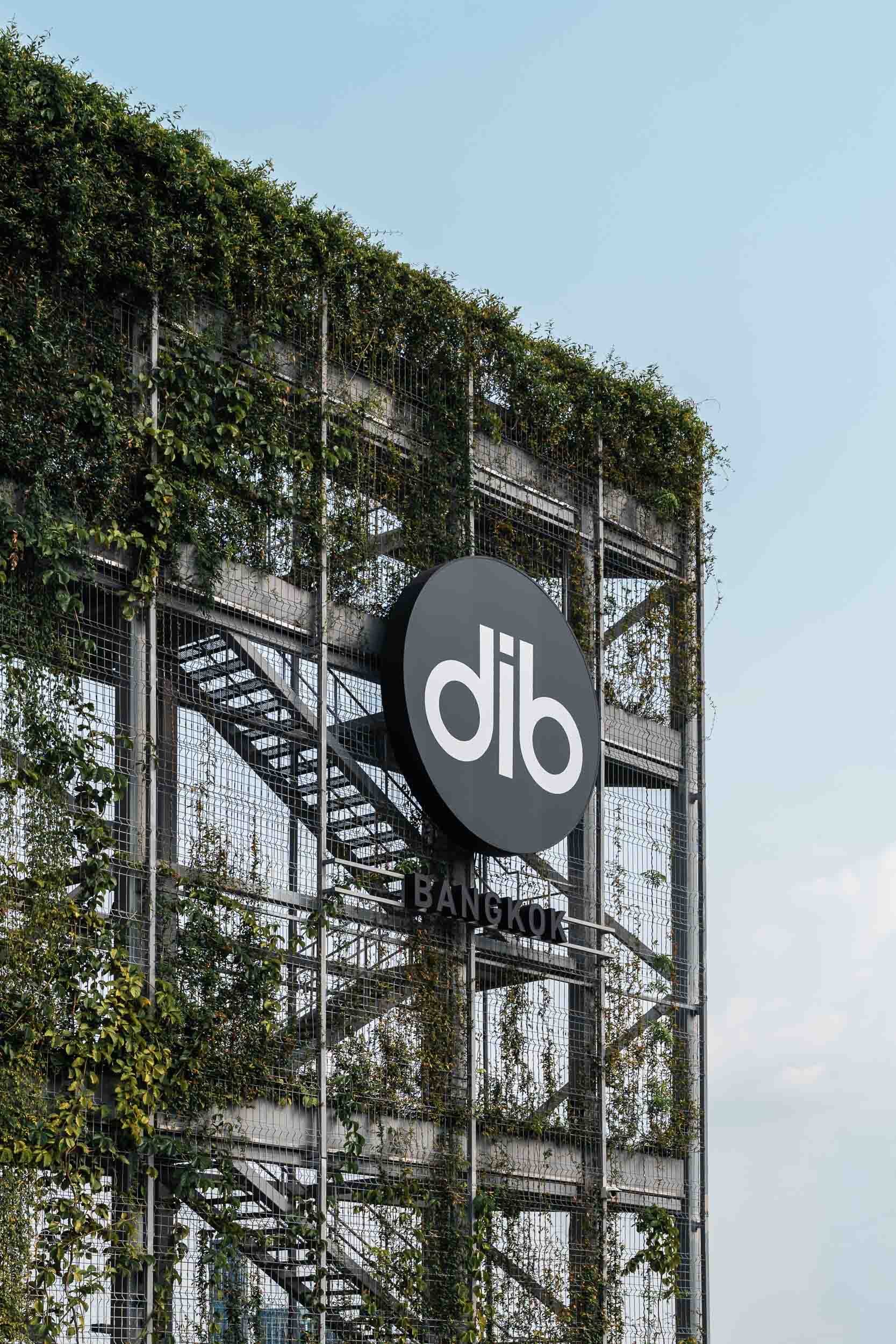
Hidden down a narrow, wonderfully nondescript alleyway between Rama IV and Sukhumvit, a blackened, fortress-like former steel warehouse slowly reveals its secrets. This is Dib Bangkok, Thailand’s first dedicated international contemporary art museum, conceived by the late energy-drink tycoon and legendary collector Petch Osathanugrah and brought to fruition by his son, Chang.
The name Dib itself translates to raw, natural, or unpolished in Thai, perfectly encapsulating a desire to keep art authentic, unrefined, and deeply resonant with the capital’s unstoppable spirit.
Dib Bangkok
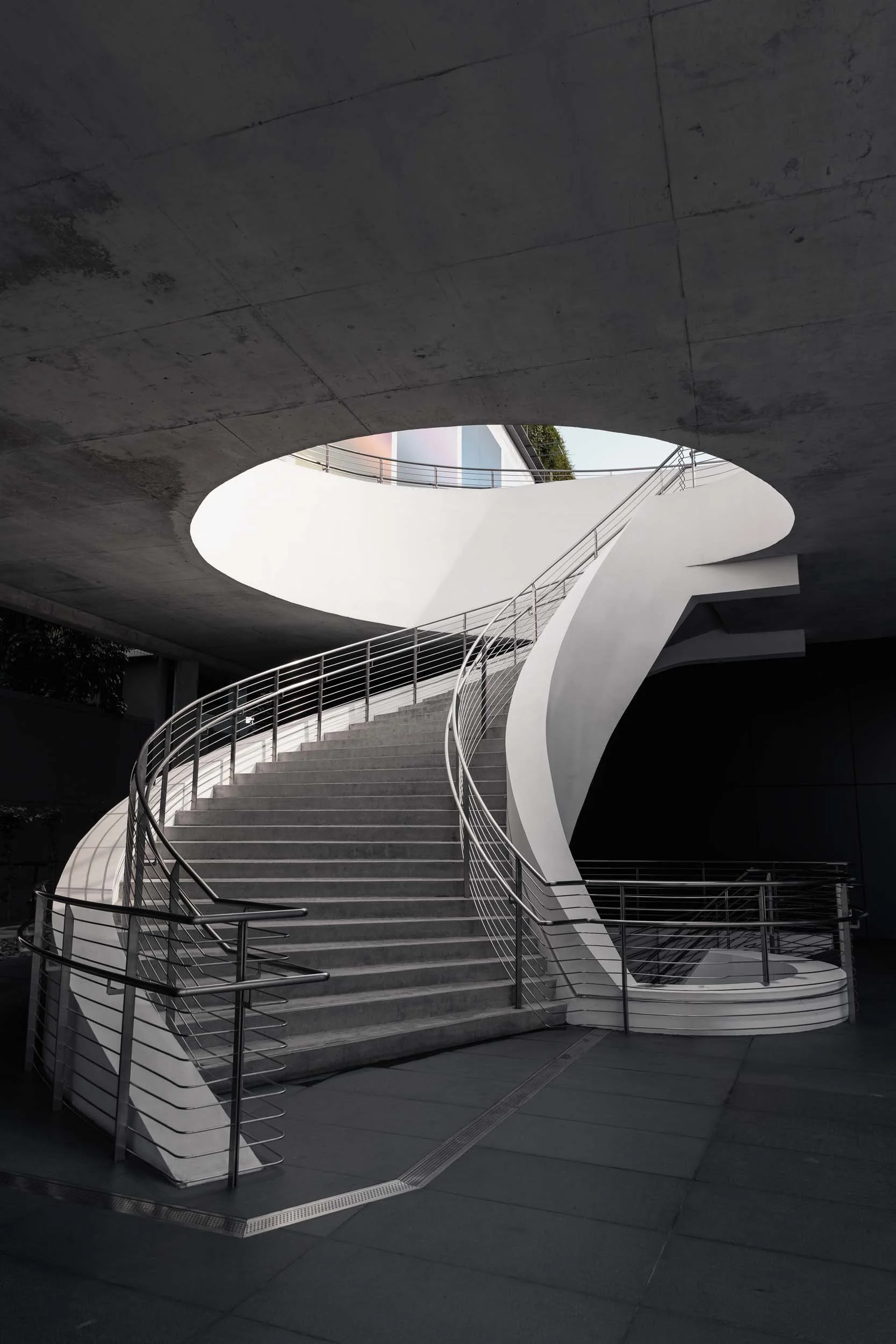
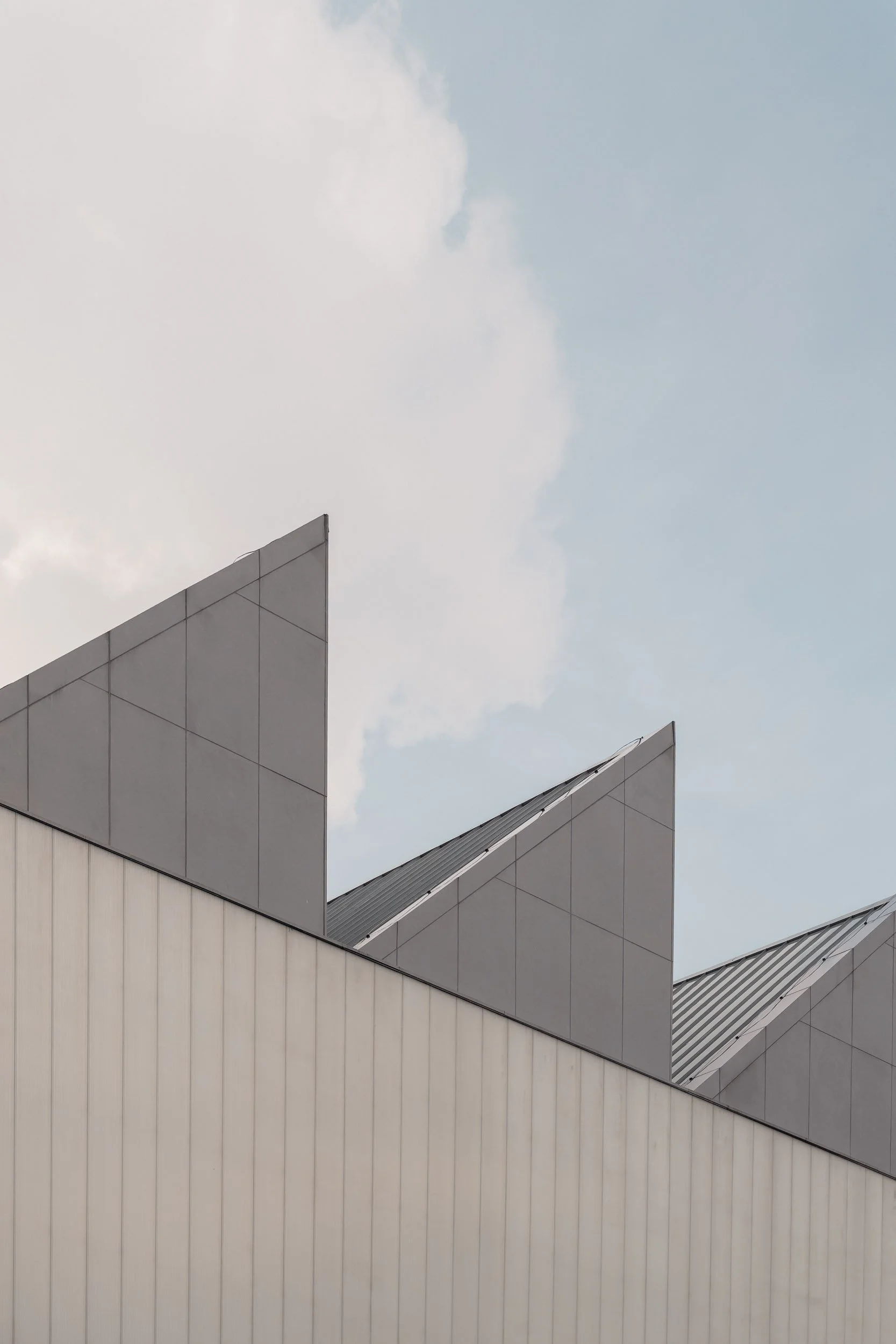
The physical shell of Dib Bangkok is as much a masterclass in spatial philosophy as the art it houses. Emerging from the industrial bones of a former steel warehouse, the museum cleverly eschews the sterile, blinding-white cube aesthetic that has plagued modern galleries. Instead, the facade presents a dark, monolithic concrete fortress that deliberately acts as a sensory palate cleanser, sealing you off from the frenetic hum of the surrounding metropolis. Once inside, the interior architecture unfolds as a physical manifestation of a spiritual journey, guiding visitors across three cavernous, light-drenched floors.
There is a gorgeous, tactile brutalism at play here; raw, unpolished concrete surfaces meet towering steel beams, creating a dramatic, textured volume that feels both deeply grounded and entirely weightless. The true stroke of structural genius, however, is the sweeping open courtyard. This central void punches directly through the heart of the building, drawing the shifting Bangkok sky into the internal choreography of the galleries. It is a brilliant, fluid manipulation of space that forces a constant, living dialogue between the architecture's permanence and the transient nature of light itself.


Alicja Kwade, Pars pro Toto, 2020
(In)visible Presence
From 21 December 2025 to 3 August 2026
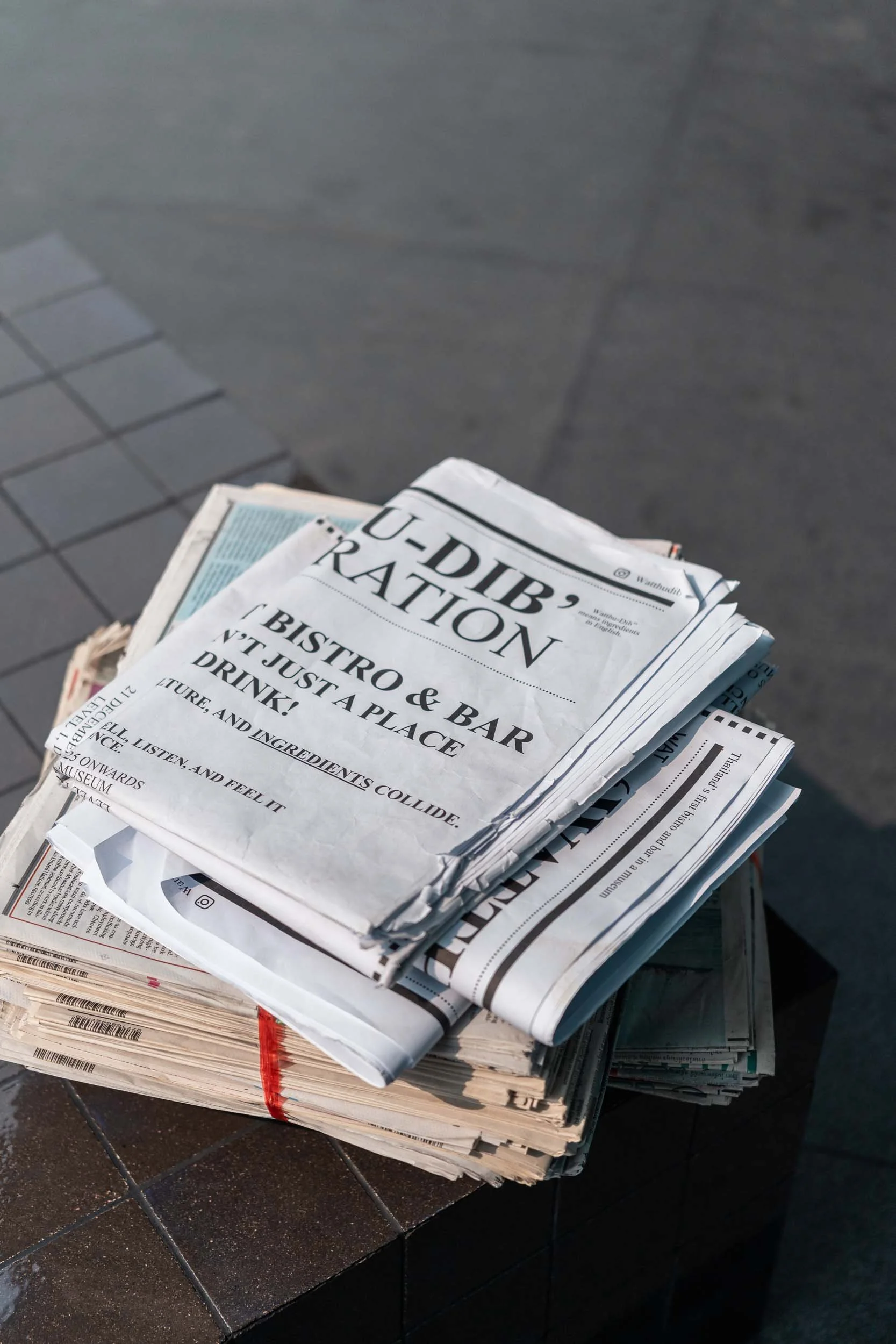
Dib Bangkok’s debut exhibition, (In)visible Presence, is a masterfully orchestrated, heavyweight affair that demands absolute, unhurried sensory compliance. Spanning three floors designed to mimic a Buddhist progression from worldly experience to eventual spiritual awakening, the curatorial team has brought together eighty-one major artworks by forty pioneering artists, both global and local, into an unforgettable, three-part conceptual narrative.

Part I: The Unseen
Stepping onto the courtyard plunges you directly into the first chapter, playfully subtitled The Unseen, which tackles matter, void, and cosmic scale with brilliant irony. The first sensory checkpoint is Alicja Kwade’s Pars pro Toto, Latin for “a part taken for the whole”, where a sprawling constellation of highly polished planetary stone spheres lies scattered across the floor like a celestial game of marbles left behind by a giant. By using stones marked by ancient geological epochs, Kwade acknowledges that our fleeting human lives exist within patterns vastly older and larger than ourselves with a piece that looks both infinitely heavy and impossibly fluid.
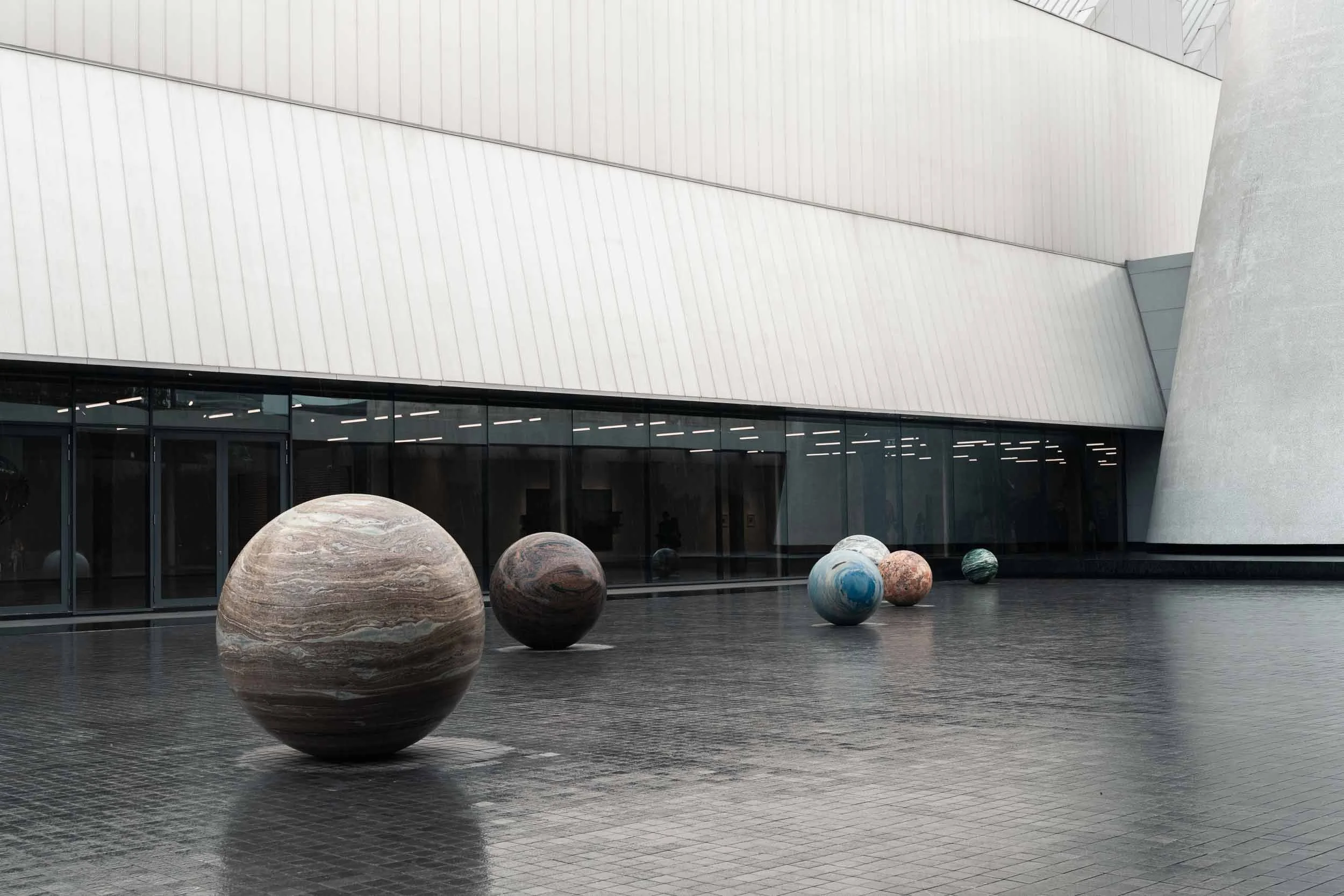
Alicja Kwade, Pars pro Toto, 2020
James Turrell’s Straight Up, a disorienting architectural cavity, is the other permanent work on display. As his first major permanent skyspace structure in Thailand, this precipitous staircase and light chamber invite you to stare directly into a sublime, infinite void where vision misleads long before it instructs. Turrell, heavily influenced by his Quaker upbringing and his pilot’s fascination with pure light, famously strips away objects so that you are ultimately looking at yourself looking. I first encountered Turrell’s work in the Chichu Art Museum on Naoshima, Japan, and was mesmerised by how the raw sky becomes part of the art. Within a Thai Buddhist context, the piece adopts a quiet, ceremonial quality, functioning less like a traditional artwork and more like a meditative ritual.
A separate ticket can be purchased to view the art at sundown, when the skylight is framed by an illuminated ceiling that shifts in colour, evoking both Open Sky and Open Field at Chichu. Tickets are limited, and viewing times vary with the weather; I’d say it’s not a mandatory experience, since the daylit look is already very surreal and unforgettable.

James Turrell, Straight Up, 2025

James Turrell, Straight Up, 2025
Once inside, the ground floor continues its material exuberance with an astonishing dialogue of international names. Lee Bul’s precarious, inflated balloon warship, laminated in reflective aluminium foil, stands as a biting, fragile performance on militarism and power, whilst Hugh Hayden’s Untitled Threshold uses intricate, neo-gothic woodwork and a hidden, functioning metal detector to weave an ominous commentary on surveillance, identity, and historical trauma.

Lee Bul, Willing To Be Vulnerable – Metalized Balloon V3, 2015/2019

Hugh Hayden, Untitled Threshold (After Victor Horta After Charleston), 2019

Marco Fusinato, Constellations, 2015–2025

Jean-Luc Moulène, Pleasure Dome, 2013
In the Chapel, a conical structure reminiscent of both industrial chimney and temple, Subodh Gupta brings his signature hyper-reflective, everyday metallic cookware to mock and elevate domestic life, sitting in comfortable, postmodern tension alongside the fractured noise-scapes of Marco Fusinato, whose Constellations invites you to swing a baseball bat directly against a pristine gallery wall, triggering a sudden, body-shaking hundred-and-twenty-five-decibel boom that sends literal ripples through the crowd, beautifully materialising the invisible presence of our own destructive gestures.
Balanced with the precise, enigmatic forms of Jean-Luc Moulène and Surasi Kusolwong’s cheeky subversions of commercial value, this opening salvo echoes the raw, everyday material experiments of the late 1960s Arte Povera movement with spectacular finesse.
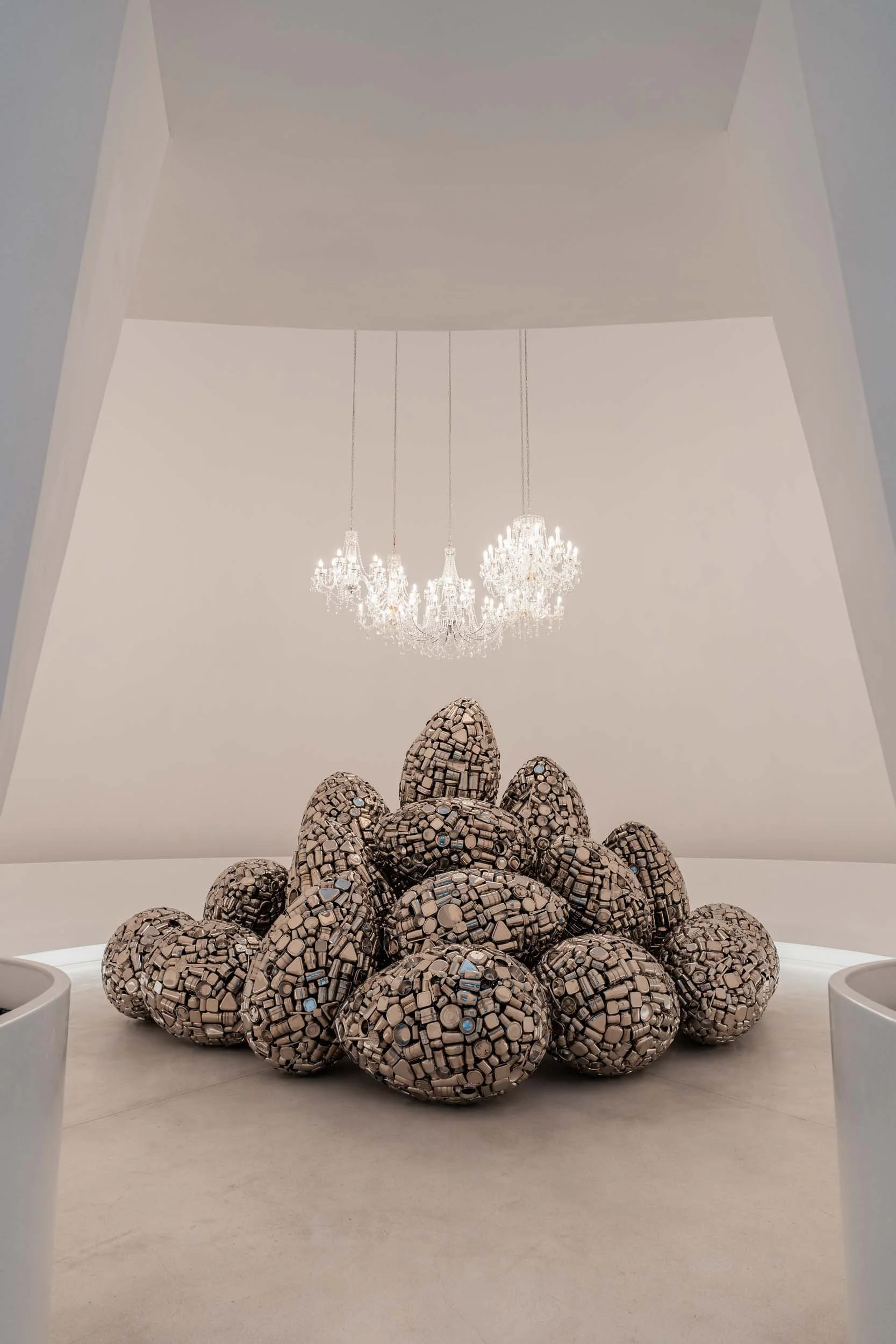
Subodh Gupta, Incubate, 2010
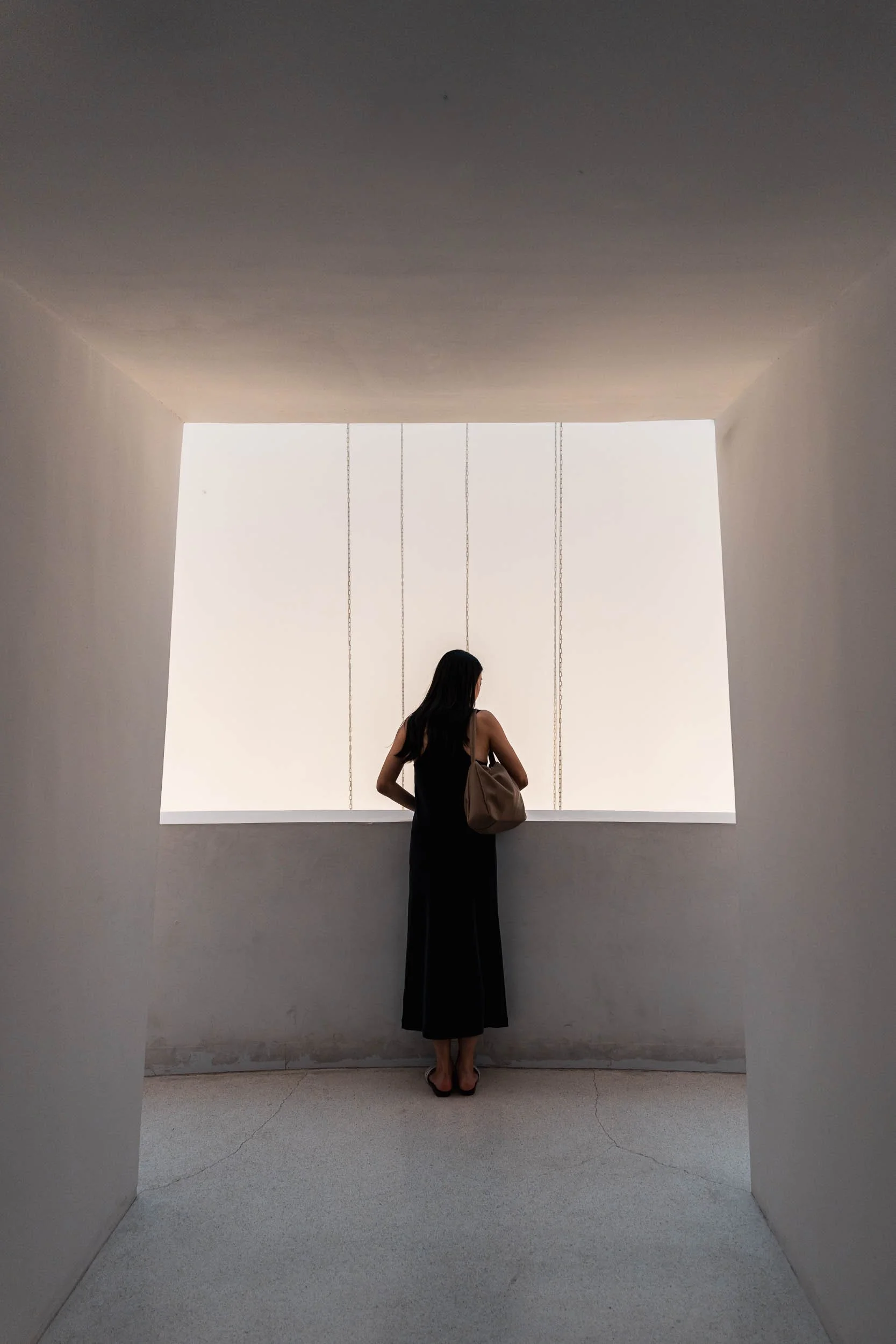

Surasi Kusolwong, Emotional Machine (VW), 2000–2001/2025
Part II: The Unheard
Moving upstairs, works gently pivot into the hazy, deeply psychological realm of The Unheard, exploring transient shadows, altered diaries, and salvaged memories. The atmosphere shifts towards a brooding, poetic melancholy, beautifully encapsulated in the photographic mastery of Hiroshi Sugimoto and Nobuyoshi Araki. Sugimoto’s Tri-City Drive-in features an outdoor cinema screen exposed for the entire duration of a film, compressing hours of cinematic romance, light, and action into a single, piercingly blank white rectangle of absolute stillness. This quietude stands in gorgeous opposition to Araki’s vast, cinematic grids of three-and-thirty-millimetre film strips, where hundreds of date stamps are intentionally manipulated to blur the distinctions between past, present, and an unwritten future.
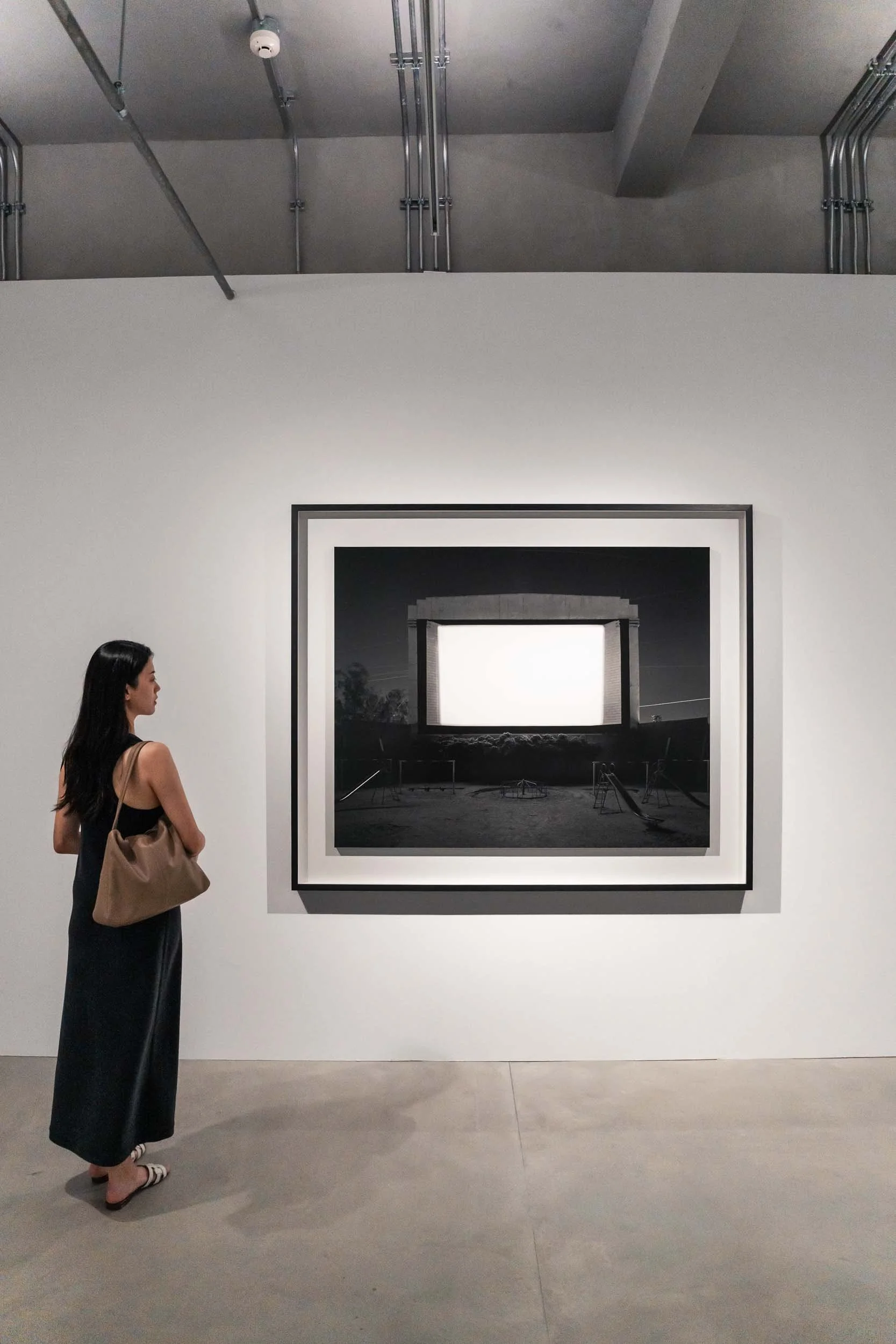
Hiroshi Sugimoto, Tri-City Drive-In, San Bernardino, 1993
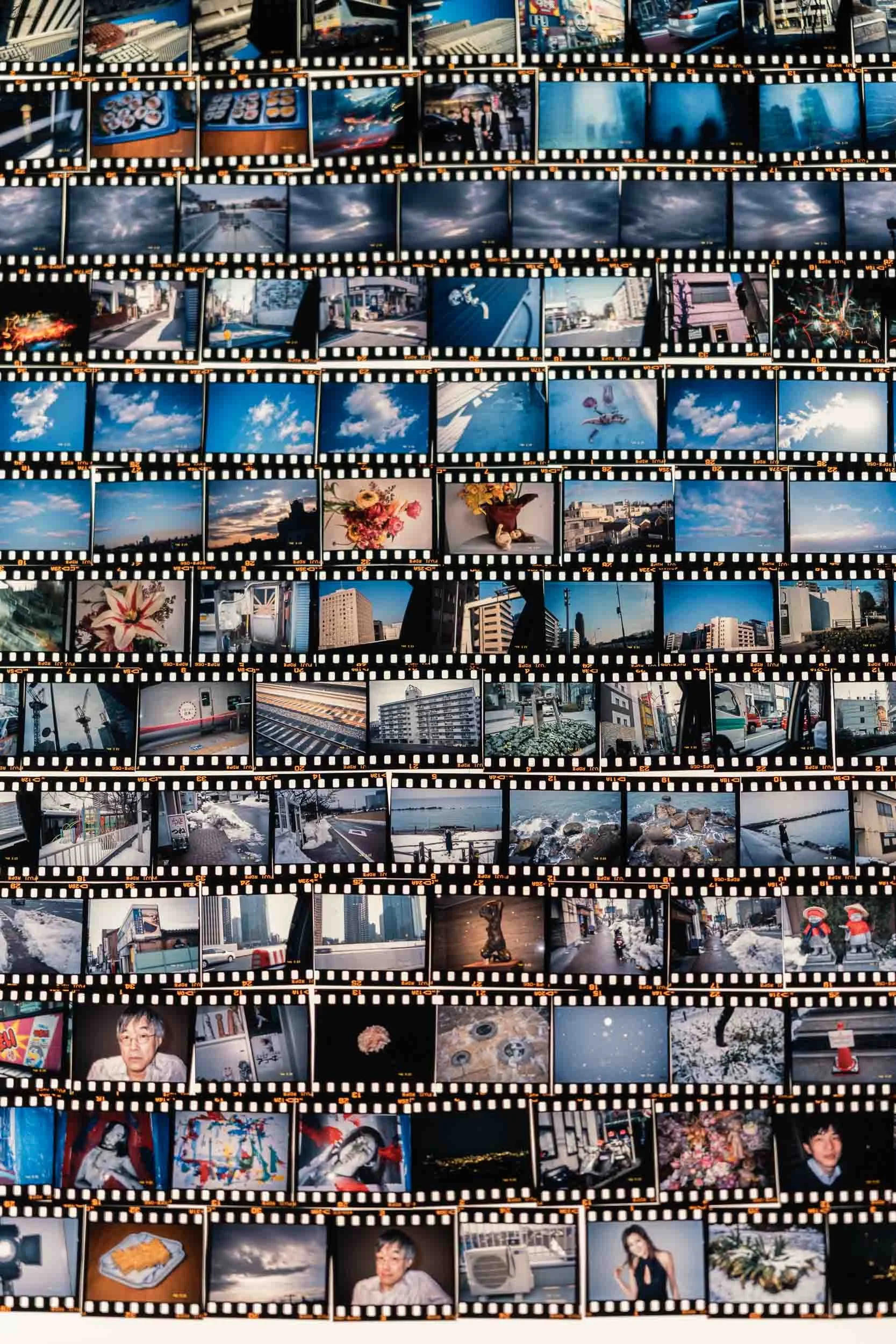
Nobuyoshi Araki, Future, 2015.11.14 – 2040.5.25, 2012

Nobuyoshi Araki, Future, 2015.11.14 – 2040.5.25, 2012

Somboon Hormtientong, The Unheard Voice, 1995

Apichatpong Weerasethakul, Morakot (Emerald), 2007
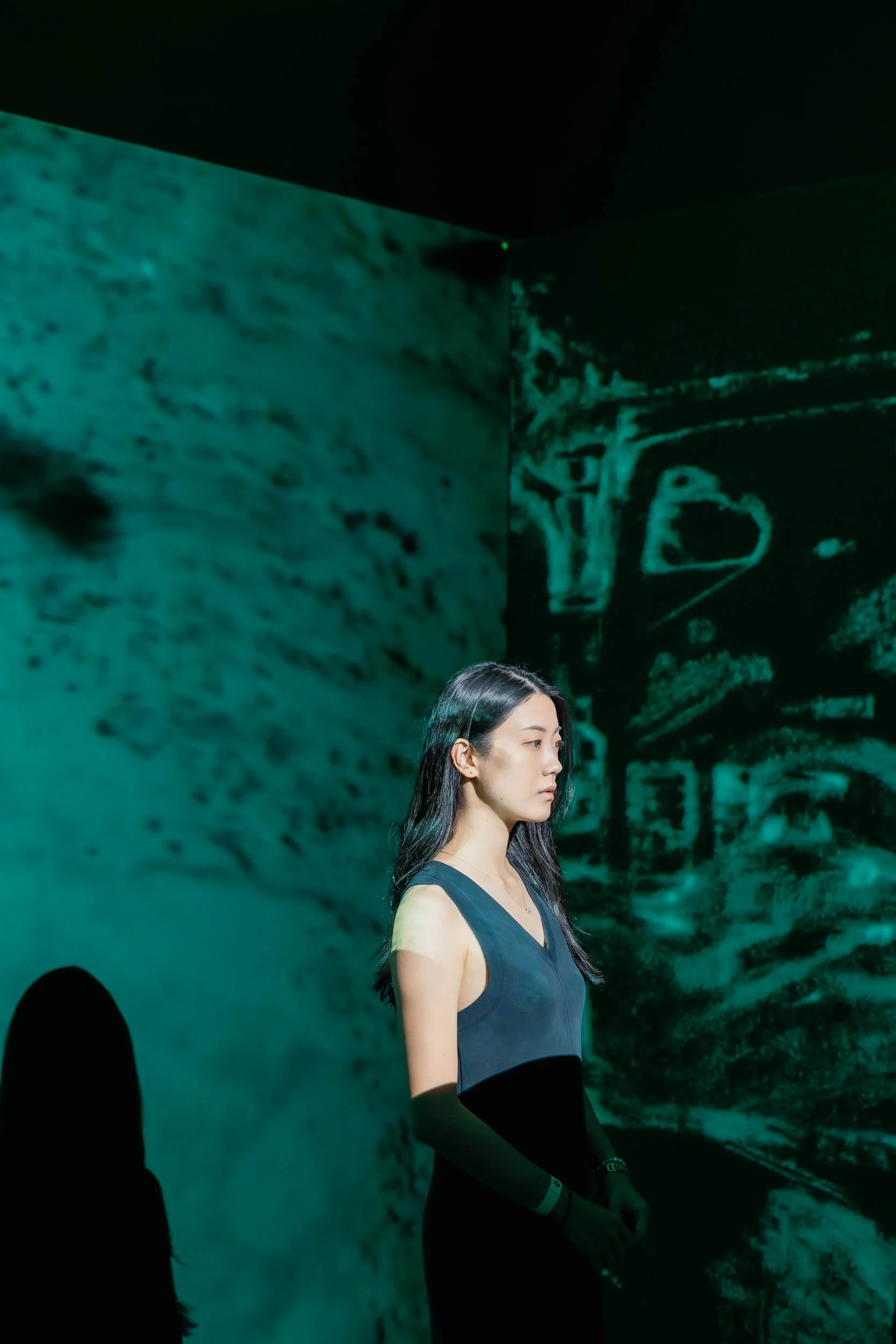
Jinjoon Lee, Daejeon, Summer of 2023, 2023
The absolute, undisputed triumph of this middle section, however, belongs to Sho Shibuya. From sunrises to international headlines, Shibuya has a knack for turning peace and tragedy alike into poetic colours encapsulated in time. Up close, his daily painted newspaper gradients, capturing the changing hues of the morning sky superimposed over New York headlines, are breathtakingly delicate exercises in mindfulness and time. Yet the real curatorial genius unfolds when you step back and observe how Memory, the massive, billboard-like recreation outside, interacts with the building's stunning architecture. Dominating the sweeping views of the open courtyard, Shibuya's vibrant, atmospheric ombrés effortlessly bleed into the actual Bangkok skyline, staging a brilliant, ever-changing conversation between the gallery's structured concrete interior and the living world beyond.

Sho Shibuya, Sunrise from a Small Window, 2020-
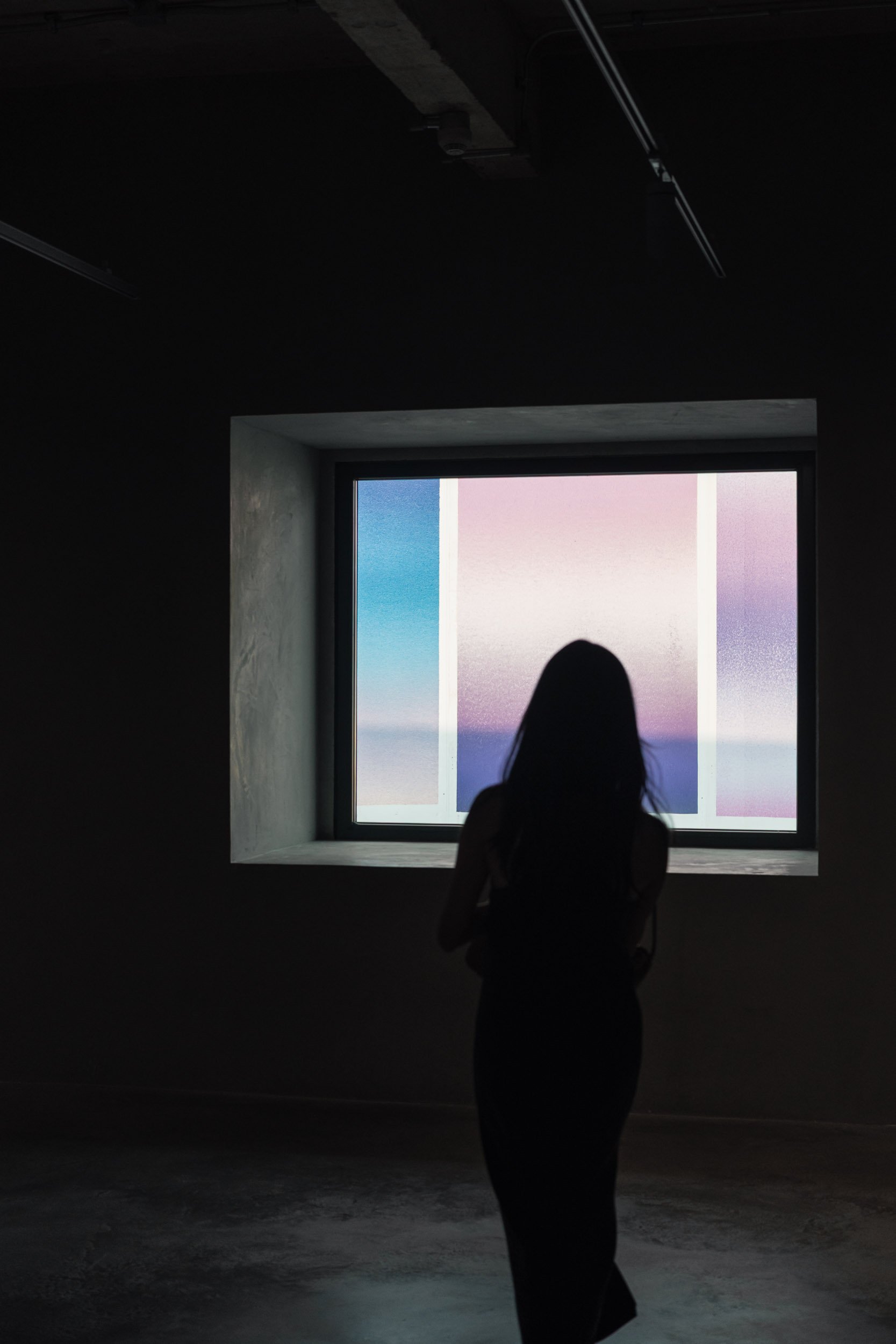
Sho Shibuya, Memory, 2025

Sho Shibuya, Memory, 2025
Pinaree Sanpitak, Breast Stupa Topiary, 2013

Sho Shibuya, Sunrise from a Small Window, 2020-
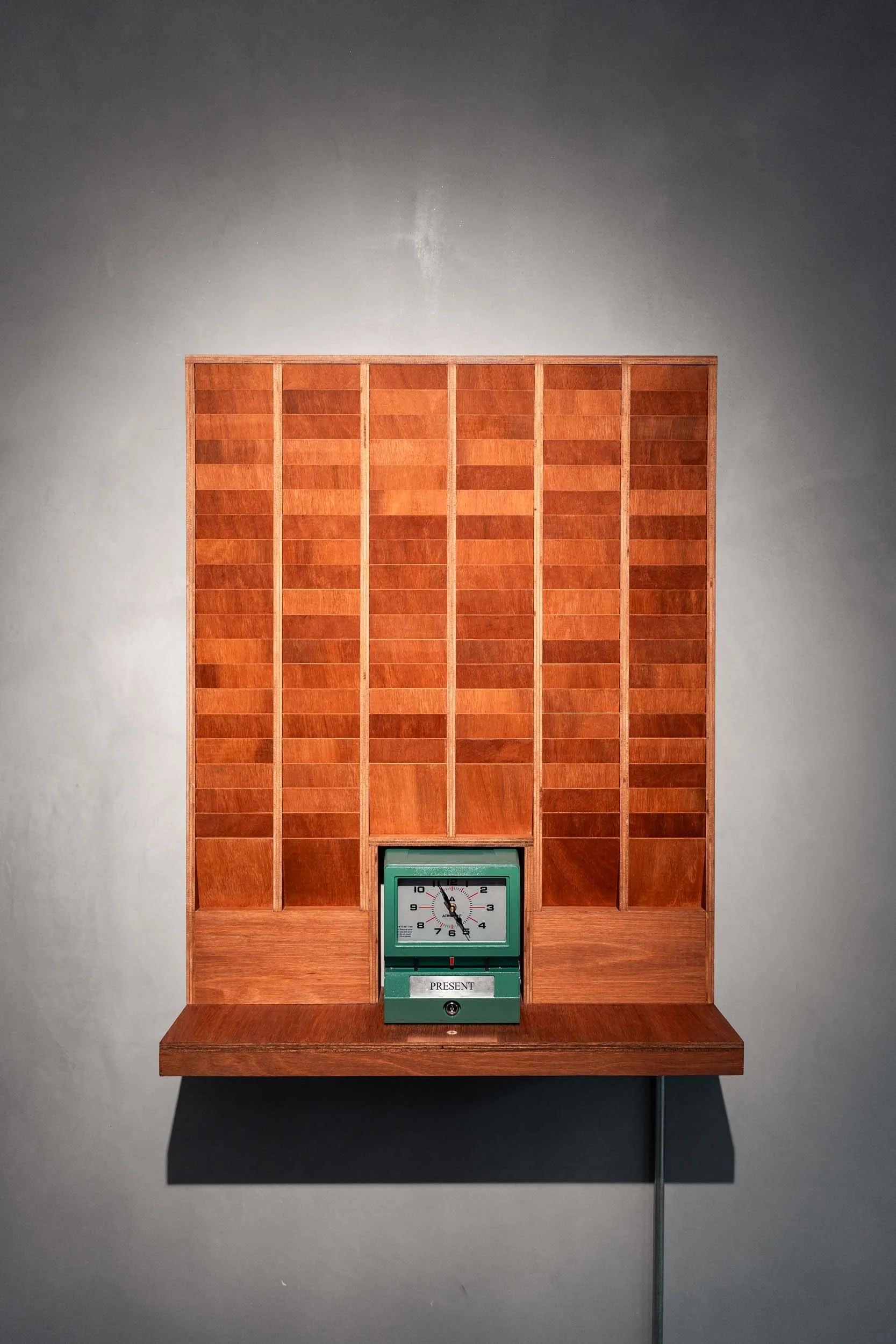
Sho Shibuya, Present, 2025
Beyond the sky, this section is punctuated by a brilliant, multi-layered array of sensory interventions that keep you on your toes. Cerith Wyn Evans’ fractured, white-hot neon lyricism cuts through the shadows, while filmmaker Apichatpong Weerasethakul blankets a room in hypnotic, slow-burning video projections that make your own shadow feel like an intruder in a dream.
Somboon Hormtientong’s The Unheard Voice stops you dead in your tracks, displaying nine massive wooden temple pillars arranged on the floor like fabric-shrouded corpses, silhouetted against a large rectangular window framing real, swaying treetops. Jessie Homer French injects a striking, localised punch of colour with her painting of a blazing forest fire under a suffocating, smoky sky, while Finnegan Shannon offers a thoughtful, accessible resting point with a vivid blue bench inscribed with Thai text. Everything on this floor is anchored by a staggering, heavily layered piece by Anselm Kiefer, thick with charcoal and sediment, with a sprawling density that feels as though it were dug directly from a scarred, historic battlefield.

Jessie Homer French, Wildland Fire, 2013

Jessie Homer French, Night Swim, 2015

Jessie Homer French, The Loved Ones, 2016

Finnegan Shannon, Do you want us here or not (Dib), 2025
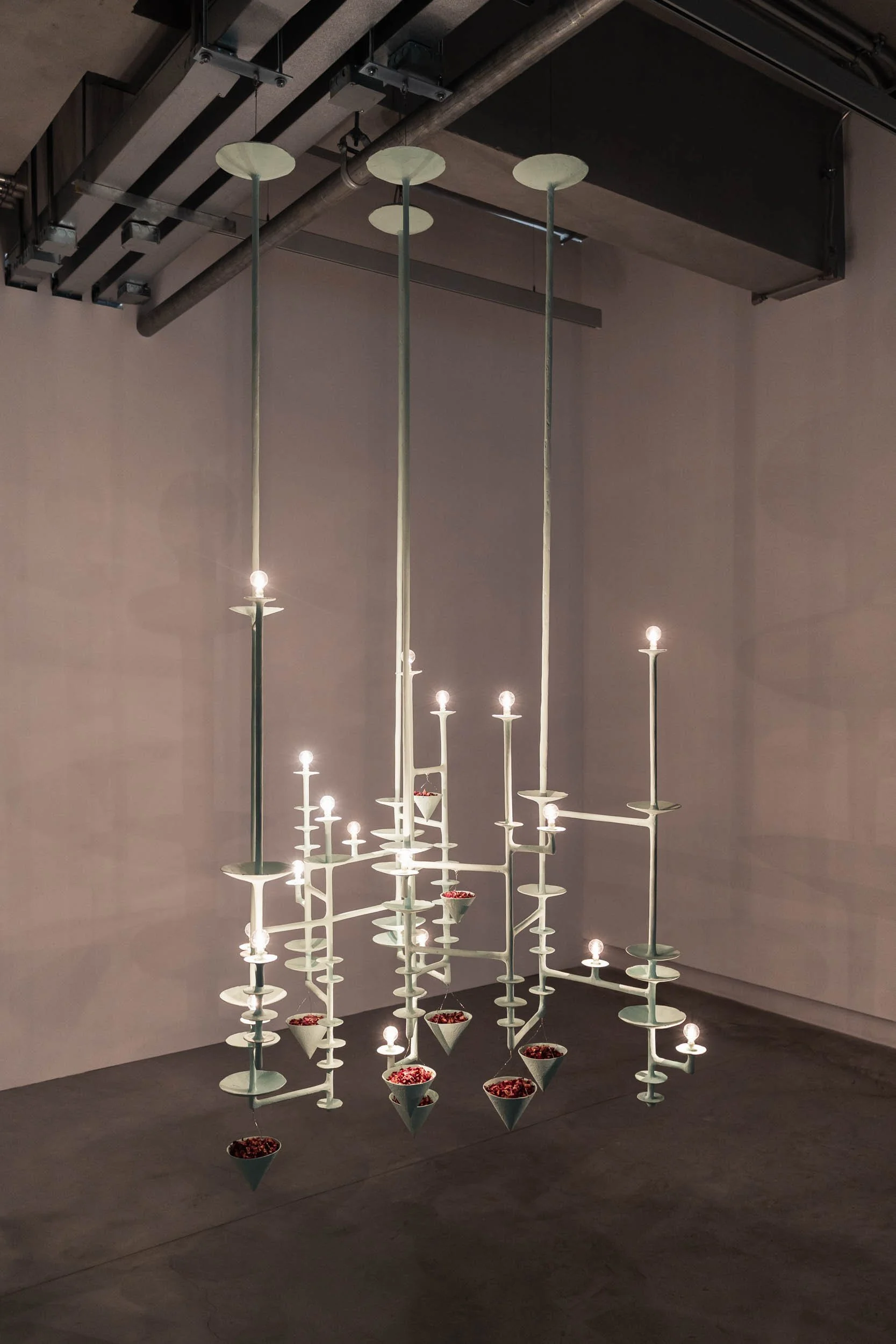
Pae White, Module#1390 NCS-Color S0530-G20Y (sea foam green), 2014

Cerith Wyn Evans, C=L=E=A=V=E 20 (after P.P.C.), 2020

Anselm Kiefer, Der Verlorene Buchstabe (The Lost Letter), 2019
Part III: The Unknown
Ascending to the topmost level brings you to the museum’s spiritual climax, The Unknown, a deeply moving tribute to the late, legendary pioneer of Thai contemporary art, Montien Boonma. If the preceding galleries feel like a whirlwind tour of pan-global contemporary anxieties, the finale is an absolute sanctuary of material spirituality. Boonma, who tragically passed away in 2020, spent his career using raw, traditional, and aromatic materials to channel profound Buddhist philosophies on healing, mourning, and the transience of human life. Entering this luminous, light-infused hall feels less like browsing an exhibition and more like stepping into a living prayer.

Montien Boonma, Lotus Sound, 1992/1999-2000
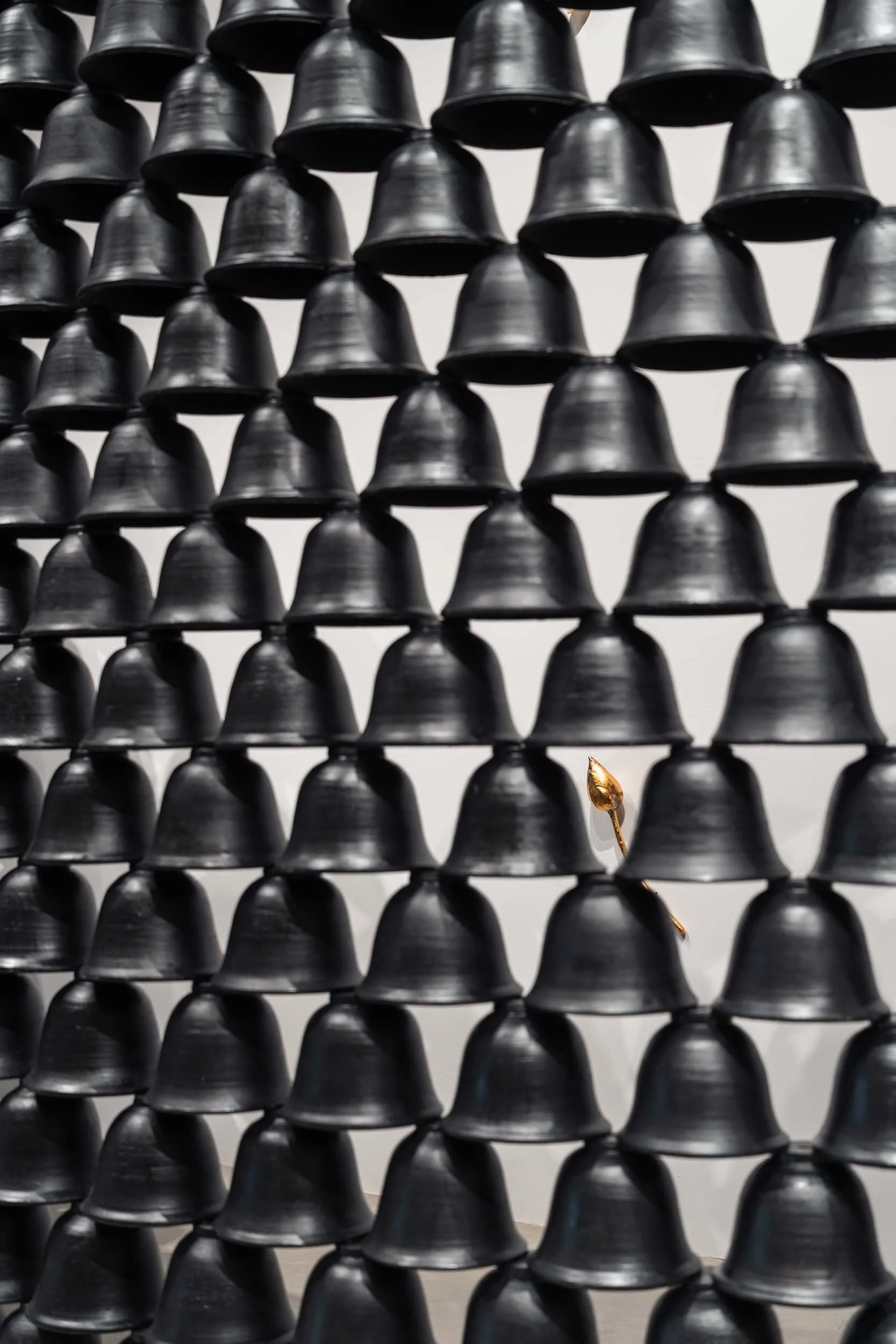
Montien Boonma, Lotus Sound, 1992/1999-2000
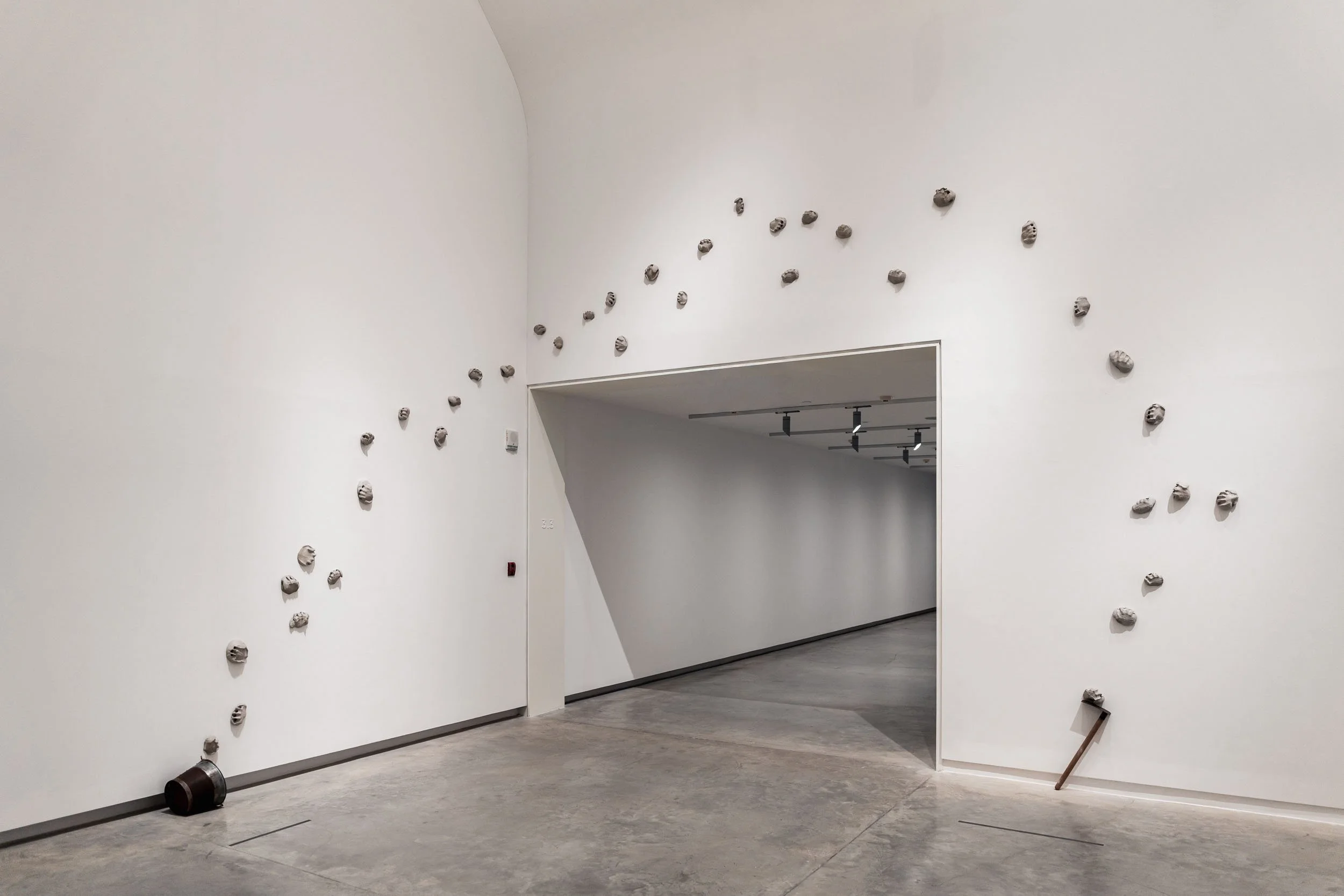
The sheer tactile presence of the space is astonishing. One wall is covered in an immense grid of textured, raked-earth tiles, their concentric semi-circular ridges echoing the organic geometry of tilled fields or sacred, unpolished stone, set off by a solemn row of ribbed terracotta jars lining the concrete floor. Nearby sits his breathtaking masterpiece, Lotus Sound, shown here for the first time with all 500 terracotta bells, exactly as the artist originally envisioned. Arranged in a protective semi-circular wall, these stacked black bowls form a physical barrier of quiet reverence, topped with delicate, gilded-bronze elements that float upward towards the ceiling like escaping whispers, prayers, or pure spirit leaving the material flesh.
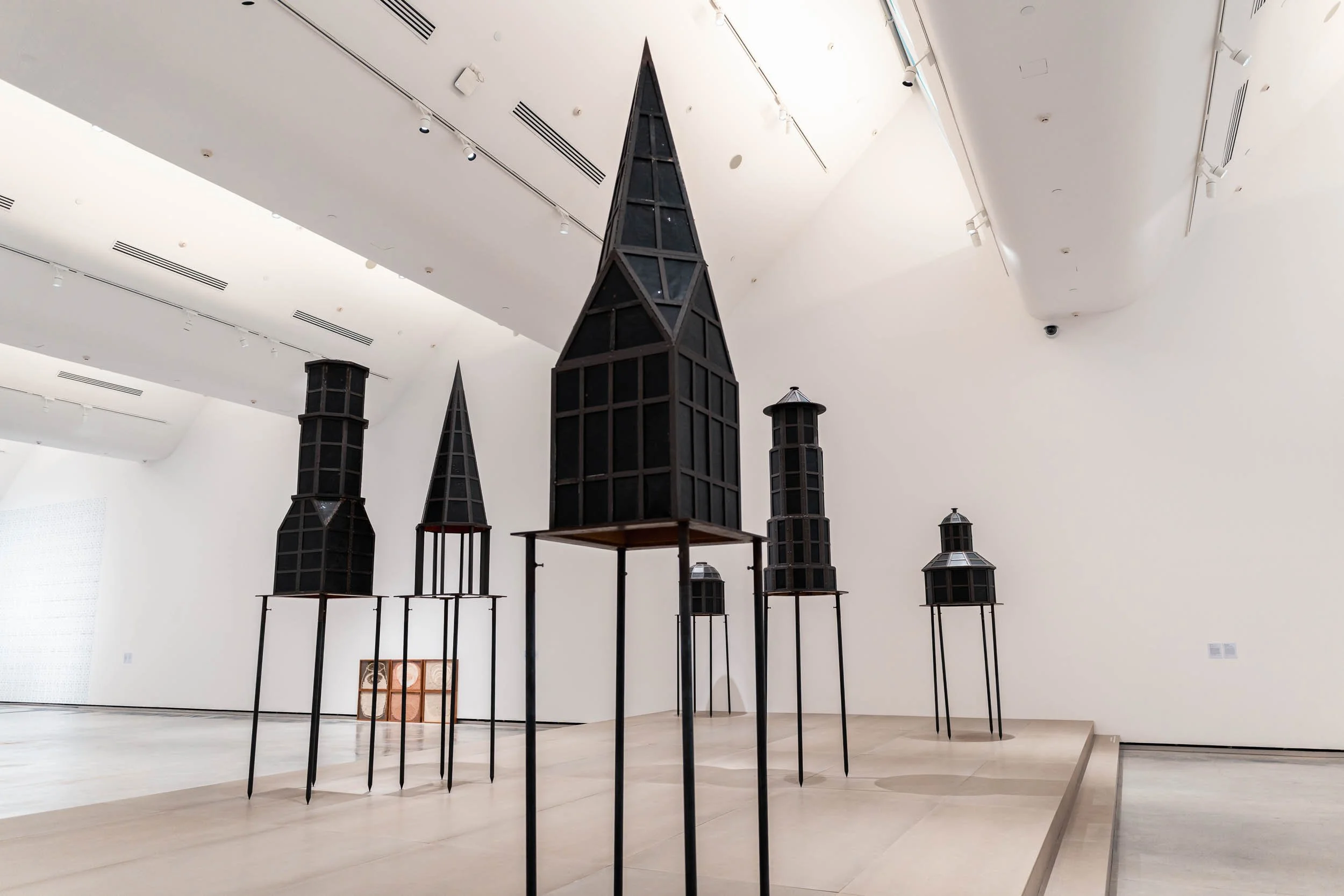
Montien Boonma, Zodiac Houses, 1998-1999
Dominating the centre of the hall are his iconic Zodiac Houses, a series of dark, geometric architectural towers resembling traditional monastic cells or funerary spires, raised high on spindly, impossibly fragile metal stilts. Stepping onto the platform entices you to tilt your head up into their hollow interiors, looking up into constellations that connect human consciousness directly with the heavens above.

Montien Boonma, Prayer of Abhisot, 1994/2025

Montien Boonma, Prayer of Abhisot, 1994/2025
In the corner, a retro Sony CRT monitor setup hums with a video piece, tucked neatly against a wall entirely wrapped in custom question-and-exclamation-mark wallpaper, a brilliant nod to Boonma's lifelong, restless questioning of what lies beyond the veil of our physical bodies.

Montien Boonma, Group of Primary Form, 1989

Montien Boonma, Red Breath, 1996
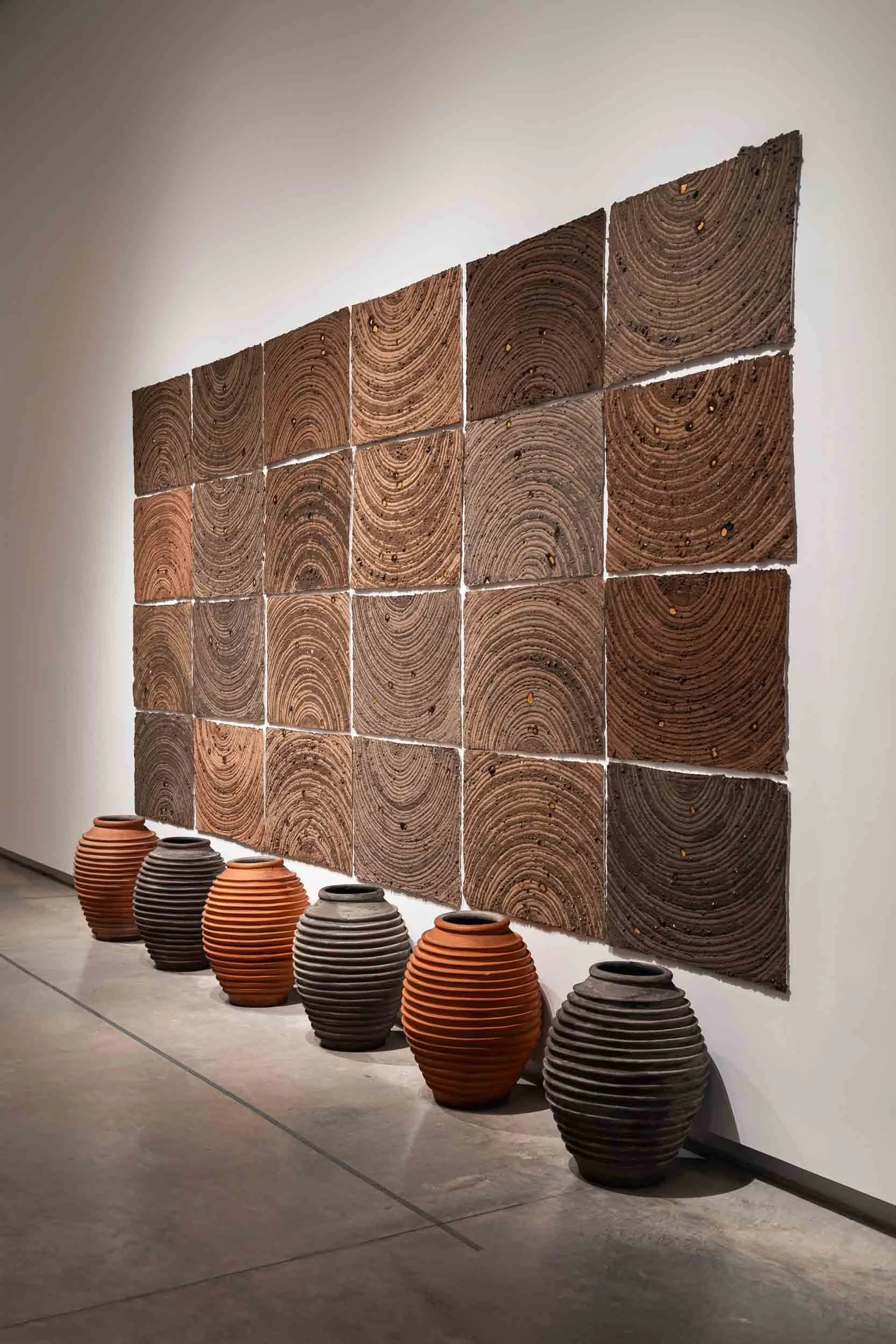
Montien Boonma, Water, 1991
And the curation rounds out his brilliant legacy with Red Breath, a rarely exhibited series of printmaking works from 1996 that explore the rhythm of breathing through ethereal, blood-orange textures, followed by Group of Primary Form, a rhythmic line of woven bamboo, capsule-like sculptures resting quietly on the floor like traditional fish traps or empty cocoons awaiting resurrection.
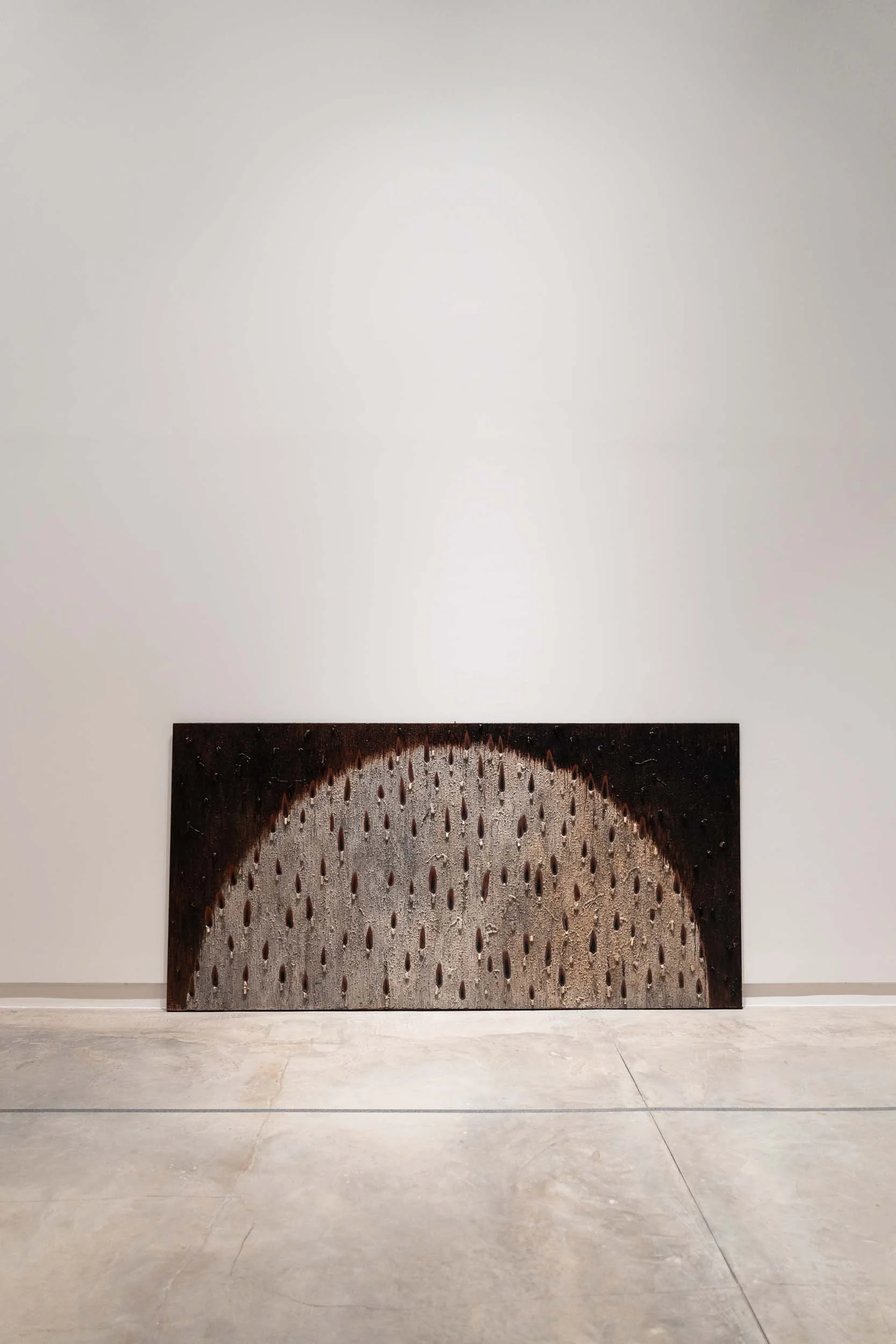
Montien Boonma, Full Moon, 1991

Montien Boonma, Full Moon, 1991
Thoughts: A New Benchmark for Bangkok’s Art Horizon
Stepping back out into the humid Bangkok air, I found myself reflecting on what Dib Bangkok has achieved here. I must admit, I initially approached with a healthy dose of modern scepticism; the glossy opening-night hype usually promises more than it delivers. Yet any lingering cynicism evaporated the moment I stepped into the museum courtyard.
For a capital drawing an unstoppable influx of global travellers, Bangkok has always been surprisingly modest in its international art museum scene. Its more established counterparts—the sprawling Museum of Contemporary Art (MOCA) in Chatuchak and the centrally located Bangkok Art and Culture Centre (BACC)—are certainly interesting in their own right and housed in equally ambitious architecture. However, Dib Bangkok fills a gaping, sophisticated hole, specifically designed for a pan-global stage.
The former warehouse’s spatial choreography is nothing short of triumphant, offering an essential pocket of serenity that deliberately distances you from the city’s chaotic overstimulation. Rather than merely staging an exhibition, the curation completely inhabits the architecture, gently coaxing you to slow your breathing, listen to the natural acoustics, and actually feel the materials vibrate. By managing such a wide spectrum of media and anchoring it with signature permanent installations, the museum has deftly carved out a distinct identity right from its debut. It is a wonderfully bold, unmissable statement of intent from an institution poised to shape Thailand’s contemporary art landscape for decades to come. Frankly, I am already patiently waiting to see what they pull out of their sleeve next.

Sho Shibuya, Memory, 2025
Related Posts

![My Ultimate Guide to Chatuchak Weekend Market [2026 Edition]](https://images.squarespace-cdn.com/content/v1/5fa57aacf5b0a90a76b0d7cc/92ef65ba-3470-4a0a-9c4f-2c81a59122e0/DSC05433-web.jpg)
A collection of everyday luxuries, cult-favourite snacks, and quiet design moments that let you bring an authentic piece of Thai living home.